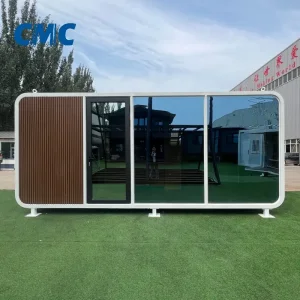
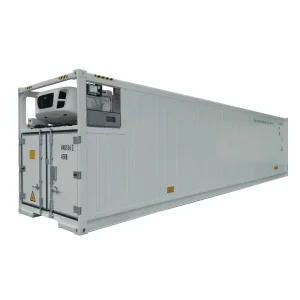
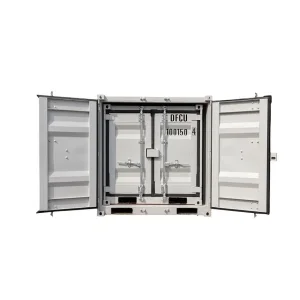
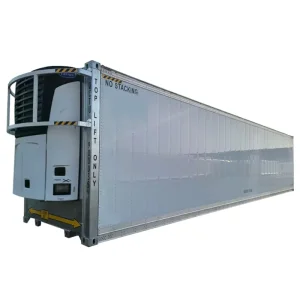
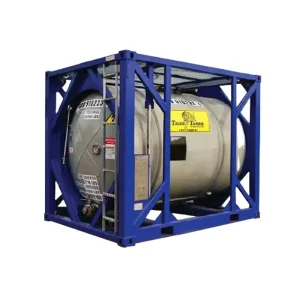
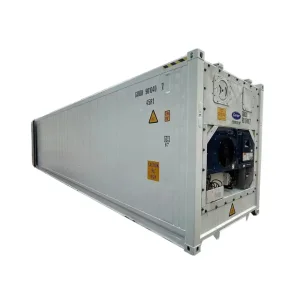
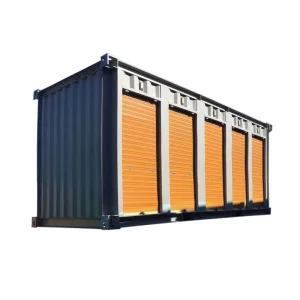
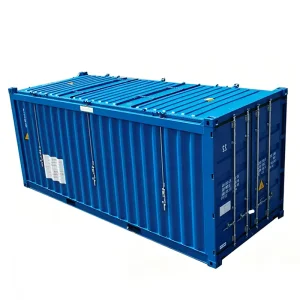
Explore high-performance modular units, offshore dry cargo carriers, and smart cold-chain solutions fabricated to classification society benchmarks for global intermodal transport.
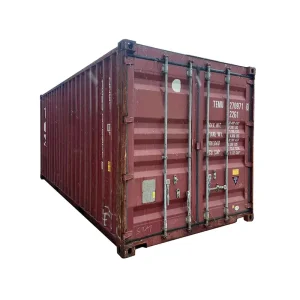

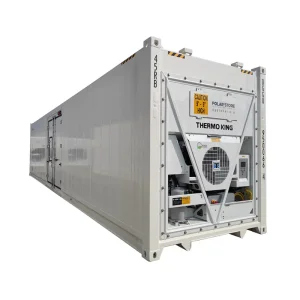
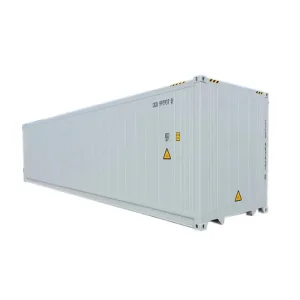
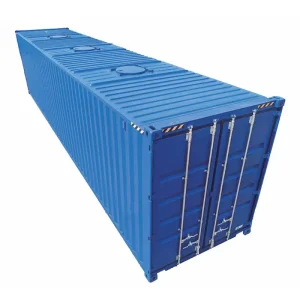
In global multi-modal distribution, the 30-foot container configuration solves a critical structural bottleneck. Sitting precisely between standard 20ft and 40ft units, 30ft architectures deliver an optimal payload-to-volume ratio for high-density industrial cargo.
Industrial procurement specialists often face a challenging economic trade-off when shipping heavy dry bulk goods, dense mineral concentrates, specialized equipment enclosures, or high-viscosity chemicals. A standard 20ft intermodal container frequently reaches its maximum axle or gross weight ceiling while half of its internal cubic capacity remains unutilized. Conversely, deploying a standard 40ft container for high-density goods introduces structural floor buckling risks, excessive tare weight, and severe deadweight freight penalties across international highway bridge formulas and European rail networks.
As a seasoned, famous 30ft containers manufacturer, our production engineering addresses this logistical reality directly. The 30ft form factor provides up to 48.2 cubic meters of internal cargo volume while sustaining extreme payload ratings up to 31,200 kg. Fabricated using high-tensile SPA-H Corten steel, our 30ft dry, insulated, open-top, and customized mobile energy storage containers guarantee superior structural deflection resistance, exceptional torsional rigidity, and seamless integration onto standard drop-deck skeletal container chassis.
| Dimensional & Mechanical Metric | 30ft Standard ISO Dry Van | 30ft High Cube (HC) Dry / BESS | 30ft Offshore / Heavy Industrial | Standard 20ft Comparison |
|---|---|---|---|---|
| External Dimensions (L × W × H) | 9,125 × 2,438 × 2,591 mm | 9,125 × 2,438 × 2,896 mm | 9,125 × 2,438 × 2,591/2,896 mm | 6,058 × 2,438 × 2,591 mm |
| Internal Dimensions (L × W × H) | 8,970 × 2,352 × 2,393 mm | 8,970 × 2,352 × 2,698 mm | 8,930 × 2,330 × 2,360 mm | 5,898 × 2,352 × 2,393 mm |
| Internal Usable Volume | 50.5 m³ (1,783 cu ft) | 57.0 m³ (2,012 cu ft) | 49.1 m³ (Custom Internal Rigging) | 33.2 m³ (1,172 cu ft) |
| Tare Weight (Base Structure) | 3,120 kg (6,878 lbs) | 3,380 kg (7,451 lbs) | 4,800 kg (Reinforced Lifting Skid) | 2,200 kg (4,850 lbs) |
| Maximum Payload Capacity | 30,880 kg (68,078 lbs) | 32,620 kg (71,914 lbs) | 31,200 kg (Dynamic Lift Tested) | 28,280 kg (62,348 lbs) |
| Corner Castings & Metallurgy | ISO 1161 Standard (8 Units) | ISO 1161 Standard (8 Units) | DNV 2.7-1 Pad Eyes & ISO Castings | ISO 1161 Standard (8 Units) |
| Flooring System Rating | 28mm Marine Plywood / 6mm Steel | 6mm Checkered Steel / Insulated | 8mm Anti-Slip Steel Plate Welded | 28mm Marine Plywood |
| Classification Society Approval | BV, ABS, LR (CSC Certified) | BV, ABS, LR, CCS (CSC Plated) | DNV GL, LR (DNV 2.7-1 / EN 12079) | ISO 1496-1 Standard |
From metallurgical procurement at state-owned steel mills to automated continuous welding, our integrated manufacturing bases deliver unmatched production velocity, scale, and capital efficiency.
Direct supply agreements with primary domestic mills (Baosteel, Ansteel) secure uninterrupted allotments of authentic SPA-H Corten atmospheric corrosion-resistant alloy, stabilizing procurement costs against international commodity spikes.
Our production bays feature automated multi-axis robotic welding cells for main load-bearing sills, corner posts, and crossmembers. Every continuous fillet weld achieves 100% non-destructive radiographic and ultrasonic flaw detection compliance.
Heavy-duty structural components undergo automated grit blasting to ISO Sa 2.5 cleanliness, immediately followed by multi-coat electrostatic application: zinc-rich epoxy primers, polyurethane intermediate barriers, and acrylic marine topcoats totaling 180μm+ dry film thickness.
Located in Tianjin FTA and Suzhou within 100 kilometers of deepwater seaport container terminals, our facilities streamline inland transit, port marshalling, container yard staging, and direct vessel loading on global line-haul loops.
International asset managers, mining EPCs, and shipping lines evaluate custom 30ft container investments through rigorous engineering feasibility, asset lifecycle returns, and field maintainability.
Standard container assets often suffer premature fatigue failure within 7 to 10 years under abrasive payloads. Our reinforced 30ft units deliver a validated 20+ year working lifecycle, substantially lowering the annualized capital amortization per metric ton transported.
From high-capacity cable glands and blast relief hatches for battery energy storage pods to hydraulic side-access doors and heavy internal partition bulkheads, we translate complex procurement drawings into fully realized fabrication packages.
Large-scale mining, oilfield, and green energy infrastructure tenders demand dependable batch manufacturing schedules. Our synchronized manufacturing processes ensure complete batches of 50 to 500+ custom units meet strict project commissioning windows.
Operating intermodal equipment internationally requires strict adherence to safety, structural, and environmental regulations across customs territories, rail corridors, and marine jurisdictions.
Every non-standard 30ft shell is engineered and full-scale prototype tested in accordance with ISO 1496-1 parameters. Stacking, transverse racking, longitudinal restraint, floor strength, and roof rigidity tests are witnessed by classification surveyors prior to issuing CSC safety approval data plates.
For offshore exploration and marine installations, units are fabricated to DNV 2.7-1 standards. Certified steel alloys exhibit Charpy V-notch impact toughness tested down to -20°C or -40°C, complete with integrated lifting slings, proof-load tests, and mill test certificates (MTR 3.1).
Our units meet Customs Convention on the International Transport of Goods under Cover of TIR Carnets. Security door hinges, tamper-evident bolt seal housings, and UIC 592-compliant lower pick-up pockets ensure rapid transshipment across borders without customs holdups.
Learn how engineering contractors, resource developers, cold-chain distributors, and utility operators deploy custom 30ft container footprints worldwide.
The 30ft High Cube configuration is an industry favorite for utility-scale lithium-ion and flow battery installations. It provides ideal floor space for multi-rack battery banks, integrated liquid-cooling chillers, aerosol fire suppression, and walk-in inverter maintenance corridors without exceeding roadway footprint limits.
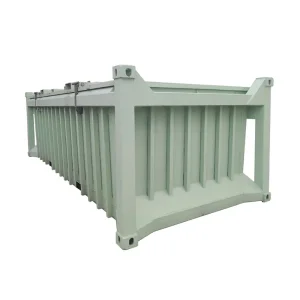
For high-density spodumene, iron ore, copper concentrate, and mineral sand operations, custom half-height and open-top 30ft containers provide balanced structural center-of-gravity dynamics, automated tippler compatibility, and reinforced floors that handle rugged industrial wear.
European and Central Asian rail corridors utilize 30ft bulk swap-body configurations to transport dry powders, petrochemical polymers, and agricultural staples. Pneumatic discharge connections and top-fill hatches enable rapid transshipment from train cars to regional distribution trailers.
Remote civil engineering sites and disaster-recovery programs deploy 30ft insulated containers housing reverse-osmosis filtration, chemical dosing skids, and automated pumping stations, fully piped and pre-wired for immediate field commissioning.
The intermodal container manufacturing landscape is advancing toward intelligent telemetry integration, green low-carbon lifecycle materials, and specialized containerization.
Modern fleet owners expect factory-fitted IoT tracking systems. Our containers support integrated telematics that monitor real-time GPS locations, door security status, multi-axis shock and impact forces, internal humidity, and temperature profiles via global satellite and cellular networks.
Responding to strict corporate Scope 3 sustainability targets, we deploy high-solids waterborne coatings and cyclopentane blown polyisocyanurate (PIR) insulation cores that reduce volatile organic emissions during manufacturing while offering 100% recyclable structural steel recovery.
Container architectures are shifting from simple freight transport toward functional modular building blocks. Standardized 30ft structural frames increasingly house high-voltage switchgear, hydrogen electrolyzers, and edge data compute centers designed for plug-and-play field deployment.
Direct answers from our senior naval architects and logistics equipment engineers on specifications, handling, certification, and volume manufacturing lead times.
Our 30ft containers feature ISO 1161 corner castings located at the standard 30ft positions. For highway haulage, they ride on purpose-built 30ft container chassis or extendable 20ft/40ft skeletal combi-chassis with intermediate bolster twistlocks. On intermodal rail flatcars, standard adjustable container spigots match our bottom corner castings securely.
Yes. Although 30ft is not an ISO 668 modular standard length, our designs are fully certified under the International Convention for Safe Containers (CSC). A prototype undergoes structural testing witnessed by classification societies (Bureau Veritas, ABS, LR, or CCS) to receive a valid CSC Safety Approval Plate for commercial cellular vessel carriage.
Following engineering sign-off on detailed CAD drawings and structural calculations, production tooling, jig setup, cutting, and welding typically takes 25 to 35 days for initial batches of 10 to 50 units. Standard prototype testing, classification survey inspections, and final surface treatment require an additional 5 to 7 business days prior to port staging.
SPA-H Corten steel contains specific micro-alloying elements—copper, chromium, and nickel—that react with ambient air and atmospheric moisture to form a tight, self-healing oxide patina. This dense barrier retards continuous oxidation, delivering up to 4 to 6 times greater atmospheric corrosion resistance than common Q235B structural steels in salty marine environments.
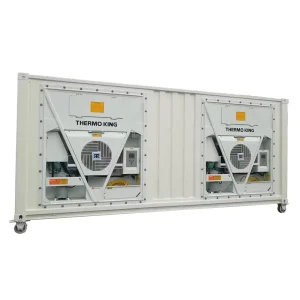
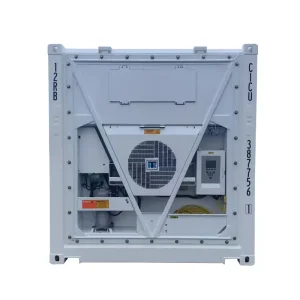
Yes. We regularly build 30ft refrigerated and insulated containers equipped with front-mounted marine cooling machinery from Carrier Transicold, Thermo King, or Daikin. The insulated envelope uses continuous high-density polyurethane foam sandwiched between stainless steel (SS304/food-grade) interior linings and Corten exterior walls.
While standard dry container production lines run at maximum efficiency with volume orders, our flexible engineering workshops accommodate prototype and project orders starting from 1 to 2 units for highly specialized applications (such as DNV offshore modules or BESS shells), and 5 units for custom dry cargo configurations.
Browse our expanded portfolio of modular container houses, bulk storage containers, mini nested boxes, and specialized transport units built to meet rigorous industrial specifications.