Verified production runs and marine intermodal units available directly from primary manufacturing facilities.
A rigorous industrial perspective on 9'6" vertical envelope architecture, thermodynamic flow physics, and modern marine cold-chain containment.
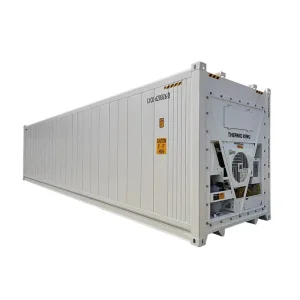
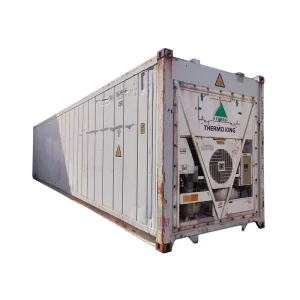
In modern global trade, maritime intermodal logistics demands extreme thermal predictability. A High Cube Reefer Container (9ft 6in external height) provides a decisive competitive edge over standard 8ft 6in units by delivering an additional vertical foot of internal clearance—translating directly to an approximate 12% to 15% increase in cubic capacity. For low-density, high-cube commodities such as berries, leafy greens, high-value pharmaceuticals, pre-packaged retail seafood, and precision electronic components, this vertical expansion fundamentally reconfigures freight economy by drastically slashing per-cubic-meter transport expenditure across complex trans-oceanic routes.
Achieving reliable thermal integrity across dynamic trans-hemispheric voyages requires structural synergy between container hull design and the active refrigeration system. Top-tier manufacturing integrates high-tensile SPA-H Corten steel external cladding, treated with high-grade anti-corrosion zinc epoxy primers, to withstand extreme salt-mist environments and dynamic g-force loading during heavy sea states. The internal boundary utilizes food-grade SUS 304 or HG stainless steel lining, supported by structurally integrated, extruded aluminum T-bar flooring profiles. These T-floors act as critical air ducts, forcing continuously tempered airflow upward through cargo pallets to eliminate thermal pockets and guarantee micro-climate consistency within a stringent ±0.25°C to ±0.5°C tolerance band.
| Performance Specification | 40ft High Cube (40HC) Reefer | 20ft High Cube (20HC) Reefer | Regulatory Standard |
|---|---|---|---|
| External Dimensions (L x W x H) | 12,192 x 2,438 x 2,896 mm (40' x 8' x 9'6") | 6,058 x 2,438 x 2,896 mm (20' x 8' x 9'6") | ISO 668 Series 1 Freight Containers |
| Internal Usable Capacity | ~67.5 m³ to 67.9 m³ (2,385 cu ft) | ~32.2 m³ to 32.8 m³ (1,150 cu ft) | ISO 1496-2 Thermal Requirements |
| Max Gross Weight (MGW) | 34,000 kg (74,950 lbs) | 30,480 kg (67,200 lbs) | CSC International Convention |
| Thermal Insulation Material | Cyclopentane-blown Polyurethane Foam (70-75mm) | High-Density Rigid PU Core (70-80mm) | CFC/HCFC-Free Eco Compliance |
| Operating Temperature Spectrum | -35°C to +30°C (Ultra-freezer variants: -60°C) | -30°C to +30°C (Deep chill down to -40°C) | ATP Certification Standards |
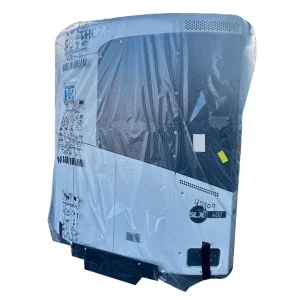
| Refrigeration Machinery Compatibility | Thermo King Magnum Plus / Daikin LXE / Carrier PrimeLINE | Carrier ThinLINE / Daikin / Thermo King | CE, UL, BV Marine Certified Machinery |
The core thermodynamic core of these units is governed by next-generation digital controllers communicating with variable-capacity digital scroll or semi-hermetic reciprocating compressors. By continuously monitoring supply and return air temperatures, intelligent controller algorithms modulate electronic expansion valves (EEVs) and electronic expansion systems, actively adjusting cooling and heating cycles to accommodate biological respiration heat from fresh produce or sub-zero pull-down loads for processed frozen goods.
Strategic manufacturing integration delivers uncompromised build quality, rapid lead times, and streamlined global export channels.
Operating in direct industrial proximity to major national steel rolling mills provides domestic Chinese container manufacturers with immediate access to premium atmospheric-corrosion-resistant SPA-H Corten alloy steel. Continuous bulk purchasing, combined with domestically localized supply ecosystems for robotic foaming lines, high-purity aluminum extrusion floors, and laser-cut structural gussets, drastically reduces input volatility and mitigates raw material lead-time risks for overseas procurement consortia.
Thermal efficiency relies completely on polyurethane insulation uniformity. State-of-the-art Chinese manufacturing facilities employ multi-axis CNC high-pressure cyclopentane injection platforms. Operating in strictly climate-controlled bays, these automated presses achieve homogeneous foam density (42–45 kg/m³) free from microscopic voids, thermal bridges, or density gradients. This guarantees a remarkably low overall Heat Transfer Coefficient (K-value under 0.38 W/m²·K), preserving critical low temperatures while significantly reducing power consumption.
Production centers situated in primary maritime corridors—such as Tianjin, Qingdao, and Suzhou—sit approximately 100 kilometers from mega-container terminals. This geographic advantage slashes inland drayage expenses. Furthermore, international buyers leverage China's monumental export trade imbalances by deploying newly purchased reefers as Shipper-Owned Containers (SOC) loaded with outbound commercial cargo, effectively offsetting or completely eliminating ocean transit repositioning freight costs.
Technological disruption in dynamic atmosphere modulation, IoT telemetry, and low-GWP refrigerants.
Modern international transit increasingly relies on Active Controlled Atmosphere systems (e.g., Daikin Active CA, Carrier XtendFRESH). These integrated devices dynamically scrub carbon dioxide and purge oxygen, placing perishable produce into a metabolic stasis. This extends commercial post-harvest shelf life by upwards of 200%, enabling premium high-cube shipments of delicate avocados, stone fruits, and asparagus across complex 35-day maritime transits without quality degradation.
Digital transformation has made real-time tracking indispensable. Standard builds now incorporate permanent or modular smart telemetry modems featuring dual GPS/satellite connectivity. Fleet directors and logistics controllers receive continuous, cloud-synchronized updates regarding supply/return air temperatures, ambient humidity levels, internal oxygen/CO₂ balance, defrost activity cycles, and automated diagnostic fault logs across global voyages.
Regulatory pressures driven by the Kigali Amendment and EU F-Gas mandates are accelerating the global phase-out of high-GWP HFCs. Modern factories are re-engineering core cooling architectures to leverage next-generation hydrofluoroolefins (HFO blends like R-452A) and ultra-low natural refrigerants, prominently including transcritical Carbon Dioxide (R-744). These fluid cycles cut environmental impact while optimizing systemic thermodynamic efficiency.
The expansion of intermodal refrigerated logistics into isolated geographical regions has catalyzed engineering in self-sufficient auxiliary power systems. Incorporating ultra-thin roof-mounted marine photovoltaic arrays alongside intelligent DC brushless variable-frequency inverters reduces mechanical load during transit pauses and optimizes overall diesel generator set (genset) fuel burn during prolonged inland intermodal drayage operations.
Beyond traditional container vessel slots: Adaptive field utilization of high-cube thermal assets across dynamic sectors.
High Cube Reefers serve as rapidly relocatable pre-cooling and consolidation stations positioned directly at rural orchard and greenhouse perimeters. Freshly harvested agricultural yields can undergo immediate blast-chill extraction down to dormancy thresholds within hours of collection. This eliminates thermal degradation at the supply chain origin, stabilizing tissue integrity and biochemical qualities prior to long-distance distribution.
Driven by rigorous Good Distribution Practice (GDP) protocols, medical enterprises deploy calibrated 40ft High Cube reefer units for active temperature-managed bulk storage (+2°C to +8°C, or deep freezing down to -40°C). Reinforced thermal envelopment combined with dual redundant electrical power systems and continuous automated temperature recording logs ensure end-to-end regulatory compliance during airport transshipment and emergency medical distribution.
Urban retail grocery distribution centers frequently face severe commercial real estate constraints. Certified high-cube reefers, equipped with sound-dampened inverter scrolls, internal emergency safety panic releases, and anti-slip stainless flooring, are widely installed as semi-permanent, plug-and-play outdoor refrigeration bays. This circumvents capital-intensive brick-and-mortar warehouse construction while scaling seasonal storage capacity during peak demand cycles.
Harmonizing maritime, rail, and highway corridors through unified technical standards and fleet procurement strategies.
Optimizing macro cold-chain ecosystems requires an end-to-end perspective on cargo velocity. Container equipment can no longer operate as an isolated silo; it serves as a central operational node within multi-modal networks. Standardized 40ft High Cube reefers manufactured under strict ISO 1496-2 and CSC safety conventions permit uninterrupted transit from deep-sea container vessels directly onto double-stack intermodal rail wagons and standard highway skeletal semi-trailers without requiring cross-dock unpacking.
This continuous intermodal capability provides enterprise food distributors and international seafood processors with three fundamental operational advantages:
Traditional cold chains that require intermediate destuffing at port warehouses routinely expose sensitive cargo to ambient air shocks, physical handling damage, and contamination risks. Factory-sealed high cube reefers preserve an unbroken thermal shield from the producer's packaging line straight to the continental distribution center, reducing product shrinkage rates by over 98%.
Procuring newly built High Cube reefers directly from specialized Chinese manufacturing bases provides a predictable 15-to-20-year structural service lifespan. The high salvage value of Corten steel structures, coupled with modularly serviceable machinery (Carrier, Thermo King, Daikin), drastically flattens total cost of ownership (TCO) compared to short-term equipment leasing programs.
Certified units possess multi-agency approvals (Bureau Veritas, ABS, Lloyd's Register, DNV-GL) alongside TIR customs approval plates. This global legal and engineering compliance guarantees frictionless boundary crossing across complex overland corridors, including the Trans-Eurasian Rail Bridge and cross-border North American shipping lanes.
Essential due-diligence factors global supply chain directors scrutinize when securing high-cube thermal assets.
Commercial buyers must verify that quotes account for complete third-party marine classification certification. Equipment delivered without genuine Bureau Veritas (BV), China Classification Society (CCS), or American Bureau of Shipping (ABS) type-approval and individual unit testing documentation cannot be lawfully manifested on commercial container line voyages.
The choice of refrigeration machine—whether Daikin LXE, Carrier PrimeLINE, or Thermo King Magnum Plus—must align directly with the operational territory's local field service footprint. International quotes must explicitly state whether genuine global OEM warranties, certified technician support access, and regional spare parts stocks are fully included in the delivered quotation package.
Procurement teams must match floor profile dimensions to handling equipment. Standard marine T-bar floors accommodate standard pallet jacks, while heavy-duty flat-top or composite flooring designs may be required for automated guided vehicles (AGVs) or specialized interior racking carts. Internal scuff liners and reinforced front bulkheads should be detailed early in the technical quotation stage.
Premium exporters apply factory air-leakage tests under positive pressure to ensure cabinet boundary seals meet ATP requirements. Every refrigeration unit must complete a standardized computerized Pre-Trip Inspection (PTI) cycle, verifying sensor calibration, compressor amperage draw, heating coil actuation, and emergency defrost cycle automation before dispatch.
Explore specialized industrial configurations, offshore DNV units, and versatile intermodal shipping containers.
In-depth insights directly from our marine engineering and export operations departments.
