Engineered for structural resilience across harsh oceanic shipping corridors, cold chains, and modular operations.
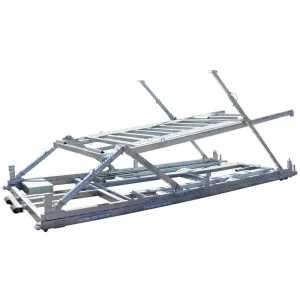
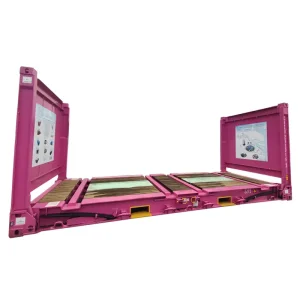
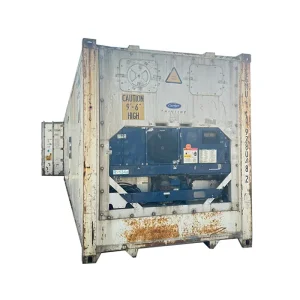
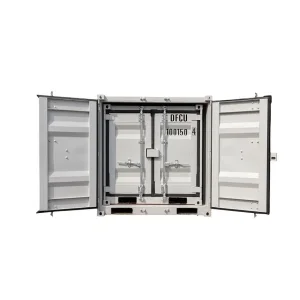
From Malcom McLean’s breakthrough in 1956 to advanced custom ODM factories in China, discover how standardized steel geometry unlocked modern global trade.
Trucking entrepreneur Malcom McLean launched the Ideal-X, modifying a tanker ship to carry 58 converted truck trailers. This eradicated tedious break-bulk cargo handling, slashing dockside labor loading costs from $5.86 per ton to roughly $0.16 per ton instantly.
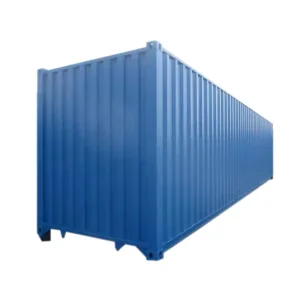
The International Organization for Standardization formalized ISO 668 and ISO 1496, establishing corner castings, twist-lock mechanics, and uniform 20ft (1 TEU) and 40ft (2 TEU) profiles. Intermodal transport across road, rail, and sea became seamless.
Container manufacturing shifted from North America and Western Europe to East Asia. China's coastal industrial zones, equipped with domestic Corten steel rolling mills and harbor infrastructure, emerged as the undeniable manufacturing core of the logistics world.
Modern factories advanced from commoditized dry steel boxes to custom ODM/OEM solutions: active pharmaceutical reefers, offshore DNV-certified units, mobile electrical sub-stations, and precision modular architectural dwellings.
Over 90% of global non-bulk freight travels inside shipping containers. Understanding total fleet metrics clarifies ODM supply chain criticality.
The manufacturing superiority of Chinese industrial clusters like Tianjin, Jiangsu, and Guangdong is anchored in structural cluster advantages.
Corten atmospheric-corrosion-resistant steel makes up over 85% of structural tare weight. Chinese mills provide zero-lagline continuous cold-rolled and hot-rolled coils directly to assembly fixtures, slashing transport overheads and raw material lead times compared to global competitors.
Modern production facilities utilize high-speed multi-axis robotic gantry systems for continuous welding of corrugated side walls, corner posts, and floor crossmembers. Standardized waterborne primer and zinc-rich epoxy paint application runs inside climate-controlled air-filtration chambers.
Positioned ~100 km from major oceanic gateways like Tianjin, Qingdao, and Shanghai, factories eliminate inland deadhead mileage. Furthermore, new containers are loaded with export freight on their maiden voyage ("One-Way Lease"), reducing transit costs to zero for foreign buyers.
The rigid structural integrity, standardized ISO lifting geometries, and high payload capacities make containers ideal for customized industrial and civil applications.
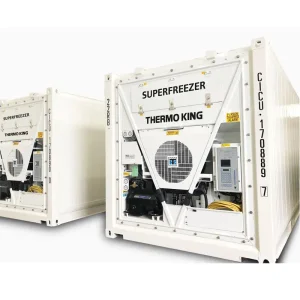
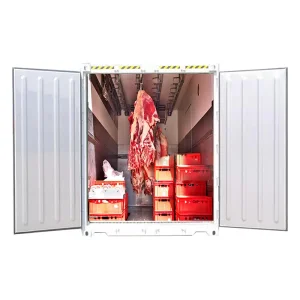
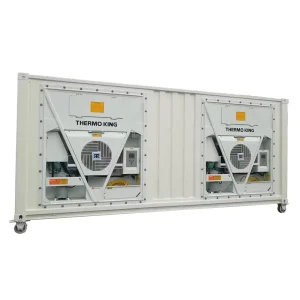
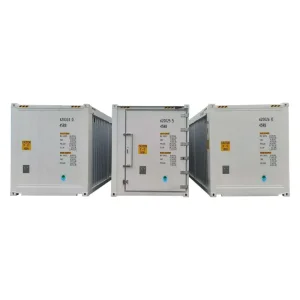
Equipped with Carrier, Daikin, or Thermo King refrigeration units, these temperature-controlled shelters support vaccines, seafood, meat, and fresh agricultural products operating reliably between -30°C and +30°C across deep-sea voyages.
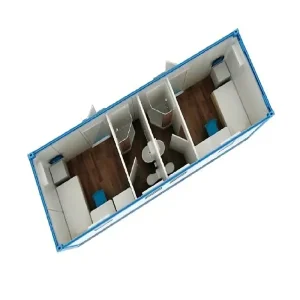
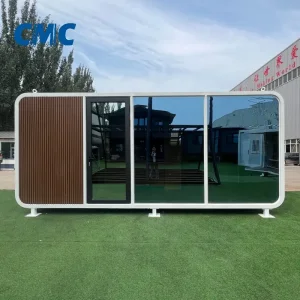
Flat-pack and expandable living pods, construction workforce camps, security pavilions, and premium outdoor apple cabins offer plug-and-play living solutions featuring factory-fitted plumbing, electrical harnesses, and thermal insulation.
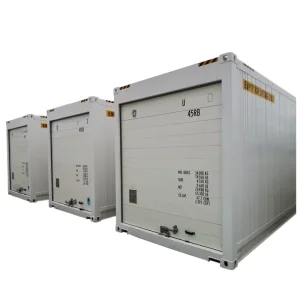
Custom ODM enclosures engineered with reinforced floor load ratings, integrated thermal barrier partitions, explosion-relief hatches, and HVAC ducting to house high-density lithium-ion battery arrays and solar inverters.
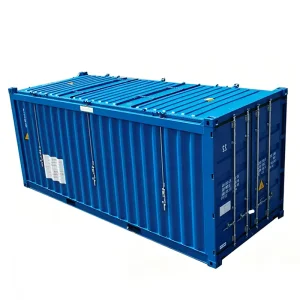
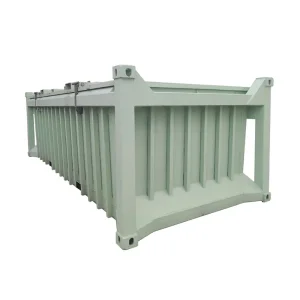
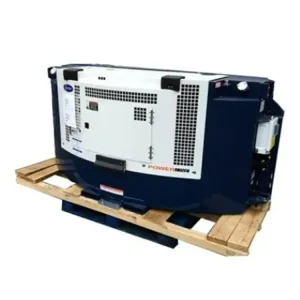
Specially reinforced half-height ore bins, open-top baskets, and offshore generator modules manufactured under strict Bureau Veritas and DNV classification rules for dynamic deep-sea crane hoisting in severe North Sea or Gulf conditions.
The shipping container ecosystem is shifting from passive structural shells to intelligent, environmentally compliant assets.
Standard containers are increasingly equipped with permanent satellite/cellular IoT devices. Real-time telemetry monitoring door seals, internal humidity, acceleration shock events, geo-location, and reefer compressor temperatures provides shippers with complete supply chain transparency.
Traditional apitong plywood floors are rapidly being replaced by sustainable fast-growing bamboo composites, laser-welded corrugated steel flooring, or 100% recyclable thermoplastic polymer decks. This drastically cuts volatile organic compound (VOC) emissions during manufacturing.
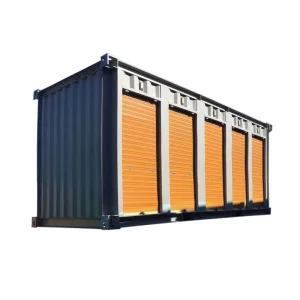
Procurement teams increasingly require hybrid configurations directly off the production line: integrated side-opening access doors, roll-up sectional doors, explosion-proof ventilation, heavy machinery loading ramps, and modular ISO twistlock connection matrices.
A comparative engineering framework for container leasing companies, logistics operators, defense buyers, and mining conglomerates.
Every seaworthy container must carry valid CSC (Convention for Safe Containers) safety approval plates stamped by recognized classification bodies like Bureau Veritas (BV), ABS, Lloyd’s Register, or DNV for offshore safety certification.
Strict structural verification for high-tensile SPA-H Corten steel, minimum yield points exceeding 345 MPa, reinforced corner castings meeting ISO 1161, and marine-grade anti-weathering resistance against high salinity.
Global procurement teams prioritize manufacturers offering complete in-house CAD/CAM rapid drafting, FEA structural stress modeling, flexible prototype pilot runs, and specialized tooling for non-standard heights, roll-up gates, and specialized access.
Total Cost of Ownership balances FOB pricing against empty positioning charges, paint life expectancy, floor payload durability under 7,260 kg axle loads (ISO 1496-1), and the regional availability of certified maintenance parts.
Direct technical answers from senior container engineering and global shipping supply chain specialists.
Shipping containers originated with Malcom McLean's 1956 sea voyage on the Ideal-X. Standardization followed with ISO 668 and ISO 1496 in the late 1960s, creating modular 20ft and 40ft units that slashed global freight transfer costs, ultimately moving the world manufacturing epicentre to China.
China holds an unbeatable industrial ecosystem: domestic access to massive SPA-H Corten steel mills, specialized automated robotic welding systems, complete cold-chain component supply lines, competitive energy infrastructures, and prime coastal shipyards like Tianjin and Shanghai.
OEM (Original Equipment Manufacturer) builds containers exactly to external client blueprint drawings. ODM (Original Design Manufacturer) designs the structural blueprints, conducts FEA stress calculations, ensures ISO/CSC safety compliance, and fabricates custom units to solve specific customer challenges.
Containers are constructed using SPA-H (JIS G3125) atmospheric corrosion-resistant Corten steel. When exposed to ocean air, this copper-chromium-nickel alloy forms an inert protective patina layer that halts internal oxidation and prevents deep corrosion.
Containers require CSC (Convention for Safe Containers) safety approval plates backed by authorized international classification societies such as Bureau Veritas (BV), ABS, Lloyd’s Register, or DNV (standard for offshore lifting units under DNV 2.7-1 / EN 12079).
Standard dry container models have flexible MOQs, while highly specialized ODM prototypes (such as custom mobile energy storage or side-opening refrigerated units) typically begin at 1 to 5 units, with engineering, prototyping, and test certification completed within 30 to 45 days.
Inspect our second tier of precision equipment for frozen food supply chains, deep mining logistics, and secure modular storage.