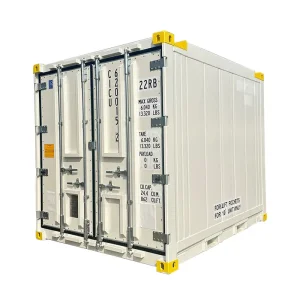
Direct supply from state-certified manufacturing yards in Tianjin and Suzhou with global multimodal certification.
How global trade lane shifts, perishables cold chain compliance, and specialized industrial containment dictate modern intermodal fleet procurement.
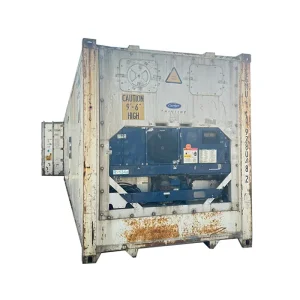
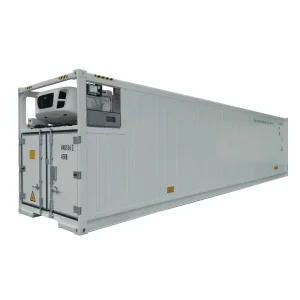
In the era of hyper-synchronized global supply chains, the standard 40 Ft High Cube Refrigerated Container (40ft HC Reefer) represents the supreme workhorse of cross-border perishable trade, biopharmaceutical distribution, and precision industrial storage. As international trading routes evolve across transpacific, transatlantic, and inland trans-Eurasian corridors, procurement directors are navigating unprecedented demands for thermal consistency, energy conservation, and carbon lifecycle minimization. Modern fleets can no longer rely on standardized assembly-line conversions; they necessitate precision OEM builds engineered from the chassis up to resist severe open-ocean lashing, saline fog degradation, and sub-zero structural fatigue.
A rigorous review of corten metallurgy, closed-cell polyurethane formulation, and T-bar aerodynamic fluid dynamics.
Fabricated with atmospheric-corrosion-resistant SPA-H steel alloy. Corner castings, sill plates, and end headers undergo precision automated submerged-arc welding to sustain dynamic racking strains exceeding 150 kN during multi-tier container ship stacking.
The insulated core utilizes zero-ODP, ultra-low GWP high-density polyurethane foam injected at high pressure. Eliminates thermal bridges along structural mullions, preventing condensation formation and minimizing power consumption on diesel gensets.
Equipped with deep extruded aluminum T-section flooring engineered to handle 7,260 kg forklift axle test loads (ISO 1496-1). The duct system maintains continuous laminar air circulation beneath stowed pallets, preventing warm pocket accumulation.
Standard architectural parameters for CIMIC OEM 40 Ft High Cube vs Standard 20 Ft and Specialized Intermodal Builds.
| Specification Parameter | 40 Ft High Cube (40HC) Reefer | 20 Ft Standard Reefer | 40 Ft Deep-Freeze (-60°C Super-Freezer) | 45 Ft Belt & Road Intermodal Reefer |
|---|---|---|---|---|
| External Length | 12,192 mm (40' 0") | 6,058 mm (19' 10.5") | 12,192 mm (40' 0") | 13,716 mm (45' 0") |
| External Height | 2,896 mm (9' 6") | 2,591 mm (8' 6") | 2,896 mm (9' 6") | 2,896 mm (9' 6") |
| Internal Cargo Capacity | 67.7 m³ (2,390 cu.ft) | 28.3 m³ (1,000 cu.ft) | 62.4 m³ (2,203 cu.ft) | 84.2 m³ (2,973 cu.ft) |
| Tare Weight (inc. unit) | 4,480 kg ± 2% | 3,020 kg ± 2% | 4,920 kg ± 2% | 5,350 kg ± 2% |
| Max Payload Capacity | 29,520 kg | 27,460 kg | 29,080 kg | 28,650 kg |
| Refrigeration Machinery Options | Carrier PrimELINE / Thermo King Magnum+ / Daikin LXE | Carrier / Daikin / Thermo King | Thermo King SuperFreezer Cascade | Dual-circuit Hybrid Electric / Diesel Gen |
| Power Operational Input | 380V/460V 3-Phase 50/60Hz ±10% | 380V/460V 3-Phase 50/60Hz | 440V 3-Phase 60Hz / High Current | 380V/460V + Auxiliary Under-mount Clip-on |
| Compliance Approvals | BV, ISO 1496-2, CSC, ATP Class FRC | BV, ISO, CSC, TIR | BV, DNV-GL, ATP Super-Freeze | UIC 592, ISO, CSC, CCC China Rail |
Transforming static storage enclosures into intelligent, automated biophysical climate centers.
Equipped with automated nitrogen-flushing, CO2 absorption scrubbing, and continuous O2 level regulation (e.g., Carrier EverFRESH or Daikin Active CA). By slowing post-harvest respiration rates, perishable shelf life is prolonged up to 300% across extended transoceanic routes.
Autonomous two-way IoT modules transmit compressor head pressure, evaporator coil temperature, defrost frequency, and door open/close timestamps. Automated alerts instantly notify dispatchers of power disruption, enabling rapid intervention before product degradation occurs.
Built-in multi-point temperature probes adhere strictly to USDA Animal and Plant Health Inspection Service (APHIS) mandates. Ensures chemical-free eradication of fruit fly larvae through continuous core pulp temperature management over predetermined quarantine days.
How regulatory shifts, natural refrigerants, and AI-driven thermal optimization are shaping the next decade of container manufacturing.
With the Kigali Amendment and EU F-Gas regulations phasing out high-GWP HFCs like R-404A and R-134a, CIMIC’s OEM pipeline integrates transcritical CO2 (R-744, GWP=1) closed-loop circuits. This delivers zero ozone depletion potential and insulation longevity without fluorinated environmental hazards.
Combining nanostructured silica core VIPs alongside traditional polyurethane foam walls. This hybrid structural layout cuts total wall thickness from 75mm to 45mm, adding over 3.2 cubic meters of internal revenue space per 40ft box while preserving lower overall thermal conductivity.
Edge-computing algorithmic control boards dynamically calculate frost accumulation via air pressure differentials and evaporator load factors. Eliminates static periodic defrost cycles, preventing temperature spikes and saving hundreds of kilowatt-hours annually per unit.
Every refrigerated unit leaves the port-proximate facilities under stringently audited marine quality protocols.
Engineered for road, rail, ocean, and offshore operations. Browse our certified heavy-duty production units.
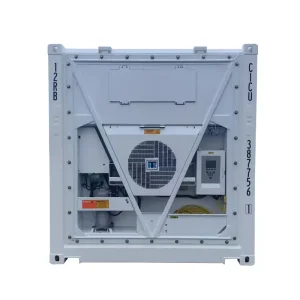
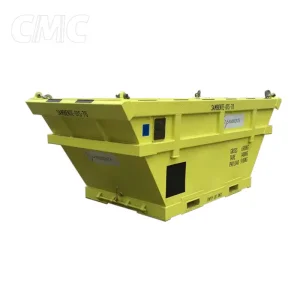
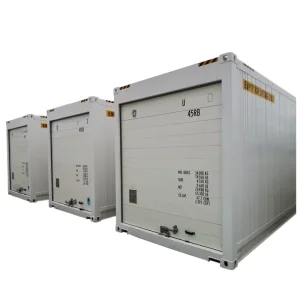
Comprehensive technical and commercial guidance directly from our factory engineering team.
Our manufacturing facilities utilize high-pressure cyclic automated polyurethane injection systems. Structural members like vertical mullions and roof purlins are equipped with thermal-break PVC barriers to insulate the exterior Corten steel shell from the interior SUS 304 food-grade stainless steel panels. Every production batch undergoes automated thermal conductivity chamber assessments to confirm a continuous K-value of ≤ 0.38 W/m²K, exceeding stringent ATP Class FRC certification requirements.
CIMIC holds strategic OEM integration partnerships with Carrier Transicold (PrimELINE, ThinLINE), Thermo King (Magnum+, SuperFreezer cascade), Daikin (Zestia, LXE series), and Starcool. Machinery selection can be matched to your regional service contractor availability, spare part inventory, and duty profile. Units are fully integrated and wired to 380V/460V 3-phase 50/60Hz dual-frequency standards before delivery.
For standard catalog 40ft HC and 20ft reefers, our minimum order quantity is 1 unit for in-stock equipment, and batches of 4 to 10 units for custom brandings (specific RAL exterior colors, corporate decaling, custom interior shelving, or butcher doors). Dedicated production line runs (50+ units) typically hold an ex-factory lead time of 25 to 35 calendar days from signed technical drawing sign-off.
Yes. We engineer and supply both front-mount clip-on gensets and chassis-mounted underslung diesel generator units powered by Tier 4 / Stage V compliant engines (Kubota, Yanmar). These units supply 460V 3-phase continuous power with 15kW to 18kW electrical output, featuring 120-gallon fuel tanks delivering over 72 hours of uninterrupted autonomous operation along long-distance rail or highway transits.
Every unit manufactured or refurbished at our Tianjin and Suzhou yards undergoes a mandatory, automated 2-hour computerized PTI run. The inspection assesses compressor compression efficiency, TXV expansion valve modulation, defrost heating coil integrity, insulation vacuum tightness, and phase-inversion safety trips. A formal Bureau Veritas (BV) certificate and computerized PTI diagnostic report accompany the export documentation package.
Under normal marine and intermodal operational cycles, a CIMIC OEM reefer has an operational life expectancy exceeding 15 to 20 years. This durability is achieved through our high-tensile SPA-H alloy framing, thick anti-corrosive multi-coat zinc epoxy base coatings, high-grade 304 food-grade stainless steel cargo interiors, and reinforced corner castings capable of sustaining heavy 9-tier vessel cell-guide stacking.
Yes. Standard side-open or roll-up doors frequently cause structural weakness in standard boxes; however, CIMIC re-engineers the roof headers, bottom rails, and corner posts with reinforced heavy-wall tubular steel. These modifications undergo comprehensive FEA (Finite Element Analysis) and physical strain gauge tests to verify that full ISO transverse racking and longitudinal deflection standards are met, with valid CSC certificates issued for ocean transit.
Our production bases in Tianjin and Suzhou sit approximately 100 kilometers from two of the world's most active deepwater container terminals (Port of Tianjin and Port of Shanghai/Taicang). We arrange direct gate-in, CSC customs export filings, and one-way cargo lease positioning (Cabotage / One-Way Load) to minimize deadhead repositioning costs, delivering landed units to Europe, the Americas, Africa, and Australia with optimal freight economy.