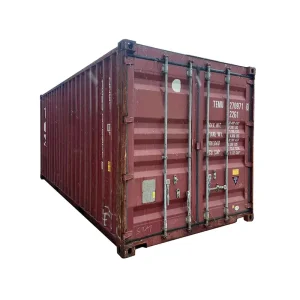
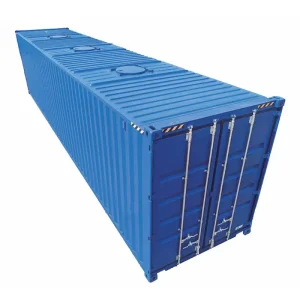
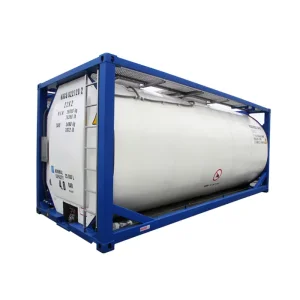
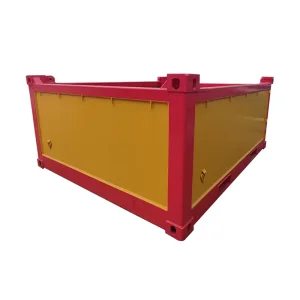
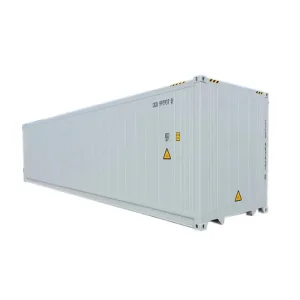
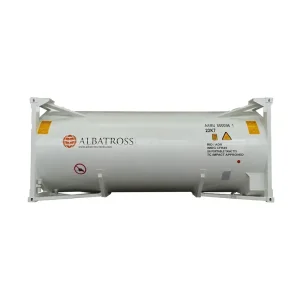
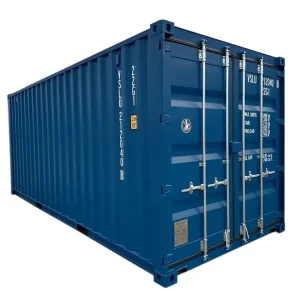
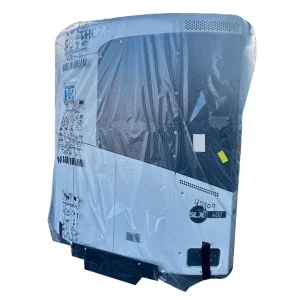
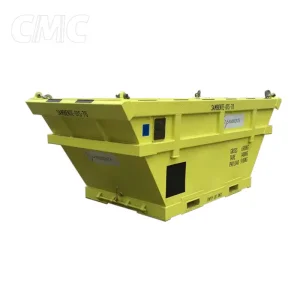
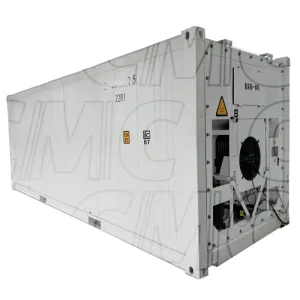
Explore production units engineered for complex industrial apertures, bulk freight, offshore lifting, and cryogenic transport.
A deep dive into how modified openings impact ISO 1496 transverse racking resistance and corner casting load distribution.
In standard intermodal logistics, the structural integrity of an ISO container relies entirely on a closed monocoque corrugated steel envelope working in synergy with four vertical corner posts, longitudinal bottom rails, and top headers. Corten-A steel side panels (typically 1.6mm to 2.0mm thick) serve not merely as weather seals, but as shear walls capable of absorbing longitudinal braking forces, dynamic wave slams in maritime conditions, and 9-high corner stacking pressures exceeding 86,400 kg per post.
When engineering custom apertures—whether for side-opening access doors, continuous modular glazed openings, industrial HVAC pass-throughs, or heavy machinery maintenance hatches—the native structural equilibrium is completely interrupted. The removal of corrugated steel creates a stress discontinuity zone, which severely reduces the module’s transverse racking stiffness. Without calculated structural re-engineering, an aperture-modified container exposed to sea transit or intermodal rail will inevitably warp, seize its door gaskets, and fail ISO CSC (International Convention for Safe Containers) safety certifications.
Factory Reinforcement Rule: Any opening exceeding 1,200mm in length requires continuous RHS (Rectangular Hollow Section) peripheral lintel framing tied directly into the upper and lower load-bearing rails to eliminate sagging moments and redistribute vertical loads around the void.
At our manufacturing facility, finite element analysis (FEA) is deployed before raw cutting commences. Our engineering teams calculate the specific bending moments and shear deformation coefficients based on intended static payload (gross weight) and operational environment. Welded steel boxing surrounds each custom opening, utilizing structural tubing (100x50x4.5mm or heavy c-channel) tied into the primary corner posts to recreate the required tensile rigidity without compromising internal volumetric efficiency.
Structural recalculation ensures every side or roof aperture retains the ability to withstand dynamic 2.0G longitudinal deceleration and corner post compressive limits.
Custom welded extruded subframes with vulcanized EPDM dual-lip continuous rubber gaskets ensure high ingress protection (IP56/IP67) against extreme maritime salt mist.
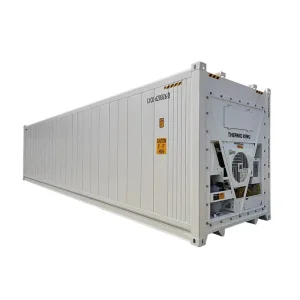
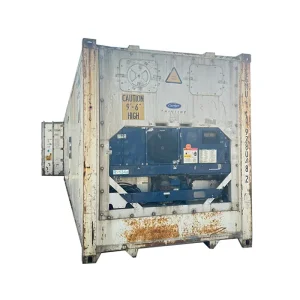
Specially designed polyurethane thermal breaks incorporated into cold-chain aperture frames eliminate condensation loops and uphold reefer energy conservation benchmarks.
China manufactures over 90% of global marine cargo containers. This hyper-concentrated manufacturing cluster unlocks unique capital expenditure, engineering, and logistics advantages.
Immediate proximity to domestic tier-1 steel mills provides direct mill-run procurement of SPA-H / Corten-A weathering steel, reducing material latency and intermediate markup.
High-power 20kW fiber laser cutters and multi-axis CNC press brakes ensure that portal frame apertures are cut to sub-millimeter tolerances for robotic continuous welding.
Every ancillary component—from ISO corner castings and heavy-duty locking bars to specialized EPDM multi-lip extrusions—is sourced within a 50km industrial perimeter.
Located strategically within 100km of primary international seaports (Tianjin & Ningbo/Shanghai clusters), minimizing domestic pre-carriage drayage costs.
Engineered apertures transform rigid ocean freight containers into high-value mission-critical equipment housings worldwide.
Precision laser cutouts with integrated motorized louvers, explosion-relief roof hatches, and cable pass-through gland plates designed for utility-scale battery storage and mobile generators.
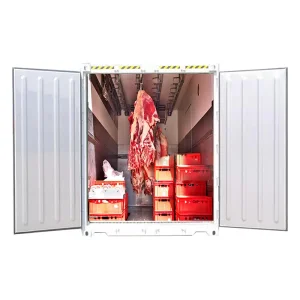
Multi-door side access and rapid roller-shutter apertures that optimize dock turnaround times, preserving cold air curtains for high-throughput perishables, dairy, and pharmaceuticals.
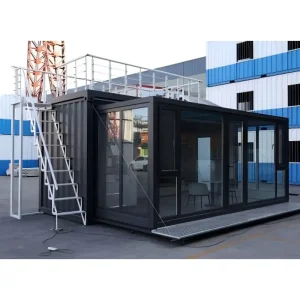
Structural framing pre-engineered for architectural glazing, multi-unit interconnect breezeways, blast-resistant access, and expandable container housing modules with instant bathroom utilities.
Top roof loading hatch installations and bottom hopper cutouts with pneumatically actuated slide gates for agricultural grain, plastic pellets, and chemical catalysts.
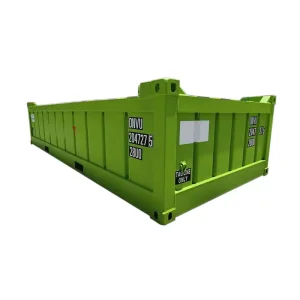
Low-profile half-height and open-top side apertures compliant with DNV 2.7-1 / EN 12079 dynamic shock criteria, built specifically for harsh subsea lifting operations.
Bespoke side-curtain aperture configurations and roll-up doors that streamline vehicle loading, drive-through racking, and multi-tier containerized logistics.
Understanding cost composition factors ensures commercial clarity when issuing RFQs for modified intermodal containers.
Receiving an accurate quotation for OEM container modifications requires understanding the cost trade-offs between "post-production modification" and "line-built bespoke engineering." For small order quantities (1 to 5 units), factories typically source standard certified one-trip containers and perform laser cut-and-weld structural refitting in a customized clean shop. For larger volumes (10+ units), cost efficiency improves dramatically by integrating apertures, door headers, and reinforced lintels directly onto the high-speed continuous assembly line prior to shot-blasting and multi-stage zinc coating.
Quotes reflect the use of authenticated SPA-H Corten steel versus standard Q235 carbon steel. Corten delivers the atmospheric corrosion resistance required for maritime ocean crossings.
Specifying 304 or 316 stainless steel hardware, anti-rattle nylon bushings, and multi-lip vulcanized EPDM seals influences both pricing and longevity in corrosive coastal locations.
Heavy industrial coating configurations (Zinc-rich primer + Epoxy intermediate + Polyurethane topcoat totaling ≥ 120μm DFT) maintain long warranty cycles against surface chalking and rust.
When requesting quotes, engineering procurement managers must provide: (a) aperture dimension layout relative to corner castings, (b) total payload and racking requirements, (c) surface treatment and operational temperature thresholds (-40°C to +70°C), and (d) third-party inspection preferences (Bureau Veritas, ABS, or DNV-GL).
Direct technical responses addressing certification, structural integrity, and international logistics.
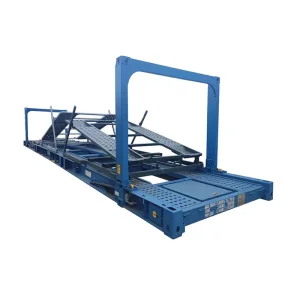
Discover high-capacity reefers, mobile generator trailer units, car carriers, and heavy offshore baskets.