
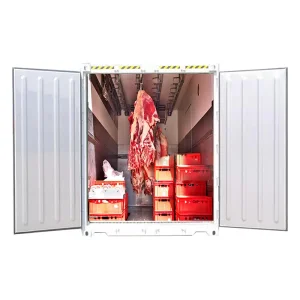
Heavy-duty freight modules engineered for international maritime standards, intermodal cryogenic handling, and specialized agricultural low-temperature transport networks.
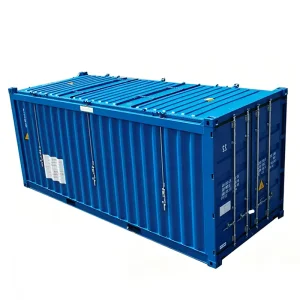
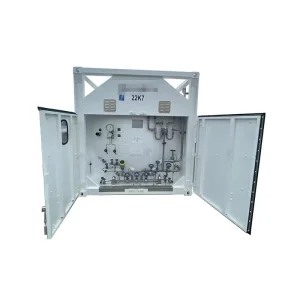
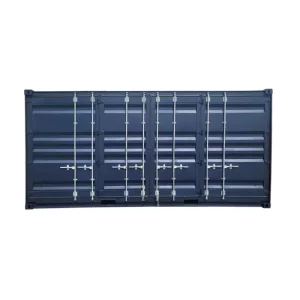
Strategic supply chain reconfiguration, industrial fleet decarbonization, and the rising global demand for custom-engineered structural solutions.
The contemporary maritime and intermodal shipping industry is undergoing a systemic structural transformation. What was once characterized by the mass deployment of uniform twenty-foot equivalent units (TEUs) has now pivoted toward application-specific, highly customized OEM and ODM container architecture. Accelerated by complex cross-border logistical disruptions, geopolitical realignments, and rigorous international decarbonization targets under the International Maritime Organization (IMO 2030/2050 regulations), modern freight operations necessitate containers that maximize payload yield, reduce parasitic tare weight, and offer verifiable thermal and structural performance.
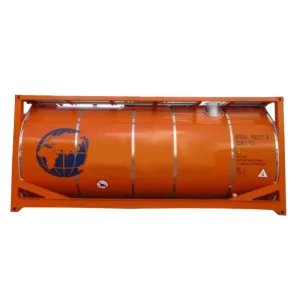
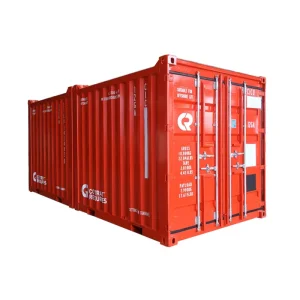
In this dynamic landscape, an OEM container factory is no longer merely a steel fabrication depot. Instead, leading facilities function as comprehensive research, engineering, and manufacturing epicenters. Modern industrial freight projects demand specialized platforms: from T75 cryogenic tanks engineered to convey liquefied natural gas (LNG) and argon under strict thermodynamic stability, to specialized hanging meat reefers that feature dynamic stainless-steel suspension systems for cold-chain food safety, and hard open-top modules that permit overhead crane loading for dense industrial machinery and raw extractives.
OEM manufacturing focuses on Corten-A steel formulations, delivering passive oxidation barriers that resist extreme salinity, mechanical racking, and cyclonic dynamic loads across deep-sea voyages.
By tailoring dimensional tolerances, floor coatings (such as bamboo composite or food-grade stainless steel), and insulation matrices, OEM designs slash operational repair cycles by up to 34% over a 15-year lifecycle.
Full compliance with ISO 668, ISO 1496-1, and UIC 592 ensures instant transitions between rail bogies, deep-sea container vessels, skeletal semi-trailers, and inland automated terminals without secondary handling.
From robotic submerged arc welding to zinc-rich anti-corrosion barrier chemistry: An inside look at technical container production.
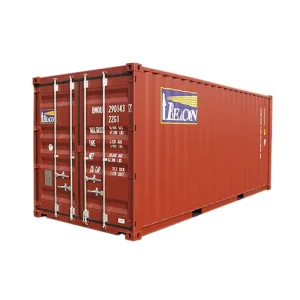
The manufacturing architecture of an export-grade ISO shipping container represents a masterclass in structural mechanics and cost-optimized metallurgical engineering. Each structural component must be balanced against tare weight limitations while maintaining the capability to withstand a 9-high static stacking test (192,000 kg total gross load) at the four corner castings, representing the severe stresses encountered on modern 24,000-TEU ultra-large container vessels (ULCVs).
High-strength low-alloy (HSLA) weathering steel with copper, chromium, and nickel inclusions forms a self-regenerating adherent oxide layer, reducing atmospheric corrosion rates by up to 80% compared to mild carbon steels.
Fabricated strictly according to ISO 1161 from cast steel (grade SCW480 or equivalent). Corner posts feature cold-formed profiles with yield strengths exceeding 345 MPa to resist dynamic racking shear forces.
Automated continuous seam welding across corrugated wall panels, header rails, and crossmembers eliminates localized embrittlement, ensuring absolute hermetic air/watertightness under dynamic flexing.
Shot blasting to Sa 2.5 profile followed immediately by a zinc-rich epoxy primer (30μm), epoxy intermediate tie-coat (40μm), and UV-resistant aliphatic acrylic polyurethane topcoat (50μm) for 15-year marine longevity.
| Component Assembly | Material Specification | Yield Strength / Performance | Manufacturing & Testing Benchmark |
|---|---|---|---|
| Structural Corner Posts | SPA-H / SM490YA Corten Steel | ≥ 345 - 365 MPa | ISO 1496-1 Stacking Test (848 kN per post) |
| Corner Castings (8x) | Cast Steel SCW480 (Weldable Grade) | Tensile ≥ 480 MPa, Charpy V-Notch ≥ 27J @ -20°C | ISO 1161, BV & ABS Class Type Approved |
| Side/Front Corrugated Panels | SPA-H Cold Rolled Corten (1.6mm - 2.0mm) | Corrugation depth: 36mm / pitch: 278mm | ISO 1496-1 Internal Transverse Strength (0.6P) |
| Crossmembers & Forklift Pockets | Hot Rolled High-Tensile Channel (4.0mm - 4.5mm) | Floor support limit: 7,260 kg axle load test | ISO 1496-1 Floor Strength (Steel wheel vehicle run) |
| Floor Decking Options | 28mm Keruing Hardwood / Bamboo Composite / Steel | Fumigated per Australian Quarantine (AQIS) | Moisture content verified < 14%, multi-ply laminated |
| Perimeter Door Gaskets | EPDM Dual-Lip Extrusion with Neoprene Core | Operating Temp: -40°C to +80°C | TIR Approved, Watertight at 200 kPa waterjet test |
From arctic extraction sites to equatorial transit hubs: How modular container platforms solve distinct geographical challenges.
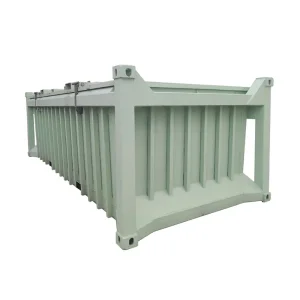
Offshore half-height ore bins and DNV certified modules designed with low-temperature impact tested steel (impact toughness down to -40°C). These units resist brittle fracture during dynamic lifting in Norwegian offshore fields and northern Canadian open-pit diamond and iron extraction mines.
Integrated reefer setups engineered with high-density polyurethane (PU) foaming (blowing agent cyclopentane) and Daikin/Carrier dual-circuit machinery. These systems maintain critical fruit and seafood cargo between -30°C and +15°C through high ambient humidity and solar radiant thermal absorption.
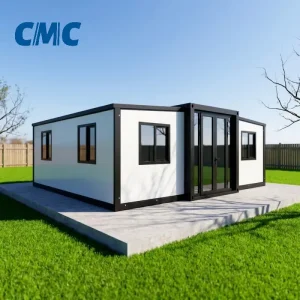
High-cube expandable modular buildings fitted with factory-installed rockwool insulation, integrated plumbing channels, and structural window cutouts engineered to preserve moment-frame stability. Ideal for rapid disaster relief housing, off-grid command stations, and commercial pop-ups.
Bespoke 20ft and 40ft custom enclosures designed specifically for utility-scale lithium-ion battery integration. Fitted with NFPA 68 explosion venting, fire-rated bulkheads (A60 fire class), structural HVAC mounting ducts, and heavy-duty reinforced underfloors designed to bear 35+ tons of static energy rack payloads.
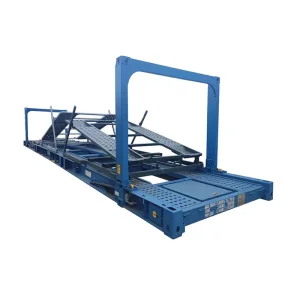
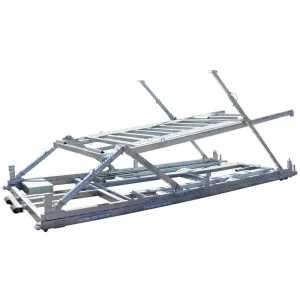
Engineered 40ft and 53ft ultra-cube car transport containers equipped with hydraulic ramp cassettes and adjustable wheel chock anchoring systems. Facilitates the secure intermodal delivery of completely built-up (CBU) electric vehicles without damage from chassis vibration or tie-down failures.
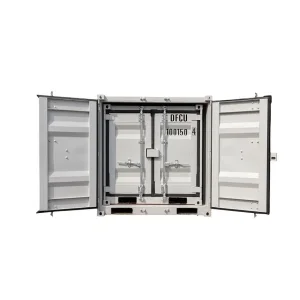
Engineered nesting fleets ranging from 4ft through 12ft modules that nest inside standard 20ft/40ft containers for ocean export. Upon arrival in domestic European, Australian, or US self-storage markets, they are deployed as flexible job-site secure storage boxes, minimizing empty repositioning sea-freight costs.
How localized industrial clustering, direct blast-furnace integration, and port-adjacent yards deliver speed, scale, and cost reliability.
The manufacturing supremacy of China in the intermodal container sector—accounting for over 90% of global output—is underpinned by an unparalleled vertical supply chain ecosystem. At our primary production campuses situated in the Tianjin Economic-Technological Development Area (TEDA) and the Suzhou Industrial Corridor, our facilities operate within a 100-kilometer radius of two of the world's most advanced deepwater maritime hubs: Port of Tianjin and Port of Shanghai/Taicang.
This geographic positioning yields decisive competitive advantages for international fleet buyers, engineering EPC contractors, and leasing syndicates:
Raw coil contracts direct from Tier-1 domestic steel giants (such as Baosteel and Ansteel) eliminate intermediate inventory surcharges. In-house decoiling, shot-blasting, and stamping presses operate seamlessly without supply bottlenecks.
Finished new containers are loaded with export dry cargo for their maiden voyage from Chinese base ports to North American, European, or Australasian ports, effectively neutralizing outbound container relocation repositioning freight costs.
Automated robotic stamping and multi-head plasma cutting lines reduce bespoke OEM tooling turnaround from industry averages of 12 weeks down to 18-24 business days from 3D CAD sign-off to full physical prototype fabrication.
IoT telemetry integration, vacuum insulation panels (VIP), waterborne paint formulations, and circular modularity.
Complete migration to low-VOC waterborne paint formulas across all lines. Standard factory fitment of autonomous GPS/LoRa sensor nodes tracking temperature, door openings, shocks, and geofence locations.
Integration of thin-profile aerogel and vacuum insulated panels (VIP) into refrigerated side walls, improving internal cargo cubic capacity by 4.2% while slashing refrigeration power draw by 18%.
Pilot procurement of hydrogen direct-reduced iron (H2-DRI) green Corten steel, slashing embedded Scope 3 carbon footprint by over 60% per unit to satisfy incoming EU Carbon Border Adjustment Mechanism (CBAM) rules.
Electrically actuated twistlock mechanisms and real-time internal load balancing telemetry tailored for autonomous automated straddle carriers and self-navigating electric feeder ships.
Rigorous multi-stage witness testing regimes guaranteeing seaworthiness, customs compliance, and structural certification.
A shipping container is governed by strict international maritime treaties and safety statutes. Deploying non-certified or sub-standard equipment exposes logistics operators to devastating cargo losses, carrier rejections, and legal non-compliance penalties under port state controls. Every container manufactured under our OEM brand undergoes rigorous classification and compliance verification before departing the factory apron:
Each unit is fitted with a stainless-steel CSC Safety Approval Plate recording maximum gross weight, allowable stacking weight (192,000 kg), racking test values, and metallurgical inspection dates per IMO requirements.
Third-party surveyor witness testing on prototype batches: Bureau Veritas (BV) for general shipping ISO lines, DNV 2.7-1 / EN 12079 for dynamic offshore lift units, and ASME Section VIII / IMDG Code for T75 cryogenic tanks.
Constructed in strict accordance with the Customs Convention on the International Transport of Goods Under Cover of TIR Carnets. Security door hinges, tamper-evident seals, and rivet heads are shielded from unauthorized removal from outside.
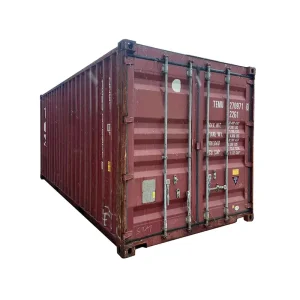
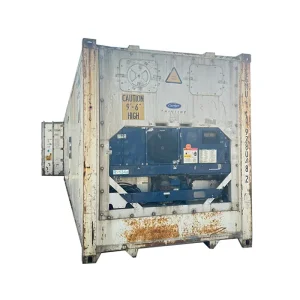
Offshore exploration frames, specialized automobile freight systems, high-cube cold storage rooms, and refurbished intermodal assets.
Detailed answers addressing engineering customization, classification approval, material provenance, and logistical deployment.
Standard ISO containers are engineered for general dry palletized cargo according to fixed dimensional envelopes (20ft GP, 40ft GP, 40ft HC). Bespoke OEM containers retain the external ISO corner casting dimensions and structural stackability (ISO 1496-1) but re-engineer internal structural framing, wall thickness, door openings, and floor load capacities to suit specialized mission profiles.
Examples include side-open configurations for loading oversized cargo, floor reinforcements up to 10,000 kg axle loads, high-grade stainless steel hanging rails for chilled meat transport, and customized apertures for energy storage (BESS) HVAC and exhaust systems.
Corten-A (designated as SPA-H under Japanese JIS G3125 standards) contains specific metallurgical additions of copper (Cu), chromium (Cr), and nickel (Ni). Unlike standard mild carbon steels which continually flake rust until structural failure occurs, Corten steel forms a dense, adherent amorphous phosphate patina layer when exposed to cycling wet/dry maritime atmospheres.
This barrier seals the base metal against dissolved chlorides and oxygen, extending service life across heavy-salinity oceanic routes beyond 15-20 years with minimal plate thinning.
All factory-manufactured containers are built under direct survey supervision from internationally recognized IACS (International Association of Classification Societies) members. Standard units carry Bureau Veritas (BV), American Bureau of Shipping (ABS), or China Classification Society (CCS) certification.
Specialized offshore units comply fully with DNV Standard for Certification 2.7-1 (Offshore Containers) and EN 12079, including low-temperature Charpy V-notch impact toughness testing down to -20°C or -40°C. Cryogenic liquid tank containers comply with ASME Section VIII Div 1, IMDG Code, ADR/RID, and USDOT approvals.
For standard ISO dry boxes and mainstream reefer units, flexible order volumes can be accommodated based on inventory buffers in Tianjin and Suzhou. For bespoke OEM/ODM engineering builds (such as custom side-door configurations, mini-storage nested bins, or BESS enclosures):
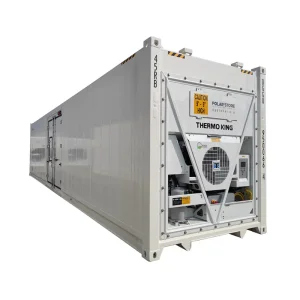
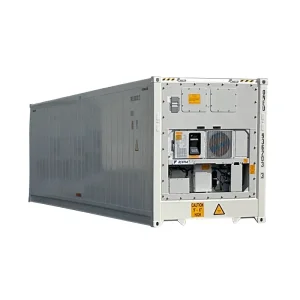
Our OEM refrigerated containers are engineered with high-efficiency polyurethane foam high-pressure injected into all wall, ceiling, and floor cavities at a nominal density of 40-42 kg/m³. Combined with stainless-steel interior lining (SUS 304 food-grade) and aluminum extruded T-floor ducting, the overall thermal dissipation (overall heat transfer coefficient or K-value) is maintained below 0.38 W/m²K.
Equipped with Tier-1 active refrigeration machinery from Daikin, Thermo King, or Carrier Transicold, the units maintain setpoint temperatures between -30°C and +30°C in equatorial ambient environments reaching up to +50°C external solar exposure.
To prevent costly "empty positioning" ocean freight fees, our factory offers three strategic logistics pathways: