Engineered for offshore exploration, multimodal freight routes, cold-chain temperature locking, and bulk raw commodity transport. Complete with classification society inspections.
China’s advanced container manufacturing ecosystem is not merely about raw labor—it is a deeply integrated, high-precision industrial cluster. Situated within 100 kilometers of the world-class deep-water ports of Tianjin and Suzhou, our manufacturing hubs optimize production cadence, material integrity, and export logistics.
Direct upstream integration with premier domestic metallurgy mills allows continuous provisioning of authentic SPA-H corrosion-resistant Corten steel. This metallurgical base forms an atmospheric passivation layer that resists severe marine salt spray and extreme thermal cycles.
Our core industrial bases in Tianjin and Suzhou are linked by express industrial corridors directly to container berths. This proximate access reduces overland transit damages, eliminates third-party staging delays, and enables real-time vessel booking flexibility for FOB, CIF, or DDP terms.
Equipped with 1000-ton hydraulic presses, automated continuous seam-welding gantry arms, and enclosed blast-and-paint robotic halls, our factories ensure identical structural rigidity, micro-toleranced corner fittings (ISO 1161), and micron-level paint film consistency across volume runs.
A container is only as viable as its legal operational authorization. We guarantee strict alignment with transnational maritime, railway, and petroleum safety jurisdictions, eliminating costly port detentions and project validation friction.
Every batch undergoes witnessed testing by Bureau Veritas or China Classification Society inspectors. Tensile resistance, racking, stacking tests (up to 216,000 kg), and weather tightness are certified with permanent CSC plates affixed directly to unit doors.
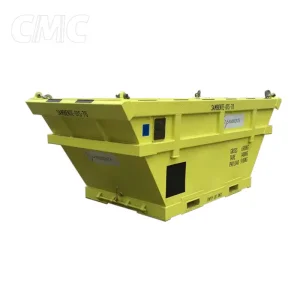
Offshore silt baskets, tool carriers, and open-top units meet exacting dynamic lifting parameters. Fully documented material traceabilities, NDT weld inspections (charpy impact tested at -20°C), and dedicated certified pad-eyes ensure offshore platform approval.
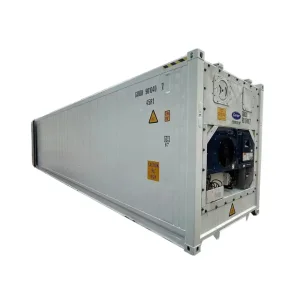
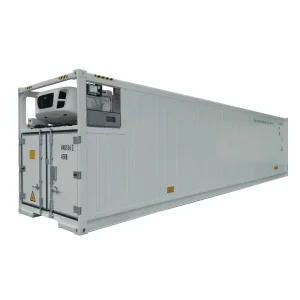
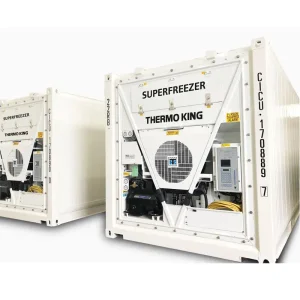
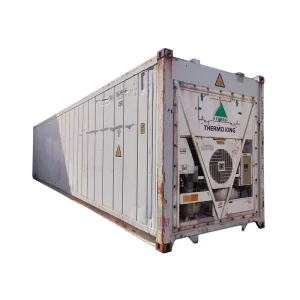
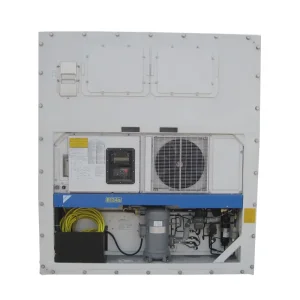
Our active cold-chain reefer builds integrate standardized Tier-1 machinery: Carrier Transicold, Daikin, and Thermo King. This provides multinational procurement officers instant access to OEM genuine components, factory firmware, and local certified technician support globally.
A direct technical reference comparison outlining material configurations, operational payloads, and thermodynamic capabilities across core container architecture lines.
| Architecture Class | Material & Framing Spec | Operating Payload | Thermodynamic / Environmental Control | Target Compliance |
|---|---|---|---|---|
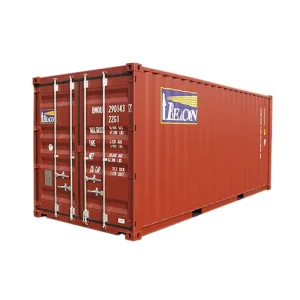
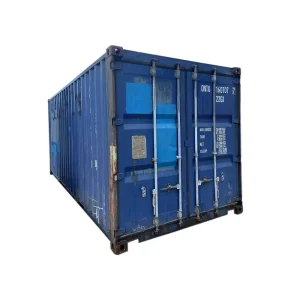
| 40ft High-Cube Dry Cargo | Corten SPA-H steel; 28mm Apitong marine-grade plywood | Up to 28,500 kg (Payload) / 32,500 kg (MGW) | Passive ventilation louvers; optional desiccants | ISO 1496-1, CSC, TIR, UIC |
| 40ft HC Precision Reefer | SUS304 inner liner, MGSS outer panels, Polyurethane foam | 29,400 kg max; usable cube approx 67.5 m³ | Carrier / Daikin / Thermo King (-35°C to +30°C) | ISO 1496-2, ATP certification, BV |
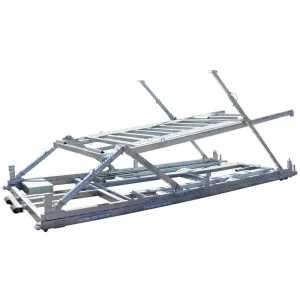
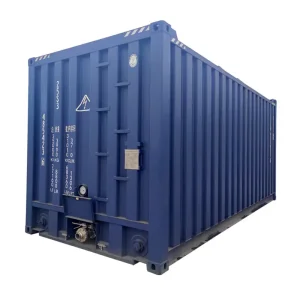
| 20ft Offshore Silt Basket | High-yield structural hollow section steel, anti-slip grid base | 10,000 kg – 15,000 kg dynamic gross load | Open drainage matrix, extreme sea salinity resistance | DNVGL-ST-E271 (DNV 2.7-1), EN 12079 |
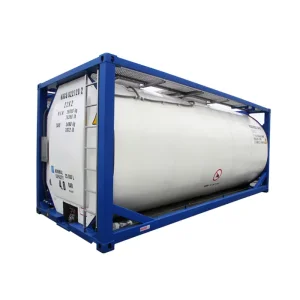
| 20ft ISO Chemical Tank | 316L Stainless steel pressure vessel with Q345-D frame | 17,500L – 26,000L volumetric liquid capacity | External steam coils or electric glycol trace heating | IMDG (T11/T14), ADR/RID, ASME Sec VIII |
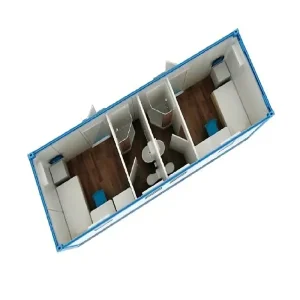
| Modular Accommodation | Galvanized cold-formed light steel, rockwool sandwich panel | Internal floor loading engineered to 2.5–3.0 kN/m² | Integrated HVAC splits, thermal break windows, Class-A fire | CE, IBC (International Building Code) |
Driven by net-zero maritime mandates, IoT asset visibility demands, and non-standard logistics payloads, modern shipping enclosures are transforming from passive steel boxes into intelligent transport nodes.
Fleet owners require end-to-end visibility. Modern reefers integrate 5G/satellite IoT transceivers monitoring real-time reefer unit status, supply air temperatures, internal oxygen/CO₂ balance (Controlled Atmosphere), and shock/vibration alerts during intermodal swaps.
With the phasedown of high-GWP refrigerants under the Kigali Amendment, CIMIC’s reefer production is transitioning to R-513A and natural CO₂ (R-744) refrigerants. These configurations achieve superior coefficient of performance (COP) and near-zero ozone depletion potential.
Standard containers are now the foundational building blocks for Battery Energy Storage Systems (BESS), mobile hydrogen electrolysis, and edge computing enclosures. Our structural factory lines accommodate heavy base reinforcements, blast-relief venting, and tailored thermal barriers.
Each transit mode imparts unique g-forces, marine salt exposure, and mechanical stress. Our container bodies are purpose-built to maintain structural resilience across varied logistical networks.
Engineered to handle dynamic 9-high container vessel stacking. Heavy-duty corner posts withstand downward compressive forces up to 848 kN per post during severe sea-state rolling motions.
Custom 40ft HC & 45ft rail enclosures built for the "Belt and Road" express lines. Reinforced sub-floor crossmembers resist continuous axial rail shunting impacts across cold-climate tundra.
Supplying heavy-duty offshore silt baskets and equipment pods to oil rigs in the North Sea, Gulf of Mexico, and West Africa. Certified pad eyes and slings facilitate crane deployment in rough swells.
Providing self-contained, insulated modular accommodation shelters, containerized diesel generator enclosures, and roll-up door maintenance stations to remote resources operations.
A systematic 4-phase delivery protocol ensures structural reliability, exact architectural tailoring, and full conformity to third-party shipping rules.
Translating project-specific payloads, access-door geometries, internal racking layouts, and environmental load factors into CAD & FEA models.
CNC laser profiling, robotic plasma beveling of Corten steel frames, automatic profile stamping, and zinc-rich primer pre-treatment.
Certified AWS/EN welders apply continuous robotic submerged-arc seams. Double EPDM compression door gaskets undergo high-pressure hydraulic wash checks.
Bureau Veritas, ABS, or CCS inspectors witness structural proof loads and PTI testing on cold machinery before issuing maritime CSC documentation.
Specialist configurations including soft open-top tarpaulins, roll-up shutter access, fluid tank containers, and deep-freeze blast systems ready for immediate deployment.



Direct operational and technical clarifications addressing procurement protocols, compliance, customs clearances, and custom fabrication specs.
All structural models are developed using finite element analysis (FEA) and built using heavy-gauge SPA-H Corten steel. Corner castings comply with ISO 1161, and our dry/reefer builds are proof-tested for 9-high stacking under Bureau Veritas (BV), ABS, or CCS inspection. A CSC plate is permanently attached to ensure full acceptance by international ocean shipping lines and port container terminals.
Standard ISO dry boxes and inspected used inventory are available immediately for dispatch from our yards near Tianjin and Suzhou ports. Custom engineering configurations—such as open-top tarpaulins, insulated wall additions, roll-up shutter access, or offshore silt baskets—typically run a 25 to 45-day fabrication schedule from final CAD approval. Minimum order quantities depend on customization complexity: standard prototypes can be ordered as single units, whereas bespoke press-formed profiles typically require a 2 to 4 unit pilot batch.
We install active refrigeration units from Carrier Transicold (e.g., ThinLINE, PrimeLINE), Daikin (e.g., LXE series), and Thermo King (e.g., Magnum Plus). Because these are standard tier-1 international brands, equipment owners can access local parts inventories, warranty programs, and certified technicians in more than 100 commercial ports worldwide. Every reefer also completes a pre-trip inspection (PTI) before vessel loading.
Offshore containers and silt baskets ship with a complete manufacturer's data report (MDR). This file includes mill test certificates (MTC) proving steel chemistry and Charpy impact values at -20°C, non-destructive testing (NDT/MPI) records for structural welds, lifting sling pull-test certificates, and formal third-party type approval certificates from DNV or Lloyd’s Register.
Containers can be supplied empty or arranged as Shipper Owned Containers (SOC). Under SOC terms, buyers can pack export cargo directly inside our units at the factory gate or staging terminal, offsetting empty repositioning fees on ocean shipping legs. We supply complete commercial invoices, packing lists, export declaration manifests, CSC inspection certificates, and certificates of origin (COO) to facilitate smooth customs processing across destination ports in North America, Europe, Africa, Australia, and the Middle East.
