Explore our frontline dry freight, insulated, cryogenic, and modular conex platforms built to exacting international maritime safety and load-bearing parameters.
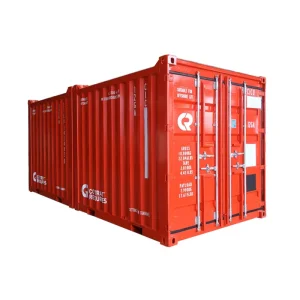
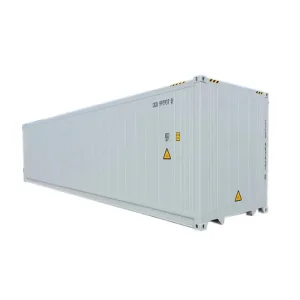
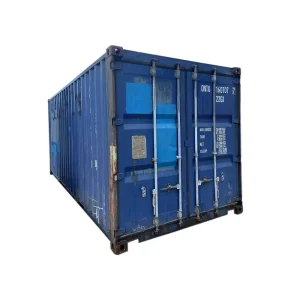




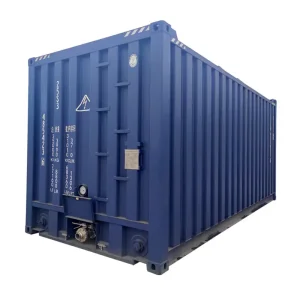
How standardization, metallurgy, and geopolitical supply re-alignment transformed the standard military "CONEX" into the linchpin of global modular infrastructure.
The term CONEX (Container Express) traces its lineage back to late-1940s United States military logistics, engineered to streamline bulk transshipment and mitigate dockside pilferage. Over the subsequent seven decades, this modular freight concept transcended its tactical origins to become the universal bedrock of globalized industrial supply chains. Today, as leading OEM storage conex containers manufacturers, Tianjin Cimic Imp&Exp Co., Ltd. (CIMIC) engineers storage containers that operate simultaneously as dynamic shipping media and permanent, high-integrity physical storage assets.
In the contemporary macroeconomic landscape, the global intermodal and stationary conex container market has entered a structural renaissance. Driven by systemic supply chain decentralization, acute nearshoring demands across North America and Europe, and the explosive proliferation of modular energy architectures (such as Battery Energy Storage Systems, or BESS), industrial procurement teams no longer treat conex units as mere commodities. Instead, they represent safety-critical architectural platforms governed by strict ISO, Bureau Veritas (BV), and Det Norske Veritas (DNV) regulatory standards.
"Procurement directors who evaluate storage conex units purely on acquisition cost per tare-kilogram routinely overlook lifetime fatigue cycles. The structural difference between consumer-grade sheet metal pods and heavy-gauge Corten SPA-H steel marine boxes dictates whether an enclosure survives 25 years of corrosive coastal saline exposure or suffers floor cross-member deflection under dynamic forklift loads in less than 36 months."
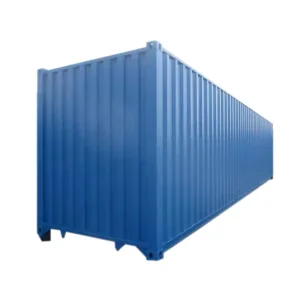
Modern global commerce demands multimodal versatility: a standard 20ft or 40ft High Cube (HC) conex must withstand being stacked nine-high inside an ultra-large container vessel (ULCV) holds, subjected to three-dimensional accelerations at sea, transported via rough rail switchyards, and subsequently placed in remote desert or arctic mining environments to serve as secure equipment vaults, control rooms, or chemical reserves.
A rigorous engineering breakdown of structural members, anti-corrosion barrier systems, and static load capacities across our OEM manufacturing lines.
Unlike standard carbon steel (Q235) which rapidly undergoes catastrophic oxidation when salt moisture penetrates the paint layer, CIMIC utilizes structural Corten SPA-H atmospheric corrosion-resisting steel. When exposed to ambient weather, copper, chromium, and nickel alloy elements form a tight adherent protective patina that retards oxidation velocities by 400% to 800%.
Structural rigidity in high-stress maritime shipping environments relies on weld continuity. CIMIC employs submerged-arc and multi-axis pulse robotic MIG welding rigs across main floor sills, top header channels, and corner casting interfaces. This eliminates structural porosity, ensures 100% full-penetration joint fusion, and passes non-destructive ultrasonic testing.
Surface preparation starts with SA 2.5 shot blasting to remove mill scale, followed by a tri-layer marine protective matrix: a 30μm zinc-rich epoxy primer, a 40μm high-build epoxy intermediate barrier, and a 40μm polyurethane topcoat. This produces an ultra-durable barrier certified for severe marine salinity, UV exposure, and abrasive abrasion.
| Structural Parameter | Standard ISO 20ft Storage Conex | High-Cube 40ft Conex Storage | Heavy-Duty DNV 2.7-1 Offshore Unit | OEM Customized Modular Box |
|---|---|---|---|---|
| Primary Steel Grade | Corten Steel SPA-H (1.6mm - 2.0mm) | Corten Steel SPA-H (1.6mm - 2.0mm) | Corten SPA-H / High-Tensile Plates | Custom Corten / Galvanized Tubing |
| Corner Post Tensile Yield | Yield strength ≥ 345 MPa | Yield strength ≥ 345 MPa | Reinforced Cold-Formed ≥ 420 MPa | Custom structural tubing ≥ 355 MPa |
| Floor Structure & Payload | 28mm Keruing / Apitong Marine Plywood | 28mm Hardwood or Anti-slip Steel Plate | 4.5mm - 6.0mm Checkered Steel Plate | Insulated composite / Vinyl / Steel |
| Max Gross Weight (Rating) | 30,480 kg (67,200 lbs) | 32,500 kg (71,650 lbs) | Project Specific (Up to 25,000 kg) | Engineered per architectural load |
| Stacking Test Rigidity | 86,400 kg (Standard 9-High Stack) | 86,400 kg (Standard 9-High Stack) | Dynamic 4-Point Slings & Drop Impact | Engineered 2 to 4 high stationary |
| Corrosion Certification | ISO 12944 C4 Marine Exposure | ISO 12944 C4 Marine Exposure | ISO 12944 C5-M Extreme Offshore | Project-dependent C3 to C5-M Spec |
Tailoring containerized solutions across aggressive maritime conditions, intermodal cross-border corridors, and autonomous field utilities.
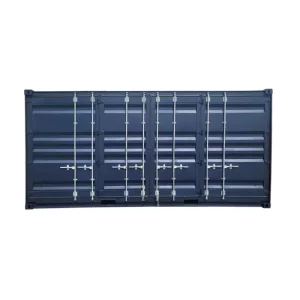
Harsh port side terminals require conex enclosures capable of resisting continuous airborne salt mist, high winds, and repeated top-lift hoist cycles. CIMIC builds custom side-access and double-door dry cargo boxes specifically for quay-side maintenance tool depots, marine rope vaults, and customs bonded cargo storage.
Long-haul intermodal railway transport across Eurasia, North America, and African rail lines subjects container frames to immense longitudinal compressive shock. Reinforced bottom rail channels and heavy-gauge corrugated side sheets prevent buckling during emergency track braking and automated marshalling.
The global transition to renewable grid storage necessitates heavy-duty thermal conex boxes configured with fire-retardant stone wool insulation, integrated roof venting hoods, explosion-relief panels, and reinforced floor channels capable of housing 35-ton lithium-iron-phosphate (LFP) rack batteries.
Extractive operations across Africa, South America, and Western Australia rely on our nested 4ft to 12ft mini conex containers and 20ft/40ft insulated modules for site explosive vaults, hydraulic workshop pods, sample testing laboratories, and harsh weather worker refuge stations.
Pioneering sustainable manufacturing, low-GWP refrigerants, automated welding lines, and IoT-integrated structural telemetry.
Full integration of high-speed fiber laser cutting and hydraulic brake stamping for sub-millimeter corrugation panel tolerances, eliminating residual steel tension and thermal warpage.
Adoption of R-452A and natural CO2 (R-744) refrigerants in partnership with Carrier, Thermo King, and Daikin to comply with stringent European F-Gas regulations and US EPA SNAP policies.
Embedded micro-sensor modules monitoring door breach attempts, internal humidity, multi-axis shock, and temperature variances, communicating via satellite and 5G cellular arrays.
Integration of low-embodied-carbon electric arc furnace (EAF) Corten steel matrices and solvent-free waterborne acrylic resin paint systems to minimize Scope 1 and Scope 2 emissions.
From preliminary CAD finite element modeling (FEM) to final CSC safety plate stamping.
Clients submit dimensional, thermal, or equipment integration parameters. Our engineering department executes 3D SolidWorks modeling and dynamic stress simulations.
Pilot prototypes are built in our Tianjin or Suzhou manufacturing bases. We test door gasket seal compression, floor deflection, and structural water spray tightness.
Bureau Veritas (BV), ABS, or DNV surveyors inspect corner castings, weld seams, and witness physical load pull tests before issuing maritime certification stamps.
Positioned just 100 kilometers from primary Chinese deep-water seaport berths, completed container batches are loaded directly onto roll-on/roll-off or container vessels.
Direct engineering answers to critical inquiries encountered by international logistics managers, EPC contractors, and equipment buyers.
True industrial storage conex containers are built with Corten SPA-H atmospheric corrosion-resistant steel. The chemical composition includes trace copper, chromium, and nickel alloys, which upon weathering form an airtight, adherent oxidized patina. This barrier stops deeper rust penetration. Cheap imitation storage sheds frequently use commercial mild carbon steel (Q195 or Q235), which lacks weathering alloys and oxidizes through within a few years of coastal or high-humidity exposure.
A CSC (International Convention for Safe Containers) certified conex features an approved data plate confirming it has passed rigorous laboratory tests: nine-high stacking tests, longitudinal end-wall/side-wall push tests, transverse racking tests, and floor strength tests. CSC certified units are legally permitted for intermodal ocean and rail freight. Non-CSC storage-only units often lack certified corner castings, possess thinner structural profiles, and cannot be transported laden on commercial container vessels.
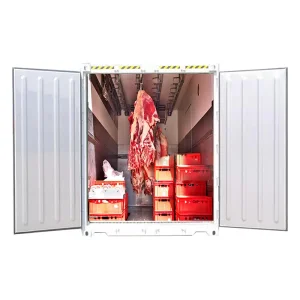
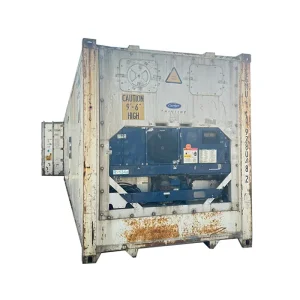
CIMIC works as an authorized systems integrator with the world's leading marine reefer machinery manufacturers, including Thermo King (Magnum Plus), Carrier Transicold (ThinLINE & PrimeLINE), and Daikin (Zestia series). Customers can choose machinery tailored to their local spare parts network and technician availability. Units provide controlled temperature stability from -30°C to +30°C (or ultra-deep frozen options down to -60°C) in high-ambient environments exceeding +50°C.
Standard ISO containers are engineered for steady cargo vessel slots, whereas DNV 2.7-1 (and EN 12079) offshore containers are built to survive open-ocean platform crane transfer, where wave dynamics impose severe shock forces. DNV units feature reinforced pad-eyes, specialized multi-leg wire rope lifting slings, Charpy impact-tested steel grades rated for -20°C brittle fracture resistance, and full non-destructive weld examinations (NDE) verified by third-party surveyors.
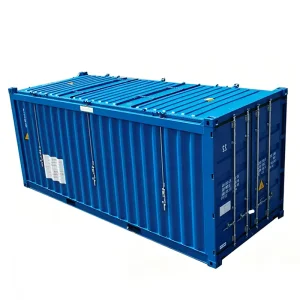
Yes. Beyond standard 10ft, 20ft, 40ft, and 45ft ISO dimensions, CIMIC specializes in custom OEM/ODM configurations. Our engineers regularly produce nested mini-storage sets (4ft, 5ft, 6ft, 7ft, 8ft, 9ft, 10ft, 12ft), full side-opening bi-fold door units, roll-up shutter garage models, open-top hard lids, and widened 2.5m pallet-wide dry freight boxes. Each project is supported by custom SolidWorks engineering drawings and payload calculations.
Our heavy production plants are situated in Tianjin and Suzhou, strategically placed approximately 100 kilometers from primary Chinese deep-water ports. This port proximity substantially reduces inland haulage fees and transit timelines. We deliver new build one-trip containers globally across six continents, with major destination markets located across Africa, Europe, North America, Latin America, and Oceania.
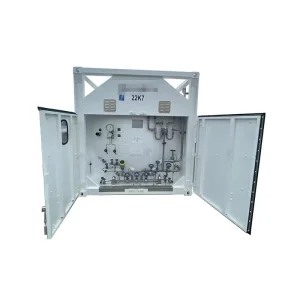
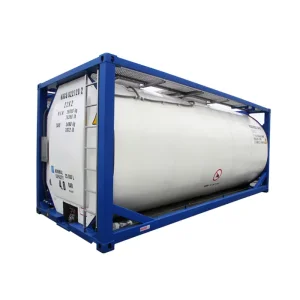
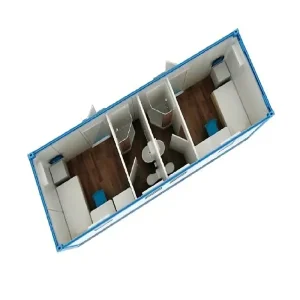
Engineered solutions including full side-door access, cryogenic liquid storage, open-top bulk handling, and modular housing platforms.