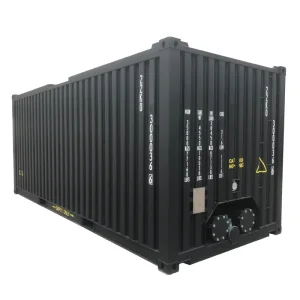
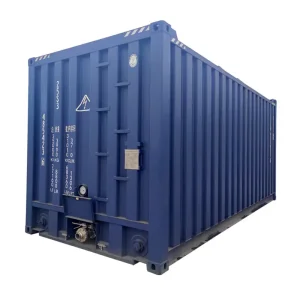
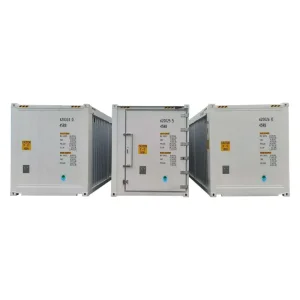
Engineered for seamless overhead crane access, rapid top-loading cycles, and rigorous intermodal transit through the Port of Melbourne and Victorian logistics corridors.


The Port of Melbourne serves as Australasia's largest containerized and general cargo port, handling upwards of 3.2 million TEU annually. Within this high-throughput ecosystem, standard dry vans continuously encounter severe operational bottlenecks when handling non-standard, heavy industrial machinery, structural steel fabrications, and dense mineral aggregates originating from Victoria’s manufacturing hubs in Dandenong, Campbellfield, and Laverton.
Traditional soft-top open-top containers, while versatile, introduce substantial maintenance overheads and weather vulnerability due to recurring tarpaulin tears, degradation under harsh Australian UV radiation, and unauthorized physical tampering during multimodal transfers across Victorian rail networks.
Eliminating logistics vulnerabilities across maritime, road, and heavy-rail intermodal channels through advanced structural engineering.
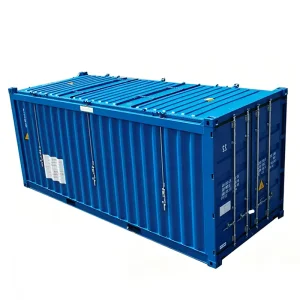
Fabricated using high-tensile SPA-H Corten steel, the hard roof can be swiftly hoisted using overhead crane spreader beams or forklift pockets. It locks down onto continuous EPDM marine-grade perimeter gaskets, delivering the structural security of a closed dry container with the accessibility of an open-top unit.
To accommodate oversized machinery exceeding door header clearance, the rear top rail header hinges outward 90° or can be detached entirely. This enables smooth horizontal cargo rolling or track-based machinery insertion directly over the rear sill without physical obstruction.
Victoria's coastal transport routes require superior finishing systems. Our manufacturing lines apply zinc-rich primer coats followed by epoxy intermediate seals and heavy acrylic topcoats, exceeding ISO 12944 C5-M marine exposure certifications for decades of salt-spray longevity.
Every hard-top container arriving at Webb Dock or Swanson Dock conforms to rigid national statutory standards and international seafaring mandates.
| Regulatory Standard | Authority / Scope | Engineering Specification | Strategic Benefit for Melbourne Operations |
|---|---|---|---|
| CSC Safety Approval | International Convention for Safe Containers | Plate certified for maximum gross weight (up to 38,000kg) | Immediate clearance through Melbourne customs and wharf operations without restacking delays. |
| ISO 1496-1 Series 1 | Freight Containers Structural Specs | Transverse racking test >150kN; concentrated floor loads 7,260kg | Permits direct rail stacking on Pacific National and SCT Logistics corridors across Victoria. |
| DAFF Biosecurity | Australian Department of Agriculture, Fisheries & Forestry | Treated timber floors (TCT compliant with Australian Quarantine standards) | Guaranteed zero biosecurity quarantine fumigation detentions at Victorian ports of entry. |
| EN 12640 Lashing Standards | Heavy Load Restraint Protocol | Internal recess lashing rings rated at 2,000kg to 5,000kg safe working load | Prevents load shifts during sudden maneuvers on Victoria’s West Gate Freeway and CityLink arteries. |
Estimated industrial pricelist for volume procurement, project deliveries, and standard factory configurations landed at Port of Melbourne or delivered CIF/DAP.
| Container Model & Type | Internal Dimensions (L x W x H) | Payload Capacity | Estimated Base Price (FOB Base) | Estimated Melbourne Landed (CIF) |
|---|---|---|---|---|
| 20ft Standard Hard-Top Open-Top | 5,898 × 2,352 × 2,348 mm | 28,250 kg | $3,850 - $4,650 USD | $5,100 - $6,100 AUD Equivalent |
| 20ft High-Cube Hard-Top Open-Top | 5,898 × 2,352 × 2,653 mm | 28,100 kg | $4,200 - $4,950 USD | $5,600 - $6,550 AUD Equivalent |
| 40ft High-Cube Hard-Top Open-Top | 12,032 × 2,352 × 2,653 mm | 28,500 kg | $6,400 - $7,600 USD | $8,400 - $9,950 AUD Equivalent |
| 40ft Heavy-Duty Mining Hard-Top (Reinforced) | 12,032 × 2,352 × 2,348 mm | 32,000 kg | $7,100 - $8,400 USD | $9,300 - $11,200 AUD Equivalent |
*Note: Final landed cost depends on prevailing sea freight indexes, steel surcharges, Australian border clearance duties, and customized options (e.g., custom RAL paint codes, forklift pocket configurations, extra tie-down rings).
Addressing challenging physical supply-chain problems with purpose-engineered hard-top logistics hardware.
Victoria’s Major Transport Infrastructure Program (Big Build)—including the Metro Tunnel, West Gate Tunnel, and Suburban Rail Loop—routinely relies on hard-top containers to transport heavy slurry pumps, underground transformers, and precision cutting heads directly to shaft construction sites.
Fabrication plants across Altona and Truganina dispatch finished industrial chillers, press dies, and precision sheet-metal rollers. Hard-top loading permits factory gantry cranes to drop equipment cleanly into the container without lateral rigging damage.
Processing plants in Ballarat and Bendigo utilize hard-top units for export-bound silica sands, specialty agricultural processing components, and bulk seed handling, capitalizing on rapid top-drop hoppers before locking on the rigid steel cover.
Bridging traditional heavy manufacturing with sensorized asset tracking and sustainable metallurgical design.
Integration of ultra-high-yield automotive steels into the hard roof skin, reducing tare weight by 14% while retaining maximum stackability ratings, translating into greater net payload capacity per road haul trip.
Optional integrated multi-axial strain sensors and sealing integrity beacons fitted directly into locking cam keepers, sending instant cloud alerts via Telstra’s cellular IoT network if roof latching is compromised.
Adoption of 100% water-borne structural primers and bio-based sealants, aligning directly with Victorian Environmental Protection Authority (EPA) net-zero supply chain mandates without sacrificing saline durability.
Direct responses from our engineering and logistics specialists regarding hard-top open-top container orders for Victoria and Australia.
Explore our complete manufacturing portfolio engineered for mining, bitumen logistics, bulk transport, and commercial development.