
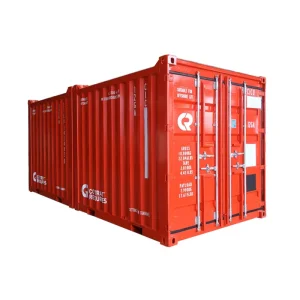
 DNV 2.7-1
Engineered to endure the intense mechanical stresses of South Atlantic swell dynamics and river-barge transshipment at the Port of Montevideo.
DNV 2.7-1
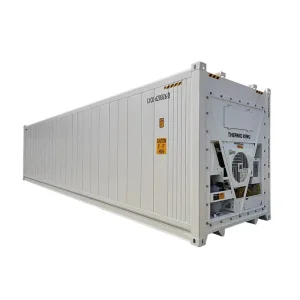 Reefer HC
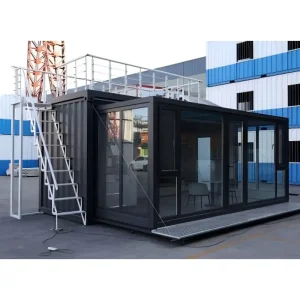 Modular Fold
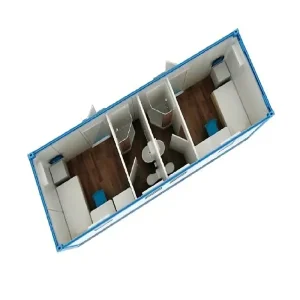 Offshore Camp
An in-depth assessment of the maritime logistics nodes, offshore energy frontiers, and intermodal corridors connecting Uruguay to global trade networks.
The Oriental Republic of Uruguay has increasingly solidified its stature as the Southern Cone's maritime gateway. Centered around the Port of Montevideo, the country functions not merely as a domestic import-export terminal, but as an indispensable transshipment hub connecting the Paraguay-Paraná Waterway (Hidrovía) to deep-sea maritime channels. In parallel, ANCAP (Administración Nacional de Combustibles, Alcohol y Pórtland) has spearheaded renewed deepwater offshore exploration bidding rounds across the Punta del Este and Pelotas basins.
These remote Atlantic shelf operations impose extreme mechanical and environmental conditions. Unlike standard ISO shipping containers, offshore containers deployed in Uruguayan maritime sectors must endure violent multi-axis dynamic loads during open-sea crane transfers from Platform Supply Vessels (PSVs) to drilling rigs. The confluence of salt spray, constant wave slap, and sub-zero oceanic gale fronts necessitates structural assemblies built with cryogenic-grade Corten steel, tested for dynamic Charpy V-notch impact down to -20°C.
The operational demand in Uruguay is uniquely diversified between traditional ocean oilfield exploration and expanding land-river green energy transitions:
Global engineering procurement contractors (EPCs) operating in Montevideo prioritize certified Chinese exporters who can deliver standardized technical integrity coupled with turn-key bespoke interior integration.
| Engineering Parameter | Standard ISO Shipping Container | CIMIC Offshore Container (DNV 2.7-1 / EN 12079) | Operational Relevance in Uruguay |
|---|---|---|---|
| Structural Dynamic Lift | Static corner castings only; 1.0g vertical rating | Tested for 2.5g dynamic shock load via certified 4-leg slings | Prevents frame tearing during vessel-to-rig swell heave in the Atlantic |
| Steel Grade & Resilience | Standard Corten SPA-H steel (no impact test required) | Low-temperature normalized structural steel with Charpy V-notch verification | Eliminates brittle failure risks under sudden mechanical stress at sea |
| Corrosion Protection | Standard industrial primer & topcoat (approx. 120μm) | Marine C5-M high-durability epoxy + polyurethane system (250–320μm) | Withstands extreme salinity in the South Atlantic & Rio de la Plata estuary |
| Lifting Eyes & Pad Eyes | None (twistlocks only) | Full-penetration welded pad eyes integrated into primary frame members | Mandatory requirement by maritime inspection agencies operating out of Montevideo |
How state-of-the-art robotic welding, automated coating lines, and integrated port logistics in Tianjin and Suzhou ensure zero-defect compliance for South American energy stakeholders.
Multi-axis automated welding stations execute continuous deep-penetration seam welds across high-tensile corner posts and load-bearing sills, ensuring flawless structural continuity that eliminates human error.
Every batch produced undergoes third-party classification society witnessing, including ultrasonic non-destructive testing (NDT), magnetic particle testing (MPI), and proof load tensile testing.
Strategically situated within 100km of Tianjin and Shanghai/Suzhou deepwater terminals, finished units transition seamlessly from production floor to direct trans-Pacific and Atlantic container liners.
Whether you require DNV 2.7-1 dry cargo boxes, half-height ore containers, or bespoke modular living quarters, our engineering directors deliver certified CAD drawings within 24 hours.
Critical answers addressing certification compliance, shipping routes, C5-M anti-corrosion, and custom EPC modifications.
For offshore exploration vessels and platform operations in the Uruguayan shelf (such as offshore concessions governed by ANCAP), standard ISO 668/1496 containers are insufficient. Equipment must comply with DNV 2.7-1 (Standard for Certification of Offshore Containers) or EN 12079 / ISO 10855. These standards mandate pad eye load calculations, destructive welding inspections, low-temperature impact testing, and documented sling sets with DNV type-approved shackles.
Our offshore units receive an ISO 12944 certified C5-M (Very High Marine) coating schedule. The process begins with SA 2.5 automatic shot-blasting, followed by a zinc-rich epoxy primer (60–80μm), an epoxy intermediate barrier coat (100–140μm), and a high-gloss polyurethane finish (50–60μm). This ensures total resistance against aggressive marine salt spray, coastal humidity, and UV radiation over prolonged operational cycles.
Yes. Our engineering division provides full OEM/ODM structural customization. We supply modular accommodation, MWD/LWD lab cabins, switchgear control enclosures, and emergency generator housings with customized A60 / H120 fire-rated paneling, ATEX/IECEx certified explosion-proof electrical systems, and integrated HVAC configurations suitable for South Atlantic operations.
Production cycles for standardized DNV offshore or specialized ISO container batches typically range from 20 to 35 days. Shipments depart directly from Tianjin Port or Shanghai/Taicang ports via regular South American East Coast (ECSA) ocean liner routes, arriving at Terminal Cuenca del Plata (TCP) in Montevideo within 35 to 45 sailing days, supported by comprehensive export documentation and international classification certification packages.
Explore our complete export catalog engineered for intermodal rail, cryogenic storage, mineral transport, and hazmat compliance across South American routes.
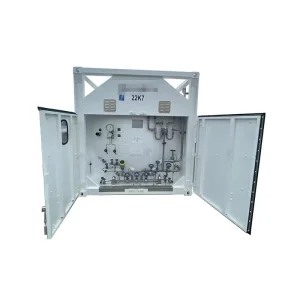 Cryogenic Tank
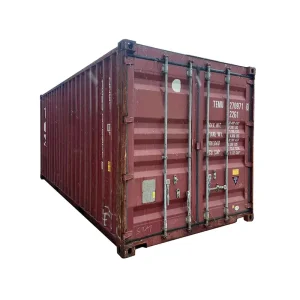 Cost Effective
DNV Offshore
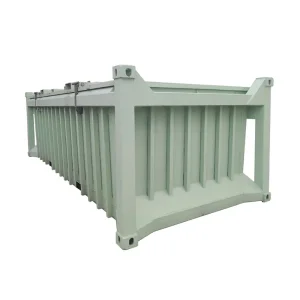 Mining & Ore
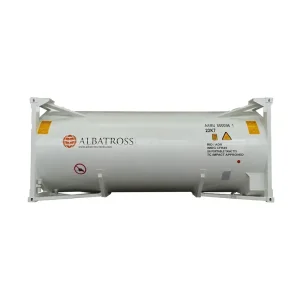 ISO Tank
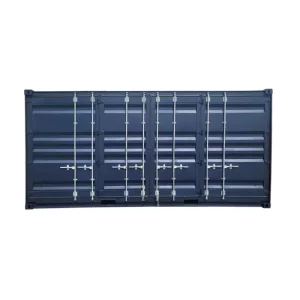 Side Open
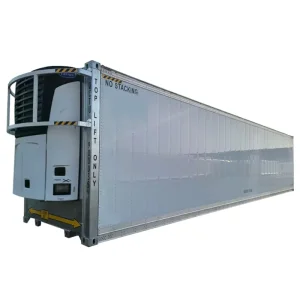 Integrated Power
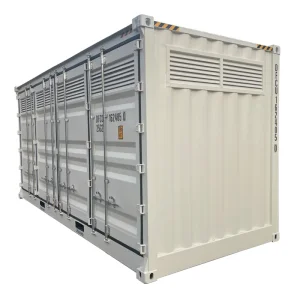 Hazmat Safe