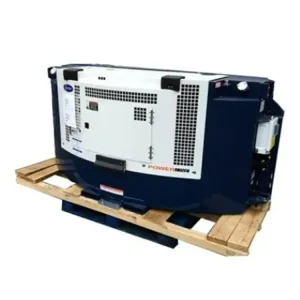
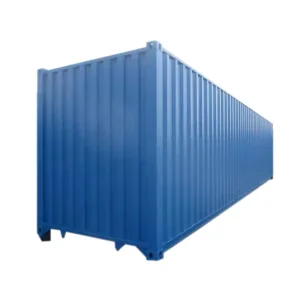
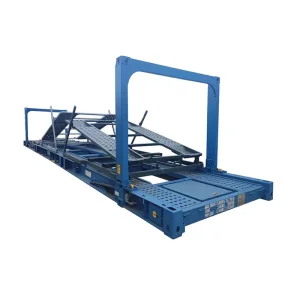
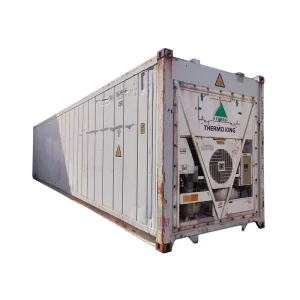
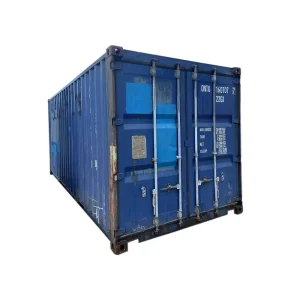
Factory-certified intermodal units, refrigerated machinery, and specialized transport racking ready for global dispatch from primary maritime assembly yards.
Comprehensive engineering analysis on volumetric efficiency, intermodal network economics, and direct factory procurement paradigms.
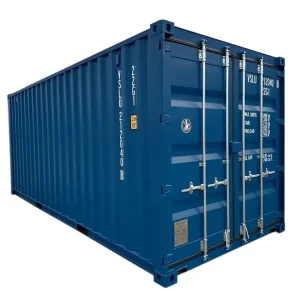
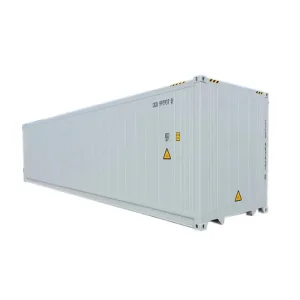
In modern global trade, the 40 ft High Cube (40HC) container has transitioned from an oversized specialty asset into the undisputed workhorse of international freight logistics. Engineered to an external height of 2,896 mm (9 ft 6 in)—exactly one foot (305 mm) taller than standard general purpose dry vans—the 40HC unlocks an internal cubic capacity of approximately 76.2 to 76.4 cubic meters (2,698 cu ft), compared to just 67.7 cubic meters in standard 40ft units.
This 12.8% increase in usable internal volume delivers immediate compound savings across high-cube, low-density cargo categories including consumer electronics, automotive parts, apparel, modular furniture, and lithium battery packs. By eliminating dead headspace and maximizing volumetric fill ratios without exceeding rail or maritime TEU envelope thresholds, multinational freight operators reduce their per-cubic-meter ocean transit tariffs by an average of 8.4% to 11.2%.
Over 78% of transpacific and Asia-Europe finished merchandise now "cubes out" before reaching maximum gross permissible axle load weights (30,480 kg to 32,500 kg). Sourcing factory-direct 40HC units optimizes total payload profitability over a 15-year lifecycle.
As global shipping lines adjust to recurring maritime chokepoints and multimodal bottlenecks, inventory velocity hinges directly on structural standardized container availability. Enterprise supply chains are moving away from ad-hoc leasing arrangements toward strategic, direct-from-factory procurement programs that lock in manufacturing slot allocations at recognized industrial coastal manufacturing zones.
Exacting metallurgical parameters and automated fabrication standards that guarantee structural compliance across extreme intermodal environments.
Industrial-grade 40HC containers are built utilizing authentic JIS G3125 SPA-H atmospheric corrosion-resistant steel. Upon atmospheric exposure, SPA-H develops an adherent, continuous protective oxide patina that arrests oxidation rates.
Floor construction utilizes multi-ply (19 to 21 plies) tropical hardwood (Apitong/Keruing) or specialized high-density bamboo composites, bonded under hydraulic heat pressure with WBP phenolic resin.
Dual-leaf doors feature full 270-degree rotation swing clearances, mounted via four heavy-duty forged hinges per door blade with maintenance-free stainless steel and self-lubricating synthetic bushings.
Precise engineering parameters for 40ft High Cube containers benchmarked against standard dry cargo and high-cube variants.
| Technical Parameter | 40 Ft High Cube (40HC Dry) | 40 Ft Standard GP (40DV Dry) | 40 Ft High Cube Reefer (40HCR) | 20 Ft High Cube (20HC Dry) |
|---|---|---|---|---|
| External Dimensions (L×W×H) | 12,192 × 2,438 × 2,896 mm (40' × 8' × 9'6") | 12,192 × 2,438 × 2,591 mm (40' × 8' × 8'6") | 12,192 × 2,438 × 2,896 mm (40' × 8' × 9'6") | 6,058 × 2,438 × 2,896 mm (20' × 8' × 9'6") |
| Internal Dimensions (L×W×H) | 12,032 × 2,352 × 2,698 mm | 12,032 × 2,352 × 2,393 mm | 11,583 × 2,294 × 2,557 mm | 5,898 × 2,352 × 2,698 mm |
| Door Opening (W × H) | 2,340 × 2,585 mm | 2,340 × 2,280 mm | 2,290 × 2,535 mm | 2,340 × 2,585 mm |
| Internal Cubic Capacity | 76.4 m³ (2,698 cu ft) | 67.7 m³ (2,390 cu ft) | 67.9 m³ (2,398 cu ft) | 37.4 m³ (1,320 cu ft) |
| Tare Weight (Nominal) | 3,900 kg (8,598 lbs) ± 2% | 3,740 kg (8,245 lbs) ± 2% | 4,480 kg (9,876 lbs) with unit | 2,350 kg (5,180 lbs) ± 2% |
| Maximum Payload | 28,600 kg (63,052 lbs) | 26,740 kg (58,951 lbs) | 29,520 kg (65,080 lbs) | 28,130 kg (62,015 lbs) |
| Max Gross Weight (MGM) | 32,500 kg (71,650 lbs) | 30,480 kg (67,196 lbs) | 34,000 kg (74,957 lbs) | 30,480 kg (67,196 lbs) |
| Stacking Test Capability | 216,000 kg (9-high laden stack) | 216,000 kg (9-high laden stack) | 216,000 kg (9-high laden stack) | 216,000 kg (9-high laden stack) |
| Standard Certification | ISO 668, ISO 1496-1, CSC, BV, ABS | ISO 668, ISO 1496-1, CSC, BV | ISO 1496-2, ATP, CSC, TIR | ISO 668, ISO 1496-1, CSC, BV |
Beyond standard dry cargo: how factories modify the 40HC envelope for active temperature maintenance, industrial energy storage, and hazardous payloads.
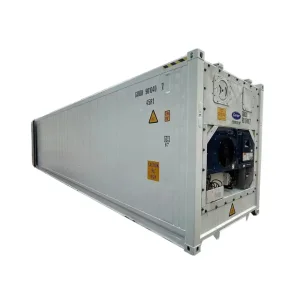
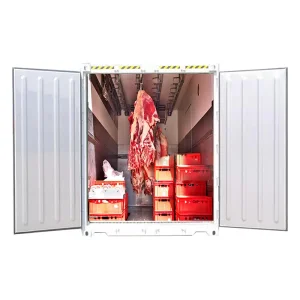
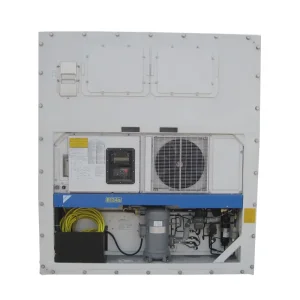
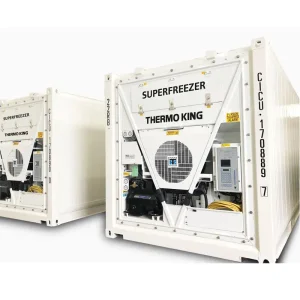
Equipped with Carrier Transicold ThinLINE/PrimeLINE, Daikin LXE, or Thermo King Magnum Plus units, these containers maintain internal thermal stability from -40°C to +30°C. High-density cyclopentane-blown polyurethane foam insulation (sandwich core panel construction) combined with inverted T-bar extruded aluminum floors delivers laminar airflow circulation through dense cargo payloads.
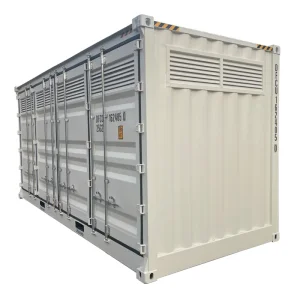
Factory-modified 40HC structural shells designed specifically for utility-scale lithium-ion battery integration. Structural reinforcements include NFPA 68/69 deflagration explosion panels, integrated HVAC roof mounting collars, floor channels pre-engineered for multi-ton rack weights, and fire suppression plumbing bulkheads certified to UL 9540A safety standards.
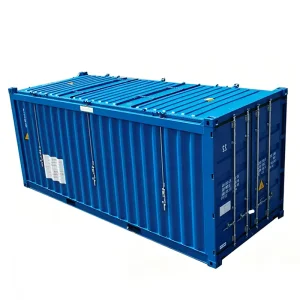
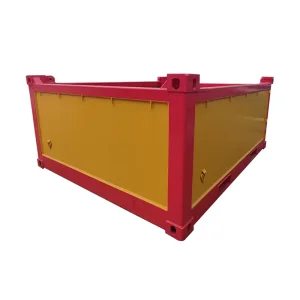
Eliminating longitudinal side wall corrugations in favor of bi-folding side doors allows instantaneous forklift side-loading for non-standard lengths, structural timber, machinery, and aviation assemblies. Open-top configurations replace rigid roof steel with heavy-duty PVC tarpaulins supported by removable arched roof bows for vertical gantry crane loading.
Transparency on commodity steel indexing, labor inputs, production line economies of scale, and freight repositioning mechanics.
Procuring 40ft High Cube containers directly from coastal manufacturing facilities requires an understanding of raw material indexing. Approximately 58% to 64% of total container manufacturing costs correlate directly to raw hot-rolled Corten steel spot prices. Zinc-rich primer coatings, marine-grade hardwood flooring, and manual-plus-robotic weld shielding gases constitute another 18% to 22%, with the remainder driven by classification society verification inspections and plant energy overhead.
Global buyers who execute direct-from-factory purchase contracts (OEM/ODM) bypass the 15% to 28% broker margins typical of secondary container trading firms. Furthermore, factory-direct contracts grant buyers custom color RAL paint matching, embossed corporate identification plates, integrated IoT telematics housings, and customized internal lashing d-rings rated to 2,000 kg each.
Baseline quote parameters for enterprise purchase orders (actual quotes adjust based on weekly hot-rolled steel coil indexes):
Every production batch undergoes exhaustive nondestructive and destruction-limit stress testing overseen by accredited international surveyors.
Each corner casting must support an axial compressive load of 846 kN (86,400 kg), proving the container's structural capacity to withstand 9-tier fully laden stacking on ultra-large container vessels (ULCVs) undergoing severe marine rolling motions.
Hydraulic rams apply 150 kN of dynamic transverse racking force across the end frames. This evaluates frame deflections, ensuring door leaf seals retain water-tight integrity without permanent plastic deformation of corner posts or crossmembers.
Continuous water jets spray all door gaskets, weld joints, and floor penetrations at a minimum nozzle pressure of 100 kPa (1 bar) from a distance of 1.5 meters. Ultrasonic leak detection equipment verifies 100% airtight and weathertight seals.
How advanced sensing, low-power satellite connectivity, and sustainable coating systems are reshaping next-generation 40HC container manufacturing lines.
Next-generation 40HC containers now emerge from the factory with recessed, solar-powered IoT hardware embedded directly into the corrugated exterior panels. These units monitor real-time door openings via magnetic hall sensors, internal volumetric payload status through multi-point optical LiDAR, and physical shock impacts along the 3-axis plane.
Dual-mode cellular (LTE-M/NB-IoT) and low-earth-orbit (LEO) satellite links deliver end-to-end visibility across open ocean corridors where terrestrial networks fail. For cold chain operators, integrated telematics allow bi-directional reefer controller adjustments—tuning setpoints and initiating defrost cycles mid-transit from a centralized supply chain operations center.
Manufacturing plants are shifting away from solvent-based paints toward 100% waterborne zinc and polyaspartic coating systems, slashing Volatile Organic Compound (VOC) emissions by over 82%. Flooring innovations also leverage fast-growing, carbon-negative engineered bamboo strand boards, reducing dependency on tropical hardwoods.
Direct answers to the most critical technical, contractual, and regulatory questions evaluated by corporate procurement directors.
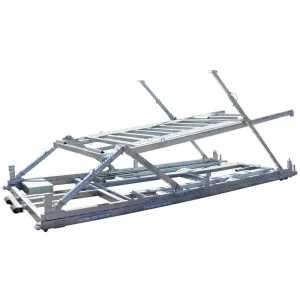
Certified intermodal dry cargo units, specialized open-tops, car carriers, and refrigerated systems direct from our manufacturing lines.