
Solar Reefer
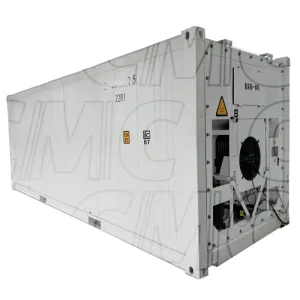
Direct manufacturer access to Corten-A high-cube cargo containers, DNV-certified offshore modules, active multi-temperature reefer units, and intelligent intermodal logistics equipment built to ISO 1496-1 standards.
Explore heavy-payload high containers engineered for critical supply chains. Each unit features structural validation under classification societies (BV, LR, ABS, CCS) with full factory traceability.
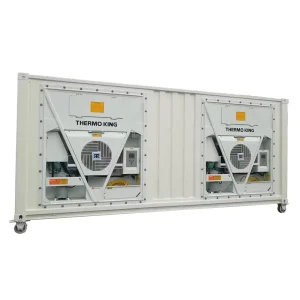
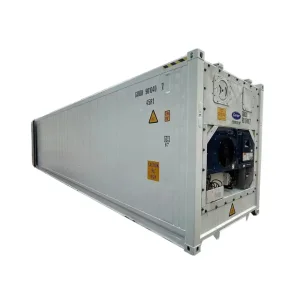
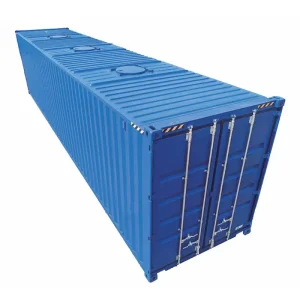
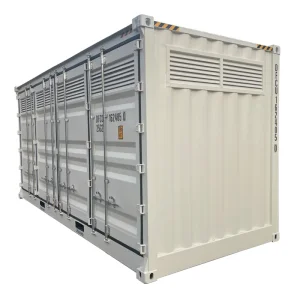
Operating from state-of-the-art deepwater coastal fabrication hubs, Tianjin Cimic Imp&Exp Co., Ltd. (founding lineage dating to 1983) engineers heavy-duty intermodal structures backed by empirical metrics and class society certification.
China accounts for over 90% of global ISO intermodal and specialized container production. Sourcing directly from our Tianjin and Suzhou manufacturing corridors provides distinct structural, commercial, and logistical advantages.
Every structural high container uses premium weather-resistant SPA-H Corten-A steel plates and cold-formed profiles. This specialized alloy forms a dense protective patina upon exposure to maritime air, preventing atmospheric corrosion and structural rust penetration during 25+ year ocean operational lifespans.
Situated within 100 kilometers of the world-class deepwater hubs of Tianjin Port and Shanghai/Taicang ports, our manufacturing bases bypass costly inland transshipment charges. Furthermore, we facilitate "one-way empty container cabotage loading," dramatically lowering net landed procurement freight costs for foreign buyers.
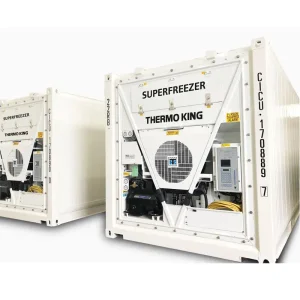
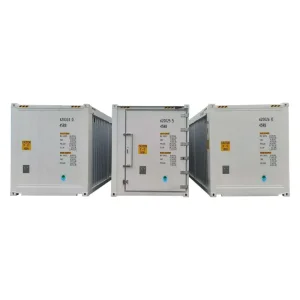
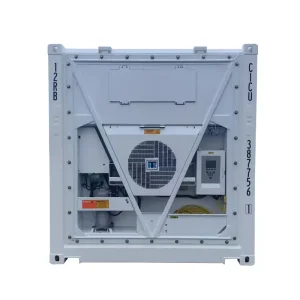
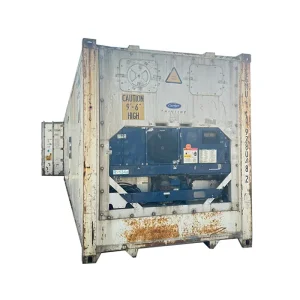
Our reefer manufacturing division works directly with top refrigeration OEMs—Carrier Transicold, Thermo King, and Daikin. This ensures factory-direct genuine warranty coverage, zero gray-market components, unified electronic microprocessors, and instant access to worldwide spare parts networks.
Purchasing high containers requires rigorous adherence to multilateral maritime conventions. Our production workflows satisfy all primary intermodal criteria, ensuring friction-free customs clearance, stackability, and port safety worldwide.
All dry and refrigerated high containers are tested and certified under the International Convention for Safe Containers (CSC 1972) and ISO 668/1496-1. Each unit carries a stainless-steel CSC safety approval plate specifying permissible transverse racking, floor strength (7,260 kg axle loads), and 9-high corner post stacking limits.
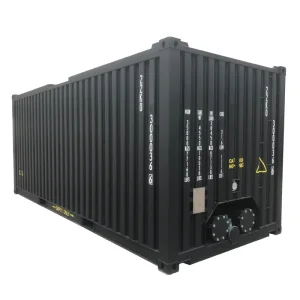
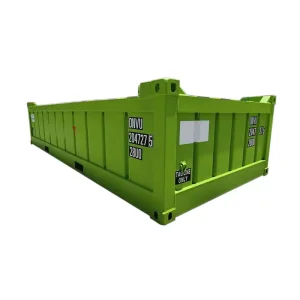
For dynamic open-sea applications, platforms, and supply tenders, our offshore high container lines meet the rigorous material toughness, non-destructive testing (NDT), and pad-eye lifting sling specifications established by DNV-ST-E271 (DNV 2.7-1) and EN 12079-1 standards.
Procuring overseas equipment can risk operational bottlenecks without field backup. We provide dedicated commissioning engineers, comprehensive English technical drawings (CAD/STEP), warranty coverage on mechanical assemblies, and modular retrofitting schematics tailored to regional building codes.
| High Container Variant | External Height (mm/ft) | Max Gross Wt (MGW) | Cubic Capacity (CBM) | Insulation / Wall Build | Compliance Standards |
|---|---|---|---|---|---|
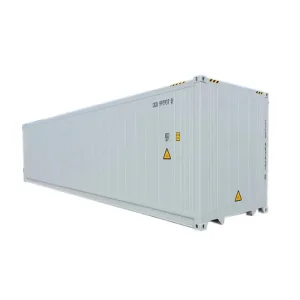
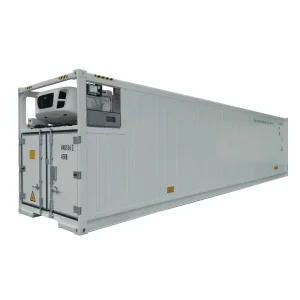
| 40ft High Cube Reefer (HC) | 2,896 mm (9' 6") | 34,000 kg (74,950 lbs) | 67.9 m³ (2,398 cu.ft) | Polyurethane 75mm / MG Stainless Steel | CSC / ATP / BV / ISO |
| 20ft High Cube Dry Freight | 2,896 mm (9' 6") | 30,480 kg (67,200 lbs) | 37.4 m³ (1,320 cu.ft) | Corten-A 1.6mm Corrugated Steel | ISO 1496-1 / UIC 592 |
| 40ft High Cube Foam Insulated | 2,896 mm (9' 6") | 32,500 kg (71,650 lbs) | 65.2 m³ (2,302 cu.ft) | Thickened PU Core, K-Value ≤ 0.35 W/m²K | ATP Class FRC / BV |
| 20ft Offshore High Cube DNV | 2,896 mm (9' 6") | 16,000 kg (35,270 lbs) | 36.8 m³ (1,300 cu.ft) | Reinforced 2.0mm Corten + Pad Eyes | DNV 2.7-1 / EN 12079 |
| 45ft High Cube Intermodal Rail | 2,896 mm (9' 6") | 34,000 kg (74,950 lbs) | 86.0 m³ (3,037 cu.ft) | Pallet-Wide (2,438mm internal width) | UIC / Belt & Road Compliant |
A standard 8'6" standard box often fails to meet modern volumetric and thermal thresholds. The extra 305mm (1 foot) height of a High Cube container provides significant volume advantages for critical industrial sectors.
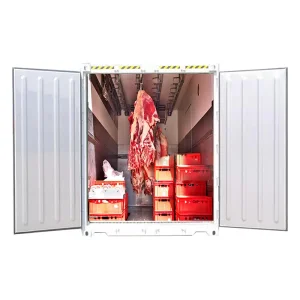
Reefer High Containers provide maximum airflow headroom over the red load line, guaranteeing strict ±0.25°C temperature consistency for export fruits, hanging meat carcasses, biologics, and seafood.
Cold Chain LogisticsEnergy developers utilize 20ft and 40ft High Cube shells to house high-density Lithium Battery Energy Storage Systems (BESS), inverters, HVAC chillers, and fire suppression systems with adequate ceiling clearance.
Renewable Energy40ft and 45ft High Cube pallet-wide containers optimize double-stack train cargo slots across Trans-Eurasian corridors, eliminating pallet handling voids and reducing handling wear.
Intermodal RailHeavy half-height and full-height offshore modules engineered to DNV 2.7-1 specifications survive North Sea and tropical wave slamming, serving offshore drilling platforms and mine extraction plants.
Marine OffshoreThe maritime and container fabrication sectors are experiencing unprecedented technological disruption. When procuring new assets, enterprises must consider carbon mandates, automation, and IoT lifecycle intelligence.
Modern High Cube reefers are evolving from passive boxes into intelligent network nodes. Integrated satellite-cellular transceivers stream real-time supply chain telematics: GPS coordinate mapping, supply/return air temperatures, ambient conditions, CO2/O2 atmospheric control levels, and vibration impacts.
Environmental compliance under the Kigali Amendment and EU F-Gas regulations is driving reefer factories to transition from R134a toward low-GWP alternatives such as R513A and natural CO2 (R744). Concurrently, rooftop thin-film solar arrays combined with DC inverter units allow refrigerated containers to operate off-grid during extended transit periods.
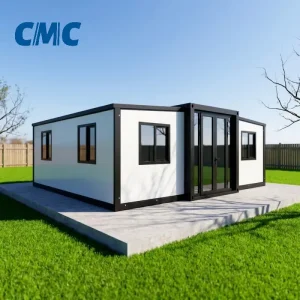
Architectural and civil engineering contractors are directly purchasing specialized high containers as structural base units. Featuring factory-engineered thermal bridging insulation, fire-rated sandwich wall cores, and precision window/door cutouts, expandable high-cube units dramatically compress on-site building construction timelines.
A transparent, risk-mitigated procurement framework guarantees that your container orders arrive on site fully certified, structurally sound, and tailored to project load demands.
Our sales engineers audit cargo densities, door opening widths, temperature criteria (-60°C to +30°C), and intermodal routing to define the optimal shell profiles and materials.
Clients receive comprehensive CAD and finite-element structural stress drawings. FEA simulations verify load distribution, lifting shear stresses, and thermal barrier integrity before production starts.
Automated cutting, hydraulic stamping, robotic welding, and shot blasting are executed under strict ISO 9001 guidelines. Classification society surveyors inspect corner castings, weld seams, and coatings.
Every unit undergoes watertightness testing, thermal leakage evaluation, and PTI machinery testing. Units are dispatched as brand-new SOC containers or positioned via one-way cargo cabotage routes.
Crucial commercial, technical, and regulatory answers directly compiled by our Senior Engineering Director to assist international shipping lines, freight forwarders, and institutional buyers.
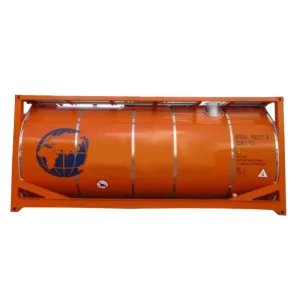
Explore heavy-duty, marine-certified, and custom configurations manufactured to handle complex project cargo, bulk chemicals, rail intermodal corridors, and low-temperature cold chains.
Connect with our technical design office to discuss custom structural dimensions, special paint RAL requirements, third-party classification approvals (BV, DNV, ABS), or volume-based pricing for international container deliveries.