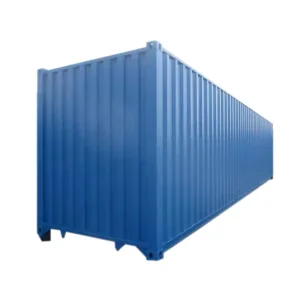
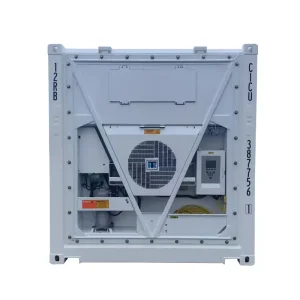
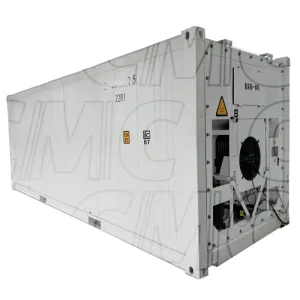
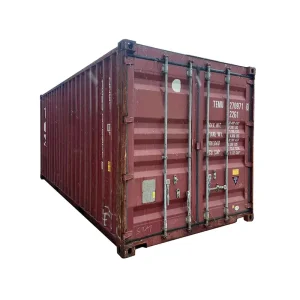
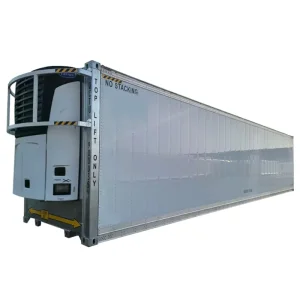
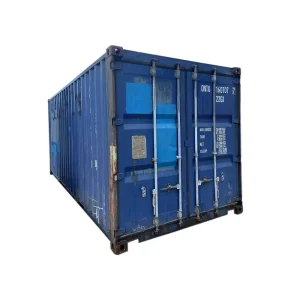
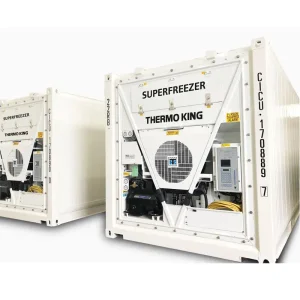
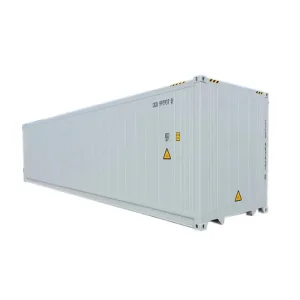
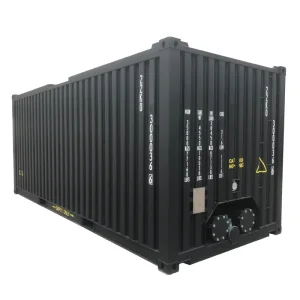
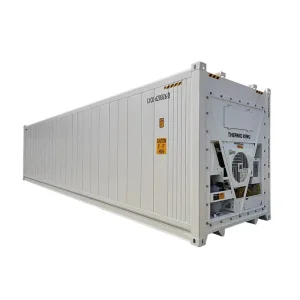
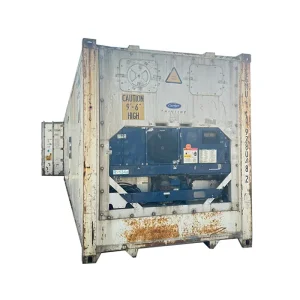
Engineered to ISO 1496-1 and DNV 2.7-1 specifications. Inspect immediate factory-direct allocations below.
Analyzing structural shifts from macro-freight standardization toward decoupled, high-density modular logistics networks.
Global logistics is witnessing an aggressive transformation toward fractional modularity. Where standard TEU and FEU structures dominate maritime deep-sea lanes, metropolitan and industrial nodes require miniature intermodal containers (spanning 6ft, 8ft, 10ft cubes down to scaled down custom pods). These allow hyper-efficient micro-hub consolidation, reducing terminal friction, empty dwell time, and inner-city carbon footprints.
Industrial miniature container fabrication requires identical structural rigors to macro containers. Tier-1 manufacturing plants utilize SPA-H anti-corrosive Corten steel, marine-grade continuous seam welding, and high-build zinc-rich epoxy paint coats. This ensures that downscaled structures maintain dynamic stacking capacity of up to 9 high even under extreme offshore saline environments.
Miniature freight boxes are increasingly delivered from factories as autonomous IoT platforms. Integrated multi-sensor telematics monitor internal atmospheric parameters, door cycle actuation, G-force shock vectors, and GPS/GLONASS positional coordinates in real-time, fulfilling stringent cold-chain traceability for high-value biopharmaceuticals and lithium-ion cells.
How customized miniature enclosures integrate seamlessly into harsh offshore operations, urban delivery schemes, and defense applications.
Engineered to DNV GL 2.7-1 / EN 12079 norms, miniature pressurized containers serve as remote telemetry centers, chemical metering points, and subsea hydraulic control skids on fixed platforms and FPSO units.
Using autonomous DC inverter units and phase-change thermal liners, miniature reefer units act as edge-storage cold hubs for temperature-sensitive seafood, floral assets, and pharmaceutical supplies without grid dependence.
Precision 10ft & bespoke micro-containers outfitted with high-density server racking, liquid immersion cooling manifolds, and Class-A fire suppression serve as rapidly deployable military edge computing clusters.
Urban courier hubs deploy stackable miniature dry containers directly to retail plazas and transport terminals, bypassing large sorting depots and enabling direct electric cargo bike dispatch.
A structured validation methodology for procurement directors evaluating Chinese manufacturing facilities.
Finite Element Analysis of custom structural profiles, payload center gravity calculations, corner casting tensile tests, and static load validation prior to cutting steel.
Mill test certificate (MTC) verification for SPA-H Corten steel, ultrasonic weld integrity inspections, radiographic checks on critical load-bearing joints, and primer adhesion benchmarks.
Active testing inside certified rain spray booths according to ISO 1496-1 parameters, multi-atmosphere thermal cycling for reefer designs, and dielectric ground testing.
Final sign-off by third-party surveyors (Bureau Veritas, DNV, ABS, or Lloyd’s Register), issuing CSC plates and intermodal type approval certificates before port dispatch.
| Modular Class | Structural Specification | Payload Capacity (MGW) | Target Applications | Certifications |
|---|---|---|---|---|
| 6ft / 8ft Ultra-Mini Dry | SPA-H Corrugated Steel, Marine Plywood / Steel Floor | 5,000 kg – 8,000 kg | Job-site secure tools, urban micro-depots, remote logistics | ISO 9001, BV Certified |
| 10ft Offshore DNV Enclosure | Heavy-duty hollow structural sections, certified pad eyes | 10,000 kg – 14,000 kg | Subsea tooling, oilfield chemical storage, offshore power | DNV 2.7-1 / EN 12079 |
| 10ft / 20ft Miniature Reefer | SUS304 Stainless Interior, High-Density Polyurethane (PUR) | 12,000 kg – 24,000 kg | Active pharma transport, dockside cold triage, seafood export | ATP, ISO 1496-2, BV |
| Bespoke Miniature Tank | 316L Stainless Steel Vessel, Uninsulated / Insulated Frame | 8,000 L – 14,000 L | Hazardous chemicals, marine bunkering reagents, fuel depots | IMDG, ASME, ADR |
Direct guidance from our senior engineering team addressing global client specifications.
Miniature shipping containers (such as 6ft, 8ft, or 10ft units) are designed either with standard corner casting geometries allowing them to be coupled via approved horizontal twistlocks into standard 20ft or 40ft TEU footprints, or shipped inside standard High Cube boxes as nested payloads to drastically reduce repositioning and ocean freight tariffs.
Standard catalog units can be dispatched from port yards within 7 to 14 days. Bespoke OEM/ODM configurations requiring specialized CNC stamping, non-standard door apertures, blast-proof internal lining, or refrigeration integration typically undergo a 30-to-45-day fabrication cycle following engineering drawing sign-off and 3D FEA verification.
Yes. Custom units can be engineered with solar PV auxiliary arrays coupled with low-vibration DC inverter units, or equipped with eutetic cold plates and thickened polyisocyanurate (PIR) insulation providing passive hold-over thermal stabilization up to 72 hours under severe ambient heat without external electricity.
All delivered containers are provided with a full factory compliance dossier including Bureau Veritas (BV) classification certificates, ISO 9001/14001 factory QC documentation, Mill Test Reports (MTC) confirming SPA-H Corten steel origins, CSC safety plates, and DNV test logs for offshore-rated units.
Explore specialized open-top, multi-door, deep-freeze, and offshore structures ready for project procurement.