
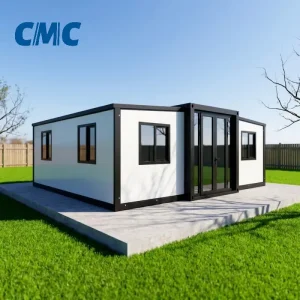
Direct-from-factory modular living structures, intermodal dry cargo units, explosion-proof chemical containers, and heavy-density offshore ore boxes manufactured under stringent quality controls.
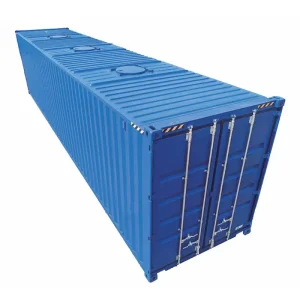


International logistics, cross-border multimodal corridors, and supply chain volatility have elevated shipping containers from standard transit boxes into critical strategic infrastructure.
The post-pandemic maritime market experienced massive structural volatility. Global shipping lines and B2B enterprise procurement managers are now transitioning from erratic spot leasing to direct factory purchases. Direct acquisition stabilizes equipment availability, standardizes fleet telematics, and locks in equipment CAPEX against carrier equipment surcharges.
International Maritime Organization (IMO) conventions, Bureau Veritas (BV), and DNV offshore rules dictate extreme mechanical tolerances. Standard intermodal units must withstand up to 216,000 kg stacking loads on vertical corner castings. Substandard maritime gear poses severe structural liabilities under marine wave impact and dynamic offshore lifting crane cycles.
Global operations no longer rely solely on basic general purpose dry containers. High-value perishable trade requires advanced controlled-atmosphere reefers, off-grid energy storage pods demand explosion-proof side-opening architectures, and remote mining sites mandate reinforced half-height aggregate boxes with extreme tare-to-payload ratios.
China's manufacturing supremacy in the intermodal equipment sector is sustained by seamless upstream raw material integration, robotic automation, and strategic coastal logistics clusters.
Immediate direct-mill access to atmospheric corrosion-resistant SPA-H Corten steel guarantees homogeneous structural durability. Raw hot-rolled coil feeds straight into automated corrugation presses without middle-tier supply interruptions.
Precision multi-axis submerged arc robotic welding ensures flawless corner post-to-casting welds, eliminating micro-porosity and delivering dimensional tolerance within +/- 1.5mm across 40-foot spans.
Factory bases in Tianjin and Suzhou enjoy local clustering of Tier-1 components: Carrier, Daikin, and Thermo King cooling aggregates, marine epoxies from Jotun/Hempel, and FSC-certified apitong flooring mills.
Situated ~100 km from major sea terminals (Tianjin Port, Shanghai/Taicang), finished container equipment moves directly to dock side or takes export "one-way" commercial cargo immediately, cutting transit repositioning fees.
Every industrial unit leaves our production facility fully tested under the CSC (International Convention for Safe Containers) safety approval protocol. From 1.5x transverse racking load analysis to 2-bar internal pneumatic tank tightness verification, our integrated Bureau Veritas (BV) and ISO 9001 certified QA pipeline ensures zero marine transit failures.
Reference pricing benchmarks, metallurgical characteristics, and load criteria across standard, refrigerated, and specialized offshore equipment classes (FOB China Port basis).
| Container Classification | Primary Metallurgy / Core Tech | Internal Dimensions (L x W x H) | Max Gross Payload | Certified Standards | Indicative Price Range (USD)* |
|---|---|---|---|---|---|
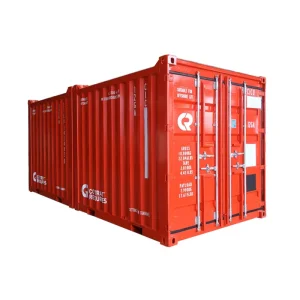
| 20ft Standard Dry Intermodal | SPA-H Corten Steel / 28mm Apitong Floor | 5.898 x 2.352 x 2.393 m | 28,230 kg (62,236 lbs) | ISO 1496-1, BV, CSC | $1,750 - $2,300 (New) |
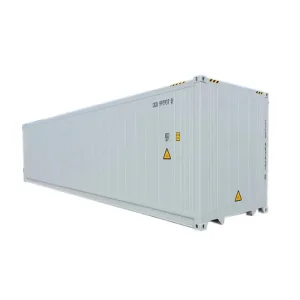
| 40ft High Cube (HC) Dry Cargo | High-Yield Atmospheric Corten / Anti-Rust Primer | 12.032 x 2.352 x 2.698 m | 28,800 kg (63,493 lbs) | ISO 1496-1, ABS, BV, CSC | $2,850 - $3,600 (New) |
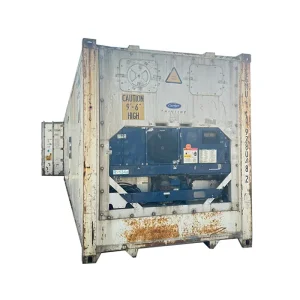
| 40ft High Cube Active Reefer | SUS304 Stainless Interior / Polyurethane Foam | 11.583 x 2.290 x 2.557 m | 29,580 kg (65,212 lbs) | Carrier / Daikin / Thermo King | $11,500 - $16,800 (New) |
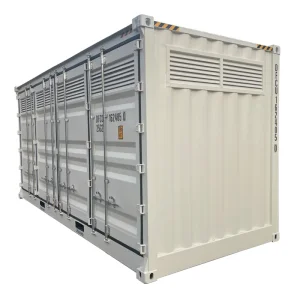
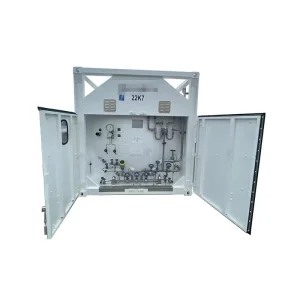
| 20ft High-Cube Dangerous Goods | Side-Open Doors, Spill-Proof Sump, Louvers | 5.898 x 2.352 x 2.698 m | 24,000 kg (52,910 lbs) | IMDG Code, ISO, BV | $4,200 - $6,100 (Custom) |
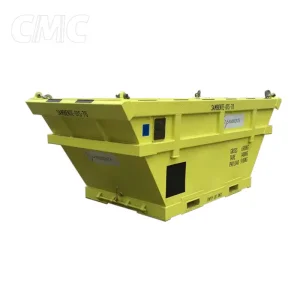
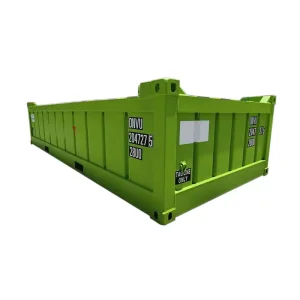
| DNV Offshore Half-Height Box | Structural High-Tensile Steel, Padeyes | 6.058 x 2.438 x 1.280 m | 18,000 kg (Dense Ores/Drill) | DNV 2.7-1 / EN 12079 | $5,800 - $8,900 (Rigid Marine) |
| T75 20ft Cryogenic ISO Tank | Austenitic Stainless Steel Inner / Multilayer Vacuum | 6.058 x 2.438 x 2.591 m | Up to 22,000 Liters | ASME VIII Div 1, ADR/RID, IMO 8 | $24,000 - $38,000 (Gas Grade) |
| 20ft Modular Expandable House | Galvanized Frame, Rockwool/PU Sandwich Board | 5.900 x 6.300 x 2.480 m (Unfolded) | Wind Resist 120km/h, Seismic Grade 8 | CE, ISO Modular Structural | $4,800 - $8,200 (Turnkey) |
*Note: Pricing subject to global steel plate fluctuations (SPA-H index), reefer compressor selection (Carrier Transicold, Daikin Zestia, Thermo King Magnum Plus), paint coating dry-film thickness (DFT), and production run quantities. Volume discounts apply to batched fleet procurement.
Intermodal containers have expanded rapidly beyond deep-sea vessel slots into specialized energy, military base camp, deep offshore extraction, and precision agricultural applications.
Standard 20ft and 40ft HC containers serve as modular enclosures for grid-scale lithium-ion battery banks. Modified with structural thermal insulation, certified fire suppression systems (Novec 1230), and explosion relief roof vents, these specialized units ensure safe field operation across desert and sub-zero renewable power plants.
Offshore exploration rigs and subsea mining sites in the North Sea, Gulf of Guinea, and Western Australia rely on DNV 2.7-1 certified silt basket containers and half-height ore boxes. Reinforced corner posts and certified sling lifting sets guarantee integrity during critical crane transfers in heavy sea states.
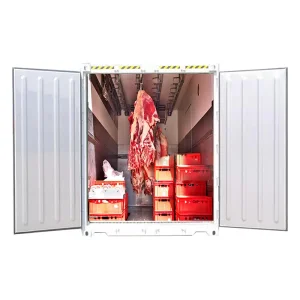
High-value perishable agricultural trade (avocados, pharmaceuticals, premium meats) deploys active reefer containers equipped with real-time O2/CO2 dynamic regulation. Hanging meat containers with integrated internal stainless monorail runners preserve product hygiene and payload balance along 40-day transoceanic lanes.
Expandable steel modular houses fold down to standard ISO dimensions for rapid flatbed and maritime shipment. On arrival, two technicians unfold full electrical, plumbing, and insulated living spaces within 30 minutes, meeting UN and humanitarian crisis relief parameters.
T75 cryogenic ISO tanks enable cross-border transport of Liquefied Natural Gas (LNG), liquid oxygen, and argon without transshipment handling. The vacuum perlite insulation layer restricts boil-off rates to <0.25% per day during multimodal rail and road movements.
Roll-up door and full side-open containers are widely installed across European and North American metropolitan fringes as modular commercial self-storage units and micro-distribution docks, bypassing protracted municipal building permit processes.
Autonomous asset tracking, composite weight reduction, and eco-friendly refrigerants are transforming industrial container fleets into connected, intelligent supply chain nodes.
Modern CIMIC fleets can be fitted with solar-powered low-profile IoT modules tracking real-time GPS location, door open/close events, internal humidity, temperature, and G-force impacts. Dual satellite/cellular transceivers eliminate oceanic data blind spots, streaming critical condition data directly to corporate ERP systems.
In anticipation of strict F-gas regulations and net-zero maritime targets, our latest reefer engineering roadmap integrates R744 (transcritical carbon dioxide) and low Global Warming Potential alternatives (R452A). These units cut lifecycle carbon emissions by over 38% while improving low-temperature COP efficiencies.
By pairing ultra-high-yield steels with continuous fiber-reinforced thermoplastic floor panels, container tare weights are reduced by up to 350 kg per 40ft HC unit. This weight reduction unlocks direct maritime fuel savings and increases cargo payload capacities without compromising stacking strength.
International purchases require ironclad international certification and seamless on-the-ground support across global destinations.
Every newly constructed dry, offshore, or reefer unit can be surveyed by Bureau Veritas (BV), ABS, Lloyd's Register (LR), or DNV. Official CSC safety approval plates, TIR customs seals, and UIC rail approval data are permanently affixed to rear doors before delivery.
For refrigerated containers, our standard integration of Carrier, Daikin, and Thermo King cooling units guarantees instant access to certified marine service engineers and spare parts across 180+ global commercial seaports.
We coordinate factory-to-port dispatch, custom export documentation, Dangerous Goods (DG) packing declarations, and "One-Way Use" commercial cargo bookings, saving overseas clients thousands of dollars in empty transit repositioning fees.
Explore our roll-up door dry vans, certified refrigeration freezers, thick foam thermal containers, soft open tops, cryogenic pressure tanks, and platform flat frames.




In-depth technical answers from our chief engineers covering container sizing, metallurgy, cooling units, certifications, and international shipping logistics.
We supply full ISO standard product lines in 10ft, 20ft, 20ft High Cube, 40ft, and 40ft High Cube configurations. Beyond conventional dry boxes, we build customized special dimension units: half-height open tops (ideal for dense mineral ore loads), full side-access containers, roll-up shutter utility units, expandable modular structures, and project-specific offshore enclosures engineered to custom payload profiles.
Our reefer solutions integrate genuine industry-leading cooling aggregates from Carrier (e.g., PrimeLINE, ThinLINE), Daikin (Zestia series), and Thermo King (Magnum Plus). This ensures our global buyers can select systems matching their local technician certifications, regional duty cycles, and available port spare parts depots.
CIMIC operates under an audited ISO 9001 quality management framework and holds primary Bureau Veritas (BV) marine equipment certification. All offshore dry cargo boxes, silt baskets, and half-height containers comply with DNV 2.7-1 / EN 12079 structural offshore lifting standards. ISO standard dry vans ship complete with CSC safety plates and TIR customs clearance seals.
Yes. Approximately 45% of our annual production covers OEM/ODM bespoke designs. We collaborate with international clients to engineer customized door geometries, spill-containment sub-flooring, heavy cable pass-through bulkheads, high-density insulation materials (aerogel/PU), customer livery, and custom interior mounting channels for mobile power or telecom installations.
New containers are produced across our primary automated manufacturing facilities in Tianjin and Suzhou, located roughly 100 kilometers from Tianjin Port and Shanghai/Taicang Ports respectively. This deep coastal proximity cuts internal positioning transport costs and accelerates vessel loading. Additionally, inspected used containers are positioned across major regional Chinese container depots for rapid dispatch.
For standard 20ft/40ft dry containers and stock reefer units, the MOQ is 1 unit. For bespoke OEM/ODM custom structural builds, minimum batch sizes typically range from 2 to 5 units depending on tooling complexity. Standard lead times run 15 to 25 working days from engineering blueprint sign-off to quay delivery.