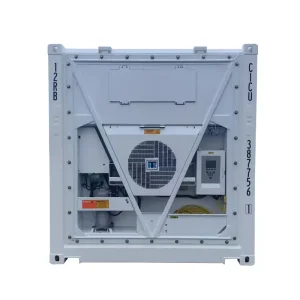
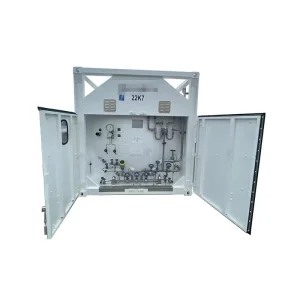
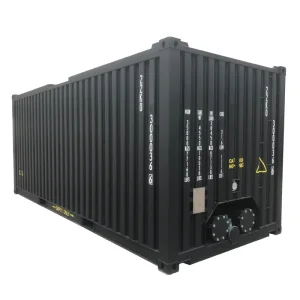
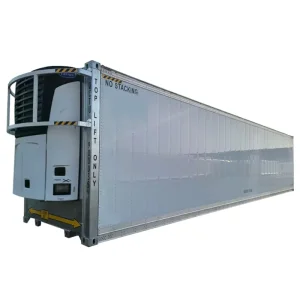
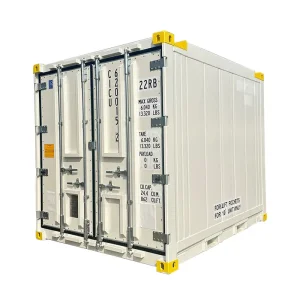
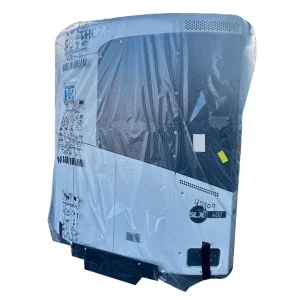
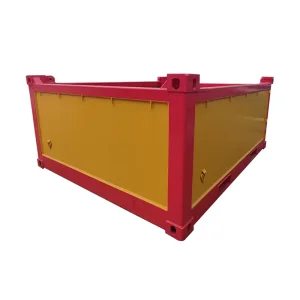
Explore heavy-duty transport racks, marine refrigeration packages, DNV offshore skids, and cryogenic tanks built to international safety mandates.
Examining structural volumetric gains, aerodynamic modal transfers, and the seismic shift toward specialized high-cube intermodal infrastructure.
The standard 40-foot container offers an internal height of 2,393 mm (7 ft 10 in), whereas the 40 Ft High Cube (9 ft 6 in / 2,896 mm external) delivers an internal clear height of 2,698 mm (8 ft 10 in). This vertical leap generates approximately 76.4 cubic meters of usable volumetric capacity compared to 67.7 cubic meters in general-purpose boxes.
For volumetric cargo—such as automotive components, high-tech electronics, e-commerce retail consumer units, and packaged insulation—this 12.8% volumetric increase drastically lowers landed freight charges per unit, maximizing container slot utilization across liner carriers.
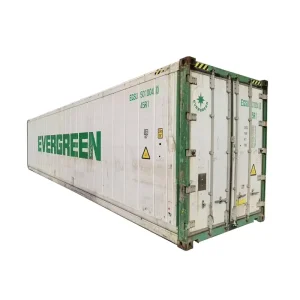
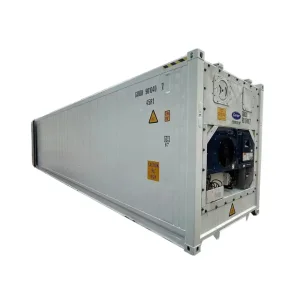
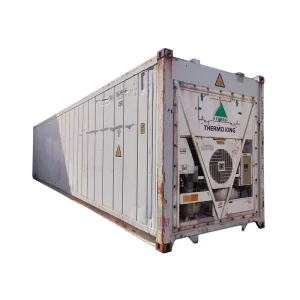
Temperature-controlled transport represents the fastest-growing sub-segment of 40ft HC deployments. Modern reefer variants integrate micro-inverter variable speed compressors from global leaders including Carrier, Thermo King, and Daikin.
These units leverage high-density blown cyclopente polyurethane foam insulation within sandwich side panels, reducing overall thermal transmittance (U-factor ≤ 0.35 W/m²K) while supporting automated CA (Controlled Atmosphere) nitrogen flush systems for perishables transiting oceanic arcs lasting 30 to 45 days.
Enterprise procurement now demands end-to-end operational visibility. Contemporary China-exported 40ft HC containers feature factory-installed solar-harvested GPS, geofencing modules, internal humidity sensors, and door-opening optical switches.
Continuous sensor telemetry beams real-time container integrity data into logistics cloud platforms via SATCOM and 5G cellular arrays, providing global logistics directors with actionable risk mitigation alerts during transpacific and Eurasian rail crossings.
A rigorous engineering benchmark detailing structural steel grades, mechanical limits, dimensional tolerances, and multi-agency regulatory certifications.
| Technical Dimension / Specification | 40 Ft HC Dry Freight (ISO 1496-1) | 40 Ft HC Reefer (Cold Chain) | 40 Ft HC Offshore (DNV 2.7-1) | Special Modified / Modular Shell |
|---|---|---|---|---|
| External Dimensions (L × W × H) | 12,192 × 2,438 × 2,896 mm (40'0" × 8'0" × 9'6") |
12,192 × 2,438 × 2,896 mm (40'0" × 8'0" × 9'6") |
12,192 × 2,438 × 2,896 mm (40'0" × 8'0" × 9'6") |
Customized / Expanded Heights up to 3,200 mm |
| Internal Dimensions (L × W × H) | 12,032 × 2,352 × 2,698 mm | 11,583 × 2,290 × 2,545 mm | 11,990 × 2,310 × 2,650 mm | Engineered per architectural insulation spec |
| Cubic Capacity (Gross Internal) | 76.4 m³ (2,698 cu.ft.) | 67.5 m³ (2,384 cu.ft.) | 73.3 m³ (2,588 cu.ft.) | Up to 82.0 m³ customized configurations |
| Tare Weight (±2%) | 3,900 kg (8,598 lbs) | 4,520 kg (9,965 lbs with machinery) | 6,200 kg (reinforced cage frame) | Variable depending on internal MEP fit-out |
| Max Payload Capacity | 26,580 kg (58,600 lbs) | 25,960 kg (57,230 lbs) | 24,280 kg (offshore structural limit) | Engineered up to 32,000 kg with reinforced sills |
| Structural Metallurgy & Shell | JIS G3125 SPA-H Corten Steel (Anti-Rust) | Outer Corten, Inner Food-Grade SUS 304 / MG-05 | Heavy EN 10025-S355 Structural Section Steel | Galvanized high-yield steel / Corten hybrid |
| Flooring System | 28 mm Hardwood Plywood or Bamboo Eco-Floor | Extruded Aluminum T-Bar (airflow profiled) | 5 mm Steel Chequered Anti-Slip Plating | Vinyl / Magnesium Oxide Fire-Rated Subfloors |
| Certifications & Classification | CSC, BV, ABS, LR, ISO 1496-1 | CSC, ATP Certification, ISO 1496-2, BV, CE | DNV 2.7-1, EN 12079, IMO MSC/Circ.860 | CE, UL, ISO 9001, National Fire Codes |
Engineering Note for Global Procurement Teams: All China-exported 40 Ft High Cube containers manufactured by vetted tier-1 facilities are treated with shot-blasting to Swedish Standard SA 2.5, followed by zinc-rich primer and heavy marine epoxy intermediate coatings. This rigorous surface prep ensures resistance against salt fog, dynamic marine torsional stress, and repeated transshipment wear.
How cutting-edge robotic production lines and deep-water seaport proximity drive unmatched cost-to-quality ratios for global buyers.
Traditional container manufacturing relies on manual MIG welding prone to human variability. Contemporary Chinese Industry 4.0 facilities utilize 6-axis continuous seam robotic welding workstations for the bottom side rails, header assemblies, and corner post gussets.
This automated precision prevents micro-voids, eliminates thermal warpage during cooling, and ensures diagonal corner-casting alignment tolerances within 1.5 mm—far exceeding the standard ISO 668 deviation thresholds and guaranteeing flawless container lashing on ultra-large container vessels (ULCVs).
In accordance with global VOC emission standards, factories utilize electrostatic automated spraying halls delivering high-solids waterborne acrylic and polyurethane systems. Steel components undergo 100% automated steel-grit shot blasting to SA 2.5 profile depth.
The resulting dry film thickness (DFT ≥ 120 μm) demonstrates zero blistering or delamination under ASTM B117 salt spray tests exceeding 1,500 continuous hours, extending container operational lifespan past 15 to 20 years in harsh oceanic lanes.
Our strategic manufacturing facilities situated along the Tianjin and Yangtze River Delta corridors reside within a 100-kilometer radius of primary container maritime terminals. This delivers rapid container repositioning, zero inland transit bottlenecks, and streamlined customs clearance.
By capturing the complete industrial cluster—from localized hot-rolled Corten coil steel mills to specialized casting, rubber gasket, and marine plywood manufacturers—Chinese exporters yield significant per-box production economies of scale, passing structural cost savings to overseas buyers.
Beyond traditional containerized maritime freight, the 40ft HC envelope has evolved into the cornerstone of modern industrial integration.
The renewable energy revolution relies on modified 40ft High Cube enclosures to house utility-scale lithium iron phosphate (LiFePO4) battery racks, power conversion systems (PCS), liquid-cooling chillers, and aerosol fire-suppression networks.
The supplementary 305 mm (1 foot) of vertical clearance provides essential overhead pathways for high-voltage DC busbars, complex HVAC ducting, and emergency smoke extractors while retaining full ISO corner-casting intermodal transportability via standard rail flatcars and chassis.
From modern prefabricated remote workforce accommodation units to multi-story pop-up retail complexes and mobile disaster medical pods, the 40ft HC offers an expansive 2.70 m internal clear height indispensable for human occupancy.
Standard architectural suspended ceilings, acoustic floor underlays, and concealed electrical conduit runs fit seamlessly within the structural envelope without compromising finished room head clearance.
Operating in the North Sea, Gulf of Mexico, or West African offshore basins requires exceptional structural integrity. Converted and purpose-engineered 40ft HC units compliant with DNV 2.7-1 / EN 12079 are deployed as offshore lab workshops, chemical dosing modules, and mud logging stations.
These units feature heavy padeyes, high-tensile four-part wire rope slings, and specialized sub-zero impact tested steel (-20°C design temperature) capable of surviving extreme dynamic snatch loads during sea-state crane lifts.
Automobile manufacturers increasingly bypass congested pure-car-and-truck-carrier (PCTC) vessels by loading finished vehicles into 40ft High Cube containers equipped with internal steel cassette racking systems.
The high-cube clearance facilitates the multi-tier placement of up to 4 passenger sedans or 3 full-size SUVs per single container, safeguarding high-value electric vehicles from open-sea atmospheric fallout, salt spray, and physical docking abrasions.
Ensuring compliance with the International Convention for Safe Containers (CSC) and global classification registries.
Every heat number of incoming SPA-H Corten steel coil is analyzed via optical emission spectrometry to verify strict copper, chromium, and nickel alloy thresholds, ensuring rapid formation of the protective passivating oxide patina.
Units are placed inside factory hydraulic test rigs to withstand a 9-high container stack load equivalent to 216,000 kg (476,200 lbs) applied downward onto the 4 corner castings, guaranteeing hull stability in heavy maritime swells.
Prior to CSC safety approval, 100% of finished dry and reefer boxes pass continuous multi-directional water deluge testing under 2 bar (200 kPa) water pressure for a minimum duration of 15 minutes, verifying zero gasket leakage.
Plywood and bamboo flooring undergoes concentrated axle load trials utilizing heavy testing vehicles exerting 5,460 kg (12,000 lbs) per wheel, surpassing ISO 1496-1 standard requirements for repeated forklift traffic inside container bellies.
Comprehensive engineering, regulatory, and logistics answers for international procurement managers and project contractors.
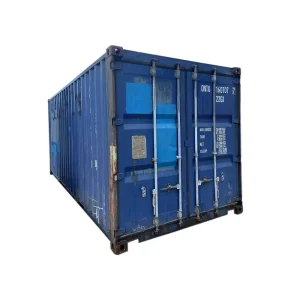
Complete your supply chain requirements with liquid tanks, heavy-duty industrial carriers, heated asphalt equipment, and pre-owned dry marine boxes.