Factory-direct precision engineered containers equipped with full side-access leaves, mechanical ventilation louvers, blast vents, and high-cube multi-door layouts.
How engineering modifications to ISO container walls maintain transverse stiffness, load bearing capacity, and compliance with ISO 1496-1 under maximum payload conditions.
Standard corrugated Corten side walls function as deep structural shear webs. When installing full-length side-open doors (bi-folding or four-leaf access), shear capacity drops dramatically. Chinese manufacturing leaders solve this through finite element analysis (FEA) by integrating heavy structural hollow section (RHS 150x100x6.0mm) roof lintels and reinforced lower side sills, preserving longitudinal bending moments without frame racking under sea-borne torsion.
Cutting windows, roll-up shutter portals, or HVAC/BESS intake openings compromises perimeter rigidity. Our CNC laser cutting systems cut openings with sub-millimeter tolerances, immediately followed by the automated robotic welding of perimeter box-section frames (SPA-H weathering steel). The lintel is flanged with drip rails to divert water away from EPDM dual-lip rubber seals, eliminating localized moisture ponding and galvanic corrosion risks.
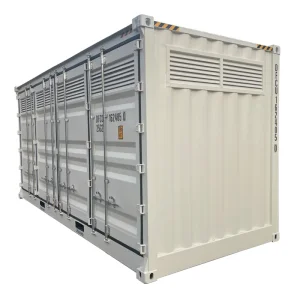
For chemical and lithium battery energy storage systems (BESS), passive labyrinth vents and active louvers are integrated into end walls and side panels. Openings are calculated according to NFPA 68 / NFPA 855 deflagration relief criteria, utilizing spark-proof stainless steel mesh, counterbalanced gravity dampers, and integrated fire dampers capable of shutting within milliseconds upon gas detection trigger.
Unmatched integration of raw metallurgical access, state-of-the-art robotic cold forming, automated continuous weld tracks, and direct coastal port dispatch.
The manufacturing ecosystem in China commands over 90% of the world's intermodal container supply chain. Our industrial base maintains unhindered direct pipeline allocations from national prime mills including Baosteel and Ansteel. For structural container openings, we strictly mandate SPA-H Corten steel for all corrugation cuts, lintel box-sections, corner castings, and hinge brackets. Unlike standard mild steel, SPA-H develops an adherent, protective oxide patina when exposed to maritime environments, yielding superior resistance to pitting and structural thinning.
Situated within roughly 100 kilometers of the world's largest deep-water container gateways (Tianjin, Shanghai, Ningbo-Zhoushan, Qingdao), Chinese container manufacturers offer unmatched turnaround velocity. Standard modified units with ventilation openings or side-access assemblies bypass inland multi-hop trucking costs, delivering directly from factory gate to ocean vessel terminal (FAS/FOB) within 48 hours of final CSC sign-off.
Navigating the stringent engineering criteria of international classification societies to ensure every container opening holds valid CSC approval, TIR customs clearance, and DNV maritime offshore certification.
Any non-standard opening (window, door, or ventilation port) alters the load distribution certified by the original International Convention for Safe Containers (CSC) safety approval plate. Our design teams work alongside Bureau Veritas (BV), Lloyd's Register (LR), and China Classification Society (CCS) to validate modified door leaves and side openings through transverse racking tests, floor deflection trials, and corner casting pull tests up to full stack rating.
For international multimodal freight, container openings must comply with TIR (Transports Internationaux Routiers) customs security standards. Custom doors, ventilation dampers, and access covers are designed with enclosed hinge pins, tamper-evident lock boxes, and security eyelets that prevent aperture removal from the exterior without breaking customs seals, ensuring seamless passage across international transit frontiers.
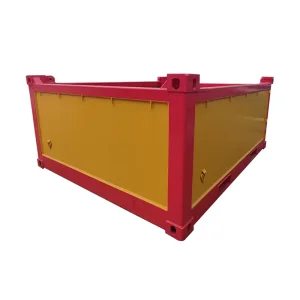
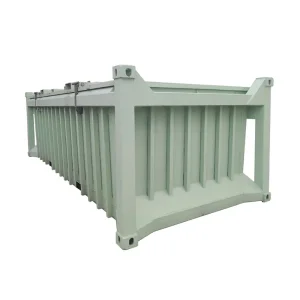
Offshore container openings operate under severe dynamic shock, platform cranes, and extreme North Sea and tropical wave actions. Our offshore cargo baskets, mini containers, and half-height bins incorporate reinforced primary pad eyes, structural coamings, high-yield steel door lintels, and non-sparking brass hinge bushings conforming strictly to DNV 2.7-1 and EN 12079 offshore lifting mandates.
Examining the high-demand industrial sectors where precision-modified container openings deliver transformative operational velocity and equipment protection.
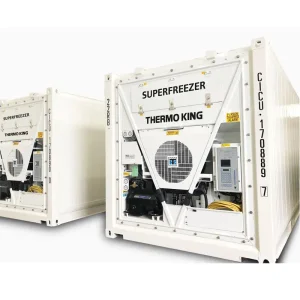
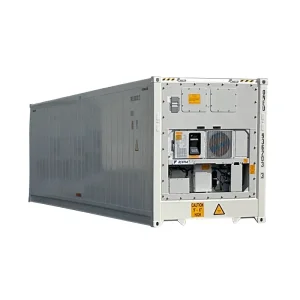
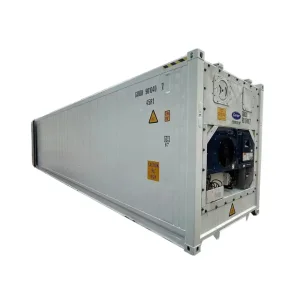
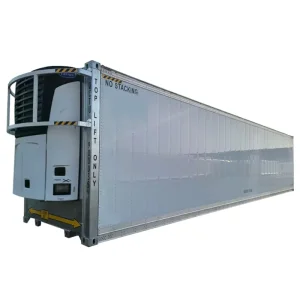
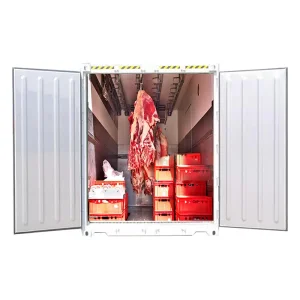
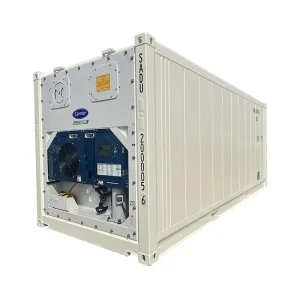
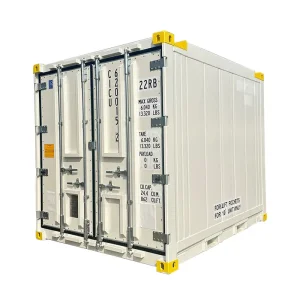
Perishable freight operators and high-turnover grocery distribution hubs cannot rely solely on standard rear doors. Side-open reefer containers equipped with full-length thermal bi-folding doors permit simultaneous multi-pallet forklift loading directly from loading docks. High-density polyurethane foam injection and multi-fin santoprene perimeter seals maintain a temperature envelope from -30°C to +30°C without localized thermal bridging.
The green energy transition has triggered widespread demand for modular containerized lithium-ion Battery Energy Storage Systems (BESS). These require precisely positioned roof blast hatches, louvers with motorized dampers, insulated maintenance access doors, and cable glandular bottom penetrations. China's manufacturing lines install fire-rated Rockwool sandwich interiors, stainless steel drip flashing, and IP55 weather protection around all openings.
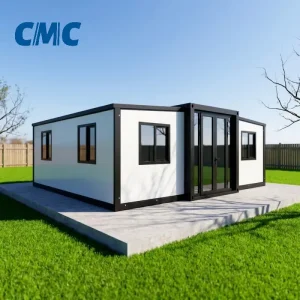
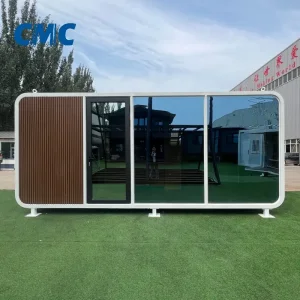
Expanding prefabricated modular cabins and mobile garden studios require architectural glass apertures, thermal break aluminum frames, and floor-to-ceiling panoramic sliding doors. By reinforcing header beams with perimeter tube framing, modular buildings preserve high shear load capacity during intermodal sea freight and rapid on-site crane placement, providing immediate plug-and-play occupancy.
Standard versus custom aperture configurations engineered by China CIMIC manufacturing facilities for overseas procurement verification.
| Aperture / Opening Type | Structural Reinforcement Spec | Gasket & Seal Technology | Applicable Standards | Ideal Industrial Application |
|---|---|---|---|---|
| Full Side Open (Bi-Fold) | 150x100x6.0mm RHS box header with continuous corner gusset plates | Dual-lip vulcanized EPDM extrusion with molded 90° vulcanized corners | ISO 1496-1, CSC Approved | Palletized distribution, machinery transport, oversized cargo |
| Hazardous Chemical Venting | Flanged SPA-H outer collar with interior spark-arrestor stainless screen | Silicone heat-resistant flange with intumescent perimeter fire seal | NFPA 68, NFPA 855, CE Mark | Lithium battery BESS containers, hazardous chemical warehouses |
| Commercial Roll-Up Shutter | Cold-formed 4.0mm heavy steel jamb tracks welded to container posts | EPDM bottom bulb seal and dual nylon brush side weather seals | EN 13241-1, WWT Certified | Frequent daily access storage, self-storage yards, equipment pods |
| DNV Offshore Basket/Hatch | Heavy plate coaming with machined hinge eyes and 316 stainless hinge pins | Neoprene marine weatherstrip with mechanical compression toggle latches | DNV 2.7-1, EN 12079, BV Marine | Offshore drill platform tools, mining extraction, rough-sea transfer |
| Architectural Panoramic Glazing | Thermal break steel perimeter subframe with deflection limit < L/300 | Structural silicone glazing (SSG) with secondary drainage channel | ISO 9001, CE EN 14351-1 | Apple cabin offices, mobile medical labs, expandable tiny homes |
Accelerating innovations in IoT telemetry integration, automated pressure mitigation, and low-carbon metallurgical manufacturing.
Global supply chains are migrating from passive locks to smart, sensor-embedded door gaskets. These openings feature integrated micro-switches, BLE (Bluetooth Low Energy) mesh transceivers, and tamper-sensing fiber optics inside the rubber extrusion. Every door opening event, unauthorized intrusion, or thermal leak is timestamped and relayed via satellite uplink to fleet managers in real time.
To maximize highway payload limits without violating tare weight restrictions, manufacturers are engineering hybrid door leaves. By pairing ultra-high-strength steel frames with carbon-fiber or basalt-fiber reinforced polymer (FRP) panels, tare weight is lowered by up to 35% across four-leaf side openings while retaining identical resistance to wind-and-water ingress.
In accordance with stricter global environmental mandates and China's green factory standards, manufacturing processes have transitioned entirely from solvent-based coatings to high-performance waterborne zinc-rich epoxy primers. Applied in humidity-controlled automated spray booths, these coatings provide C5-M marine corrosion resistance across all cut edges, hinges, and weld seams.
Expert technical insights answering common procurement inquiries regarding certifications, structural modifications, weather sealing, and custom manufacturing runs.
Yes, unauthorized field modifications immediately void the container's original CSC safety approval plate. However, when manufactured or modified at a certified Chinese factory with verified engineering calculations and structural reinforcement frames, the unit undergoes recertification under classification societies such as Bureau Veritas (BV), Lloyd's Register (LR), or CCS, retaining full sea-worthiness and international stacking ratings.
Only SPA-H (JIS G 3125) or Corten-A equivalent atmospheric corrosion-resisting steel should be utilized for structural reinforcement lintels, perimeter box tubing, and framing channels. Using standard Q235 mild steel induces galvanic corrosion at weld interfaces and drastically degrades structural lifespan in saline maritime environments.
High-integrity side-opening containers incorporate three defensive layers: an overhead drip flange along the top lintel, multi-fin continuous vulcanized EPDM rubber gaskets fitted into precision-recessed retainer channels, and heavy-duty forged cam locking mechanisms that exert continuous mechanical compression against the door frame perimeter.
While standard mass-production shipping containers favor multi-unit runs, our custom opening lines support prototype evaluation orders starting from 1 to 2 units for complex projects (such as BESS battery enclosures, mobile clinics, or special dangerous goods units), with tiered tooling volume pricing on larger contract runs.
Yes. To accommodate high-clearance roll-up doors without roof deflection under snow or container stacking loads, we weld an inverted heavy-gauge structural box lintel across the top span, directly anchoring into the corner posts. This distributes overhead compressive forces around the roll-up drum housing directly into the bottom side rails.
Openings designed for hazardous chemical or battery energy storage utilize certified intumescent fire dampers that expand under high heat (typically >180°C) to hermetically seal ventilation channels. Exterior louvers are backed with flame-retardant stainless wire mesh and counter-weighted blast panels conforming to NFPA 68 and ATEX industrial safety directives.
Discover our extended line of refrigerated reefers, offshore certified baskets, heavy ore open-top units, and deep-freeze modular containers.