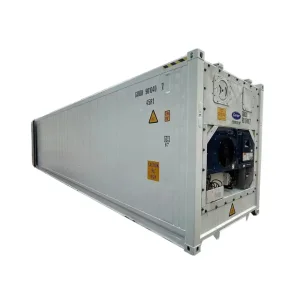
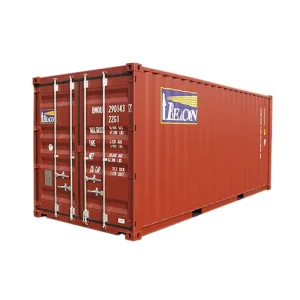
Pre-engineered standard dry cargo, thermal-controlled reefers, and modular offshore equipment manufactured in compliance with ISO 1496 and DNV 2.7-1 certifications.
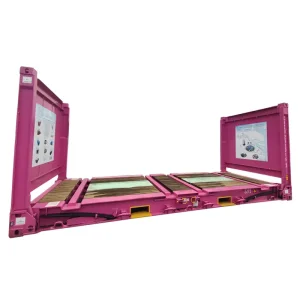
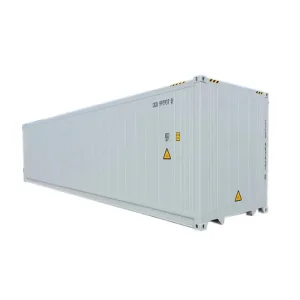
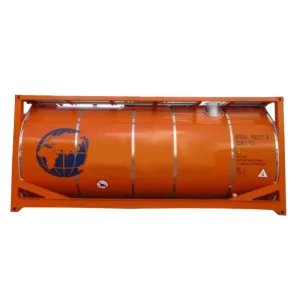
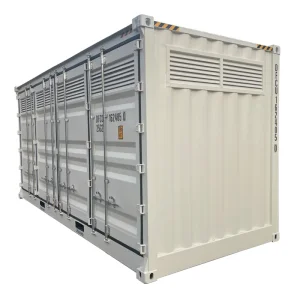
A comprehensive examination of how structural steel refinement, robotic production automation, and port-proximate logistics hubs make China the unrivaled epicenter of standardized global trade assets.
The concentration of domestic smelting mills supplying specialized weathering steel (Corten A/B equivalent to JIS G3125 SPA-H) provides an unbreakable foundation. From raw coil slitters to precision automated roll-forming lines, the manufacturing cycle eliminates freight bottlenecks and metal scrap variance across multimillion-TEU volumes.
Modern Chinese container fabrication lines utilize high-precision tandem submerged arc welding (SAW) and multi-axis robotic gas metal arc welding (GMAW). This ensures continuous penetration along critical primary structural members: bottom side rails, top corner castings, header frames, and corrugated side panelling under strict ISO tolerances.
Production hubs concentrated in Tianjin, Qingdao, Shanghai-Ningbo, and the Pearl River Delta are located within 50 to 100 kilometers of deepwater maritime berths. This proximate geometry minimizes drayage expenses and facilitates instantaneous one-way export loading voyages, slashing ocean repositioning capital expenditures.
An in-depth technical analysis of metallurgical choices and environmental coating technologies engineered to withstand decades of aggressive saline spray, cyclic wave impacts, and high humidity.
Chinese factories standardize on high-grade weathering steel enriched with Copper (Cu), Chromium (Cr), and Nickel (Ni). When exposed to maritime atmospheres, SPA-H develops an adherent, impervious oxide patina that halts atmospheric oxygen diffusion, yielding a service life exceeding 20 years in transoceanic freight operations.
In adherence to strict volatile organic compound (VOC) reduction mandates, Chinese manufacturing facilities lead global compliance via three-tier waterborne coating setups: zinc-rich epoxy primers, high-build epoxy intermediate barriers, and water-dispersed polyurethane topcoats for UV resistance.
Flooring substrates must bear heavy forklift wheel loads (ISO 1496 7,260 kg test). China has developed high-density laminated bamboo-veneer composite flooring treated with eco-safe pesticides complying with Australian Department of Agriculture quarantine regulations.
Every industrial container exported from China undergoes rigid verification processes overseen by international classification societies to secure immediate legal operation across intermodal routes worldwide.
| Standard / Regulation | Certifying Bodies | Mandatory Test Protocols | Global Application Domain |
|---|---|---|---|
| CSC 1972 Convention for Safe Containers |
BV ABS LR CCS | 9-high dynamic stacking load (86,400 kg), transverse racking (150 kN), roof load, floor strength test. | International deep-sea liner shipping, rail intermodal interchange, automated port terminals. |
| ISO 1496-1 / 1496-2 Series 1 Freight Containers |
ISO 9001 ClassNK | Dimensional dimensional verification (ISO 668), air leakage, heat transmission coefficient (K-value < 0.4 W/m²K). | Reefer cold storage, dry bulk containerized movement, rail flatcar lock-pin validation. |
| DNV 2.7-1 / EN 12079 Offshore Lifting Containers |
DNV Bureau Veritas | Charpy V-notch impact toughness at -20°C/-40°C, 4-point dynamic lift test, pad-eye NDT weld inspection. | Open ocean oil & gas rigs, offshore wind turbine maintenance, harsh offshore supply vessels (OSV). |
| IMDG / UN Portable Tank (T-Codes) Dangerous Goods Transport |
BV TÜV SÜD | Hydrostatic pressure testing (up to 6 bar), ASME Section VIII weld radiography, safety relief discharge calibration. | Corrosive chemicals, liquid foodstuffs, cryogenic liquefied gases (LNG, LOX, LIN - T75). |
| Customs TIR & UIC 592 Cross-Border Rail & Customs Seal |
Customs Administration | Tamper-proof door hardware integrity, bonded curtain-side cable threading, railway impact humping tests. | Trans-Eurasian rail lines (China-Europe Railway Express), intermodal road trailer operations. |
Enterprise asset managers balance initial capital expenditures against fleet lifecycle maintenance costs, payload-to-tare ratios, and structural longevity across demanding deployment routes.
By engineering high-yield lightweight corrugations without compromising structural integrity, Chinese manufacturers reduce tare weights down to ~3,600 kg for 40ft High Cubes, boosting billable freight capacity over 25-year service terms.
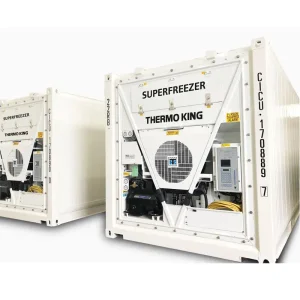
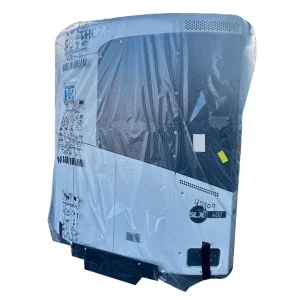
Every reefer leaving Chinese yards undergoes factory-integrated digital Pre-Trip Inspections (PTI). Comprehensive operational data logging covers Carrier Transicold, Thermo King, and Daikin units to prevent field breakdowns.
Procurement teams utilize "Cabotage" or "One-Way Use" programs, allowing empty newly manufactured containers to carry revenue cargo to Europe or North America, effectively amortizing ocean transport costs to zero.
From internal tie-down lashing track rings to specialized side-curtains and floor drop-wells, Chinese facilities rapidly build bespoke steel forming dies, decreasing special equipment lead times from 24 weeks to just 6 weeks.
Engineered shipping containers have transcended standard maritime freight to become structural units for remote resource extraction, cold chain distribution, and modular civil installations.
Navigating cross-border rail routes demands high resistance against longitudinal humping acceleration shocks (up to 4G) and extreme ambient shifts from +40°C in Central Asian steppes to -40°C in Siberian transit zones.
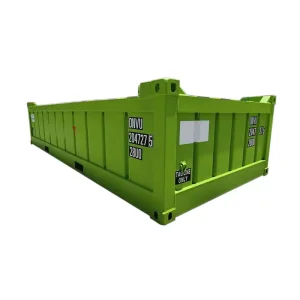
Open ocean support vessels require half-height and open-top containers capable of carrying heavy mineral ores, drill bits, and subsea risers without high center-of-gravity tipping hazards.
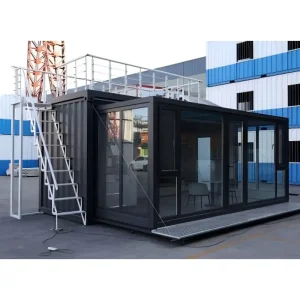
Rapid deployment requirements in disaster recovery, edge computing, remote mining barracks, and battery energy storage systems (BESS) transform ISO container frames into plug-and-play modular stations.
The convergence of low-orbit satellite IoT telemetry, synthetic biological cold-chain preservation, and closed-loop steel recycling models reshapes the next decade of container manufacturing.
Factory-integrated sensor arrays monitor container metrics: real-time GPS positioning, door open/close light detection, multi-axis acceleration impact tracking, cargo CO2/ethylene levels, and internal humidity readouts.
Phasing down high-GWP HFCs (such as R134a and R404A) accelerates the adoption of eco-conscious units powered by R1234yf, R513A, and natural CO2 (R744) compressors capable of deep chilling below -35°C with near-zero ozone depletion.
Chinese steel mills feeding container plants are increasing scrap steel ratios via Electric Arc Furnace (EAF) infrastructure powered by renewables, reducing the embedded carbon footprint per TEU box from cradle to quay.
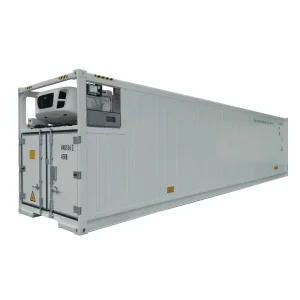
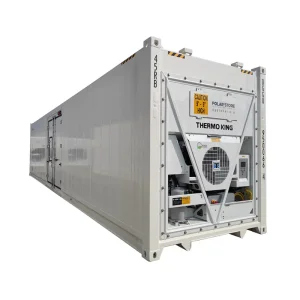
Bespoke industrial solutions including hazardous roll-up doors, cryogenic T75 pressure vessels, side-access reefers, and multi-temperature reefer storage enclosures.
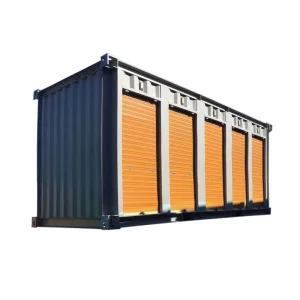
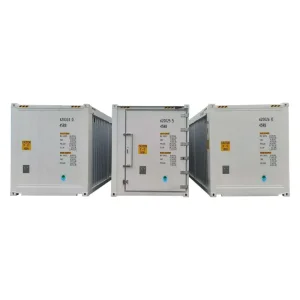
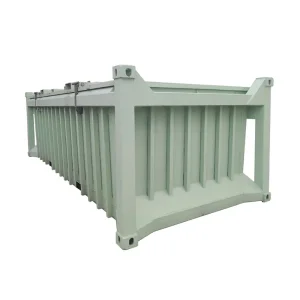
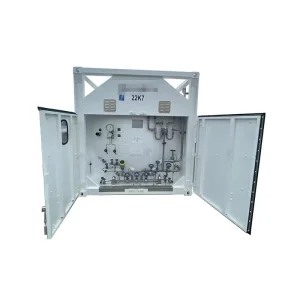
Comprehensive answers drafted by marine surveyors and factory quality directors addressing manufacturing tolerances, custom builds, classification, and warranty terms.
SPA-H (JIS G3125 standard) is an alloy steel formulated with targeted additions of Copper (0.25-0.40%), Chromium (0.50-1.00%), and Nickel (0.20-0.50%). Standard Q235 carbon steel forms flaky rust that continuously spalls and exposes underlying metal to further attack. SPA-H generates a dense, stable amorphous passivation layer that seals the base steel against water and chlorides, reducing corrosion progression by over 400% in high-salinity ocean environments.
Non-standard length, width, or height containers (e.g., 10ft mini sets, 45ft pallet-wides, or 53ft domestic formats) require specialized type approval under CSC 1972 Annex II regulations. Factory prototype models undergo rigorous multi-axis hydraulic destructive testing witnessed by society surveyors (such as BV, ABS, or DNV). Once stacking tests (typically 9-high at 1.8x max gross weight) and racking loads are confirmed, a customized stainless steel CSC plate is permanently riveted to the left door leaf.
Factory quality protocols for refrigerated containers include testing per ISO 1496-2 standards. Airtightness is evaluated by pressurizing the internal compartment to a designated differential pressure (e.g., 250 Pa) and measuring internal decay over time. For thermal performance, thermal imaging camera inspections verify consistent high-pressure cyclopentane-blown polyurethane foam distribution, preventing cold bridge voids along corner frames, bottom T-bars, and door perimeter gaskets.
Standard ISO containers are designed primarily for static stacking and balanced vertical spreaders at dockside terminals. Offshore containers (DNV 2.7-1 / EN 12079 / ISO 10855) are built for open-ocean dynamic snatch lifting from supply boat decks under rough sea conditions. They require higher-toughness structural steel rated at -20°C or -40°C, integrated pad-eyes welded to main structural rails with 100% non-destructive examination (NDE), internal lifting frames, and certified four-leg wire rope chain slings.
For standard dry freight containers (20GP, 40GP, 40HC), Chinese plants operate on high-speed flowlines where small pilot orders (1 to 5 units) can ship from yard inventory, while custom production runs typically start at 5 to 10 TEU. For fully customized builds requiring proprietary roll-forming dies, laser-cut side assemblies, or specific paint liveries, tooling lead time runs 2 to 4 weeks, with line manufacture completed within 15 to 25 business days thereafter.
Following strict mandates established by the China Container Industry Association (CCIA), solvent-based coatings have been largely phased out in favor of waterborne paint formulations. These advanced systems replace hazardous aromatic hydrocarbon thinners with demineralized water. The resulting dry films match solvent formulations in pull-off adhesion strength (> 5 MPa, ISO 4624) and corrosion protection, while cutting VOC emissions by over 80% to satisfy EU and US environmental standards.
