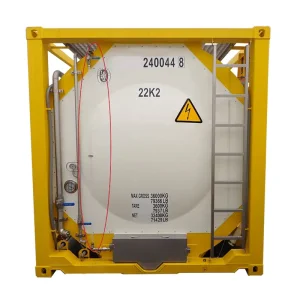
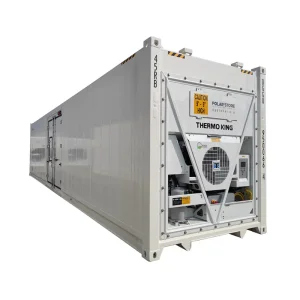
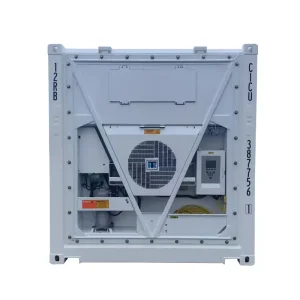
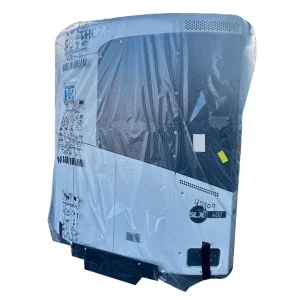
Explore heavy-duty intermodal equipment, cold-chain refrigeration units, DNV-certified offshore platforms, and modular architectural builds manufactured to rigid global classification society criteria.
Analyzing the structural bridge between 20ft payload ceilings and 40ft spatial volumetrics across modern international supply chains.
Standard 20ft ISO containers frequently cube out before meeting maximum axle weight thresholds for dense dry bulk and specialized machinery. Conversely, 40ft units present excess dead weight and road toll penalties. 30ft intermodal builds provide the precise sweet spot—yielding roughly 48 to 56 m³ of usable internal space while optimizing road chassis weight distribution.
Engineered using atmospheric corrosion-resistant Corten-A (SPA-H) structural steel, 30ft container variants boast exceptional torsional rigidity. Corner castings built to ISO 1161 standards allow compatibility with cellular container vessels, specialized spreaders, and 30-foot rail spine wagons widely favored across European (UIC 592) and Australian rail transport arteries.
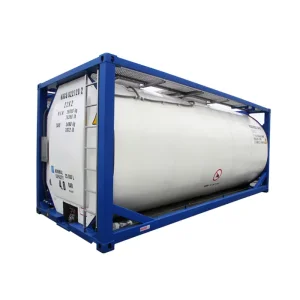
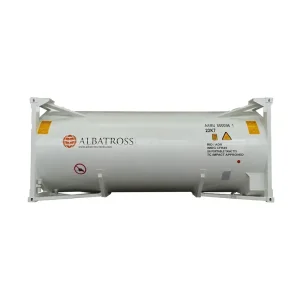
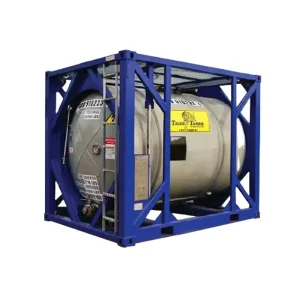
Beyond general cargo, 30ft platforms have emerged as the premier dimensional footprint for containerized Battery Energy Storage Systems (BESS), mobile water treatment plants, offshore living quarters, and cryogenic gas iso-tanks. Their intermediate size enables factory integration of multi-megawatt systems without violating standard crane hoisting envelopes.
Addressing supply chain friction, dynamic tare weight requirements, and strategic procurement for institutional EPC contractors, fleet operators, and industrial logistics conglomerates.
Global procurement teams across mining, petrochemical, and intermodal bulk operations are navigating strict gross vehicle weight (GVW) limits on highway corridors across North America, the EU, and Australasia. Traditional 40ft high cubes consistently run half-empty when moving dense ores, mineral concentrates, or liquid chemicals. Meanwhile, 20ft units fail to provide the interior linear space required for 10-meter extraction pipes, subsea risers, or complex electrical enclosures.
The strategic deployment of 30ft container infrastructure resolves this operational deficit by capturing a 40% volumetric gain over standard 20ft units while avoiding the empty dead-weight tare penalty of 40-footers, directly slashing maritime per-ton freight rates and road chassis demurrage fees.
Enterprise asset managers focus extensively on asset lifecycle economics. Container fleet longevity is contingent on zinc-rich primer anti-corrosion treatments, robotic seam welding integrity, and CSC safety approval maintenance. Procuring directly from certified original equipment factories (such as Tianjin Cimic Imp&Exp Co., Ltd.) eliminates intermediary markups and grants engineering teams full control over CAD blueprints.
By standardizing on 30ft dual-point lifting platforms with certified twistlock pockets, asset operators achieve multi-modal versatility: moving seamlessly from road gooseneck trailers to rail skeletal flatcars and deep-sea vessels without cargo transloading or manual rigging adjustments.
A deep look inside Tier-1 container manufacturing lines: precision forming, robotic submerged-arc welding, automated surface shot blasting, and marine-grade protective coating systems.
Factory fabrication begins with primary decoiling and hydraulic stamping of SPA-H atmospheric corrosion-resistant steel plates. Corrugation profiles are precision-formed to 2.0mm and 1.6mm thickness tolerances, ensuring maximum lateral yield strength under acute dynamic compressive loads.
Corner castings (cast steel SCW480) and structural sills are joined on automated jig lines using dual-torch robotic submerged arc welding and mixed gas (Ar+CO₂) shielded arc welding. This guarantees 100% seam penetration, eliminating micro-cracking and achieving absolute airtight sealing.
Fully assembled container structures undergo automated centrifugal grit blasting to reach Swedish Standard Sa 2.5 surface purity. A three-tier paint schedule follows: zinc-rich epoxy primer (30μm), epoxy intermediate barrier coat (40μm), and topcoat polyurethane (40-50μm), reaching ISO 12944 C5-M marine anti-corrosion compliance.
Custom industrial configurations engineered to address high-friction logistics scenarios across global verticals.
30ft containerized battery enclosures accommodate up to 3.5 MWh - 5.0 MWh utility-scale lithium-ion or sodium-ion energy banks. Integrated with certified NFPA 68/69 deflagration panels, Novec 1230 / aerosol fire suppression, and liquid-cooling HVAC chillers, these units offer optimal road transportability to remote solar and wind generation substations.
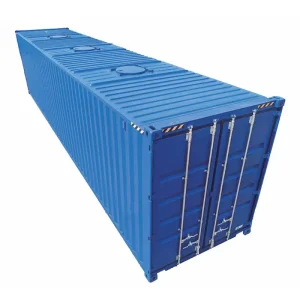
In petrochemical resin, polymer pellet, and cement distribution, 30ft bulk containers feature pneumatic discharge valves, fluidizing aerators, and top roof hatch filling ports. They maximize train payload while utilizing standard 30ft tipping chassis at port transloading terminals without material segregation.
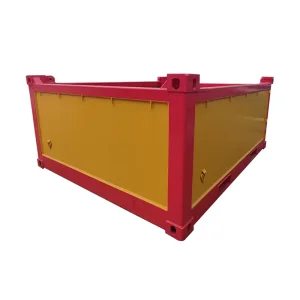
Custom 30ft half-height and open-top offshore baskets engineered to DNV 2.7-1 / EN 12079 criteria provide dedicated rigging for subsea manifolds, drill collars, and heavy blow-out preventers (BOPs). Equipped with certified pad-eyes and sling sets rated for dynamic offshore hoisting in harsh sea state conditions.
Comparative structural parameter data verified by factory quality control engineers for intermodal planning.
| Dimensional Metric | 20ft ISO Standard | 30ft Intermodal Spec (CIMIC) | 40ft ISO High Cube |
|---|---|---|---|
| External Dimensions (L × W × H) | 6,058 × 2,438 × 2,591 mm | 9,125 × 2,438 × 2,896 mm | 12,192 × 2,438 × 2,896 mm |
| Internal Usable Volume | 33.2 m³ | 54.6 m³ | 76.4 m³ |
| Average Tare Weight | 2,200 kg | 2,980 kg | 3,920 kg |
| Max Gross Operating Weight (MGW) | 30,480 kg | 36,000 kg | 32,500 kg |
| Maximum Net Payload | 28,280 kg | 33,020 kg | 28,580 kg |
| Floor Structure Material | 28mm Keruing Marine Plywood | 4.5mm Corten Checkered Steel Plate | 28mm Bamboo / Plywood Laminate |
| Classification Societal Certifications | BV, ABS, CCS, ISO 1496-1 | BV, ISO 668, CSC, DNV 2.7-1 (Opt) | BV, ABS, CCS, Lloyd's Register |
Ensuring cross-border compliance across UIC rail codes, maritime CSC conventions, and hazardous material protocols.
Every industrial 30ft container fabricated at our production yards receives independent third-party approval (Bureau Veritas or CCS) pursuant to the International Convention for Safe Containers (CSC 1972). Testing includes a 9-high stacking load test (86,400 kg per post), transverse racking tests, and longitudinal restraint resistance tests.
For intercontinental road and rail corridors across Eurasia and the Americas, our builds satisfy TIR customs sealing criteria. Continuous internal hinge pins, anti-rack door hardware, and tamper-proof lock cam assemblies guarantee border crossing clearance without manual cargo inspection holdups.
Specialized units intended for maritime oil, gas, and offshore wind applications are designed and tested to DNV Standard for Certification 2.7-1 / EN 12079. Destructive drop testing at -20°C and 4-point dynamic lifting assessments verify impact toughness under acute North Sea and Gulf of Mexico hydrodynamic environments.
Next-generation smart monitoring, ultra-lightweight alloys, and sustainable zero-carbon container fabrication.
Integration of self-powered solar IoT telemetry beacons tracking GPS, internal tri-axial shock forces, door breach events, and interior ambient temperature/humidity curves via satellite-cellular mesh arrays.
Transitioning primary structural side panels to high-strength, low-alloy (HSLA) micro-composite sheets, cutting tare weight by 14% while retaining structural yield thresholds up to 550 MPa.
Incorporating aerogel composite insulation cores into specialized 30ft reefer and cold-room container walls, reducing heat leakage (K-value < 0.32 W/m²K) and slashing cooling unit electrical power draw by 28%.
Deploying electric arc furnace (EAF) steel sourcing, waterborne zero-VOC epoxy paint formulations, and circular modular container floor systems derived from 100% post-industrial structural polymers.
Direct answers from our engineering desk regarding 30ft container manufacturing, handling, transportability, and custom configurations.
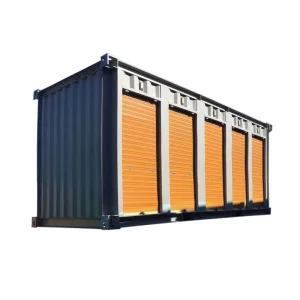
Explore additional specialized logistics platforms: bulk shipping containers, ISO tank systems, roll-up dry cargo modules, and trailer refrigeration packages.