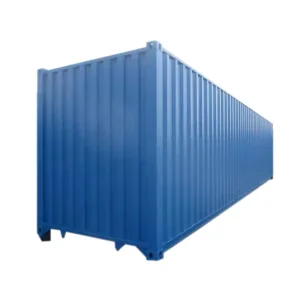
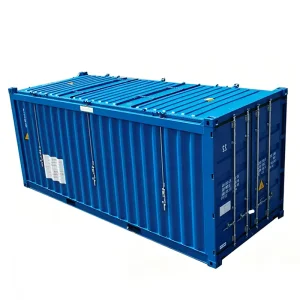
Directly sourcing high-grade Corten steel intermodal containers certified by Bureau Veritas and compliant with ISO cargo integrity standards.

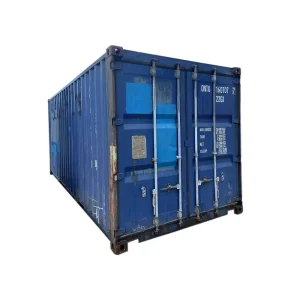
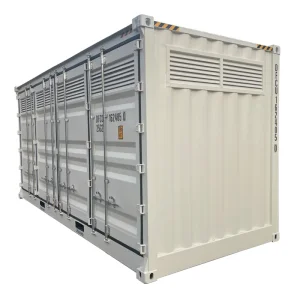
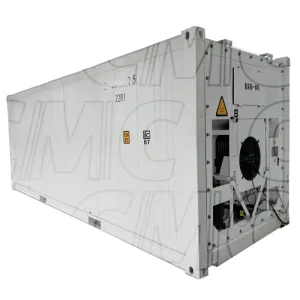
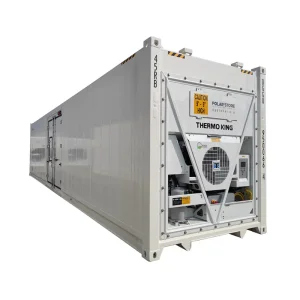
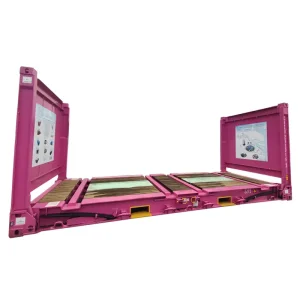
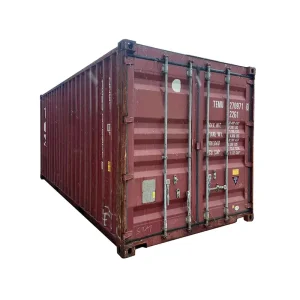
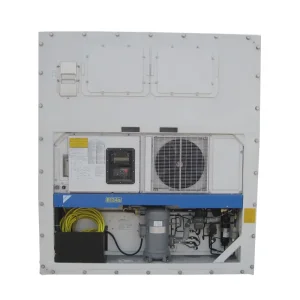
Examining how Corten-A steel formulations, structural FEA simulation, and high-tensile structural components have elevated the ubiquitous 20ft and 40ft standard dry container from simple iron boxes to high-precision intermodal assets.
Modern standard dry containers utilize high-grade SPA-H atmospheric corrosion-resistant steel. Unlike conventional carbon steel, Corten steel produces an amorphous, passivating patina when exposed to airborne salinity. This self-sealing oxide barrier retards corrosion penetration speeds down to < 0.012 mm/year, ensuring ocean transits across the Roaring Forties or trans-Siberian freight runs do not compromise wall structural margins.
The characteristic vertical fluting in dry container sidewalls is strictly engineered: 2.0mm thick outer corrugation profiles coupled with precision pressing geometries generate lateral shear modulus values exceeding 1,960 kN. This design allows empty stacking capabilities reaching 9 to 11 units high on modern Ultra Large Container Vessels (ULCVs) carrying up to 24,000 TEU, resisting intense hydrostatic and inertial pitch-roll harmonics.
Load floor assemblies feature 28mm thick laminated apitong or keruing wood ply matrices or lightweight steel hybrid decks. Bonded with phenol-formaldehyde boiling-water-proof (BWR) resins and pre-treated in full accordance with Australian Department of Agriculture, Fisheries and Forestry (DAFF) quarantine criteria, the flooring endures 5,460 kg front-axle forklift loads defined under ISO 1496-1 Annex B test conditions.
Enterprises orchestrating massive cargo shipments face a classic capex optimization equation: acquiring factory-new builds or leveraging multi-port depot second-hand assets.
| Evaluation Parameter | Factory-New Standard Dry (CW / IICL-6) | Refurbished / Cargo Worthy (CW) | Wind & Water Tight (WWT Grade) |
|---|---|---|---|
| CSC Safety Plate Validity | Full 5-Year Original Certification | 12 to 30 Months Re-certified (Depot Inspected) | Expired / Static Terrestrial Only |
| Surface Protection System | Zinc-Rich Primer + Polyurethane Topcoat (>120μm) | Spot Sandblasted, Epoxy Recoating Applied | Original Paint with Surface Oxidation / Scuffs |
| Ocean Freight Suitability | Prime tier; lowest marine insurance risk band | Fully approved for multimodal ocean carriage | Restricted to static storage & overland road runs |
| Optimal Commercial Application | High-value equipment, pharma, chemical export | Standard palletized commodities, mineral dry bulk | Decentralized on-site storage, conversion hulls |
| Expected Service Lifecycle | 20 to 25+ Years with periodic maintenance | 10 to 15 Years in intermediate duty cycles | 5 to 8 Years static longevity |
Consolidating procurement around unified ISO corner castings, lock-rod cam mechanisms, and floor cross-member spacing streamlines maintenance inventories and ensures immediate trailer chassis compatibility globally.
Exporting from our Tianjin port base enables "one-trip" revenue loading. Enterprises dispatch export cargo inside freshly purchased containers, effectively amortizing ocean transit costs down to zero net sea-freight overhead.
Sourcing dry units directly through integrated depot networks across Tianjin, Shanghai, Qingdao, and Ningbo eliminates drayage friction and accelerates export dispatch timelines by 10 to 14 working days.
Direct export sourcing via certified Pilot Free Trade Zones (FTA) in Tianjin gives corporate accounts direct tariff documentation, streamlined duty-drawback capabilities, and auditable asset depreciation structures.
Engineered for frictionless handoffs between ultra-large container carriers, standard double-stack rail cars, and Class-8 long-haul highway chassis.
Reinforced corner posts tested to 848 kN vertical compression loads comfortably withstand dynamic slamming loads during severe sea states. EPDM double-lip perimeter door gaskets guarantee an airtight seal under torrential downpours and green water deck immersion.
Cross-border rail corridors through Central Asia demand resistance against severe temperature variations, from +45°C summer desert heat down to -40°C sub-Arctic winters. Our low-temperature impact-tested steel prevents brittle fractured joints under high-frequency rail vibrations.
Standard dry units serve as structural shells for battery energy storage systems (BESS), water treatment enclosures, and secure job-site depots. Precision steel dimensions permit easy integration of insulation panels and electrical conduits.
Every container exported from our Tianjin and Suzhou manufacturing yards is manufactured under strict quality controls and accompanied by third-party certification paperwork.
Comprehensive destructive and non-destructive load trials, racking tests, transverse bending, and roof strength validations verify safety under the International Convention for Safe Containers (CSC).
Standardized workflows govern raw material incoming inspections, automated submerged arc welding, ultrasonic seam testing, and multi-stage dry film thickness (DFT) paint evaluations.
Engineered to meet Customs Convention on the International Transport of Goods (TIR) guidelines. Door hinges and cam-lock retainers feature integrated tamper-evident customs sealing apertures.
Floor timber undergoes pressure-impregnation with approved anti-pest preservative formulations, accompanied by complete treatment verification certificates for smooth clearance at Australian and Pacific ports.
Exploring the evolution of standard dry containers through integrated IoT telematics, low-carbon steel formulations, and circular design.
Next-generation dry containers feature laser-recessed roof cavities to house self-powered, solar-harvesting satellite and 5G cellular tracker beacons. These systems monitor real-time GPS locations, sudden tri-axial shock signatures, door-opening tamper triggers, and internal humidity levels without manual recharging.
In step with global green freight initiatives, CIMIC collaborates with upstream steel suppliers to incorporate electric arc furnace (EAF) and hydrogen-reduced iron (DRI) plate coils. This approach reduces embodied carbon dioxide emissions by up to 38% per TEU manufactured, supporting corporate Scope-3 carbon reduction targets.
Anticipating diverse modular use-cases, factory-floor frames incorporate pre-drilled structural connection brackets, internal lashing tracks, and uniform side-hatch cut lines. This built-in adaptability allows dry shipping containers to transition quickly into power pods or secure storage spaces at the end of their ocean transit life.
Clear, engineering-backed answers addressing the most common technical questions raised by logistics directors and freight procurement specialists.
Both standard 40ft and 40ft High Cube dry containers share an external length of 12,192 mm (40' 0") and width of 2,438 mm (8' 0"). The critical variance lies in the vertical profile: standard dry containers have an exterior height of 2,591 mm (8' 6") providing an internal volume of roughly 67.7 m³ (2,390 cu.ft). High Cube containers measure 2,896 mm (9' 6") externally, adding roughly 305 mm (1 foot) of vertical clearance. This increases interior volume to 76.4 m³ (2,700 cu.ft)—a 12.8% volumetric increase well-suited for high-cube, low-density palletized freight.
Every used container undergoes multi-stage inspections at our port facilities. First, a high-intensity internal light audit checks for micro-pinholes along roof panels and seam welds. Second, trained technicians conduct chalk-seal and smoke-wand tests along the dual EPDM door gaskets. Any rust beyond superficial surface oxidation is ground down, treated with zinc-rich coatings, and patch-welded with Corten plate in full compliance with IICL-6 (Institute of International Container Lessors) structural repair criteria.
Standard 20ft dry containers typically feature a Maximum Gross Weight (MGW) rating of 30,480 kg (67,200 lbs) with a tare weight around 2,200 kg, leaving a usable cargo payload capacity of roughly 28,280 kg. Standard 40ft and 40ft High Cube units share a 30,480 kg (or optional 32,500 kg heavy-duty rating) MGW. However, because tare weight ranges from 3,700 to 3,950 kg, the maximum payload is approximately 26,500 to 28,550 kg. Heavy equipment and dense bulk commodities should be balanced evenly across the bottom longitudinal rails to prevent localized floor deflection.
For custom OEM/ODM production runs—such as bespoke exterior paint codes, company decal application, custom floor materials, or integrated ventilation layouts—typical factory lead times range from 18 to 28 business days following technical drawing approval. Standard catalog units and certified used dry containers are stocked across depots in Tianjin, Shanghai, and Qingdao, allowing dispatch within 3 to 7 business days once export documentation is finalized.
Under international plant protection and quarantine regulations (such as Australian DAFF / AQIS requirements), raw untreated wood cannot be used for international intermodal transport. CIMIC hardwood plywood floors are pressure-treated with approved chemicals (such as permethrin or cypermethrin mixtures) before lamination, or heat-treated (HT) to core temperatures above 56°C for a minimum of 30 minutes. Each container receives an official treatment verification plate affixed to the door assembly for straightforward customs clearance.
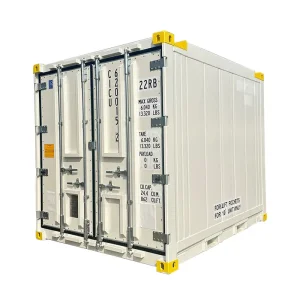
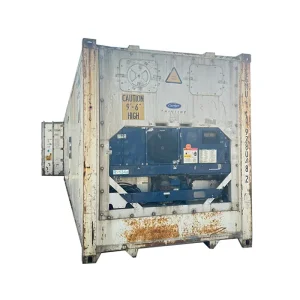
Explore heavy-duty, marine-certified, temperature-controlled, and vehicle-carrying container options engineered for specialized global logistics assignments.