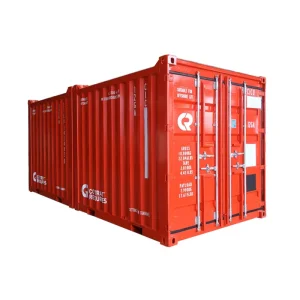
Verified structural compliance, factory direct-dispatch capability, and BV-standard certification across our multipurpose intermodal container fleet.
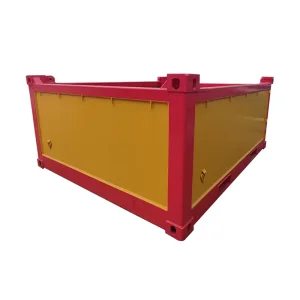
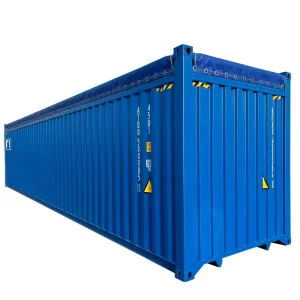
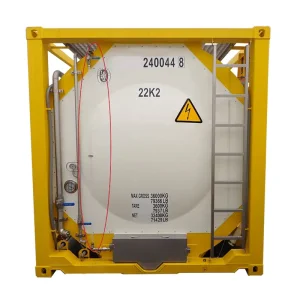
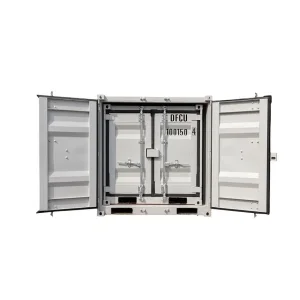
How 40ft High-Cube Soft Open Top containers dismantle traditional intermodal challenges across global capital equipment supply chains.
Standard dry vans restrict loading to rear fork entry, making monolithic structural steel, industrial presses, and rotary mining assemblies impossible to load without damage. Soft open tops remove top barriers, enabling swift gantry loading directly from crane hooks into high-cube clearance.
Breakbulk and flat-rack shipping demand expensive stevedoring, custom sea-fastening, and extreme demurrage exposure. The 40HC Soft Open Top combines open loading with standard container cell-guide stowage, cutting maritime freight overhead by up to 35% on transatlantic and transpacific trade lanes.
Constructed with removable high-tensile steel roof bows and a marine-grade PVC tarpaulin (650g/m² to 900g/m²) secured via continuous TIR cord routing. This ensures absolute water and dust exclusion matching conventional ISO 1496-1 standard steel roof integrity during heavy weather transits.
Manufactured from high-yield SPA-H Corten anti-corrosive steel with swing-out rear headers designed for oversized asset access.
| Dimensional & Structural Metric | 40ft High-Cube Soft Open Top (40' HC OT) | Operational Impact & Safety Baseline |
|---|---|---|
| External Dimensions (L x W x H) | 12,192 mm x 2,438 mm x 2,896 mm (40'0" x 8'0" x 9'6") | Provides 305 mm (1 foot) extra internal vertical clearance over standard open top units. |
| Internal Dimensions (L x W x H) | 12,032 mm x 2,352 mm x 2,655 mm (39'5.7" x 7'8.6" x 8'8.5") | Enables continuous cargo packing up to 76.4 CBM total volumetric envelope. |
| Top Roof Opening Dimensions | 11,830 mm x 2,230 mm (38'9.7" x 7'3.8") | Clear unobstructed top portal allows vertical insertion of prefabricated assemblies. |
| End Door Opening (W x H) | 2,340 mm x 2,580 mm (7'8.1" x 8'5.6") | Equipped with a swingable/removable top rear header beam to clear tall payloads. |
| Tare Weight & Max Gross Mass (MGM) | Tare: 4,050 KG (8,928 lbs) | MGM: 30,480 KG (67,200 lbs) | High payload ratio: Up to 26,430 KG net loading capability under ISO structural ratings. |
| Roof Structure & Cover System | Heavy-duty PVC tarpaulin with anti-theft TIR cable & steel bows | Complies with international customs seal requirements for cross-border bonded shipping. |
| Steel Metallurgy & Marine Primer | SPA-H Corten steel, zinc-rich primer + 200μm marine finish | Exceptional resistance to saline corrosion, spray zones, and rough multi-modal transport. |
All CIMIC equipment undergo extensive physical destructive and non-destructive quality tests before port dispatch.
Validated for series 1 freight containers: 9-high stacking compliance under 86,400 KG maximum stack load at the bottom corner castings.
Every batch comes with official BV stamping, factory survey certificates, and CSC safety approval plates for immediate sea voyages.
Engineered tarpaulin eyelets, steel end caps, and unbroken security cables fulfill international customs requirements for sealed containerization.
28mm marine-grade hardwood plywood floor tested to withstand forklift front axle load limits of 7,260 KG under standard ISO floor strength tests.
Engineered for complex cargo geometries that render conventional dry freight enclosures unusable.
Crushers, vibratory screens, drill head systems, and modular mining pumps exceed standard 8ft door openings. The soft open top accepts crane loading from overhead while the swing rear header allows horizontally rolling machines in without roof fouling.
Fabricated steel bridge girders, mast sections, and transition piece subcomponents can be positioned safely down through the open top, nested against internal lashing rings spaced every 300mm on the top and bottom rails for absolute sea fastening.
Electrical substation transformers and switchgear cubicles contain fragile components that cannot withstand tilting during side or end-ramping. Soft top crane slinging ensures vertical descent directly onto vibration dampers mounted on the container floor.
Next-generation upgrades in structural composite polymers, anti-tamper tracking, and rapid turnaround roof architectures.
Deploying filament-wound composite roof bows that cut top-structure tare weight by 45% while resisting mechanical denting during rapid overhead crane drop-ins. Quick-action lever lock assemblies accelerate dockyard tarp opening to under 8 minutes per container.
Smart sensors molded into the perimeter lip monitor tarpaulin tension variations, environmental moisture ingress, and unauthorized TIR cable tampering in real time, communicating via dual-band satellite/cellular transmitters.
Adoption of ultra-low VOC waterborne polyurethanes with self-healing properties against mechanical sling abrasions, paired with 100% recyclable floor compounds replacing tropical hardwood ply to satisfy stringent ESG and carbon offset frameworks.
Essential guidance on pricing, freight economics, CSC validations, and customization for offshore buyers.
Because soft open top containers require specialized engineering—including removable swing-out headers, reinforced top side rails, and high-tensile removable bows—the initial acquisition cost is typically 25% to 40% higher than a standard 40ft HC dry box. However, they slash out-of-gauge breakbulk terminal fees by thousands of dollars per single voyage.
Yes. If cargo exceeds the 9'6" height, it can travel with the tarpaulin removed or custom-lashed as Out-of-Gauge (OOG) cargo. However, this will occupy top cell clearances on container vessels and will incur carrier OOG slot surcharges compared to in-gauge soft top transits.
The system utilizes a 100% waterproof UV-stabilized heavy PVC tarp. The perimeter features raised corrugation gutters and tensioned rubber cords that redirect torrential sea spray away from the interior, passing standard high-pressure water spray verification under ISO 1496-1 test conditions.
Standard new-build runs ship directly from our production centers in Tianjin and Suzhou, situated just 100 kilometers from international ocean berths. Standard runs can be ready for loading onto vessels within 15–25 business days following technical drawing approval.
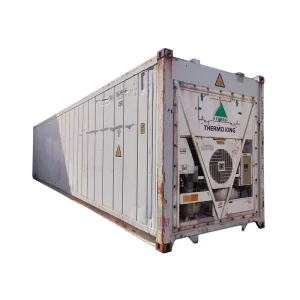
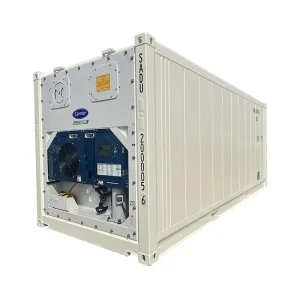
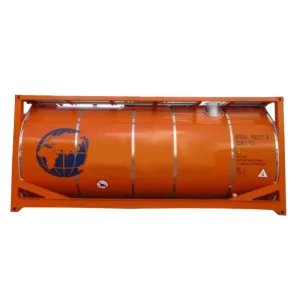
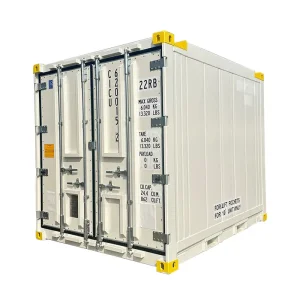
Complete your fleet deployment with complementary offshore reefers, tank containers, and custom modular solutions.