
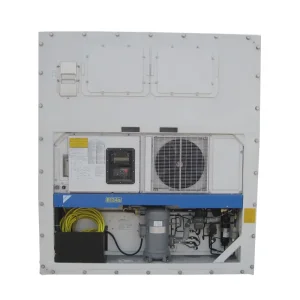
Explore our certified intermodal solutions engineered for the transport of volatile chemicals, bulk liquids, cold-chain chemicals, and heavy offshore mining assets.
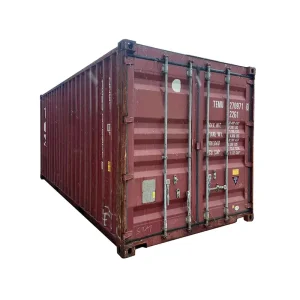
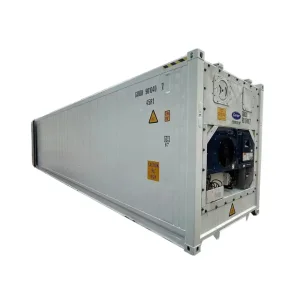
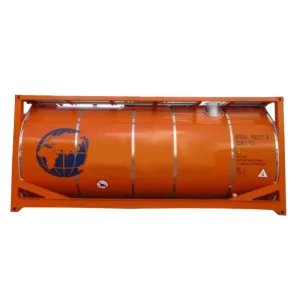
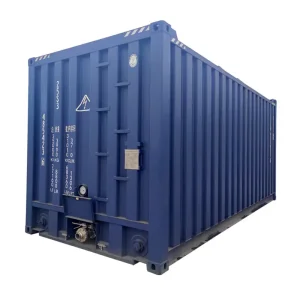
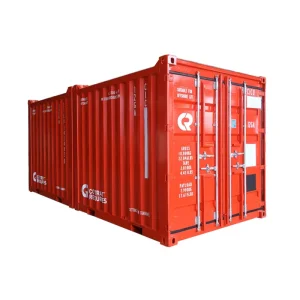
Modern dangerous cargo transport is experiencing unprecedented regulatory scrutiny. The expansion of lithium battery logistics, clean hydrogen transit, and volatile petrochemical movements demands a paradigm shift from passive containment to intelligent, explosion-mitigating enclosures.
The global surge in EV battery packs and Battery Energy Storage Systems (BESS) introduces catastrophic thermal runaway risks. Standard freight containers are incapable of handling internal blast pressures, HF gas emissions, and extreme thermal spikes above 1,100°C without rupturing.
Port State Control (PSC) inspections across Rotterdam, Singapore, and Houston now strictly enforce IMO MSC circulars concerning dangerous cargo stowage. Non-compliant wall thicknesses, lack of structural explosion venting, or improper CSC data plates result in severe impound penalties.
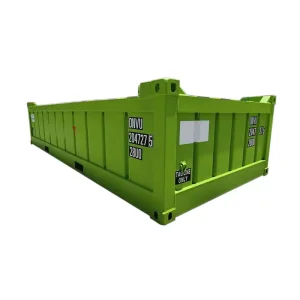
Offshore oil rigs and deep-water wind installations operating in the North Sea and Gulf of Mexico require extreme dynamic impact resistance under DNV 2.7-1 / ISO 10855. Conventional ISO boxes buckle under offshore sling drop tests and marine-induced structural fatigue.
Global chemical conglomerates, mining operators, and defense contractors maintain stringent tender criteria that separate generic dry shipping box converters from bona fide specialized dangerous cargo container manufacturers.
Every dangerous goods container designed for liquid chemicals (IMO 3, 6, 8) must incorporate a fully welded, sub-floor steel bund with sump drainage valves. Our builds feature bund capacities engineered to retain at least 110% of the largest vessel volume or 25% of total combined volume.
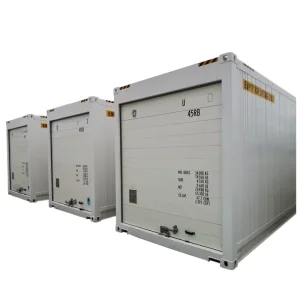
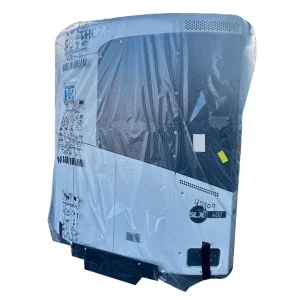
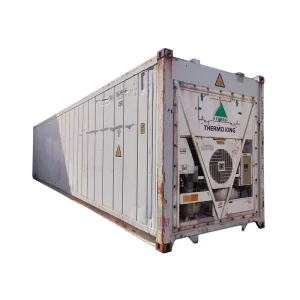
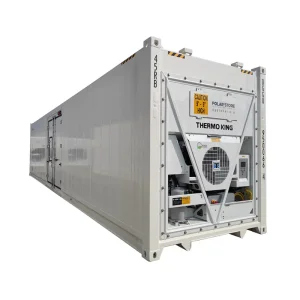
Uncontrolled ambient temperatures cause volatile chemicals to reach their Self-Accelerating Decomposition Temperatures (SADT). Our dangerous goods reefers incorporate explosion-proof HVAC systems (ATEX Zone 1/Zone 2 rated) with dual redundant compressor circuits.
When transporting Class 1 explosives, flammable solids, or high-density Li-ion racks, internal ignition must not create a shrapnel bomb. We integrate precision-calibrated blast relief roof panels and spark-arresting flame barrier vents to redirect blast vectors vertically into free air space.
Direct engineering cross-reference detailing containment topology, metallurgical composition, fire-rating index, and safety valving tailored to specific dangerous goods classifications.
| Hazard Classification | Primary Cargo Material | Structural Metallurgy | Fire & Explosion Containment | Ventilation & Sensors |
|---|---|---|---|---|
| Class 1 & Class 2 Explosives / Gases |
Munitions, Pyrotechnics, Compressed Toxic Gas | Heavy Corten-A Outer / Spark-Proof Wood or Brass Cladding | Top-Mount Vertical Blast Relief Hatches; EI60 Insulation | Natural Cross-Flow Spark Arrestors, Infrared Gas Sensors |
| Class 3 & Class 4 Flammable Liquids/Solids |
Solvents, Fuels, White Phosphorus, Nitrocellulose | SPA-H Corten Framing / 316L Stainless Bund Sump | 2-Hour Hydrocarbon Fire Wall; Automatic FM-200 / Novec Flooding | ATEX Zone 1 Continuous Exhaust; Vapor Sniffer Telemetry |
| Class 5.1 & 5.2 Oxidizers & Peroxides |
Organic Peroxides, Ammonium Nitrate Prills | Passivated 304/316 Stainless Interior Liners | Redundant Active Refrigeration with Failsafe Backup Genset | Temperature Gradient Probes with Real-time Satellite Warning |
| Class 8 & Class 9 Corrosives / Li-Ion |
Sulfuric Acid, Lithium NMC Packs, BESS Modules | Fluoropolymer Coated Floor / Reinforced Monocoque | Perfluoroalkoxy Lining, Aerosol Pyrotechnic Suppression Racks | Hydrogen Fluoride (HF) Gas Scrubber, Thermal Sensor Array |
Crossing territorial boundaries with dangerous materials requires unified adherence to multiple regulatory regimes. Our engineering workflow secures dual and triple certification stamped directly on the CSC safety plate.
Every dangerous cargo container undergoes rigorous stacking (up to 192,000 kg), racking, transverse bending, and weather-tightness verification supervised by Bureau Veritas or ABS surveyors before export from our Tianjin and Suzhou yards.
Offshore chemical and oilfield waste units feature integrated pad-eyes welded to main corner structural posts, fabricated from low-temperature charpy V-notch tested steel (-20°C to -40°C) capable of surviving extreme North Sea wave impacts.
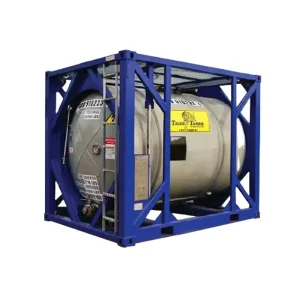
Cryogenic T75 and liquid chemical ISO tank containers are manufactured using automated plasma welding and 100% X-ray radiographic weld examination, carrying ASME 'U' or 'UM' stamps alongside IMDG Portable Tank T-codes.
Seamless multimodal authorization for road and rail networks across North America and Western Europe, ensuring intermodal chemical containers transit without depot de-vanning or customs re-inspection delays.
The future of high-consequence hazardous freight relies on real-time sensory perception. Our R&D division is actively deploying embedded AI-IoT sensor fabrics and autonomous suppression arrays within specialized container enclosures.
Internal multi-spectral sensors monitoring VOC build-up, carbon monoxide, temperature deviations, and structural g-force shock telemetry transmitted via low-power satellite uplink.
Integration of heat-actuated condensed aerosol generators and dielectric liquid flooding mechanisms that extinguish internal Li-ion battery thermal runaway within 45 seconds of initiation.
Graphene-enhanced polyurethane and fluorocarbon inner barrier coatings resisting high-strength inorganic acids (hydrochloric, nitric, hydrofluoric) and salt fog corrosion for over 25 years.
Onboard edge-computing controllers calculating exothermic reaction probabilities during oceanic voyages, autonomously communicating with vessel bridge systems to deploy proactive cooling cycles.
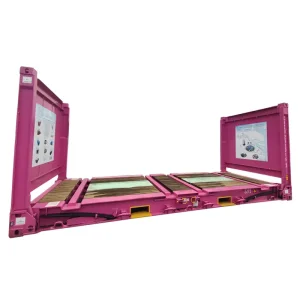
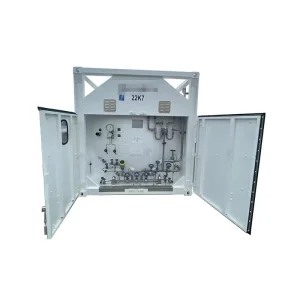
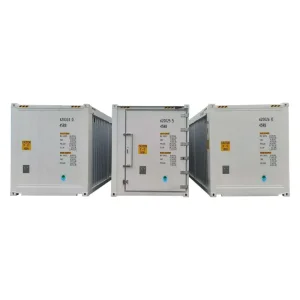
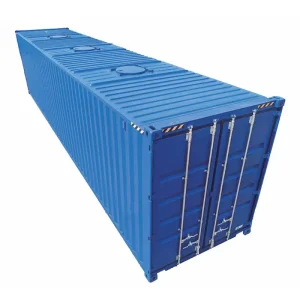
Browse our extended product portfolio including cryogenic tank containers, side-opening reefers, DNV offshore modules, and heavy intermodal chassis platforms.
Direct answers prepared by our Senior Structural & Hazardous Material Transport Engineers addressing common technical inquiries from corporate buyers.
Our Class 9 Li-ion enclosures combine passive thermal barriers (calcium silicate and aerogel composite linings with EI120 fire resistance) with active safety mechanisms. Structural roof blast-relief ports vent sudden pressure peaks outward before container walls can rupture, while spark-arresting flame grids prevent ignition of external shipboard atmospheres.
Our T75 cryogenic ISO tanks (designed for Liquid Argon, Nitrogen, Oxygen, and LNG) utilize high-vacuum multi-layer insulation (super-insulation) within an annular space between the inner austenitic stainless steel vessel and outer carbon steel jacket. Standard guaranteed holding times range from 30 to 75 days depending on the media and ambient temperature profiles.
Yes. We specialize in custom OEM/ODM configurations including full-side open doors, bi-fold container walls, end-to-end double doors, and motorized ATEX-certified roller shutters. All specialized door configurations are structurally reinforced to satisfy ISO 1496-1 transverse rigidity requirements without racking under full gross weights.
Every unit is delivered with a complete classification document packet: Bureau Veritas (BV) or DNV Approved Manufacturer Certificate, CSC Safety Approval Certificate, Mill Test Certificates (MTC) for Corten steel and pressure boundary alloys, NDT/X-ray radiographic weld examination reports, and full IMDG/ADR prototype test reports.