
 Certified Reefer
Procure certified dry freight, cold-chain reefer, and marine intermodal units engineered to rigorous Lloyd's Register, BV, and DNV GL standards directly from verified manufacturing facilities.
Certified Reefer
 DNV 2.7-1 Offshore
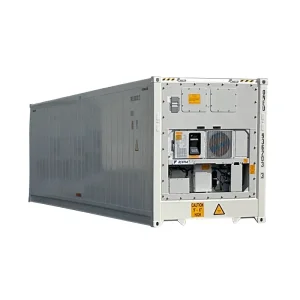 Daikin Deep Freeze
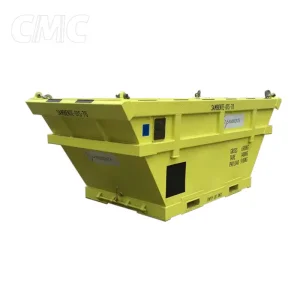 Subsea Basket
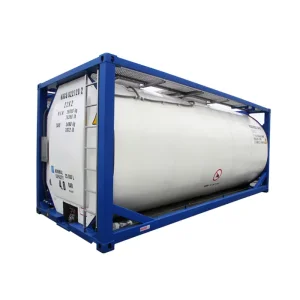 ISO T11 UN Tank
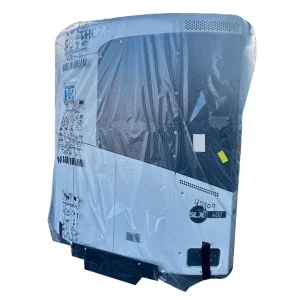 Genset Reefer
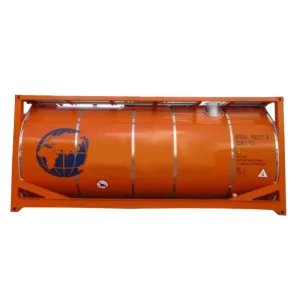 Food Grade 316L
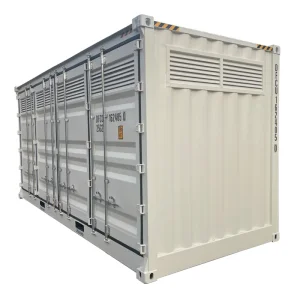 Hazmat High Cube
An exact volumetric breakdown evaluating exterior clearances, internal cubic meters (CBM), door apertures, tare weights, and ISO 668 structural payload ceilings for global logistics compliance.
| Container Classification | External Dimensions (L × W × H) | Internal Dimensions (L × W × H) | Door Aperture (W × H) | Tare Weight (±2%) | Max Payload | Cubic Capacity |
|---|---|---|---|---|---|---|
|
40ft High Cube Dry (40HC)
|
12,192 × 2,438 × 2,896 mm 40'0" × 8'0" × 9'6" |
12,032 × 2,352 × 2,698 mm 39'5" × 7'8" × 8'10" |
2,340 × 2,585 mm 7'8" × 8'5" |
3,900 kg (8,598 lbs) | 28,600 kg (63,052 lbs) | 76.4 m³ (2,698 cu ft) |
|
20ft High Cube Dry (20HC)
|
6,058 × 2,438 × 2,896 mm 19'10" × 8'0" × 9'6" |
5,898 × 2,352 × 2,698 mm 19'4" × 7'8" × 8'10" |
2,340 × 2,585 mm 7'8" × 8'5" |
2,350 kg (5,180 lbs) | 28,130 kg (62,015 lbs) | 37.4 m³ (1,320 cu ft) |
|
40ft High Cube Reefer (40HCR)
|
12,192 × 2,438 × 2,896 mm 40'0" × 8'0" × 9'6" |
11,583 × 2,290 × 2,544 mm 38'0" × 7'6" × 8'4" |
2,290 × 2,535 mm 7'6" × 8'3" |
4,580 kg (10,097 lbs) | 29,420 kg (64,859 lbs) | 67.6 m³ (2,387 cu ft) |
|
45ft High Cube Dry (45HC)
|
13,716 × 2,438 × 2,896 mm 45'0" × 8'0" × 9'6" |
13,556 × 2,352 × 2,698 mm 44'5" × 7'8" × 8'10" |
2,340 × 2,585 mm 7'8" × 8'5" |
4,820 kg (10,626 lbs) | 27,680 kg (61,024 lbs) | 86.1 m³ (3,040 cu ft) |
|
40ft Standard GP (Reference)
|
12,192 × 2,438 × 2,591 mm 40'0" × 8'0" × 8'6" |
12,032 × 2,352 × 2,393 mm 39'5" × 7'8" × 7'10" |
2,340 × 2,280 mm 7'8" × 7'5" |
3,700 kg (8,157 lbs) | 28,800 kg (63,493 lbs) | 67.7 m³ (2,390 cu ft) |
In high-density industrial logistics and modern BESS (Battery Energy Storage Systems) modularization, that additional 305 mm overhead translates directly into an extra vertical layer of standardized packaging pallets or the installation space required for heavy HVAC ducting, liquid cooling manifolds, and cable trays without sacrificing floor load ratings. Furthermore, the 2,585 mm door aperture allows forklifts to drive fully laden pallets directly through the rear threshold without costly tipping risks.
How the structural evolution of global maritime routes, multimodal rail networks, and modern manufacturing distribution centers transitioned High Cube containers from a niche variant into over 55% of global dry containerized movements.
Over the past decade, international ocean carriers have rapidly favored 40ft High Cube containers over conventional 8ft 6in units. The surge in consumer electronics, automotive light assemblies, e-commerce fast freight, and renewable energy equipment demands cubic volume rather than gross weight limits.
In North America (double-stack rail corridors) and the China-Europe Railway Express (Trans-Eurasian corridors), High Cube containers dominate transit. Tunnel height upgrades and clearance harmonization have removed historic clearance bottlenecks, unlocking continuous cross-border journeys.
The container is no longer merely a freight box; it is an industrial enclosure. From modular water treatment stations to edge data centers and utility-scale battery energy storage systems (BESS), engineers rely on high cube measurements to accommodate standardized 19-inch racks and cooling plenums.
China manufactures more than 90% of the world's intermodal shipping containers. This hegemony is not simply driven by scale, but by unrivaled supply chain clustering, fully integrated metallurgical ecosystems, automated robotic welding, and seamless deepwater port integration.
From the metallurgical mills supplying weather-resistant Corten steel (SPA-H) to automated shot blasting, zinc-rich primer application, and precision polyurethane foam injection lines, China's production corridors deliver high-precision containers with unyielding consistency.
*Data compiled from verified QA/QC records across certified Tianjin and Suzhou production plants operating under ISO 9001 and Bureau Veritas monitoring.
Beyond baseline dry cargo shipping, custom-dimensioned high cube structures serve as critical infrastructure across energy, agriculture, chemical safety, and offshore exploration.
Refrigerated 40ft High Cube containers equipped with Thermo King, Daikin, or Carrier machinery maintain precise setpoints from -30°C to +30°C, and down to -60°C for ultra-low cryogenic applications.
The extra vertical foot in High Cube profiles enables utility battery energy storage system (BESS) integrators to install heavy lithium iron phosphate (LiFePO4) racks alongside overhead aerosol fire suppression and liquid thermal management systems.
Engineered with side-opening bi-fold doors, secondary containment bunded sumps, and spark-proof explosion-venting wall panels to ensure compliance with AS 1940 and European ADR chemical regulations.
The intermodal container manufacturing sector is undergoing fundamental disruptions driven by carbon taxation (CBAM), circular economy principles, and real-time sensor network integration.
Major shipping lines demand lower embodied carbon in Corten steel sheets. Leading Chinese mills are deploying scrap-based Electric Arc Furnaces (EAF) powered by renewable energy, reducing container manufacturing carbon footprints by up to 38% compared to blast-furnace routes.
Factory-integrated IoT transceivers powered by solar-scavenging roof pucks deliver continuous GPS positioning, door open/close telemetry, shock/vibration indexing, and internal temperature profiles directly to carrier ERPs via low-power satellite and 5G NTN networks.
Traditional apitong plywood floors are increasingly substituted by high-durability bamboo composites and glass-fiber reinforced polyurethane (GFRP) sandwich floorings. This prevents defoliation, offers zero moisture absorption, and cuts tare weight by 140 kg per 40ft HC unit.
OEM factories now offer laser-cut openings, pre-installed structural studs, and thermal-break subframes on the main assembly line. This allows B2B buyers to skip dangerous on-site hot work, preserving factory anti-corrosion warranties while expediting final architectural or industrial deployments.
A rigorous quality verification roadmap to mitigate commercial risks, ensure structural compliance with international conventions, and avoid premature corrosion in harsh maritime environments.
Ensure mill test certificates (MTC) explicitly confirm authentic SPA-H or equivalent atmospheric weathering steel to JIS G3125 standards.
Confirm ultrasonic or magnetic particle testing across corner post welds to ensure certification for 9-high dynamic stacking load tests.
Audit total coating thickness: external paint must average ≥110 µm (with zinc primer ≥30 µm) verified using magnetic gauge calibration.
Inspect Bureau Veritas (BV), ABS, or Lloyd's Register stamping on the stainless steel CSC safety approval plate prior to vessel dispatch.
Clear, unhedged engineering insights to resolve common procurement queries from enterprise supply chain teams, project managers, and freight forwarders.
The sole dimensional variation between a standard GP and a High Cube container lies in the vertical plane. A standard 40ft general purpose container has an exterior height of 8 feet 6 inches (2,591 mm), whereas a 40ft High Cube measures 9 feet 6 inches (2,896 mm)—a difference of exactly 305 mm (12 inches or 1 foot).
This increases the internal clear ceiling height from 2,393 mm to 2,698 mm, raising total internal usable volume from 67.7 m³ (2,390 cu ft) to 76.4 m³ (2,698 cu ft)—an increase of roughly 12.8%. Length and width remain identical across both variants (12,192 mm exterior length, 2,438 mm exterior width) to ensure universal compatibility with standard chassis twistlocks, spreader beams, and vessel cells.
When mounted on a standard flatbed chassis (typically 1.3 meters to 1.5 meters high), a 9ft 6in (2.9 m) High Cube container can achieve an overall transport height of up to 4.2 to 4.4 meters. In many European jurisdictions, the maximum permissible vehicle height without special permits is 4.00 meters, necessitating the use of specialized "gooseneck" chassis or low-loader drop-deck trailers to keep total height compliant.
In the United States, federal bridge laws generally permit total vehicle heights up to 13 feet 6 inches (4.11 m) on interstate systems, which readily accommodates High Cube containers on standard drop-frame gooseneck trailers. Sourcing teams must ensure destination drayage carriers utilize appropriate gooseneck skeletal chassis to avoid route deviation or over-height violations.
Pricing for shipping containers is subject to four core variables:
Yes. The corner castings, twistlock apertures, and longitudinal/transverse footprint dimensions of High Cube containers are 100% compliant with ISO 668 and ISO 1161. Consequently, High Cube and Standard Height containers can be intermixed in the same stack on a vessel's deck or in container yard depots.
However, modern vessel stowage planners prefer grouping High Cube containers within specific cell tiers (especially on top tiers or dedicated High Cube hold cells) to prevent vertical profile mismatch with container crane lashing gantries and lashing bridge geometries.
Any container intended for commercial intermodal ocean transport must carry a valid CSC (International Convention for Safe Containers) safety approval plate. If the structural integrity of the container is altered—such as cutting large side openings for rollup doors, integrating heavy internal equipment, or modifying corner posts—the original CSC certification becomes void.
In such instances, the modified unit must undergo structural re-calculation and recertification by an accredited classification society (such as Bureau Veritas, DNV GL, ABS, or Lloyd's Register). For offshore platform deployment, the unit must comply with the significantly more demanding DNV 2.7-1 / EN 12079 dynamic lifting standard, which includes extreme Charpy impact testing at -20°C and certified 4-point lifting sling bridles.
Standard new-build dry 40ft High Cube containers in custom corporate livery typically require 2 to 3 weeks from technical drawing approval to final yard staging, depending on factory scheduling. Highly customized builds—such as insulated thick-foam containers, dangerous goods units with secondary containment sumps, or specialized offshore open-top baskets—normally require 4 to 6 weeks to allow for component fabrication, third-party classification witnessing, and marine coating curing cycles.
Explore specialized industrial equipment, vehicle carriers, expandable modular buildings, and offshore handling baskets built to strict ISO, DNV, and BV manufacturing tolerances.
 Thermal Insulated
 Compact Reefer
 Rig Support Basket
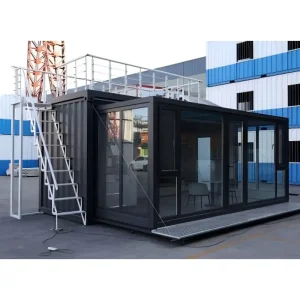 Expandable Modular
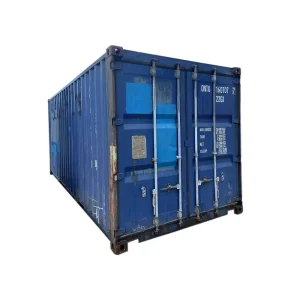 Cargo Worthy (CW)
 Roll-Up Access
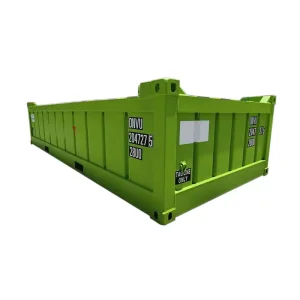 Heavy Mining Ore
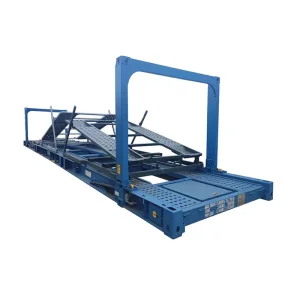 Auto Racking