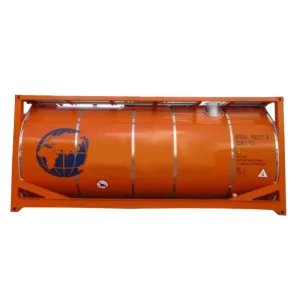
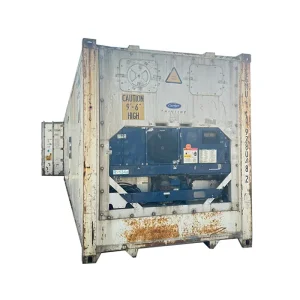
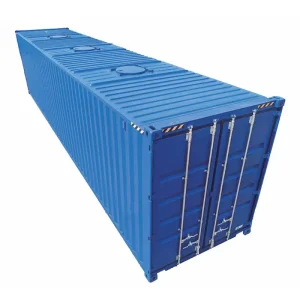
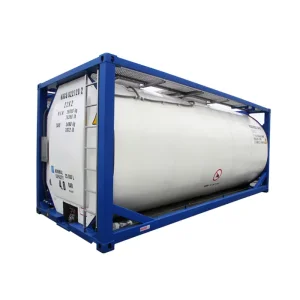
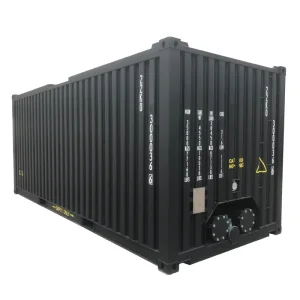
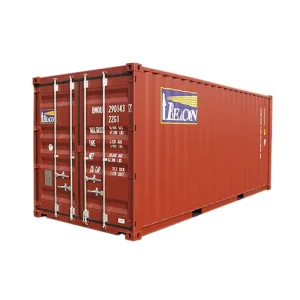
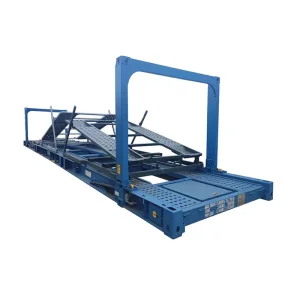
Explore our heavy-duty marine freight systems, offshore containers, and intermodal transport containers engineered for port-to-terminal cargo efficiency.
In modern intermodal freight logistics, a sea container trailer—encompassing terminal bomb carts, gooseneck container chassis, skeletal trailers, and multi-axle intermodal flatbeds—serves as the foundational bridge connecting ocean cargo ships, marine container terminals, railway sidings, and overland highway infrastructure.
Structural reliability begins with raw material specification. Premium container chassis are manufactured using submerged arc-welded I-beams fabricated from Q345B low-alloy carbon structural steel or ultra-high-yield T700 steel. This metallurgical profile guarantees superior yield strength, elastic deformation resistance, and structural integrity under dynamic stresses exceeding 60,000 kg.
Fully compliant with ISO 1161 corner casting criteria, our trailers incorporate cast steel twist locks featuring precision retractable, flip-up, or screw-down locking pins. Whether locking a single 40ft High Cube container, tandem 20ft ISO dry boxes, or specialized 20ft tank containers, the mechanical lock assemblies prevent shear failure and maintain lock integrity under acute centrifugal cornering loads.
Equipped with standardized BPW, FUWA, or SAF-HOLLAND axle systems, units feature heavy-duty mechanical leaf spring suspension with parabolic equalizers or advanced pneumatic air-ride suspension. Dual-line pneumatic braking circuits integrated with WABCO ABS/EBS anti-rollover electronic management ensure rapid braking actuation times and extended tire tread lifespans.
Procuring sea container trailers from our manufacturing facilities in Tianjin and Suzhou delivers distinct competitive, operational, and commercial advantages for international logistics fleets, shipping lines, and port authorities.
Immediate proximity to Tier-1 domestic steel mills like Baosteel and Shougang guarantees raw material access with certified mill test reports (MTR), decoupling manufacturing schedules from volatile international material shortages.
Our assembly facilities leverage multi-axis automated robotic welding gantries, submerged arc welding, and CNC laser plasma profiling tables. This automation achieves uniform weld penetration, minimized heat-affected zones (HAZ), and structural seam repeatability.
Located ~100 km from major container hubs (Tianjin Xingang Port and Shanghai/Taicang Port), finished container trailers are transferred from workshop to container freight stations (CFS) or Ro-Ro terminals within 24 hours of release.
From chemical spectroscopic analysis of raw billets to X-ray weld examination, air brake leakage tests, and electro-hydraulic stress simulations, each chassis batch leaves the factory under BV, ISO 9001, and DNV-compliant monitoring.
A primary challenge facing global procurement managers is ensuring that container chassis purchased abroad comply with destination-market transport laws and infrastructure parameters. Our engineering teams customize designs to meet regional roadway standards.
Configurations match Federal Motor Vehicle Safety Standards (FMVSS 121 for air brake systems), AAR (Association of American Railroads) intermodal structural criteria, standardized 40ft/53ft gooseneck profiles, and sealed LED lighting harnesses conforming to SAE standards.
Built with E-Mark certified side under-run protection (Directive 89/297/EEC), rear underrun bars, dual electronic EBS braking architecture, ADR-compliant wiring for hazardous chemical tank containers, and axle bridge configurations adapted to 40-tonne and 44-tonne combined GCW regulations.
Specialized configurations supporting Australian Design Rules (ADR 38/05 braking), tri-axle configurations, heavy-duty outback spring or road-train rated air suspension, high-articulation turntable connections, and payload ratings up to 45,000 kg.
Engineered for unpaved terrain and demanding transit conditions, featuring reinforced main beams with reinforced web plates, mechanical tandem multi-leaf suspension (up to 16mm thickness per leaf), high-clearance landing legs, and secondary fuel tank/generator mounting frames.
Tier-1 shipping consortia, logistics providers, and port terminal operators evaluate chassis investments beyond upfront purchase price. Strategic procurement requires analyzing Total Cost of Ownership across an operational service life of 15 to 20 years.
By employing high-yield T700 steel instead of conventional mild steel, chassis deadweight is reduced by 800 to 1,200 kg per unit without sacrificing gross load ratings. This weight reduction directly translates to increased legal commercial freight capacity per haul, reducing diesel fuel consumption and lowering carbon emissions per ton-kilometer.
Marine atmospheric salt spray accelerates chassis frame rust. Our manufacturing incorporates SA 2.5 automated abrasive shot blasting, followed by high-adhesion zinc-rich epoxy primers and dual-coat polyurethane or electrophoretic deposition (ED) coatings. This surface finish withstands up to 1,500 hours of standardized ASTM B117 salt fog testing without paint delamination.
To reduce ocean shipping expenses, our engineering division provides specialized Complete Knock-Down (CKD) and Semi-Knock-Down (SKD) containerized shipment packaging. Multiple container chassis units can be nested, bolted, and stacked inside 40ft High Cube containers or bundled for Ro-Ro vessel holds, reducing transoceanic landed freight costs per unit.
The sea container chassis sector is transitioning toward digitalization, active safety engineering, and sustainable manufacturing practices aligned with global freight decarbonization.
Modern container chassis fleets are integrating factory-installed solar-powered GPS telematics units, electronic hub-odometers, and tire pressure monitoring systems (TPMS). Sensors stream real-time data on axle load weights, brake pad wear, and bearing temperatures directly to fleet dispatchers.
With automated container terminals (ACTs) expanding, corner guides, self-aligning twist lock collars, and reinforced gooseneck ramps are specifically engineered for compatibility with autonomous straddle carriers, Automated Guided Vehicles (AGVs), and ship-to-shore (STS) crane spreaders.
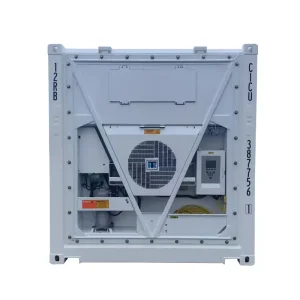
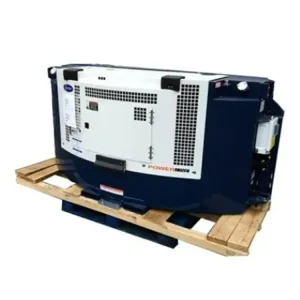
Cold chain logistics operations require uninterrupted thermal management. Modern container chassis incorporate modular underslung diesel generator mounting bays with quick-release vibration dampeners, integrated fuel supply lines, and centralized electrical connection harnesses for reefer boxes.
Manufacturing is adopting low-VOC waterborne epoxy formulations and complete closed-loop cathodic electrodeposition immersion tanks. These surface treatment lines deliver total internal boxed-beam coverage while reducing industrial carbon output and chemical waste.
Direct answers from our engineering and export documentation teams addressing common technical specifications, certifications, and ordering parameters.
Standard over-the-road skeletal trailers are rated for 35,000 kg to 45,000 kg GVWR depending on dual-axle or tri-axle configurations. Dedicated off-road port terminal bomb carts (terminal trailers) can be engineered to support payloads up to 65,000 kg for high-density mining, ore carriers, and industrial block movements.
Yes. In addition to standard ISO 20ft, 40ft, and 45ft container locations, our chassis frames can be configured with multi-point twist locks (8 to 12 lock assemblies) to accommodate swapped loads: single 20ft container in the middle position for axle balance, two 20ft boxes, or heavy ISO chemical tank containers requiring dedicated low-profile center saddles.
We supply full engineering submittals including static chassis load stress calculations, finite element analysis (FEA) reports, axle brake performance documentation, electrical schematic diagrams, and VIN stamping conforming to international ISO 3779 standards. This documentation supports local Department of Transport registration and road licensing.
Our standard anti-corrosion system includes automated SA 2.5 blast cleaning, zinc-rich primer, and double topcoat polyurethane paint delivering 5 to 7 years of protection under C4/C5 marine atmospheric conditions. Hot-dip galvanization is also available on request, offering 15+ years of corrosion resistance in highly saline coastal operations.
Standard chassis orders of 10 to 50 units require 25 to 35 business days from drawing approval. Bespoke configurations (such as extendable gooseneck or specialized offshore chassis) are scheduled across 40 to 45 business days. Finished chassis are dispatched via direct ocean carriers from Tianjin Xingang or Taicang ports under FOB, CIF, or DDP terms.
All functional wear components—such as wheel hubs, brake shoes, air valves, air bags, landing gear, and twist lock stems—are sourced from internationally standardized component brands (such as JOST, Fuwa, BPW, and WABCO), ensuring replacement parts are readily accessible across commercial vehicle parts networks globally.
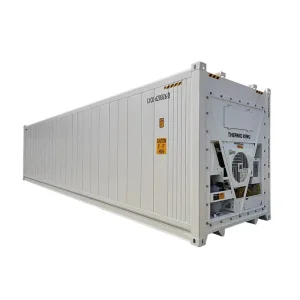
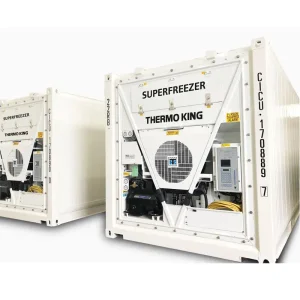
Complete your fleet ecosystem with our comprehensive portfolio of dry cargo, certified reefer units, specialized bulk shipping solutions, and heavy cargo modules.