
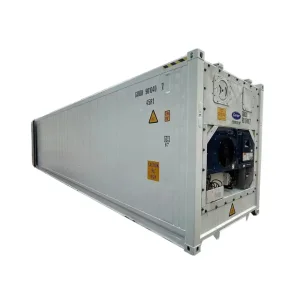
Precision-fabricated logistics units engineered for ocean crossing, intermodal rail lines, cryogenic hazmat cargo, and automated cold-chain storage ecosystems.
Navigating international intermodal shipping demands unyielding engineering discipline. Global transport corridors subject cargo units to multi-axial racking forces, corrosive marine atmospheres, and extreme temperature fluctuations.
Standard commercial steels fail catastrophically under cyclic sea-spray mist exposure. High-tier Chinese manufacturers employ cold-rolled SPA-H atmospheric corrosion-resistant steel. Upon surface oxidation, the copper, chromium, and nickel alloy matrix forms an impervious oxide patina layer that halts internal ferric decay, delivering a 25-year structural service envelope.
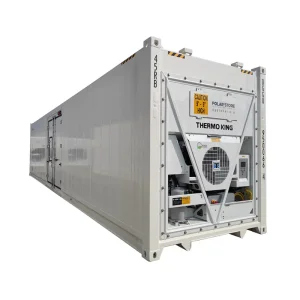
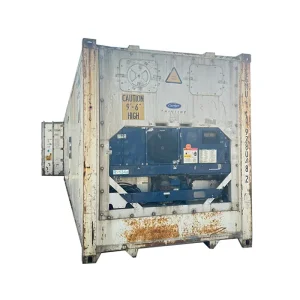
Precision reefer engineering combines high-pressure cyclopentane-blown polyurethane foam insulation (density 40-42 kg/m³) encapsulated between 0.8mm high-grade stainless steel (SUS304 food-grade) inner linings and MGSS outer panels. This barrier limits thermal leakage, prevents condensation voids, and slashes total compressor runtime under heavy ambient tropical heat loads.
The structural cornerstone of intermodal integrity rests on cast steel corner fittings conforming to ISO 1161. Welded to cold-formed high-tensile steel corner posts, these assemblies safely sustain corner racking loads up to 150 kN and vertical superimposed stacking loads of 86,400 kg per post, ensuring safety across UL-class multi-tier deep-sea container vessels.
Modern container fabrication relies on lean robotics, digital QA integration, and direct proximity to global maritime conduits. Operating along the Bohai Rim and Yangtze River Delta, our smart manufacturing infrastructure provides global buyers with high-volume, reliable procurement pipelines.
Fully automated CNC fiber laser profiling lines cut corrugated steel panels with sub-millimeter accuracy. Multi-axis industrial robots perform submerged arc seam welding, ensuring weld penetration depth, uniform bead geometry, and minimizing thermal distortion across large structural floor bearers.
To meet strict environmental standards, automated shot-blasting reaches SA 2.5 cleanliness, clearing all mill scale. Automated spray booths apply waterborne zinc-rich epoxy primers, high-build epoxy intermediate coats, and polyurethane topcoats, generating a 120-micron DFT shield against salt-spray corrosion.
Our facilities in Tianjin and Suzhou are within 100 kilometers of the world's most active deepwater container terminals. This proximity avoids inland drayage bottlenecks, reduces domestic trucking carbon emissions, and facilitates rapid container yard staging, direct barge transshipment, and prompt vessel bookings.
Every container batch undergoes structural test protocols witnessed by classification surveyors: light-leak detection, weather tightness testing at 200 kPa water jets, lifting tests, floor rolling axle tests with a 7,260 kg test truck, and reefer Pre-Trip Inspection (PTI) down to -25°C.
Modern container manufacturing extends far beyond moving standard dry freight. We engineer specialized, certified containment solutions for cold-chain networks, offshore oil and gas operations, chemical transport, and modular architecture.
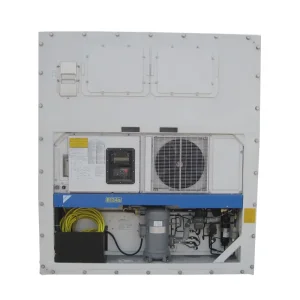
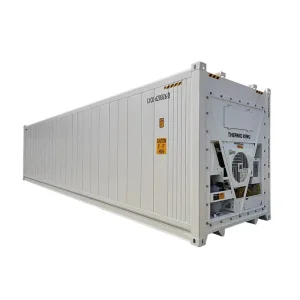
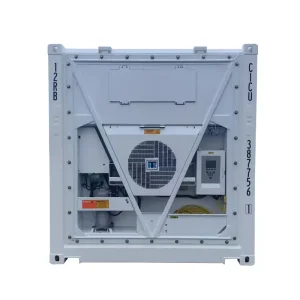
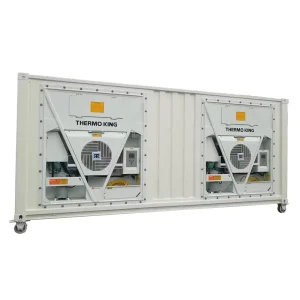
Equipped with Carrier Transicold PrimeLINE, Daikin LXE, or Thermo King Magnum Plus units, our reefer containers protect perishable cargo, frozen proteins, and biopharmaceuticals across extended journeys. Deep-freeze units reach -40°C to -60°C for blast freezing and premium tuna logistics, supported by precise micro-inverter compressor management.
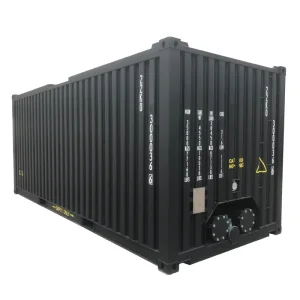
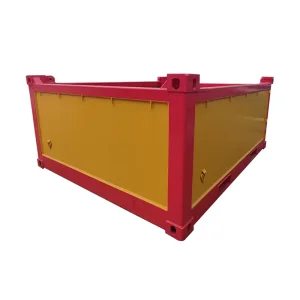
For extreme marine environments, standard ISO units cannot be safely lifted onto floating production platforms or supply vessels. Our offshore containers, baskets, and specialized reefer units feature heavy structural padeyes, integrated multi-leg certified wire rope lifting slings, and Charpy impact-tested steels rated for -20°C to -40°C marine conditions.
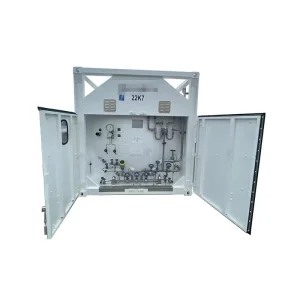
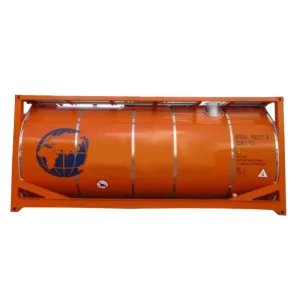
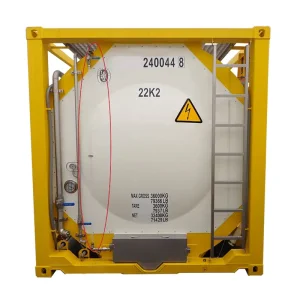
Our ISO tank container series covers T11 to T75 categories, handling liquid chemicals, food-grade alcohol, asphalt, and cryogenic liquefied natural gas (LNG). T75 cryogenic containers feature dual-shell construction with austenitic stainless steel inner vessels protected by high-vacuum multi-layer insulation systems and certified pressure relief mechanisms.
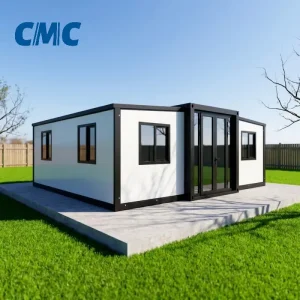
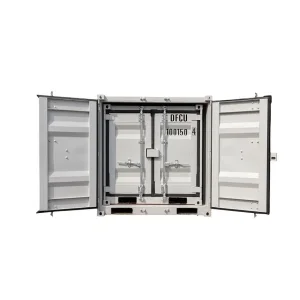
Repurposed and purpose-built modular containers serve mobile command offices, battery energy storage systems (BESS), temporary healthcare units, and expandable worker housing. Factory-integrated rockwool insulation, fire-rated doors, certified electrical looms, and HVAC assemblies ensure turnkey utility upon arrival.
The intermodal container is transforming into an intelligent, digitized asset. Our engineering roadmap focuses on smart sensor integration, low-GWP natural refrigerants, and structural mass optimization.
Integrated solar-powered IoT hardware modules offer real-time tracking via 5G Cat-M1 and LoRaWAN connectivity. Fleet operations monitor interior temperature profiles, relative humidity, door-opening status, supply/return air metrics, and multi-axis shock events over international waters via satellite backup.
To satisfy the Kigali Amendment and European F-Gas regulations, our research prioritizes next-generation cooling systems using R744 (Carbon Dioxide, GWP=1) and low-GWP R513A. Variable-frequency scroll compressors, electronic expansion valves, and optimized fan blades lower electrical consumption by up to 35% on reefer vessel decks.
We are pioneering hybrid wall construction incorporating ultra-thin Vacuum Insulation Panels (VIPs) alongside lightweight fiber-reinforced polymers (FRP). This technology trims tare weight by 12% while increasing internal volumetric capacity, helping ocean shippers lower their carbon emissions per ton-kilometer.
Evaluating a container purchase involves more than initial factory gate pricing. A proper TCO model analyzes structural longevity, thermal efficiency, drayage repositioning costs, maintenance cycles, and secondary market salvage value.
| Evaluation Parameter | New Build (OEM Direct Production) | Certified One-Trip / High-Grade Used | TCO Operational Impact |
|---|---|---|---|
| Initial Capital Outlay (CapEx) | Baseline 100% (Custom project configuration) | 65% – 80% of new unit pricing | Lower acquisition costs free up operating capital for short-term projects. |
| CSC Safety Certification | Full 5-Year initial validation plate | Inspected; typically 24-30 months remaining | New builds eliminate intermediate survey and recertification overhead. |
| Thermal Efficiency (Reefer Units) | Peak efficiency (K-factor ≤ 0.032 W/m²K) | Operational (Minor thermal drift < 8%) | Lower K-factor cuts marine generator electrical loads by 15-20%. |
| Structural Integrity & Fatigue | Zero micro-fractures; pristine floorboards | Inspected, IICL-6 standard repairs | New units avoid cargo damage claims caused by hidden micro-fissures. |
| Bespoke Customization Flexibility | Full (Side open, dual doors, custom dimensions) | Limited to standard stock sizes | Tailored designs streamline cargo handling and reduce terminal dwell time. |
| 15-Year Residual Salvage Value | Estimated 35% – 45% based on steel scrap/used index | Estimated 15% – 25% | SPA-H steel maintains strong equity in secondary equipment markets. |
Our engineering team prepares comprehensive technical schematics, door opening dimensions, internal floor plan layouts, and CAD drafts tailored to your cargo footprint and shipping routes.
International maritime logistics operates within strict regulatory frameworks. Every container we supply complies with relevant international standards, supported by verified type-test certificates from leading classification societies.
Production runs are audited by Bureau Veritas (BV), ABS, Lloyd's Register, or DNV-GL. Surveyors review steel mill certificates, supervise non-destructive testing of critical welds, and inspect production lines before stamping CSC approval plates.
Our facilities operate under ISO 9001 quality management and ISO 14001 environmental systems. Standard Operating Procedures (SOPs) govern every stage, from laser positioning to final seal leak detection under high-pressure water testing.
We provide full Shipper Owned Container (SOC) documentation, including valid CSC certificates, TIR carnets, and timber treatment declarations conforming to Australian biosecurity standards. This paperwork helps prevent customs holds across North America, Europe, Australia, and Africa.
Common technical and commercial questions answered by our engineering and logistics specialists.
We build our units with SPA-H high-grade Corten steel (yielding at 345 MPa, tensile strength up to 490 MPa). When exposed to outdoor environments, its copper, chromium, and nickel alloy elements develop a dense, protective surface oxide patina. This oxide layer seals the base metal, halting deep corrosive oxidation far more effectively than standard structural carbon steel.
We install units from Tier-1 global manufacturers: Carrier Transicold (such as PrimeLINE), Daikin (LXE series), and Thermo King (Magnum Plus). Buyers can choose based on local parts availability, technician familiarity, and refrigerant preferences across their target supply chain corridors.
Standard ISO 1496-1 containers are designed for calm harbour crane handling and cell-guide shipboard storage. Offshore containers built to DNV 2.7-1 / EN 12079 are reinforced to handle dynamic shock loads experienced when lifted by cranes in rough seas. They require impact-tested steel rated down to -20°C or -40°C, heavy padeyes, and certified four-leg lifting sling assemblies with master link shackles.
Standard ISO dry boxes and mainstream reefer units have flexible MOQs, often starting from 1 to 2 units for available stock. For bespoke ODM builds requiring specialized tooling, custom dimensions, or custom side openings, the typical production batch starts at 5 to 10 units to optimize machine setup, weld jigs, and classification testing fees.
Every Shipper Owned Container (SOC) comes with an official CSC safety plate stamped with its initial 5-year validation, classification certificate (BV, ABS, or LR), manufacturer's certificate of conformance, and timber floor phytosanitary treatment documents (Australian Biosecurity/TCT compliant).
T75 cryogenic tanks undergo rigorous testing: 100% radiographic or ultrasonic examination of all primary pressure welds, hydrostatic pressure testing of the inner stainless steel vessel, helium mass spectrometer leak testing of the vacuum space, and hold-time performance verification under simulated operational pressures.
Browse our certified offshore dry units, chemical ISO tank containers, expandable modular buildings, and blast freezing cold storage systems.
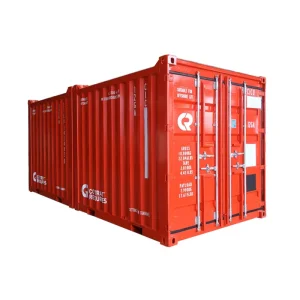
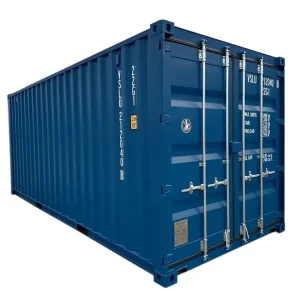
Whether planning standard dry container purchases, specialized cryogenic tanks, or customized DNV 2.7-1 offshore reefers, our technical teams provide full production scheduling, factory-gate pricing, and port delivery lead times within 24 hours.