Direct supply from Tier-1 manufacturing facilities. Fully certified for intermodal transshipment across ocean, rail, and land transport networks.
In modern industrial logistics, ISO tank containers represent the apex of safety, payload economics, and environmental stewardship for bulk liquids, liquefied compressed gases, and powders.
Engineered for hazardous and non-hazardous chemical commodities, food-grade feedstocks, and industrial solvents. T11 units utilize bottom discharge configurations, while T14 tanks feature top-discharge design to safely transport corrosive acids and toxic compounds conforming to IMDG and ASME Section VIII Div 1 standards.
Double-walled, vacuum-perlite, or multi-layer super-insulated stainless steel pressure vessels engineered for deep-refrigerated liquefied atmospheric gases including Liquefied Natural Gas (LNG), Liquid Nitrogen (LIN), Liquid Oxygen (LOX), Liquid Argon (LAR), and Ethylene under extreme cryogenic temperatures (-196°C to -162°C).
High-tensile carbon steel vessels engineered for non-refrigerated liquefied petroleum gas (LPG), anhydrous ammonia, chemical refrigerants, and sulfur dioxide. Tested at working pressures reaching 34.5 bar, reinforced with high-reliability internal safety relief valves and fail-safe remote pneumatic shutoff valves.
For aggressive chemicals such as hydrochloric acid, hydrofluoric solutions, and high-purity chlor-alkali products. Incorporates specialized fluro-polymer linings (PTFE, PFA, ECTFE, rubber, or phenolics) bonded to dual-certified 316L or carbon steel shells, preventing pinhole breaches and stress corrosion cracking.
Manufactured to 3-A Sanitary Standards and FDA compliance with mirror-electropolished interior finishes (Ra < 0.4 μm). Features fully clean-in-place (CIP) spray balls, steam-heating panels, integrated glycol chiller loops, and sterile breathing filters for dairy, craft beer, wines, and active pharmaceutical liquid bases.
Reinforced marine structural frames certified to DNV GL 2.7-1 / EN 12079 criteria, specifically developed for harsh offshore oil and gas rigs, floating production units (FPSO), and harsh wave shock environments. Equipped with marine-grade four-point pad-eyes, sloped sumps, and nitrogen inerting systems.
The global tank container market continues its sustained expansion, driven by regulatory restrictions on single-use drums, the acceleration of global trade along the Belt & Road corridors, and rigorous decarbonization imperatives.
| ISO Tank Classification | UN Portable Code | Working Pressure (Bar) | Primary Commodities | Shell Metallurgy & Lining |
|---|---|---|---|---|
| General Chemical / Food | T11 | 1.75 – 4.0 Bar | Potable liquids, resins, bio-fuels, edible oils | SS316L Dual Certified / Electro-pickled |
| Toxic / Corrosive Liquid | T14 | 4.0 – 6.0 Bar | Sulfuric acid, chlorine precursors, corrosives | Carbon Steel + PTFE / PFA / Rubber lined |
| Pressurized Liquefied Gas | T50 | 10.0 – 34.5 Bar | LPG, Propylene, Butadiene, Anhydrous Ammonia | Fine-grained Carbon Steel / SA612 / P460NL |
| Cryogenic Liquefied Gas | T75 | 6.0 – 22.0 Bar | LNG, Liquid Nitrogen, Liquid Argon, Liquid Oxygen | Inner: Austenitic SS304/316; Outer: Carbon Steel |
| Offshore Hazardous Chemical | DNV 2.7-1 / T11 | 2.65 – 4.5 Bar | Drilling additives, biocides, methanol, scale inhibitors | SS316L / Heavy-duty offshore cage structure |
Operating tank containers requires seamless cross-jurisdictional compliance. Every unit leaving our production bases in Tianjin and Suzhou is backed by complete traceability and internationally recognized certification documentation.
Rigorous third-party testing protocols witnessed and stamped by Bureau Veritas (BV), Lloyd’s Register (LR), Det Norske Veritas (DNV GL), and the American Bureau of Shipping (ABS). Fully compliant with ISO 1496-3, CSC, IMDG, ADR/RID, US-DOT, and TC Impact testing.
Equipped exclusively with international tier-1 valve systems including Fort Vale and Perolo. This ensures that field operators across Europe, the Americas, Africa, and Australasia can immediately access interchangeable gaskets, footvalves, burst discs, and airline valves without supply delays.
Strategically situated within 100 km of key deepwater seaports in Tianjin and Shanghai/Suzhou, our export pipeline accelerates export booking, customs declaration, and pre-loading inspection, cutting international project lead times by up to 25 days compared to inland depots.
Across diversified chemical, petrochemical, mining, and food logistics sectors, tank containers solve complex logistics bottlenecks where cargo integrity cannot be compromised.
For cross-ocean chemical freight, our high-spec T11 and T14 tanks withstand extreme marine rolling cycles. Equipped with high-efficiency longitudinal steam heating tubes and rock-wool insulation, allowing viscous chemicals (like polyols and isocyanates) to be maintained at optimal transit temperatures and rapidly heated prior to destination discharge.
Handling severe shock loads and temperature fluctuations from -40°C in Siberian winter to +45°C in Central Asia. Reinforced frame gusseting, high-impact bolster structures, and vacuum-jacketed thermal insulation safeguard against cargo crystallization or thermal boil-off throughout 10,000+ kilometer transit journeys.
Bulk transport of concentrated hydrochloric acid, sodium cyanide solution, and specialized flotation reagents into remote mining sites in Latin America, Western Australia, and Sub-Saharan Africa. The integration of high-durability internal lining prevents premature structural degradation caused by aggressive chemical abrasives.
The transition toward autonomous, highly monitored cargo containers is reshaping chemical logistics safety, predictability, and environmental transparency.
Integrated solar-powered IoT hardware tracking GPS coordinates, real-time internal pressure, shell temperature, liquid ullage levels, and high-G impact shocks directly uploaded to cloud architectures for immediate risk mitigation.
Adoption of 2101 / 2205 lean duplex stainless steel formulations, decreasing tare weight by up to 12% while boosting tensile yield strength and resistance to stress corrosion cracking, expanding customer payload capacities.
Deployment of advanced passive latent-heat phase change material jackets that replace diesel-driven reefer loops on short-sea routes, keeping heat-sensitive specialty resins within ±1.5°C without active power draw.
Pioneering ultra-deep cryogenic engineering prototypes featuring extreme-vacuum multi-shield insulation to maintain liquid hydrogen at -253°C with near-zero daily boil-off rates (BOR) for cross-border clean energy projects.
In-depth responses authored by certified intermodal container design engineers to assist chemical logistics directors, fleet purchasers, and project managers.
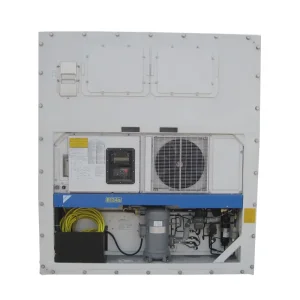
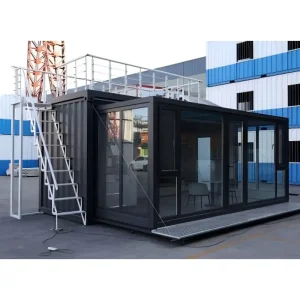
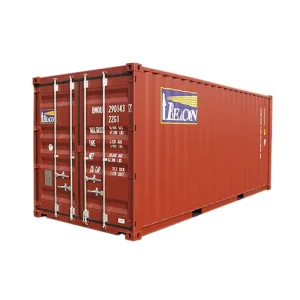
Comprehensive intermodal portfolio for commercial export, multi-temperature cold chain logistics, and modular construction projects worldwide.