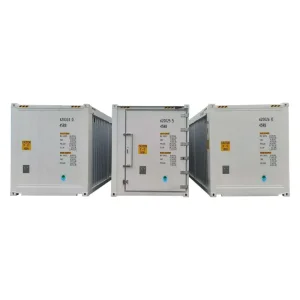
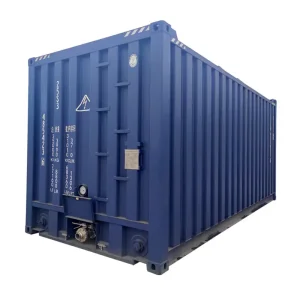
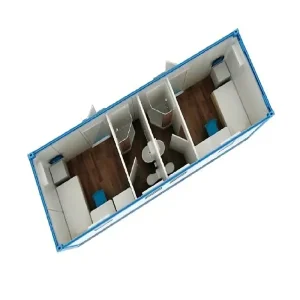
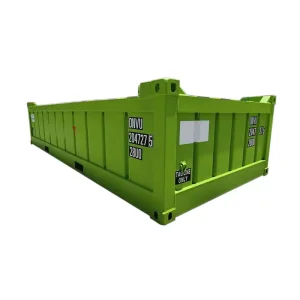
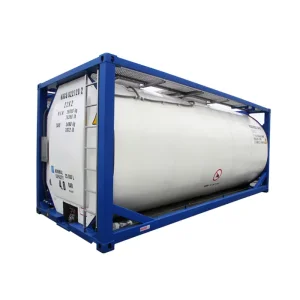
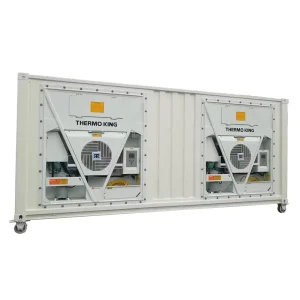
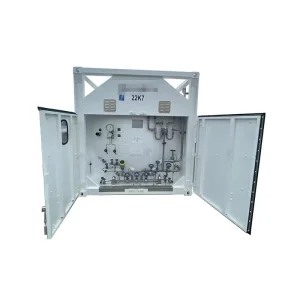
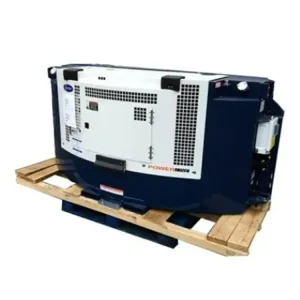
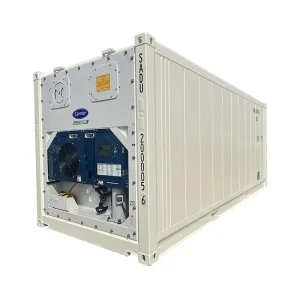
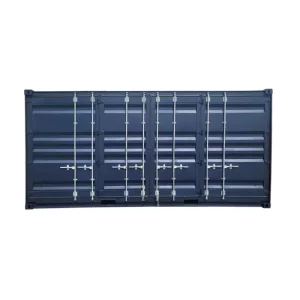
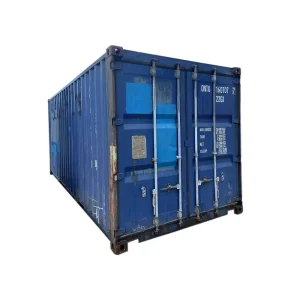
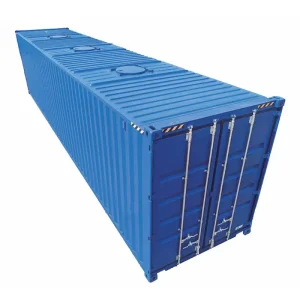
Immediate procurement assets: Class-certified reefer architectures, modified side-door dry vans, offshore cargo carrying units, and multimodal liquid transport containers.
A rigorous examination of geopolitical shift, cold-chain regulatory frameworks, and advanced metallurgical integration driving global intermodal supply chains.
The global shipping container landscape is undergoing an unprecedented paradigm shift. For decades, the sector operated primarily as a volume-driven, standardized commodity market focused strictly on generic ISO dry vans. However, accelerated geopolitical realignments, the disruption of traditional maritime transit corridors, and hyper-stringent cold-chain pharmaceutical mandates have catalyzed an imperative need for specialized Original Design Manufacturing (ODM). Enterprise buyers no longer seek mere steel enclosures; they require highly engineered intermodal containment assets capable of resisting catastrophic environmental extremes, satisfying international structural safety compacts, and interfacing seamlessly with digital logistics ecosystems.
As an established container design and manufacturing authority since 1983, Tianjin Cimic Imp&Exp Co., Ltd. (CIMIC Group) has spearheaded this technological transition. By maintaining integrated, heavy-engineering fabrication yards in Tianjin and Suzhou—situated approximately 100 kilometers from China’s paramount deep-water maritime conduits—CIMIC directly eliminates supply chain friction. Modern ODM manufacturing demands an uncompromising convergence of finite element stress analysis (FEA), high-yield atmospheric corrosion-resistant Corten steel fabrication, automated robotic submerged arc welding (SAW), and sophisticated thermodynamic management systems that transcend baseline ISO 1496-1 parameters.
Modern corporate procurement directives are inextricably tied to Environmental, Social, and Governance (ESG) frameworks and rigorous Total Cost of Ownership (TCO) assessments. In legacy procurement setups, capital expenditure (CapEx) was the sole metric evaluated. In contrast, today's Fortune 500 logistics conglomerates, chemical multinational syndicates, and offshore drilling conglomerates evaluate tare weight optimization, insulation thermal degradation over time, coating durability ratings against maritime chloride bombardment, and end-of-life cyclability.
Reducing container tare weight through the deployment of ultra-high-strength steel grades such as SPA-H Corten yields immediate operational dividends: it expands payload capacities for intermodal freight rail and reduces fuel burn per ton-kilometer across transoceanic container vessels. Concurrently, zero-emission powder coatings, low-VOC waterborne epoxy primers, and polyfluorocarbon topcoats are superseding traditional solvent systems to drastically diminish atmospheric volatile discharges while extending corrosion resistance cycles beyond 15 years in corrosive ISO 12944 C5-M marine environments.
Addressing structural failure risks, thermal transfer vulnerabilities, and cross-border regulatory non-compliance across multi-jurisdictional supply routes.
Standard carbon steel succumbs swiftly to accelerated oxidation in harsh marine environments. ODM engineering mandates high-tensile SPA-H Corten alloy compositions containing controlled copper, chromium, and nickel fractions that generate a self-passivating protective patina, ensuring prolonged structural integrity under racking, stacking, and dynamic sea forces.
Substandard reefer and insulated containers suffer severe internal temperature variance due to thermal bridges at the corner posts, structural rails, and floor-to-wall joints. We utilize automated high-pressure cyclopentane-blown polyurethane foam injection and vacuum insulation panels (VIP) to guarantee an exceptional thermal conductivity rating (λ ≤ 0.022 W/m·K).
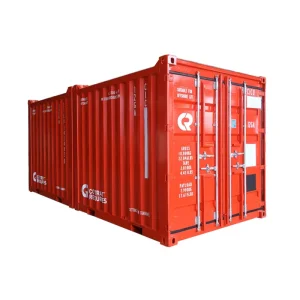
Offshore containers intended for deep-water floating production storage and offloading (FPSO) units or harsh platform supply cannot rely on generic ISO corner castings. Compliance with DNV 2.7-1 / EN 12079 requires Charpy V-notch impact testing at -20°C or -40°C, integrated pad-eyes, and certified four-part wire rope lifting slings capable of surviving turbulent open-sea transfers.
Tailored manufacturing programs engineered specifically to support energy infrastructure, cold-chain distribution, bulk chemical logistics, and rapid-deployment modular facilities.
| Vertical Segment | Primary Technical Standards | Structural Metallurgy & Spec | Thermodynamic / Mechanical Package | Target Operational Deployment |
|---|---|---|---|---|
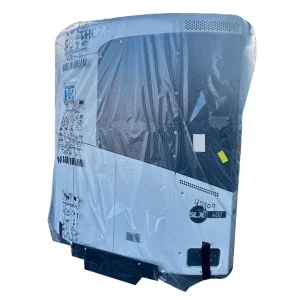
| Cold-Chain & Deep Freeze | ISO 1496-2, TIR, ATP Certificate | Stainless 304 / MGSS Interior; SPA-H Frame | Thermo King, Daikin, Carrier (-40°C to +30°C) | Vaccines, seafood, perishable agricultural exports |
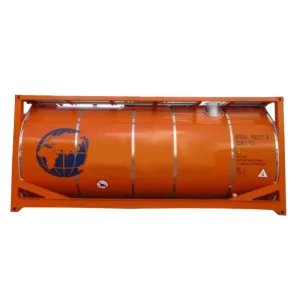
| Hazardous Bulk Chemical | ASME VIII, IMDG, RID/ADR, USDOT | 316L Stainless Steel Shell, 4mm-6mm baffle plates | Steam heating conduits, glycol tracing, thermal blankets | Corrosive chemicals, food-grade syrups, industrial solvents |
| Offshore Oil, Gas & Wind | DNV GL 2.7-1, EN 12079, IMO MSC/Circ.860 | Normalized structural hollow sections, low-temp toughness | Explosion-proof ATEX Zone 1/2 electrical fit-outs | Subsea drill bits, platform tools, dynamic sling lifts |
| Cryogenic Energy (LNG/LIN) | ISO 21014, ADR/RID T75, ASME U-Stamp | Double-walled austenitic stainless steel inner, vacuum insulated | Multi-layer superinsulation (MLI) with getter materials | Liquid Nitrogen, Argon, Oxygen, Liquefied Natural Gas |
| Modular Living & Power | ISO 668, CSC, CE, UL 94 Flame Spread | Corrugated Corten sidewalls, integrated fork pockets | A60 fire-rated rockwool insulation, acoustic dampening | Mobile substations, remote mining camps, BESS battery units |
A notable transformation within our ODM engineering division is the exponential surge in custom containers engineered for renewable Battery Energy Storage Systems (BESS) and high-density edge computing containerized modules. Unlike standard dry storage, these containers demand sub-millimeter tolerances to accommodate high-capacity lithium iron phosphate (LiFePO4) racks, liquid-cooling distribution manifolds, automated clean-agent fire suppression systems (Novec 1230 / FM-200), and integrated blast-relief venting doors.
Our engineering matrix involves advanced dynamic load calculation and thermal modeling to ensure that internal heat rejection remains completely stable across desert conditions reaching ambient peaks of +55°C down to sub-arctic operational thresholds of -45°C. Structural floors are augmented with high-yield transverse cross-members to bear point loads up to 40 metric tons while retaining global CSC (Convention for Safe Containers) stacking certifications up to 9-high laden configurations.
Guaranteeing worldwide port acceptance, cross-border custom clearances, and zero operational downtime across the global logistics grid.
Every batch of dry, reefer, and custom equipment undergoes rigorous continuous third-party inspection by Bureau Veritas surveyors, verifying weld porosity, joint penetration, and hydraulic hydrostatic pressures.
Full-traceability raw material certifications (MTC EN 10204 3.1) from primary steel foundries, followed by dimensional verification with computerized laser telemetry before entering paint cycles.
Dedicated fabrication cells configured for offshore dry vans, open-tops, and half-height skids. Structural pad-eyes are 100% Non-Destructive Tested (NDT) via Magnetic Particle and Ultrasonic testing.
Equipped with heavy-duty anti-corrosion CSC data plates stamped for gross laden weight parameters up to 36,000 kg, and built to TIR customs requirements for uninterrupted multi-border intermodal transits.
Pioneering the intersection of composite material science, AI-driven refrigeration duty cycles, and real-time satellite IoT telematics.
Modern CIMIC smart reefer builds integrate multi-constellation GNSS (GPS/Galileo), LTE-M/NB-IoT cellular gateways, and low-earth-orbit (LEO) satellite failovers. Fleets report real-time internal core temperatures, relative humidity, door-breach alerts, refrigerant pressure metrics, and oxygen/CO2 concentrations under Controlled Atmosphere (CA) regimes directly to cloud ERPs.
Next-generation reefer units, leveraging high-efficiency scroll and variable-speed reciprocating compressors from Thermo King, Carrier, and Daikin, utilize predictive thermal algorithms. By anticipating ambient solar radiation cycles and vessel route temperatures, these systems reduce power consumption by up to 28% without incurring chilling stress.
To reduce container deadweight and conquer electrochemical galvanic corrosion, we are advancing carbon-fiber-reinforced polymer (CFRP) structural corner caps and continuous-strand fiberglass-reinforced polyester (FRP) sidewall skins. This yields higher payload ratios for payload-restricted road transport corridors while extending asset lifespans well beyond 20 years.
In-depth technical answers addressing custom lead times, metallurgical traceability, specialized reefer maintenance, and maritime export protocols.
Our quality assurance framework starts with strict material testing at receipt. Every sheet of SPA-H Corten steel, stainless steel 304/316L, and structural hollow profile is validated with authentic Mill Test Certificates (MTC EN 10204 Type 3.1). Welds are systematically subjected to radiographic or ultrasonic testing. Each container receives a stamped, permanent CSC plate and a detailed technical dossier containing dimensional inspection reports, dry film thickness (DFT) paint logs, and electrical insulation resistance test records certified by third-party bodies including Bureau Veritas (BV) and DNV.
Standard ISO containers are engineered exclusively for vertical stacking and standardized spreader beam lifting during commercial container ship and intermodal carriage. Conversely, DNV 2.7-1 / EN 12079 offshore containers are engineered to withstand severe dynamic mechanical shocks encountered during open-ocean transfers between moving supply vessels and offshore rigs. Offshore units feature heavy structural steel grades with verified Charpy V-notch low-temperature toughness, permanently welded heavy-gauge pad-eyes, lack ISO corner pocket weaknesses, and undergo rigorous 2.5x Max Gross Weight dynamic drop and tilt prototype tests.
Yes. By utilizing specialized dual-stage refrigeration compressors, advanced multi-layer vacuum insulation panels (VIP), and high-density cyclopentane-blown polyurethane foam insulation (density > 42 kg/m³), our blast freezer containers achieve continuous internal temperatures down to -40°C or -60°C (for ultra-low temp sashimi tuna or biopharmaceutical plasma storage) even when navigating tropical waters with ambient deck temperatures surpassing +50°C.
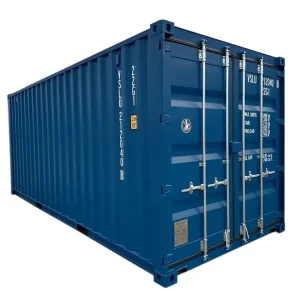
For custom ODM projects (such as specialized side-opening doors, integrated diesel generator mountings, or containerized mobile power modules), the engineering drawing and 3D modeling approval phase typically requires 7 to 10 business days. Upon final technical sign-off, fabrication spans 3 to 5 weeks depending on batch volume. Our strategic fabrication sites in Tianjin and Suzhou, situated roughly 100 km from major seaports, allow completed units to be loaded directly as One-Way Shipper Owned Containers (SOC) containing your own cargo, or positioned promptly onto vessel berths.
T75 ISO tank containers provide an optimized, intermodal payload solution for transporting bulk liquefied industrial gases including LNG, liquid nitrogen (LIN), liquid oxygen (LOX), and liquid argon (LAR). Configured with a double-walled inner austenitic stainless-steel vessel and high-vacuum multi-layer superinsulation, our T75 units deliver exceptional thermal holding performance with static daily evaporation rates (≤ 0.15% per day). This allows long intermodal transit via rail, ship, and road without venting product, significantly outperforming smaller, inefficient dewar batteries.
We implement a strict three-tier protective coating regimen adhering to ISO 12944 standard C5-High/Marine classifications. Steel surfaces are abrasive blasted to Sa 2.5 white-metal finish to ensure superior mechanical anchorage. We apply a zinc-rich epoxy primer (minimum 30 μm DFT), followed by a high-build polyamide-cured epoxy intermediate barrier coat (minimum 40 μm DFT), and finish with an aliphatic polyurethane or acrylic topcoat (minimum 40 μm DFT). This total protective barrier of ≥ 110 μm resists cyclic salt spray corrosion, intense UV degredation, and abrasion from road debris.
Explore our heavy-duty industrial inventory: Multi-temperature reefer configurations, ISO chemical tanks, cryogenic containment vessels, and modular housing solutions.