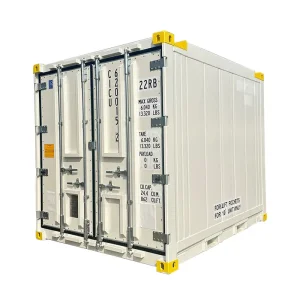
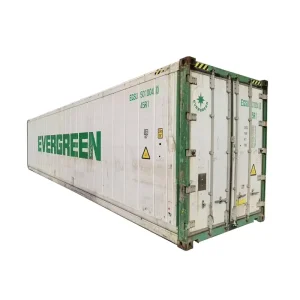
Explore heavy-duty intermodal units engineered to ISO 668/1496-1, DNV-GL offshore specifications, and global classification society guidelines for sea, road, and bulk transit.
From metallurgical optimization to real-time telematics integration, the standard intermodal freight box is evolving from a passive shipping shell into a smart, carbon-efficient logistics asset.
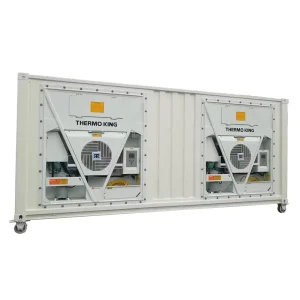
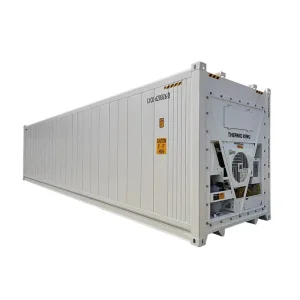
Modern fleet operators require real-time visibility. OEM containers now integrate factory-fitted GPS micro-sensors, door status switches, cargo ultrasonic volume scanners, and remote reefers monitored via low-power satellite and 5G networks, ensuring continuous cold-chain compliance and cargo security.
Global decarbonization drives the transition to waterborne zinc-rich primers and automated electrostatic powder coating booths. This lowers volatile organic compound (VOC) emissions by over 85% while delivering 15+ years of C5-M marine corrosion resistance in extreme oceanic environments.
Deploying advanced SPA-H Corten atmospheric corrosion-resistant steel allows wall and roof corrugations to maintain yield strengths above 345 MPa with reduced thickness, maximizing payload capacities without compromising the vertical 9-high fully laden stacking requirement under ISO 1496-1.
Global supply chain managers, container leasing companies (box-lessors), and military-industrial logistics hubs prioritize total cost of ownership (TCO) across 15-20 year lifecycles over upfront purchase cost.
Mandatory certification by Bureau Veritas (BV), Lloyd's Register (LR), or ABS. All standard containers must carry a permanent stainless steel CSC Safety Approval Plate reflecting structural tests up to 1.8x maximum gross mass.
Floor failures cause 40% of mid-life dry box repairs. Enterprise tenders specify 28mm hardwood plywood treated to Australian quarantine requirements (AQIS) or non-corrosive, insect-proof extruded composite bamboo flooring.
Forged carbon steel locking gears, anti-rack hardware, and EPDM dual-lip continuous door gaskets prevent water ingress under 100 km/h wind-driven ocean spray, safeguarding sensitive electronic, retail, and pharmaceutical cargo.
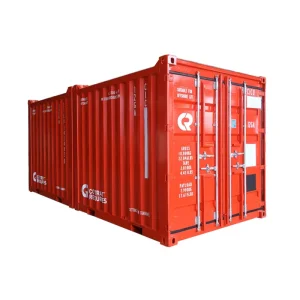
Procurement teams demand custom frame alterations: roll-up shutters, side-access bifurcated doors, removable roof panels for overhead crane loading, and reinforced tie-down anchor rings rated up to 2,000 kg each.
Combining end-to-end component clustering, robotic production lines, and direct portside deployment from our primary manufacturing bases in Tianjin and Suzhou.
Our Tianjin assembly lines use robotic multi-axis welding cells for corner castings, cross members, and side panels. Continuous automated submerged arc welding eliminates human weld seam porosity, ensuring absolute seal integrity and fatigue endurance under torsional stresses.
Situated within 100 kilometers of the international deep-water seaports of Tianjin (Xingang) and Shanghai/Taicang (via Suzhou), our hubs eliminate costly domestic feeder transport, enabling rapid vessel berth direct loading, FOB dispatch, and empty positioning for bulk global shipments.
Every sheet of raw Corten steel, primer batch, and corner post forging is fully documented with metallurgical mill certificates. Ultrasonic thickness testing and non-destructive testing (NDT) are completed at in-line inspection stations prior to classification sign-off.
Real-world operating environments require specialized structural modifications. We engineer container variants matched to distinct geographic, climatic, and intermodal stresses.
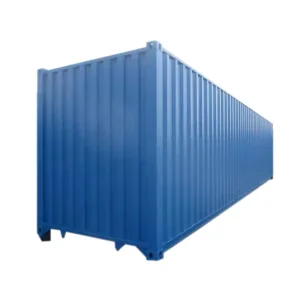
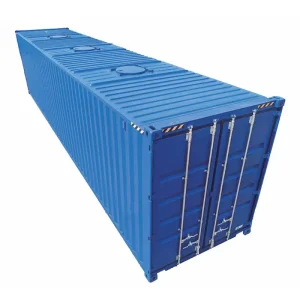
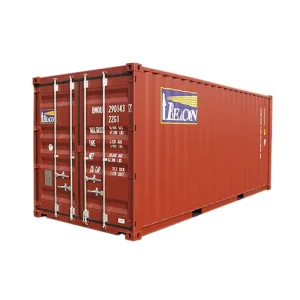
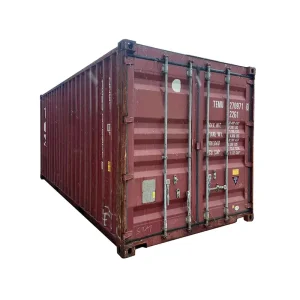
Standard 20GP, 40GP, and 40HC containers handle cellular container ship stowage, enduring extreme sea slap, racking loads, dynamic rolling, and stacking forces up to 216,000 kg on bottom corner blocks.
Built for the China-Europe Railway Express across Siberia and Central Asia. Reinforced bottom side rails and specialized sub-zero steel grades resist embrittlement and impact shocks down to -40°C.
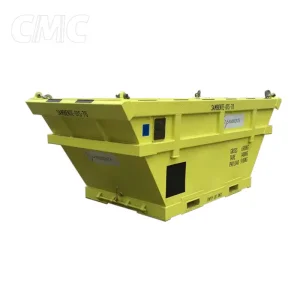
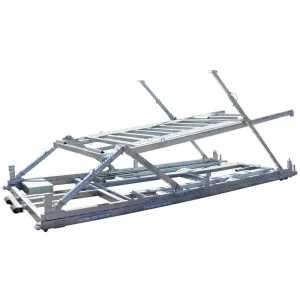
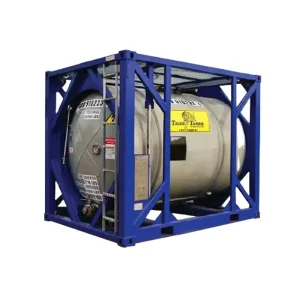
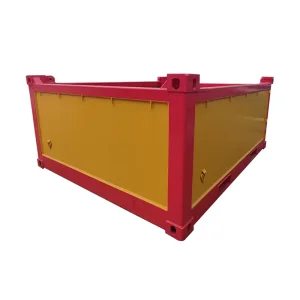
Specially reinforced offshore mini-containers, cargo baskets, and ISO tanks certified to DNV 2.7-1 / EN 12079, engineered with dedicated pad eyes for open ocean crane transfers to drill rigs and FPSOs.
Modified standard containers serve as structural building blocks for mobile clinics, telecom shelters, battery energy storage systems (BESS), and modular work camps in remote mining territories.
Comprehensive baseline dimensions, maximum gross weight capacities, tare weights, and payload parameters for our standard and high-cube dry freight production runs.
| ISO Container Model | External Dimensions (L × W × H) | Internal Dimensions (L × W × H) | Max Gross Mass (M.G.W.) | Tare Weight | Internal Volume | Standard Certifications |
|---|---|---|---|---|---|---|
| 10ft Standard Dry (10GP) | 2,991 × 2,438 × 2,591 mm | 2,831 × 2,352 × 2,393 mm | 10,000 kg | 1,300 kg | 15.9 m³ | ISO / BV / CSC |
| 20ft Standard Dry (20GP) | 6,058 × 2,438 × 2,591 mm | 5,898 × 2,352 × 2,393 mm | 30,480 kg | 2,200 kg | 33.2 m³ | ISO / LR / BV / ABS |
| 20ft High Cube (20HC) | 6,058 × 2,438 × 2,896 mm | 5,898 × 2,352 × 2,698 mm | 30,480 kg | 2,350 kg | 37.4 m³ | ISO / CCS / BV |
| 40ft Standard Dry (40GP) | 12,192 × 2,438 × 2,591 mm | 12,032 × 2,352 × 2,393 mm | 32,500 kg | 3,750 kg | 67.7 m³ | ISO / BV / DNV-GL |
| 40ft High Cube (40HC) | 12,192 × 2,438 × 2,896 mm | 12,032 × 2,352 × 2,698 mm | 32,500 kg | 3,900 kg | 76.4 m³ | ISO / ABS / LR / BV |
| 40ft Side-Door High Cube | 12,192 × 2,438 × 2,896 mm | 12,032 × 2,280 × 2,600 mm | 32,500 kg | 4,600 kg | 71.5 m³ | ISO / BV / CSC |
Detailed engineering, manufacturing, metallurgical, and international delivery answers directly from our factory technical support division.
We use SPA-H or Q345E atmospheric corrosion-resistant hot-rolled steel plate conforming to JIS G3125 and GB/T 4171 standards. This metallurgy forms a dense, self-healing oxide patina that slows corrosion rates in salt-laden marine air, extending operational lifespan to 15+ years.
Yes. Our automated shot-blasting booth preps steel to SA 2.5 cleanliness before applying zinc-rich primer, epoxy intermediate coats, and acrylic topcoats in any RAL color. High-precision silk screening applies fleet prefixes, owner logos, barcodes, and CSC-mandated gross weight markings.
Every production run passes factory load testing witnessed by classification surveyors: floor loading tests (7,260 kg axle loads), end-wall transverse racking, roof static loads, corner-post vertical compression (9-high stack simulation), and high-pressure water spray testing at 1 bar along all gasket lines.
For standard dry freight containers (20GP, 40HC), production capacity reaches up to 300 TEU per day. Custom configurations (side-access doors, customized interior insulation, offshore cargo baskets) run on average 25 to 35 days from technical CAD approval to port delivery.
Yes. Through our international forwarding partnerships, new OEM containers can be dispatched as SOC boxes loaded with non-hazardous dry cargo directly to Europe, North America, the Middle East, or Australia, substantially lowering repositioning transport costs.
While ISO standard containers adhere to ISO 1496-1 for intermodal stacking, DNV 2.7-1 / EN 12079 units are built for open-ocean dynamic snatch lifting. They feature heavier structural frames, charpy V-notch impact-tested steel down to -20°C, integrated pad-eyes, and certified lifting sling sets.
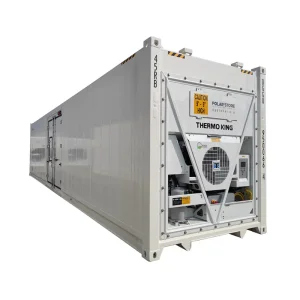
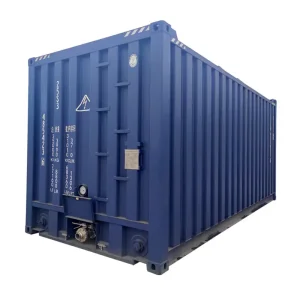
Explore heavy-duty bulk handling, liquid tank transport, high-cube cold storage, and certified pre-owned intermodal containers ready for immediate global deployment.