
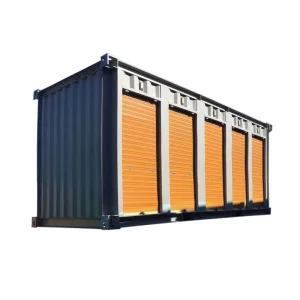
Comprehensive engineering specs, direct factory pricing, and duty-optimized procurement guidelines for logistics hubs, multi-compartment self-storage facilities, and transit operations across Colon, Balboa, and Panama Pacifico.
Engineered for tropical maritime resistance, high-cycle roll-up mechanisms, and seamless deployment across Colon Free Zone transshipment terminals.
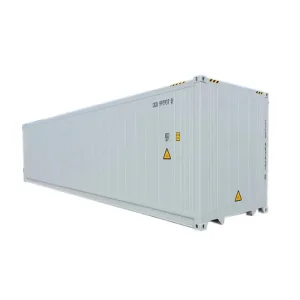
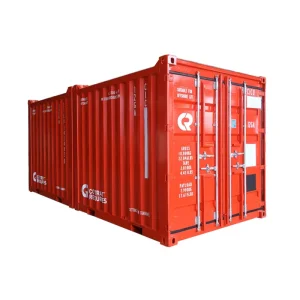
Panama sits as the undisputed interoceanic crossroads of the Western Hemisphere. The expanding demand for specialized roll-up and multi-compartment containers reflects an evolving domestic and transcontinental logistics ecosystem.
As the largest free trade port in the Americas, Colón processes massive transshipment volumes. Traditional swinging double doors require a 4-meter clearance swing zone behind trucks. Industrial roll-up shutter doors eliminate rear radius constraints, maximizing floor footprint utilization within narrow staging lanes and bounded bonded warehouses.
The intermodal transfer between Pacific ports (Balboa, PSA Panama) and Atlantic terminals (Manzanillo, Cristobal) relies heavily on rapid cross-dock logistics. Roll-up side-door containers allow multi-drop freight routing, facilitating rapid customs spot checks and cross-dock pallet extraction without demounting shipping locks.
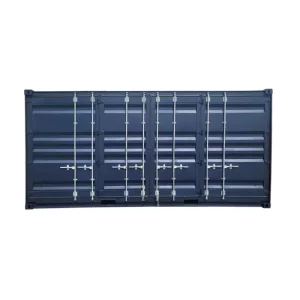
Driven by rapid urbanization in San Francisco, Costa del Este, and Bella Vista, modular roll-up door containers have become the primary capital asset for self-storage ventures. Standard 20ft and 40ft units are partitioned into two, three, or four secure lockup cells with independent heavy-gauge roll-up access, yielding high rental ROI.
Operating containers in Panama requires specialized structural fortification against extreme ambient humidity (averaging 80–90%), continuous marine salt-fog exposure, and heavy tropical downpours.
Standard dry cargo conversions often fail within 24 months when low-spec sheet metal shutters are welded into altered ISO frames without reinforced load redistribution. Our factory-engineered roll-up door containers feature comprehensive structural integrity calculations:
Whenever an ISO wall is perforated to fit a single or multiple roll-up doors, corner casting torsional resistance is compromised unless properly compensated. We engineer heavy hollow structural sections (HSS 100x50x4.5mm) into the lintel and threshold framing, maintaining full nine-high stacking capacity without diagonal racking distortion.
Unlike light commercial roll-up garage doors, our industrial shutters incorporate wind-lock end clips, extruded aluminum guides with heavy EPDM weatherstripping, and high-tensile torsion spring barrels tested for over 50,000 cycles. This prevents curtain blow-out during tropical storm squalls in the Gulf of Panama.
To resist galvanic degradation and intense UV radiation, all fabricated frames and raw cut edges undergo automatic SA 2.5 shot blasting. This is sealed with an inorganic zinc-rich primer (30μm), epoxy intermediate coat (40μm), and two polyurethane topcoats (total DFT ≥ 120μm), certified for 15+ years in harsh saline zones.
Transparent factory direct cost breakdowns (Tianjin / Suzhou manufacturing bases) with CIF estimated landed freight benchmarks to Port of Balboa and Port of Cristobal.
| Model Configuration | Door Aperture & Material | Factory FOB (China) | Estimated CIF Panama* | Primary Industrial Use Case |
|---|---|---|---|---|
| 20ft Standard Roll-Up (1 Door) | 2.2m x 2.0m Galvalume Shutter | $2,850 - $3,350 | $4,650 - $5,300 | Site storage, tool crib, secure equipment locker |
| 20ft Multi-Door (3 Compartments) | 3x Individual Roll-Up Doors (Side) | $3,800 - $4,400 | $5,600 - $6,350 | Urban self-storage rental, segregated inventory |
| 40ft High Cube (4 Roll-Up Doors) | 4x Individual Aluminum Shutters | $6,200 - $7,100 | $9,400 - $10,500 | Commercial mini-storage facilities, trade yards |
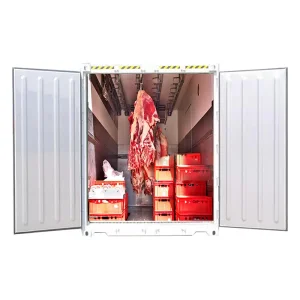
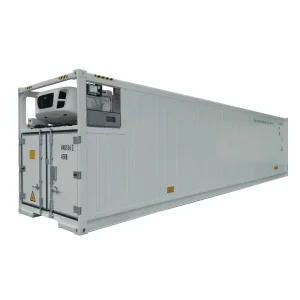
| 40ft Insulated Roll-Up Hybrid | Polyurethane Core + Thermal Curtains | $7,500 - $8,600 | $10,800 - $12,200 | Pharmaceutical transit staging, cold-chain buffer |
| DNV 2.7-1 Offshore Unit | Heavy Impact Steel Shutter System | $8,900 - $11,500 | $12,200 - $14,900 | Offshore platform supply, maritime canal maintenance |
*Disclaimer: Ocean freight rates fluctuate weekly based on bunker adjustment factors (BAF) and canal slot congestion. Exact CIF quotations are finalized upon project drawing confirmation.
Procuring specialized containers internationally requires exact documentation to navigate Panamanian customs and capture available tax incentives.
Companies operating within registered zones like Panama Pacifico, Ciudad del Saber, or Zona Franca de Albrook enjoy comprehensive exemptions from import tariffs (aranceles) and the 7% ITBMS (Impuesto de Transferencia de Bienes Corporales Muebles y la Prestación de Servicios) when purchasing containers categorized as commercial capital equipment.
All containers bound for intermodal transit must carry valid International Convention for Safe Containers (CSC) plates approved by IACS members (such as BV, DNV, or ABS). For units imported strictly for static self-storage or site housing, we arrange dual tariff filing (HS Code 8609.00 vs 9406.90) to streamline clearance through the Autoridad Nacional de Aduanas.
With manufacturing facilities positioned within 100km of Tianjin and Shanghai/Suzhou deepwater export docks, containerized or SOC (Shipper Owned Container) units reach Panamanian terminals in an average transit time of 26 to 34 days, backed by clean original Bills of Lading, Certificate of Origin, and BV inspection documentation.
Bridging traditional heavy manufacturing with digital container operations across Latin American logistics hubs.
Factory-embedded door status telemetry monitoring roll-up curtain state (open/closed) transmitted via LoRaWAN and satellite gateways for remote security monitoring across Panamanian yards.
Application of ceramic microsphere reflective coatings on container roofs, reducing interior heat soak by up to 18°C under tropical Central American sun, preserving shelf-life of temperature-sensitive cargo.
Smart latching roll-up mechanisms tailored for unmanned 24/7 self-storage franchises in Panama City, enabling smartphone credential access and automated audit trail logging.
Transition from traditional steel curtains to high-tensile carbon-reinforced polymer slats, cutting shutter deadweight by 45% while offering 100% immunity to salt-induced galvanic oxidation.
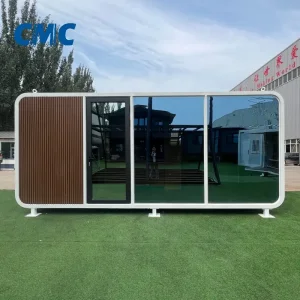
Explore our certified series of specialized dry, cold-chain, offshore, and modular units available for immediate order and custom build fabrication.
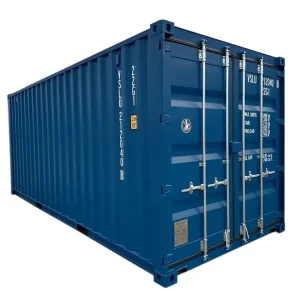
Direct answers from our structural engineers and export directors regarding certifications, modifications, and freight logistics to Central America.
If an existing container is modified in an uncertified yard by cutting corrugation without recalculating stress moments, yes, the CSC certification becomes void. However, CIMIC manufactures these units as original purpose-built structures at our factory. Every sub-frame is built with certified Corten structural tubing and tested under ISO 1496-1 parameters, allowing us to deliver units with valid Bureau Veritas (BV) or CCS CSC approval plates for ocean freight loading.
Standard architectural shutters can leak through the interlocking slats. For units bound for Central American tropical zones, we incorporate dual-lip EPDM bottom gaskets, brush and rubber side channel draft-seals, and an integrated galvanized water diversion canopy (drip hood) welded directly above the roll-up barrel. This prevents driving rain ingress during intense Pacific and Caribbean squalls.
Yes. This is one of our most frequent orders for Panama City commercial projects. We install internal transversal bulkhead walls fabricated from 1.6mm corrugated steel sheets, dividing a 40ft High Cube into 2, 3, or 4 completely isolated compartments. Each compartment is fitted with its own independent roll-up shutter and internal pad-lockable barrel bolt mechanism.
Production cycles typically require 15 to 25 business days depending on order size and customization level. Maritime sailing time from Tianjin or Shanghai to the Port of Balboa (Pacific side) or Manzanillo / Cristobal (Atlantic side) takes between 26 and 32 days via direct trans-Pacific container liner services.
Because coastal terminals like Colon and Balboa experience ambient airborne salt particulates, we recommend bi-annual inspection of the torsion springs, application of marine lithium-based grease to the side guide tracks, and clearing the bottom rubber seal of abrasive grit to maintain effortless one-handed roll-up operation over decades of use.
Connect with our technical design team today. Obtain complete structural CAD drawings, volume B2B discount tiers, and customs dispatch support for Panama and Central America.