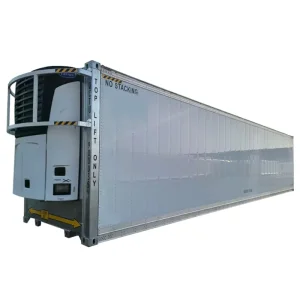
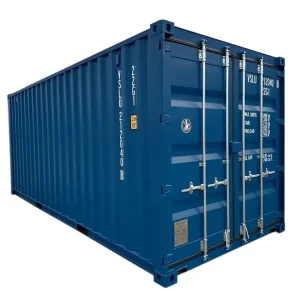
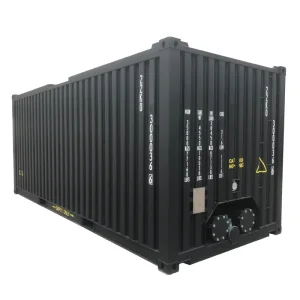
Inspect factory-direct certified offshore modules, active refrigeration cold rooms, and extreme-environment storage solutions built to international maritime and offshore class standards.
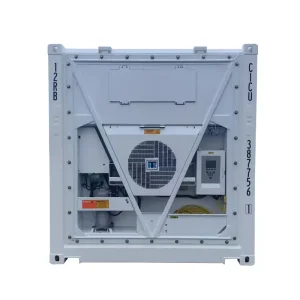

Analyzing dynamic wave-impact stresses, thermal conductivity thresholds, and metallurgical criteria mandated by international offshore regulatory bodies.
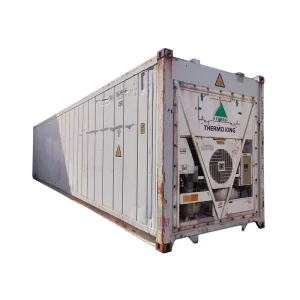
In offshore oil, gas, renewable energy, and subsea engineering, deploying refrigeration equipment goes far beyond traditional intermodal cold-chain standards. A standard ISO 1496-2 refrigerated container is engineered primarily for stacked static container-ship transit and calm terminal handling. In contrast, an Offshore Reefer Container must endure extreme dynamic loading during platform crane transfers in Sea State 6 conditions, constant cyclic salt-spray immersion, and potentially explosive atmospheric conditions (Zone 1 or Zone 2 hazardous areas).
Fabricated using specialized high-yield structural steel grades such as S355NL / Corten SPA-H, engineered specifically to pass Charpy V-Notch impact testing at -20°C or -40°C down to 42 Joules, preventing catastrophic brittle fracture during harsh marine crane hoists.
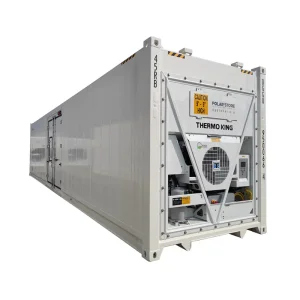
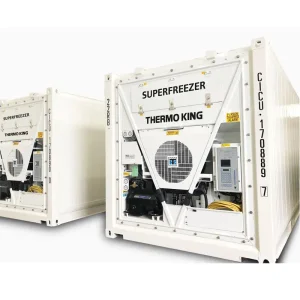
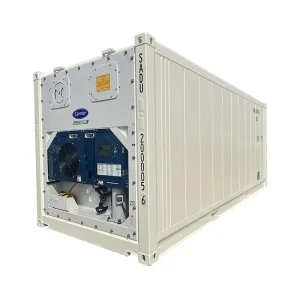
Integrated with marine-grade active chillers (Carrier Transicold ThinLINE/PrimeLINE, Daikin LXE, or Thermo King Magnum Plus) fully converted for hazardous environments according to ATEX Directive 2014/34/EU and IECEx.
Engineered with zero-thermal-bridge vacuum-injected high-density Polyurethane (PU) foam insulation cores achieving exceptional overall heat transfer coefficients (U-Factor ≤ 0.36 W/m²K), drastically reducing compressor running hours.
A rigorous industrial cost matrix reflecting structural engineering variations, class certifications (DNV / BV / LR), cooling unit architectures, and explosion-proof adaptations.
| Container Model & Footprint | Class Certification Standard | Refrigeration Unit Architecture | Operating Temp Range | Indicative Ex-Works Cost (USD) |
|---|---|---|---|---|
| 10ft DNV Offshore Reefer | DNV 2.7-1 / EN 12079 / ISO 10855 | Carrier / Daikin Single Integrated Unit | -30°C to +20°C | $18,500 - $24,800 |
| 20ft DNV Offshore Reefer (Standard) | DNV 2.7-1 / EN 12079 / CSC / BV | Carrier PrimeLINE / Thermo King MP-4000 | -35°C to +30°C | $24,500 - $32,000 |
| 20ft DNV Dual-Redundant Reefer | DNV 2.7-1 / EN 12079 / ASME / ISO 10855 | Twin Independent Refrigeration Circuits (Duty/Standby) | -30°C to +25°C | $38,000 - $49,500 |
| 20ft ATEX Zone 1 Explosion-Proof | DNV 2.7-1 / ATEX Zone 1 (Ex d e ib mb IIB T4) | Fully Certified Explosion-Proof Custom Package | -25°C to +20°C | $58,000 - $76,000 |
| 20ft ATEX Zone 2 Hazardous Area | DNV 2.7-1 / ATEX Zone 2 / IECEx Certified | Marine Refrigeration w/ Ex nA / Ex d Protection | -30°C to +25°C | $42,000 - $55,000 |
| 40ft High Cube DNV Offshore Reefer | DNV 2.7-1 / EN 12079 / ISO 1496-2 / DNV-GL | Carrier Transicold Digital Scroll or Daikin LXE | -30°C to +30°C | $36,000 - $46,500 |
Submit your operating payload specs, minimum design temperature (TD), zone classification, and required sling assemblies. Our marine architects generate comprehensive general arrangement (GA) packages within 24 hours.
Deconstructing how raw material proximity, robotic automated welding, Tier-1 cooling brand partnerships, and direct deep-water port access optimize Capex by 28-35%.
China's heavy industrial clusters in Hebei and Jiangsu supply premium Corten-A atmospheric corrosion-resistant steel and S355 grade plates directly to factory gates with zero import tariff markups. Automated laser plasma cutting and robotic sub-arc welding stations eliminate labor discrepancies while maintaining stringent WPS (Welding Procedure Specification) compliance recognized by DNV and Bureau Veritas.
Direct original equipment manufacturer (OEM) partnerships with global refrigeration giants—Carrier Transicold, Daikin Marine, and Thermo King—mean container shells are fitted with authentic, warranty-backed machines on certified production lines. Units undergo immediate factory pre-trip inspections (PTI), automated refrigerant vacuum tests, and complete thermodynamic profiling prior to yard release.
Situated within 100 kilometers of major global deep-water marine gateways (Tianjin Port and Shanghai/Taicang ports), transport handling time is virtually eliminated. Containers can be seamlessly positioned for bulk shipping via heavy-lift breakbulk vessels, flat racks, or one-way domestic cabotage to cut export freight costs down to global procurement hubs like Houston, Rotterdam, Singapore, and Luanda.
Critical engineering considerations for supply chain managers, drilling contractors, and naval architects balancing lifetime operational risk against capital expenditure.
Procuring offshore refrigeration units requires verification of several mission-critical parameters beyond surface dimensions:
The offshore cold chain is undergoing radical technical modernization focused on compliance and environmental sustainability:
Examining operational parameters across demanding marine, oilfield, and remote scientific working environments worldwide.
Providing essential sustenance preservation for 150-300 offshore personnel over 28-day crew rotations. High-volume 20ft and 10ft dual-zone reefer/freezer compartments maintain strict HACCP standards with independent -25°C freezer and +4°C chill sections, ensuring food security in the most isolated maritime fields.
Converter platforms in offshore wind farms require stable thermal management for high-capacity backup battery arrays and delicate switchgear components. Modified offshore reefers serve as modular, fire-rated climate-controlled chambers operating flawlessly in high-salinity offshore wind zones.
Core samples, testing reagents, dynamic mud additives, and volatile platform chemicals demand constant low-temperature storage within ATEX Zone 1 hazardous production areas. Specially designed explosion-proof reefers eliminate any combustion risk from volatile ambient gases.
In-depth responses to critical engineering, testing, certification, and commercial queries encountered by procurement teams.
ISO 1496 applies to multimodal freight units transported via standard container cell guides, testing corner castings and side rails for stacked compression. DNV 2.7-1 (and EN 12079 / ISO 10855) addresses open-sea dynamic lifting, requiring certified padeyes, dedicated 4-leg wire rope slings with safety shackles, high impact-resistant low-temperature metallurgy, and proof load testing up to 2.5x the Maximum Gross Mass (MGM).
Yes. Offshore reefer containers are quoted with certified DNV 2.7-1 / EN 12079 four-leg wire rope lifting sling assemblies, complete with top master links and quadruplicate safety-pin bow shackles. Each sling assembly is load-tested, serialized, and matched directly to the container's DNV certificate databook.
Zone 1 units are designed for environments where explosive gas atmospheres are likely to occur during normal operation, requiring Flameproof (Ex d), Increased Safety (Ex e), or Encapsulation (Ex m) measures across all electrical gear. Zone 2 units are certified for areas where explosive atmospheres are abnormal and would persist for only a short period, allowing non-sparking (Ex nA) enclosures and pressurized air purges.
Due to the robust S355 heavy structural steel frame, heavy-gauge Corten exterior panels, high-build marine C5-M epoxy coating systems, and stainless-steel internal linings, the structural design lifespan exceeds 15 to 20 years with routine annual visual examinations and periodic padeye NDT inspections.
Yes. We offer fully custom OEM/ODM designs including dual-temperature bi-zone partitions (freezer and chiller separated by an insulated bulkhead wall with internal doors), butchers' meat rails, pharmaceutical shelving systems, integrated strip curtains, and internal escape hatch releases.
Every delivered unit is accompanied by a full comprehensive Manufacturer's Data Report (MDR), including the Third-Party Class Certificate (DNV, BV, or Lloyds Register), mill test certificates (MTC 3.1) for all structural steel, welding WPS/PQR credentials, NDT reports (MPI/DPI), sling certs, and factory PTI logs.
Our high-density (42-45 kg/m³) polyurethane foam insulation core delivers thermal conductivity as low as 0.022 W/m·K. In the event of a total generator power outage during platform transfer in +35°C ambient conditions, internal frozen cargo temperatures increase by less than 0.35°C per hour.
Standard cooling units operate on 460V/440V 3-phase 60Hz or 380V 3-phase 50Hz. For remote platform decks without electrical tie-ins, we engineer custom self-contained diesel generator-set (genset) clip-on packages or integrated underslung fuel reservoirs providing up to 120 hours of continuous runtime.
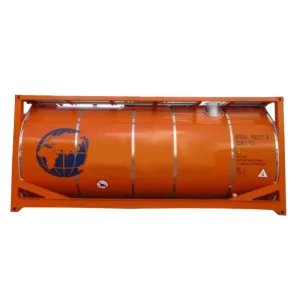
Explore additional dry, refrigerated, side-door access, cryogenic liquid tank, and insulated container equipment engineered for seamless offshore, intermodal, and industrial deployment.