Direct manufacturer deployment of open systems, specialized heavy-haul dry units, and active refrigerated intermodal equipment certified under CSC and ISO 1496/1.
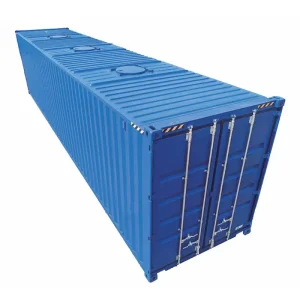
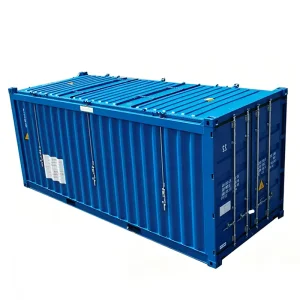
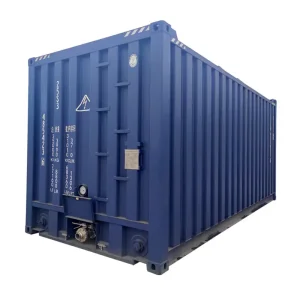


In modern intermodal freight logistics and global breakbulk movements, procurement officers encounter a major bottleneck: cargo density, extreme top-loading overheads, and non-standard dimensional geometry render standard closed steel containers unviable. The structural classification categorized broadly under Shipping Container Open topologies—encompassing Hard Open-Top (HOT), Soft Open-Top with Tarpaulin Cover, Full-Side Access Open Door units, and End-to-End Open Platform Flat Racks—has evolved into a mission-critical infrastructure category.
Global trade analysis reveals that oversize machinery, mining concentrates, renewable wind components, structural steel coils, and bulky industrial turbines constitute more than 18.4% of total dry equivalent container slot allocation on main carrier lanes. Purchasing managers and project procurement specialists seeking to buy shipping container open products and secure reliable price quotes must navigate complex parameters: yield strength metrics (SPA-H Corten steel), tare weight optimization, corner casting load transfer, and water-tight sealing mechanisms (EPDM perimeter gaskets and multi-point lock rods).
Engineered for overhead gantry cranes, marine shore arms, and magnetic lifts. Removable rear roof headers allow seamless longitudinal crane access without dimensional obstruction.
Factory-direct pricing models avoid broker markups. Heavy-duty tare-to-payload ratios provide up to 30,480 kg gross design capacity, lowering logistics expenditures per shipping ton.
Manufactured using Corten-A weathering steel, dual anti-theft cam locks, heavy lashing rings (1,500–4,000 daN), and Bureau Veritas (BV) type certificates compliant with CSC criteria.
A rigorous breakdown of load bearing, header swinging mechanics, seal interfaces, and metallurgic formulas essential for procurement verification.
Standard ISO containers rely entirely on a unified closed corrugated box envelope to resist torsion, racking forces, and dynamic maritime swells. When the roof or side panels are designed to open, shear stresses redistribute across top side rails, corner posts, and floor sills. CIMIC engineers solve this structural dilemma through reinforced upper boxed chords, cold-formed tubular sections, and heavy corner casting gussets conforming strictly to ISO 1496-1: Series 1 freight containers.
| Structural Model | Key Opening Mechanism | Max Gross Weight | Payload Capacity | Corrosion & Material Spec | Target Operational Cargo |
|---|---|---|---|---|---|
| 20ft Hard Open Top (HOT) | Detachable steel roof lid with crane eyelets | 30,480 kg (67,200 lbs) | 27,800 kg (61,288 lbs) | SPA-H Corten Steel + Zinc Primer | Crushed ore, industrial machinery, glass sheets |
| 40ft High Cube Soft Open Top | TIR-certified tarpaulin with pivoting rear header | 32,500 kg (71,650 lbs) | 28,150 kg (62,060 lbs) | Corrugated 2.0mm Corten + 650g PVC tarp | Tall drilling apparatus, boilers, steel pipes |
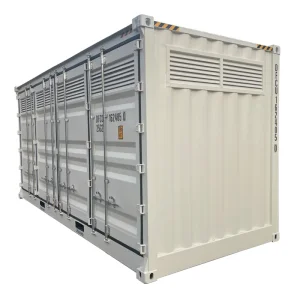
| 20ft / 40ft Side-Open Door | Bi-fold full length lateral door panels | 30,480 kg (67,200 lbs) | 26,900 kg (59,304 lbs) | Reinforced bottom rail, 4-point cam lock | Palletized goods, EV battery racks, emergency gensets |
| 20ft Platform / Flat Rack | Collapsible end frames / Flush floor flushbed | 45,000 kg (99,200 lbs) | 40,200 kg (88,625 lbs) | High-yield I-beam longitudinal sills | Earthmoving excavators, marine shafts, transformers |
| Offshore DNV Open Basket / Box | Top open with internal tie-down pads & slings | 10,000–16,000 kg | 8,500–13,200 kg | EN 12079 / DNVGL-ST-E271 Structural Steel | Subsea drill heads, heavy offshore casing pipes |
Rear door headers swing outward left or right up to 270 degrees, eliminating snag hazards during low-clearance crane lowered machinery placement.
Equipped with high-durability braided steel core TIR cables, high-frequency vulcanized sealing beads, and customs anti-tamper lacing tabs.
Features 28mm certified keruing hardwood plywood with zinc-treated floor screws or optional 4.5mm anti-skid checkered steel flooring plates.
Examining field-tested performance across North American rail grids, Australian mining clusters, European multimodal hubs, and African extraction terrains.
In the Pilbara and Western Australia gold and lithium belts, hard open-top 20ft units operate in specialized rotary tippler systems, dumping high-density spodumene concentrate directly into vessel holds without manual labor.
Full side-opening high cube enclosures provide utility projects across Texas and California with structural walk-in accessibility to install large scale LFP battery packs, fire suppression conduits, and PCS inverters.
Connecting Rotterdam and Duisburg into Central Europe, side-door dry units speed up dock loading for pallet distribution, bypassing traditional warehouse overhead dock bottlenecks via rapid side forklift loading.
Certified under DNV 2.7-1 and BS EN 12079, our offshore open half-height baskets withstand arctic wave slams and dynamic ship-to-platform crane transfers in harsh -20°C marine operating conditions.
How CIMIC’s Tianjin and Suzhou industrial complexes drive predictable production lead times, superior metallurgy, and port-side loading cost advantages.
China manufactures more than 90% of global intermodal shipping containers, sustained by tightly integrated industrial ecosystems covering raw metallurgy, automated robotic welding, environmentally certified eco-coatings, and standardized testing rigs. CIMIC Group stands at the center of this industrial cluster with dedicated facilities in Tianjin Pilot Free Trade Zone and Suzhou.
Unlike secondary brokers who outsource assembly, our direct manufacturing integration delivers four major advantages to international corporate buyers:
Direct supply partnerships with Baosteel and Shougang ensure continuous lots of certified SPA-H weathering steel with documented chemical tracer analysis and tensile test certification.
Automated multi-axis welding robots assemble continuous side rail seams and corner post unions, eliminating human defect variance and passing strict radiographic structural audits.
Strategic locations within 100 km of Tianjin Port (Northern shipping gateway) and Shanghai/Ningbo ocean terminals drastically reduce inland repositioning costs and drayage wait times.
Custom engineering from single prototype trials to thousand-TEU enterprise runs. Tailored designs incorporate explosion-proof vents, roller shutters, modular floors, and specialized RAL paints.
The next decade of container technology: IoT tracking, ultra-low VOC coatings, lightweight composite panels, and automated telemetry.
Next-generation hard and soft open units integrate solar-harvested roof sensors tracking real-time GPS coordinates, internal humidity, roof-cover tamper alarms, and acceleration forces across rail bumps.
Meeting strict EU REACH chemical regulations, our finishing processes employ water-dispersible polyurethane and epoxy zinc systems, slashing volatile organic compounds (VOCs) by over 72% while maintaining C5-M marine corrosion resistance.
Ongoing R&D balances the security of hard-tops with the light weight of tarps: lightweight composite hard lids cut roof weight by 45%, allowing up to 600 kg of additional cargo payload per unit.
Every open unit leaves the CIMIC line with comprehensive international registry paperwork and load validation.
To qualify for international sea carriage aboard container vessels, specialized open shipping containers must withstand rigorous physical testing observed by authorized classification societies like Bureau Veritas (BV), Lloyd’s Register (LR), or China Classification Society (CCS). Structural performance criteria under ISO 1496/1 cover:
Containers are tested with 86,400 kg loaded on each top corner post, replicating the massive axial compression of 9 fully loaded containers stacked in a ship cell guide amid heavy rolling seas.
Subjected to a 7,260 kg forklift axle test running back and forth across 28mm keruing floor boards without permanent rupture or excessive elasticity deformation.
Hydraulic actuators apply lateral forces of 150 kN to corner castings, ensuring open-roof configurations maintain geometric squareness without latch failures.
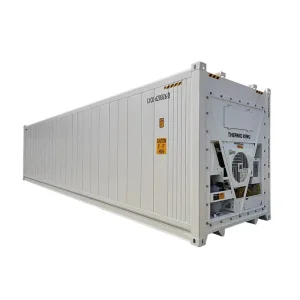
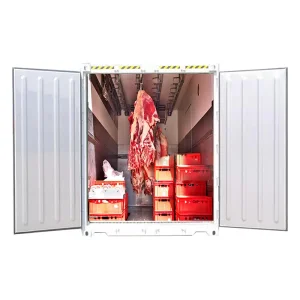
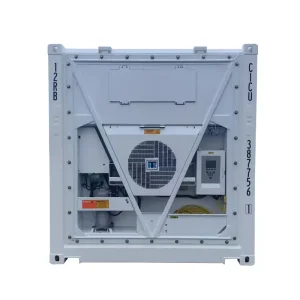
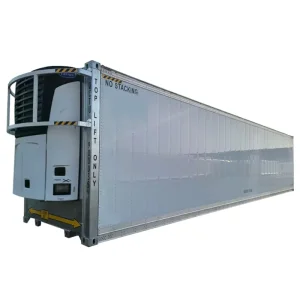
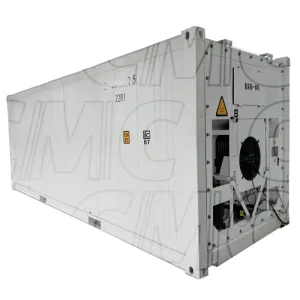
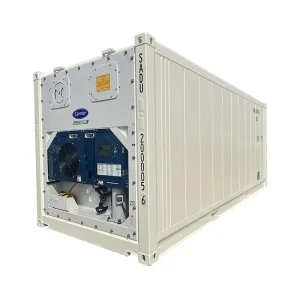
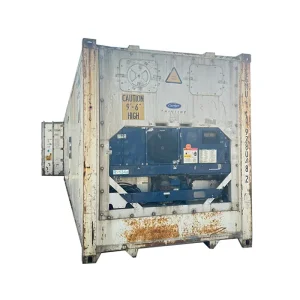
Complete project-ready options: hazardous goods containers, heavy platform frames, offshore tanks, and self-contained refrigerated units.



Understanding factory quote dynamics, Incoterms, batch volume economics, and structural options for institutional tenders.
Evaluating commercial quotations for open shipping containers requires calculating the total landed cost over the asset's working life. Standard dry boxes may look cheaper upfront, but forcing top-heavy or oversized cargo through standard end doors leads to costly cargo damage, rig repositioning delays, and terminal demurrage.
A precision quote review should analyze five core structural cost drivers:
Standard containers often substitute cheaper carbon steel alloys. CIMIC specifies certified SPA-H Corten steel for both primary framing and corrugations, extending service life in salt-fog marine environments past 15 years.
Hard Open Tops use crane-hoisted steel roofs with lock pin setups for cargo that needs rigid tamper security. Soft Open Tops use heavy 650g/m² PVC tarpaulins on curved steel roof bows to maximize payload allowance.
Our export operations team can frequently pair newly fabricated open-top and side-door containers with one-way revenue cargo bound for North America, Rotterdam, or Australia, cutting ocean transit freight charges by 30% to 60%.
Technical and commercial answers addressing common engineering inquiries, certifications, warranties, and delivery lead times.
