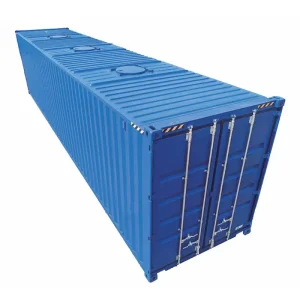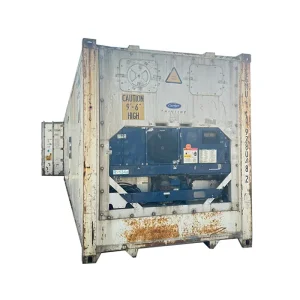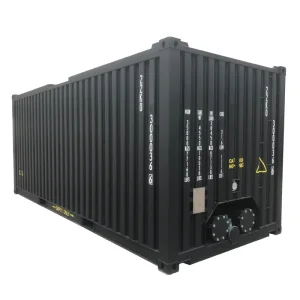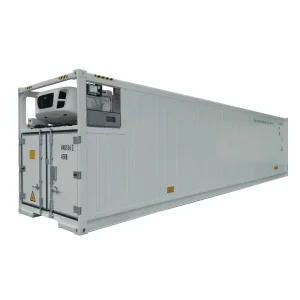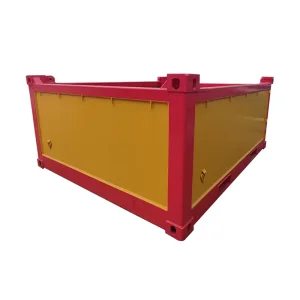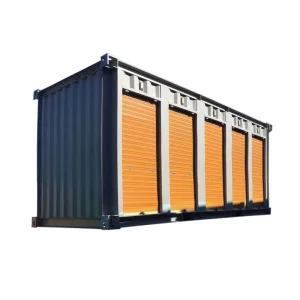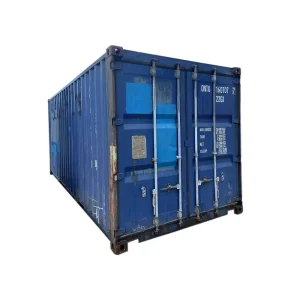
Reefer Spec
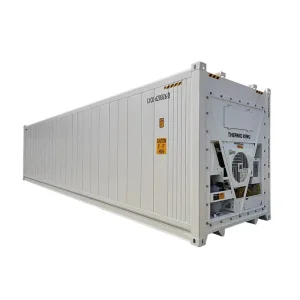
Directly manufactured to international maritime compliance benchmarks. Select an engineered system to examine load parameters, metallurgical certifications, and custom foundation designs.
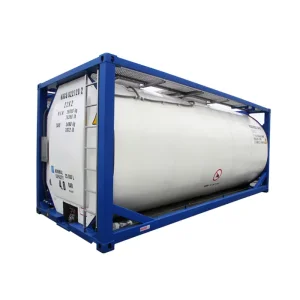
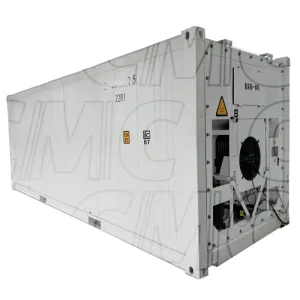
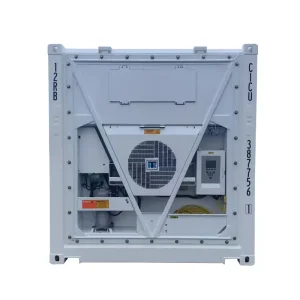
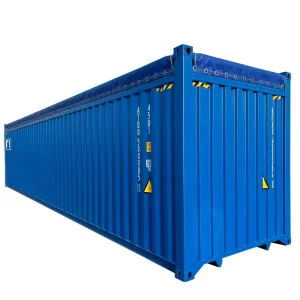
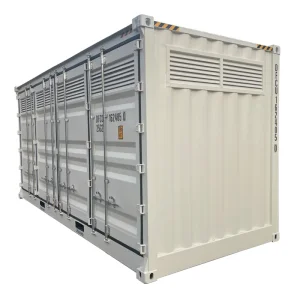
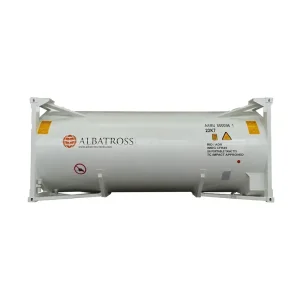
In modern mechanical engineering and global intermodal supply chains, the term "container feet" refers strictly to the lower corner structural blocks—specifically ISO 1161 Bottom Corner Castings (Bottom Left 'BL' and Bottom Right 'BR')—together with heavy-duty structural bolster pads, foundation plates, and specialized modular footings.
Every standard ISO freight container, specialized modular data housing unit, and offshore equipment skid depends entirely on eight localized three-dimensional corner castings to bear all static, dynamic, and racking stresses. Among these, the bottom container feet carry the single highest concentration of mechanical force encountered in civil or maritime transport.
During typical 9-high container vessel stacking, the bottom container feet of the lowest unit must absorb a static compressive load exceeding 848 kN (86,400 kg / 190,480 lbs) per post. At sea, dynamic roll, heave, and pitch exacerbate this loading by up to 1.8x, demanding flawless metallurgical integrity, zero internal blowholes, and exceptional Charpy V-notch fracture toughness at sub-zero operating temperatures.
Container corner feet are the structural transition point between the container's cold-formed Corten steel (SPA-H) side sills, corner posts, and the foundation. Strict chemical and thermal control prevents cold-cracking, heat-affected zone (HAZ) embrittlement, and dynamic shear failures.
| Casting Standard Grade | Carbon (C max %) | Manganese (Mn %) | Silicon (Si max %) | Phosphorus (P max %) | Sulfur (S max %) | Yield Strength (ReH min) | Impact Energy (KV2) |
|---|---|---|---|---|---|---|---|
| SCW480 (Standard ISO) | 0.20% | 1.20% – 1.50% | 0.60% | 0.035% | 0.035% | ≥ 280 N/mm² | ≥ 27 J at -20°C |
| SCW490 (High-Tensile) | 0.18% | 1.30% – 1.60% | 0.50% | 0.025% | 0.025% | ≥ 320 N/mm² | ≥ 34 J at -20°C |
| DNV Offshore Grade (E36/D36) | 0.16% | 1.10% – 1.60% | 0.45% | 0.020% | 0.010% | ≥ 355 N/mm² | ≥ 42 J at -40°C |
| Corten Matching Cast Alloy | 0.12% – 0.16% | 0.80% – 1.25% | 0.40% | 0.020% | 0.015% | ≥ 345 N/mm² | Weathering Cu-Cr-Ni Doped |
To ensure seamless integration with Corten-A/SPA-H weathering steel chassis members, our cast steel feet maintain a strict Carbon Equivalent Value (CEV ≤ 0.45%). This eliminates the risk of hydrogen-induced cracking during automated submerged arc and manual GMAW welding operations.
Internal cavities or microporosity in a bottom corner foot can precipitate structural catastrophic collapse under heavy multi-tier container stacks. Every production batch is subject to rigorous multi-stage NDT quality protocols verified by third-party classification surveyors.
Twistlock aperture engagement requires exact ISO 1161 dimensional compliance. Our automated 5-axis machining cells maintain wall thicknesses within +3.0mm/-1.5mm tolerances, guaranteeing automatic spreader twistlock rotation without jamming or excessive free-play rattle.
China manufactures over 90% of the world's intermodal shipping containers. Sourcing container feet, foundation pedestals, and structural corner castings directly from specialized Chinese industrial centers unlocks unparalleled structural, economical, and scheduling advantages.
Our primary production bases in Tianjin and the Yangtze River Economic Delta operate within immediate proximity to China's premier metallurgical giants (including Baosteel and Ansteel). This direct raw material pipeline shields overseas buyers from global scrap volatility and ensures reliable alloy purity across high-volume production cycles.
Utilizing state-of-the-art Disamatic green sand molding and lost-foam automated casting lines, our foundries produce tens of thousands of container feet monthly with consistent dimensional repeatability. Rapid cooling and automated shakeout cycles yield refined grain microstructure that drastically increases dynamic fatigue limits.
Located approximately 100 kilometers from Tianjin Xingang and close to Shanghai/Ningbo maritime terminals, our facilities slash domestic inland transit legs. Whether exporting raw casting sets (palletized 8-piece container corner sets: 2 TL, 2 TR, 2 BL, 2 BR) or completely integrated modular container structures, dispatch cycles are reduced by weeks.
International procurement officers frequently encounter regulatory hurdles, brittle fractures, or port rejection when purchasing non-traceable container structural hardware. Our manufacturing quality management protocols ensure airtight international compliance.
Overseas fleet owners, mining operators, and EPC contractors encounter four recurrent failure modes when sourcing container feet and base castings from non-certified suppliers:
Every container foot leaving our production line is permanently stamped with heat numbers, batch codes, and class approvals, backed by localized engineering support:
Container corner feet and foundation anchor assemblies are deployed far beyond standard dry freight boxes. Each application imposes specific mechanical, environmental, and spatial constraints.
The bedrock of international commerce. Bottom container feet bear continuous cyclic racking forces during ocean passages and sudden high-G shunt shocks on rail spine cars. The bottom apertures must smoothly accept automatic twistlocks from gantry spreaders, terminal bomb carts, and standard road chassis twistlocks.
Modular data centers, luxury container homes, construction site offices, and mobile clinics utilize container feet as engineered anchor foundation nodes. Specialized leveling feet and bridge fittings attach directly into the bottom apertures, allowing rapid leveling on concrete footings without permanent in-situ welding.
Utility-scale Lithium Battery Energy Storage Systems (BESS) containers weigh upwards of 35 to 45 metric tons. Their container base feet must transfer severe, concentrated static loads onto perimeter foundation beams while remaining thermally isolated and fire-safe during high-current operational cycles.
Offshore container baskets and reefer modules encounter harsh North Sea or Gulf wave slam loads. Standard castings are prohibited; offshore container feet must conform strictly to DNV 2.7-1, featuring specialized alloy grain refinement, 100% UT/MPI inspection, and verified impact energy down to -40°C.
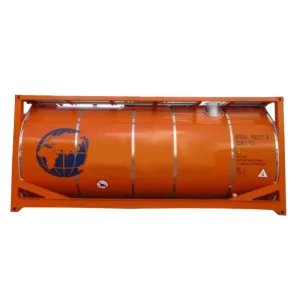
Chemical and liquified gas tank containers hold pressurized hazardous payloads inside a steel perimeter cage. The bottom feet transfer both thermal contraction forces from cryogenic loads and surging liquid surge momentum to railway wagons and flatbed trailers.
Defense forces and disaster relief agencies require ISO shelter containers mounted with mobile water desalination, satellite communications, and diesel generator units. Container feet in this sector must feature quick-detachable leveling jack sockets, tie-down D-rings, and heavy air-drop drop-shock absorption margins.
The container manufacturing industry is experiencing an epochal transition driven by supply chain digitalization, automation at maritime terminals, and aggressive scope-3 carbon reduction targets.
Next-generation container corner feet now incorporate recessed internal recesses designed to shield wireless RFID asset-tracking tags and piezoelectric load sensors from physical crush damage. These smart nodes instantly communicate stack weight distribution, twistlock latch confirmation, and container positioning to terminal automated operating systems (TOS).
Through finite element analysis (FEA) topology optimization and vanadium-niobium micro-alloying, new casting designs shave 1.2 kg per casting set while increasing yield strength by 22%. Scaled across multi-million container fleets, this deadweight reduction drives monumental fuel conservation across ocean carrier fleets.
In line with strict European and maritime VOC reduction mandates, traditional solvent-heavy zinc-chromate primers are being replaced by automated electric arc wire thermal spray zinc-aluminum (Zn-Al 85/15) coatings. This produces an impervious galvanic sacrificial barrier that provides 20+ years of saltwater corrosion protection.
Our partner foundries are aggressively deploying Electric Arc Furnaces (EAF) powered by renewable provincial hydro and solar grids. By utilizing up to 85% certified recycled steel scrap, the embodied carbon footprint per container foot casting has dropped by over 45% compared to blast-furnace routes.
Get immediate, technically rigorous answers regarding corner casting dimensions, weld procedures, class society testing, and order packaging.
Engineered on high-tensile corner support frames for heavy freight, asphalt bulk, and intermodal Belt & Road rail routes. Click through to view engineering drawings and price quotes.