Precision-engineered ISO containers, certified gas tanks, multi-tier auto racks, and heavy-duty offshore equipment direct from coastal manufacturing hubs.
Standard dry freight shipping boxes are no longer sufficient for the intricate logistical demands of energy transition infrastructure, biopharmaceutical cold chains, and harsh offshore extraction.
While standard 20ft and 40ft General Purpose (GP) containers transformed 20th-century commerce, contemporary heavy manufacturing demands non-standard geometry and functionalized envelopes. Special containers now incorporate active thermodynamics, pressurized containment, and hazardous material suppression systems.
The global special container market has expanded beyond traditional transport, becoming fundamental equipment housings for utility-scale energy storage, modular hydrogen electrolysis units, and remote data centers.
The rapid deployment of lithium-ion Battery Energy Storage Systems (BESS) has triggered massive worldwide demand for specialized fire-rated, liquid-cooled container enclosures. These units require NFPA 68/69 explosion venting, high-integrity thermal insulation, and custom floor loading tolerances up to 50 metric tons.
Chinese specialized manufacturers engineer these structural shells directly in synergy with leading battery cell manufacturers, setting global standards for energy density, environmental safety, and thermal management.
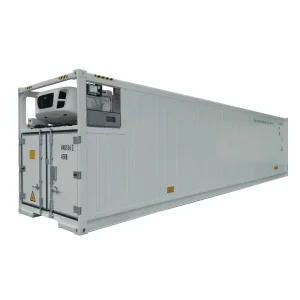
From temperature-sensitive biopharmaceuticals requiring ultra-low storage at -70°C to intercontinental hanging meat shipments, precision refrigeration integration is crucial. Advanced telematics, micro-ventilation channels, and airtight polyurethane foaming chemistries are essential engineering benchmarks.
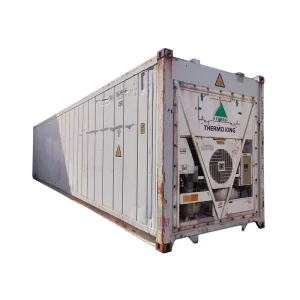
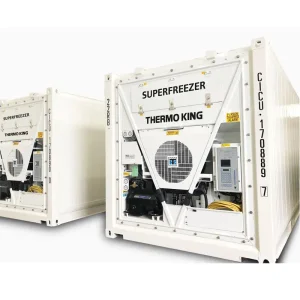
Equipment configurations featuring world-tier machinery such as Carrier Transicold, Daikin, and Thermo King ensure seamless serviceability and operational resilience across international shipping lanes.
China produces over 90% of the world's shipping containers and dominates specialized container engineering. This preeminence is not merely built on cost, but on an unparalleled, fully integrated industrial cluster linking metallurgy, robotic fabrication, environmental coatings, and maritime logistics.
With primary production installations located strategically around Tianjin FTA Pilot Area and the Yangtze River Delta corridor in Suzhou, manufacturing plants sit within 100 kilometers of deep-water container terminals. This proximity slashes domestic drayage overhead and accelerates vessel loading.
Immediate upstream access to high-grade atmospheric corrosion-resistant Corten steel (SPA-H) guarantees high yield strengths, superior weld integrity, and multi-decade longevity in aggressive marine environments.
Continuous electrophoretic dip tank lines and multi-stage robotic spray lines apply high-solids zinc primer and marine fluorocarbon topcoats that surpass ISO 12944 C5-M extreme marine corrosion resistance tests.
Integrated design offices utilize advanced Finite Element Analysis (FEA) to transition custom CAD architectures into functional prototypes within weeks, rather than the multi-quarter cycles common in Western fabricators.
"Sourcing custom intermodal equipment from China is no longer simply about labor economics. It is an engineering partnership. Chinese manufacturers operate in a synchronized ecosystem where specialized valve manifolds, CNC laser plate cutters, polyurethane foam injection lines, and third-party classification surveyors (BV, DNV, ABS) operate on the same factory campus."
Specialized containers perform critical duties in demanding operating environments worldwide. Here is how modern modifications solve unique industrial challenges.
Standards: DNV 2.7-1 / EN 12079 / ISO 10855
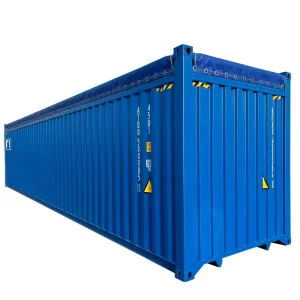
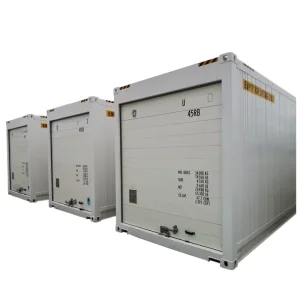
Unlike standard ISO shipping containers, offshore dry cargo units and half-height open-top ore containers are engineered to withstand severe marine dynamic impact forces. Lifting pad-eyes are welded directly into the primary perimeter structural members to prevent catastrophic shear failure during crane transfers between floating supply vessels and offshore oil platforms in heavy seas.
Standards: UIC 592 / GOST / ISO 1496-2
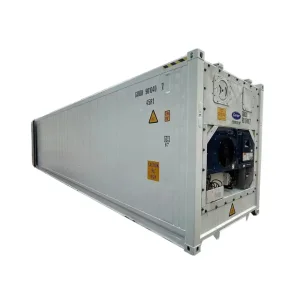
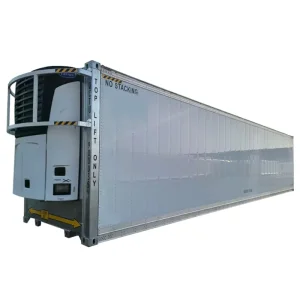
The 10,000+ km railway routes connecting Chongqing and Zhengzhou to Duisburg, Rotterdam, and Central Asia cross extreme Siberian winters where temperatures plunge to -45°C. Railway reefer containers employ diesel-electric dual-power generators (gensets), thickened insulation panels, and high-frequency automated telematics to safeguard perishable electronics and food assets.
Standards: CCS / ISO High Cube Optimization
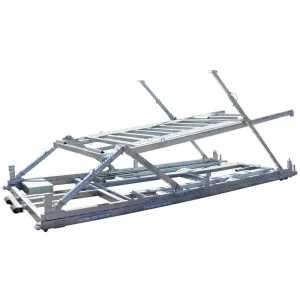
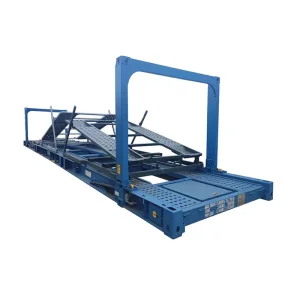
Global automotive supply chains rely heavily on specialized container vehicle racks. By installing hydraulic, cantilevered, or modular internal vehicle transport frames within 40ft High Cube containers, exporters can securely ship up to four SUVs or sedans per box, safeguarding vehicles from saltwater corrosion, windblown grit, and loading dock damage.
Standards: ASME Section VIII, IMDG Code, ADR/RID
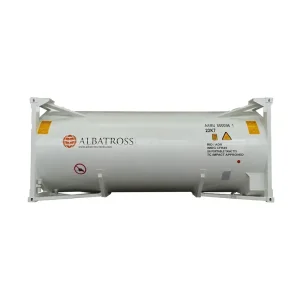
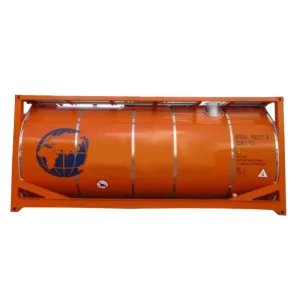
ISO tank containers (T11, T14, T50, and cryogenic variants) safely move bulk liquids, liquefied petroleum gases, food-grade oils, and corrosive acids. Fabricated using 316L stainless steel vessels enveloped in polyurethane insulation and an outer protective marine-grade frame, these tanks prevent cross-contamination and eliminate recurring drum disposal expenses.
Standards: ISO 668 Nested Dimensioning
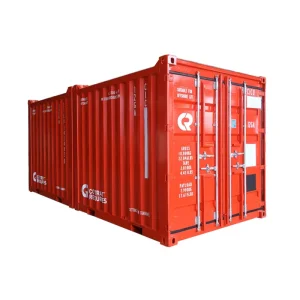
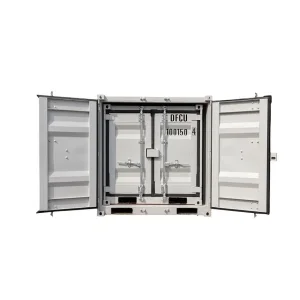
From relocatable mining camps and disaster-relief clinic units to nested mini-storage containers (ranging from 4ft to 12ft), modular container technology provides rapid on-site utility. Fabricated with integrated fork pockets and internal lashing points, these units nest inside parent containers to dramatically lower transoceanic empty repositioning costs.
Standards: ATP Hygiene Class / Cold Chain Multi-Drop
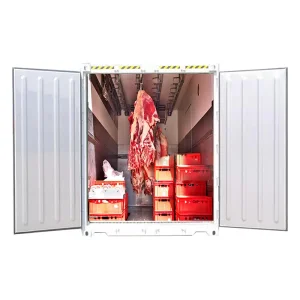
Urban cold-chain delivery operations often struggle with standard swinging cargo doors in congested distribution docks. Roll-up shutter reefer containers facilitate swift, frequent pallet access, while heavy-duty stainless-steel internal hanging meat rails convert standard 40ft HC containers into mobile processing cold storage facilities without compromising structural ceiling integrity.
Compare mechanical properties, structural materials, and operational design limits before initiating OEM/ODM technical drawings with Chinese export engineering desks.
| Container Classification | Structural Metallurgy | Thermal / Pressure Rating | Global Certification | Primary Industrial Use-Case |
|---|---|---|---|---|
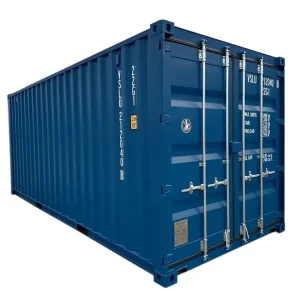
| ISO Dry Cargo (Double Door) | SPA-H Corten Anti-Corrosive Steel | Ambient (-40°C to +80°C) | ISO 1496-1, BV, CSC | Dual-end loading, machinery transfer, temporary worksite store |
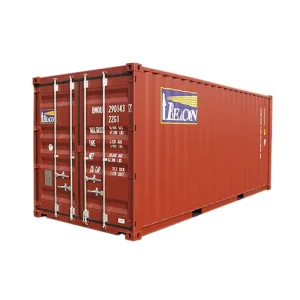
| Reefer / Freezer (Carrier / Daikin) | Stainless 304 Outer / Al T-Floor | -35°C to +30°C Active Control | ISO 1496-2, ATP, BV | High-value perishables, vaccines, seasonal agricultural harvests |
| Offshore Module (DNV 2.7-1) | High-Yield Structural Steel EN 10025 | Charpy V-Notch Impact @ -20°C | DNV GL 2.7-1, EN 12079, ISO 10855 | Subsea drilling tools, platform rig supply, marine harsh environments |
| ISO Gas/Liquid Tank (25,000L) | Stainless Steel 316L / Q345R Shell | Test Pressure up to 4.0 bar / 0.4 MPa | ASME VIII, IMDG, UN Portable T11 | Bulk chemicals, potable water, food oils, hazardous solvents |
| BESS Power Storage Unit | Heavy Reinforced Corten Shell | Custom Liquid Loop / HVAC R-Value | NFPA 855, UL 9540A, CE | Renewable solar/wind grid energy buffering, microgrids |
| Multi-Car Carrier Container | High-Tensile Tubular Steel Frame | Dynamic Road & Rail Lashing Limits | ISO Freight Certified, CCS | EV shipments, luxury vehicle export, multimodal rail haulage |
Discover how cutting-edge IoT tracking, aerogel insulation, and low-carbon manufacturing are reshaping the next generation of specialized logistics equipment.
Modern special containers are evolving into connected sensor hubs. Embedded IoT gateways track micro-vibrations, door openings, internal humidity, atmosphere levels (O2/CO2 in controlled-atmosphere reefers), and real-time GPS locations via hybrid satellite-cellular modules.
Procurement officers manage fleets through centralized telematics portals, predicting refrigeration compressor failures before cargo spoilage occurs.
To satisfy global Corporate Social Responsibility (CSR) and EU Carbon Border Adjustment Mechanism (CBAM) requirements, Chinese container mills are transitioning toward Electric Arc Furnace (EAF) steelmaking utilizing recycled scrap iron and hydrogen metallurgy.
This transition slashes embedded carbon per container tare ton by up to 40% while preserving strict ISO stacking load-bearing capacities of up to 192,000 kg.
Passive temperature-controlled shipping demand has stimulated the integration of advanced aerogel blankets and vacuum insulation panels (VIP) into side walls and ceiling panels.
These ultra-thin, low-conductivity barriers preserve internal cargo temperatures for several days without electrical hookups, decreasing fuel draw in intermodal rail and long-haul trailer routes.
Specialized reefer containers, ISO liquid tanks, modular nested storage systems, and specialized intermodal automotive carriers.
Common engineering, certification, and export logistics inquiries answered directly by factory technical directors.
All containers are manufactured and certified under major International Classification Societies. Depending on client specifications, units are issued Bureau Veritas (BV) certificates, ISO 9001 quality compliance, DNV GL 2.7-1 / EN 12079 type approval for offshore applications, CSC (Convention for Safe Containers) safety plates, or ASME VIII & IMDG stamps for ISO tank vessels.
The process begins with our design team reviewing your internal payloads, climate tolerances, and dimensional bounds. We build comprehensive 3D SolidWorks models and conduct Finite Element Analysis (FEA) to verify stress points under maximum load. Upon drawing sign-off, a physical prototype undergoes prototype testing—including transverse racking, longitudinal restraint, floor strength, and weatherproof water-deluge tests—before full-scale factory production commences.
Standard dry units and catalog reefer boxes are available in single-unit quantities. For highly customized engineering builds (e.g., specialized battery enclosure structures, side-curtain roll-ups, or non-ISO dimensional shells), the initial prototyping lot typically requires 1 to 2 units, followed by production batches of 4 to 10 units to optimize automated tool calibration and material yield.
To avoid expensive breakbulk or flat-rack surcharges, mini-containers (such as 5ft, 6ft, 8ft, and 10ft models) are engineered with nested modular dimensions that securely pack inside standard 40ft High Cube containers. For custom ISO external envelopes, containers carry a CSC "One-Way Service" certification, permitting freight forwarders to load commercial export cargo inside your container on its maiden outbound voyage to your destination port.
We integrate genuine, brand-new, globally warranted units from Carrier (such as PrimeLINE and X4 systems), Daikin (LXE series), and Thermo King (Magnum Plus). Clients choose their unit according to their local port technician network, regional parts availability, and particular cooling profiles (e.g., deep freeze down to -40°C vs. controlled-atmosphere fruit transit).
We employ a rigorous C5-M extreme marine coating system per ISO 12944. Steel plates undergo automatic centrifugal shot blasting to Sa 2.5 cleanliness, immediately followed by an inorganic zinc-rich primer coat, an epoxy micaceous iron intermediate barrier coat, and an aliphatic polyurethane topcoat, resulting in a total Dry Film Thickness (DFT) exceeding 180 to 220 microns.
Request comprehensive CAD drawings, structural FEA calculations, and export price books. Our sales engineers provide turnkey quotations within 24 hours.
