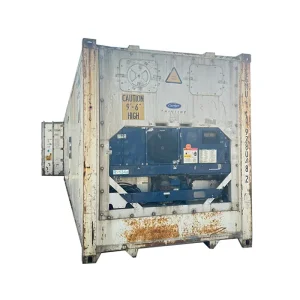
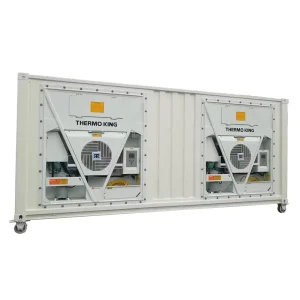
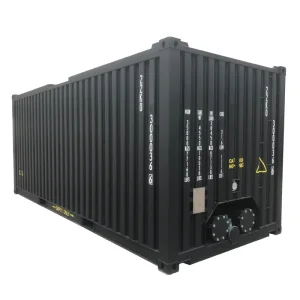
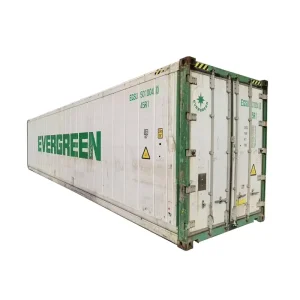
Explore premier-grade freight, energy-independent reefer, and marine offshore intermodal hardware certified by Bureau Veritas, ISO, and DNV for mission-critical worldwide logistics.
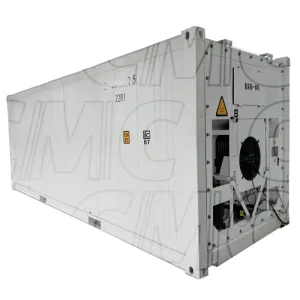
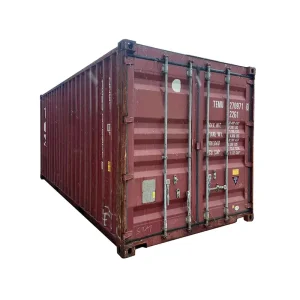
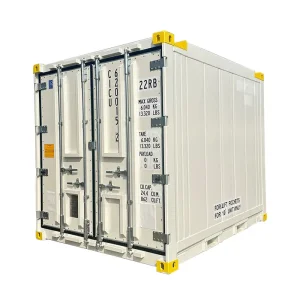
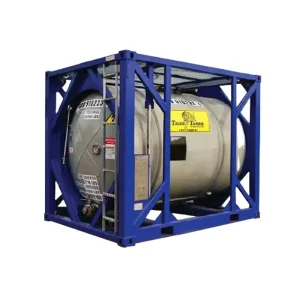
In the modern arena of international physical logistics, securing the "top container quotes" is not merely a tactical pricing exercise; it is a complex risk management and total cost of ownership (TCO) calculation governed by international conventions, structural metallurgies, and integrated thermal engineering.
Procurement officers managing enterprise fleets across North America, Europe, Africa, and the Asia-Pacific face an increasingly bifurcated market. On one hand, commoditized dry freight units require strict ISO dimensional compliance, rapid port turnaround, and resilient anti-corrosion treatments to survive saline offshore passages. On the other hand, specialized temperature-controlled (reefer) platforms and offshore oil-and-gas equipment demand stringent thermodynamic efficiencies, hazardous zone electrical compliance (ATEX/IECEx), and adherence to classification society protocols such as DNV 2.7-1 / EN 12079.
When global enterprises evaluate container quotes from Chinese exporters, transparency in specification determines lifetime operational viability. Factors such as whether a quote reflects Corten-A weathering steel (SPA-H) or sub-grade carbon steel, water-borne epoxy coatings compliant with environmental VOC mandates, or certified brand-name machinery (e.g., Thermo King, Daikin, Carrier) can result in a 200% variance in residual value after seven years of continuous intermodal service.
The dominant position of Chinese container manufacturers is not based merely on manufacturing capacity; it is anchored in the world's most sophisticated, geographically concentrated industrial ecosystem for specialty steel, thermal polymer foaming, robotic sub-arc welding, and port-adjacent staging.
Direct integration with domestic tier-one blast furnace mills ensures uncompromised SPA-H atmospheric corrosion-resistant steel. This alloy forms a dense, self-regenerating copper-chromium passivation layer that retards oxidation even when protective marine topcoats are abraded in rough transit.
Production lines utilize 6-axis articulated laser-guided robotic welding units for longitudinal corrugated sheet jointing and structural corner post integration. This eliminates human error, guarantees uniform penetration depths, and maintains air- and water-tight sealing under full ISO load test matrices.
Manufacturing hubs in Tianjin and Suzhou are situated approximately 100 kilometers from prime deep-water international container terminals. This geographical proximity reduces drayage expenses, mitigates pre-voyage handling risks, and enables fast-track berth allocation for expedited ocean dispatch.
| Evaluation Parameter | Chinese Tier-1 Exporters (e.g., CIMIC) | Regional Secondary Fabricators | Refurbished / Broker Units |
|---|---|---|---|
| Steel Chemistry | Certified Corten-A / SPA-H (Yield ≥ 345 MPa) | Q235B / Common Structural Carbon Steel | Degraded alloy; indeterminate stress fatigue |
| Surface Pre-Treatment | Automatic shot blasting to Sa 2.5 standard | Manual chemical wash / Partial grit blasting | Spot grinding over untreated residual scale |
| Anti-Corrosive Coating | Multi-layer Zinc-rich primer + C5-M marine epoxy | Single-pack alkyd paint (< 60 μm DFT) | Cosmetic over-spray hiding internal corrosion |
| Certification Documentation | BV, ISO 9001, CSC Plate, DNV 2.7-1 (offshore) | Self-certification or national-only permits | Expired or non-transferable classification |
| Thermal Insulation Tech | High-pressure cyclopentane PU injection (42 kg/m³) | EPS / Mineral wool / Hand-poured foam panels | Delaminated foam with thermal bridging |
Deploying intermodal units across jurisdictions demands seamless compliance with evolving safety, maritime, and environmental frameworks. Chinese engineering leaders do not simply build boxes; they certify international assets.
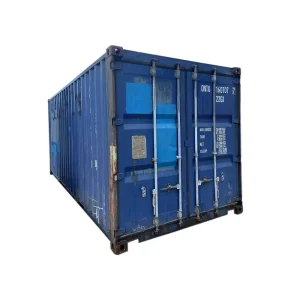
Every freight container is tested under the International Convention for Safe Containers (CSC 1972), stamped with stainless steel data plates validating 9-high stacking capacity under full payload load-bearing conditions.
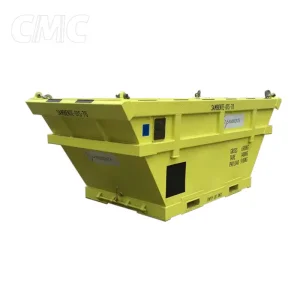
For harsh offshore oil, gas, and subsea exploration, specialized units and silt baskets feature charpy impact-tested structural pad eyes, integrated lifting slings, and DNV type-approval certificates for high-dynamic-stress marine environments.
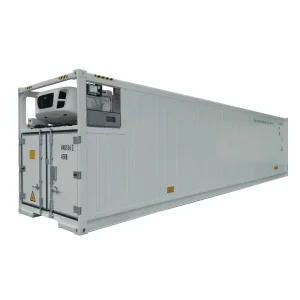
Refrigerated intermodal builds conform to the ATP agreement on the International Carriage of Perishable Foodstuffs, validating overall heat transfer coefficients (K-value ≤ 0.40 W/m²·K for heavily insulated units).
Customs-sealed door hardware and tamper-evident locking systems comply with the TIR Convention, facilitating frictionless cross-border transit across Euro-Asian intermodal corridors and the Belt and Road railway network.
Modern supply chain directors, port equipment leasing conglomerates, and cold-chain operators evaluate container quotes through an advanced Total Cost of Ownership framework. Initial purchase price constitutes only one segment of overall lifecycle expenditure.
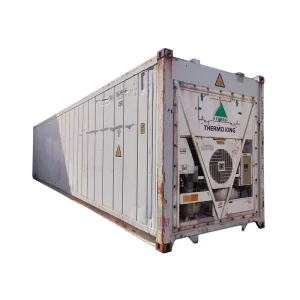
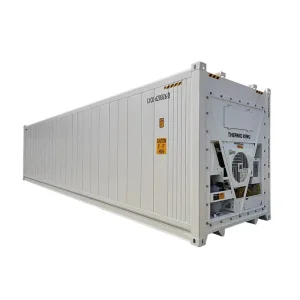
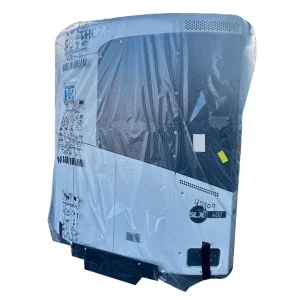
Active reefer units represent significant operational energy burdens. Sourcing advanced DC inverter units and hermetic scroll compressors (from Thermo King, Daikin, or Carrier) slashes dynamic power draw by up to 35% compared to legacy reciprocating compressors on extended ocean and rail lanes.
Enterprise buyers must guarantee that any refrigeration machine or modular valve installed can be serviced by depot technicians in Rotterdam, Houston, Singapore, or Durban. Deploying standard certified machinery mitigates costly downtime for temperature-sensitive cargo.
A container manufactured to ISO 1496-1 specifications with 28mm marine-grade apitong or bamboo composite flooring retains 60% of its initial acquisition value on the secondary market after a decade, significantly outpacing low-grade commercial fabrications.
Different operational environments place distinct physical demands on container structures. Exporters must calibrate structural steel gauge, door hardware, floor systems, and cooling machinery to these mission-critical scenarios.
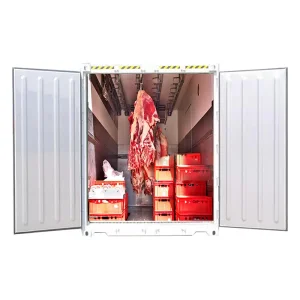
Transporting pharmaceutical biologics, fresh produce, and seafood across trans-Pacific and trans-Atlantic trade lanes demands automated continuous atmosphere management, de-humification controls, and multi-point temperature data-logging compliant with FDA and EU pharmacopeia standards.
Railway operations across the Belt and Road experience extreme ambient shifts from +40°C in central deserts to -40°C across Siberian winters. Containers require thickened polyurethane insulation, heated drainage valves, and auxiliary diesel-generator clip-on units (e.g., TK SLXI systems) to prevent freezing of perishable freight.
Harsh open-sea operations demand DNV-certified silt baskets, half-height ore containers, and hazardous material tank units built to withstand horizontal dynamic impact, wave-slam loads, and harsh salt fog exposure without catastrophic structural failure.
In rural agricultural and sub-Saharan coastal fisheries where grid infrastructure is unstable or non-existent, 20ft and 40ft solar-assisted smart cold chain reefers with integrated lithium battery banks and DC inverter compressors provide localized, uninterrupted harvest preservation.
Heavy industrial materials such as bitumen, asphalt, and industrial oils require dedicated heated tank containers equipped with steam heating jackets, electrical heat tracing systems, and pressurized relief manifolds for safe discharge at regional processing depots.
From mining exploration base camps in Western Australia to prefabricated disaster-relief administrative pods, modified ISO container frames with integrated rockwool fire-rated panels provide rapidly deployable, cyclone-resistant architectural facilities.
The intermodal hardware sector is evolving beyond static steel boxes into intelligent, connected, and carbon-optimized supply chain assets driven by strict emissions mandates and pervasive IoT connectivity.
In compliance with the Kigali Amendment and EU F-Gas regulations, leading exporters are replacing legacy R134a and R404A systems with low-GWP alternatives such as R452A and natural transcritical CO2 (R744), reducing environmental impact while maintaining stable deep-freeze capacities down to -35°C.
Modern enterprise orders are routinely specified with factory-integrated GPS, cellular, and satellite transceivers. These sensors transmit real-time data on container coordinates, compressor discharge pressures, cargo temperatures, door openings, and shock impacts directly to fleet management dashboards.
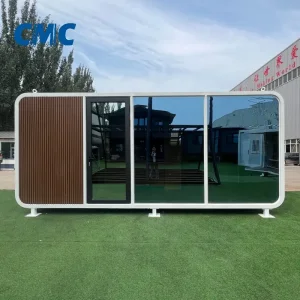
With maritime container replacement cycles averaging 12-15 years, tier-1 Chinese manufacturers now engineer containers for secondary life adaptability. Standard bolt-hole configurations and modular corrugation pitches simplify conversion into modular architecture, battery energy storage systems (BESS), or static cold rooms.
Answers to key engineering, compliance, and supply chain questions encountered during intermodal asset procurement.
Explore high-capacity blast freezers, insulated modular enclosures, asphalt heating tank platforms, and verified second-hand assets ready for worldwide drayage and ocean transport.