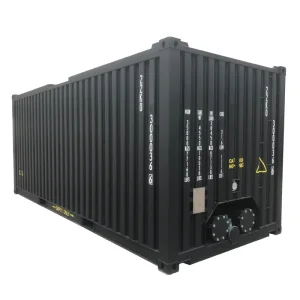
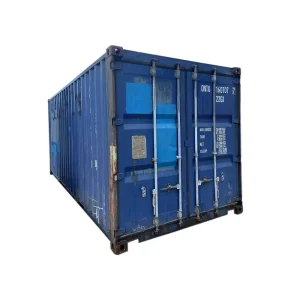
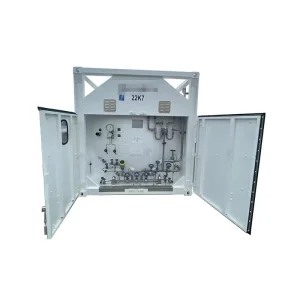
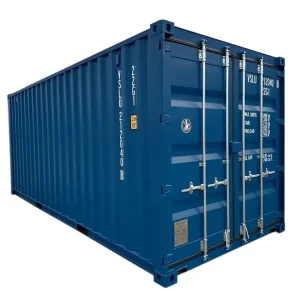
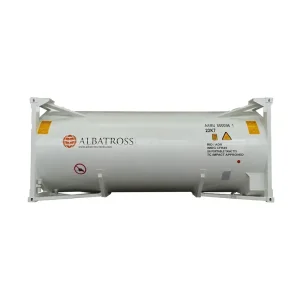
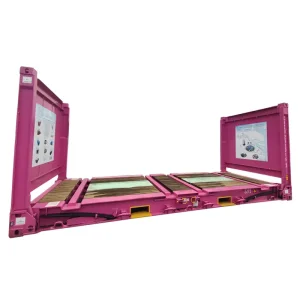
Explore heavy-duty intermodal equipment, offshore units, and specialized thermal configurations built to stringent ISO, BV, and DNV maritime standards.
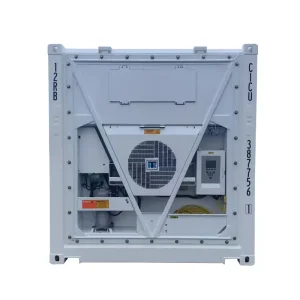
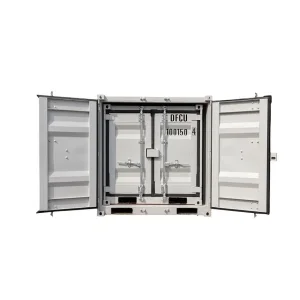
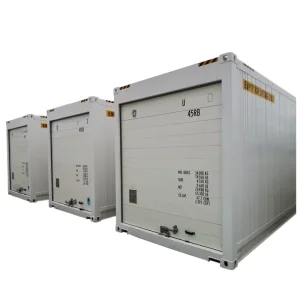
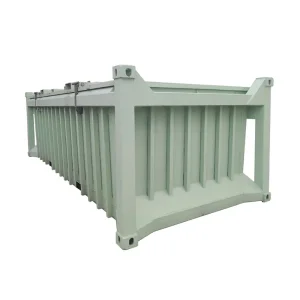
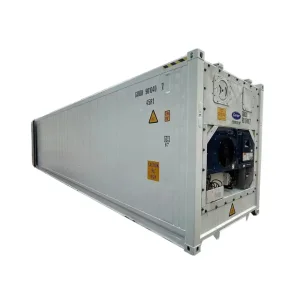
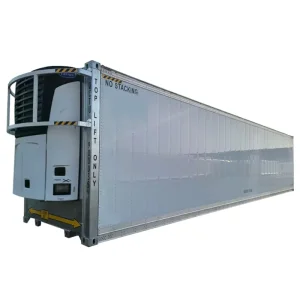
Engineered to resolve the physics of top-loaded, out-of-gauge (OOG) heavy industrial machinery, soft open top containers replace rigid roofs with flexible, high-tensile tarpaulins and swiveling rear header mechanisms.
Fabricated using high-yield Corten-A weathering steel across all primary load paths—including 4.5mm cold-formed bottom corner fittings, structural top side rails, and high-tensile corrugations. This ensures optimal yield strength (>355 MPa) and galvanic corrosion resistance against oceanic chloride bombardment.
Equipped with an engineered, detachable or 180-degree swiveling rear header bar. This eliminates overhead crane clearance constraints during heavy equipment ingress, allowing gantry spreaders to deposit tall, dense freight directly onto the floor without risk of racking structural headers.
Constructed from 650g/m² to 900g/m² flame-retardant, UV-stabilized, ripstop PVC-coated polyester canvas. Fastened via a continuous TIR steel cable passing through forged zinc-coated lashing rings, establishing watertight hermetic seals and complete customs-tamper compliance across international borders.
| Standard Dimension Class | External Dims (L x W x H) | Roof Opening Clearance | Tare Weight | Max Gross Mass (MGM) | Payload Capacity | Structural Compliance |
|---|---|---|---|---|---|---|
| 20ft ISO Soft Open Top | 6,058 x 2,438 x 2,591 mm | 5,438 x 2,230 mm | 2,350 kg | 30,480 kg | 28,130 kg | ISO 1496-1 / CSC / TIR |
| 40ft ISO Soft Open Top | 12,192 x 2,438 x 2,591 mm | 11,556 x 2,230 mm | 3,850 kg | 32,500 kg | 28,650 kg | ISO 1496-1 / BV / CSC |
| 40ft High Cube Soft Open Top | 12,192 x 2,438 x 2,896 mm | 11,556 x 2,230 mm | 4,150 kg | 34,000 kg | 29,850 kg | ISO 1496-1 / ABS / TIR |
| Custom Engineered Heavy Half-Height | 6,058 x 2,438 x 1,295 mm | 5,500 x 2,260 mm | 2,900 kg | 35,000 kg | 32,100 kg | DNV 2.7-1 / EN 12079 |
As global infrastructure, renewable energy deployments, and mining sectors experience cyclical capital investment, soft open top containers bridge the gap between traditional containerization and high-risk breakbulk shipping.
Breakbulk charters incur excessive terminal handling charges (THC), high port stevedoring costs, and extreme exposure to rough weather damage. Soft open top containers allow oversized machinery, pipe spools, and heavy transformers to travel via standard container vessels on liner terms, achieving up to 38% logistics savings.
Modern container terminals operate under stringent turn-around service level agreements. Rigid closed containers restrict overhead lifting, creating multi-hour dock delays. Soft open top units with roof bow assemblies can be stripped and repacked in minutes under quay gantry spreaders, slashing drayage dwell times.
Shipping lines face deadheading costs when repositioning specialized equipment. Soft open top units function dualistically: they accept standard dry palletized cargo on the return voyage by re-engaging the roof bows and tarpaulin cover, drastically lowering empty repositioning operational costs.
Real-world logistics engineers deploy soft open top configurations across complex supply routes where dimensional tolerances, vertical loading limits, and hostile ambient conditions converge.
In high-altitude mining basins across Latin America and Western Australia, crushing equipment, flotation cells, and drill heads exceed door heights. Soft open top units allow drop-in crane placement with reinforced 45mm tropicalized hardwood or checked-steel floors bearing localized dynamic loads up to 10 metric tons per wheel print.
Utility-scale grid transformers and offshore power converter assemblies require overhead crane loading due to integrated suspension eyes. Soft open top containers safeguard electrical components with insulated, moisture-wicking tarp membranes and heavy-duty corner tie-downs rated to 2,000 daN lashing points.
Dense natural stone slabs and structural glass require vertical A-frame loading via overhead shop cranes. Soft open top containers enable rapid top-down rigging. The reinforced side rails absorb horizontal dynamic rocking during rough intermodal rail transits across the Trans-Eurasian corridors.
Longitudinal structural members, continuous coiled steel wire, and oilfield piping configurations cannot navigate standard box doors horizontally. Top placement down onto heavy timber dunage prevents structural buckling and optimizes axle-weight distribution over chassis bogies.
Deploying specialized hopper chutes directly into open containers allows granular chemicals, grains, and biomass to be loaded from overhead bulk silos within seconds, eliminating costly conveyor equipment and ensuring clean, single-origin handling from farm gate to marine terminal.
China manufactures over 95% of the world's intermodal shipping equipment. The industrial ecosystems in Tianjin and Suzhou combine deep metallurgy expertise, complete supply clustering, and immediate deepwater port integration.
Direct supply contracts with domestic primary mills guarantee consistent, immediate procurement of certified Corten-A steel plates, cold-rolled profiles, and specialized corner castings without international billet supply interruptions.
Automated plasma cutting lines paired with multi-axis robotic dual-wire welding stations produce continuous, leak-proof fillet welds across floor-to-rail junctions, minimizing thermal stress points and maximizing structural rigidity.
Automated grit-blasting to Swedish Standard SA 2.5 is immediately followed by high-build zinc-rich epoxy primers, intermediate coats, and polyurethane topcoats, achieving an ultra-durable C5-M marine anti-corrosion barrier.
Factories situated roughly 100km from Tianjin Port and Shanghai/Taicang maritime corridors drastically lower inland drayage lead times, enabling just-in-time loading aboard scheduled deep-sea container lines.
The convergence of industrial IoT, ultra-lightweight composite materials, and strict global decarbonization standards is redefining next-generation soft open top container manufacturing.
Development is underway for embedded strain-gauge sensors inside corner posts and piezoelectric sensors woven into tarpaulin edge seams. These send real-time alerts via satellite and 5G regarding improper load shifting, canvas tears, unauthorized customs breach, and severe sea-state racking stresses.
Eliminating physical dockworker roof-climbing hazards, automated accordion-style roller bows driven by solar-charged kinetic battery packs expand and seal the tarpaulin in under 90 seconds, drastically increasing port safety and reducing labor turnaround times.
Transitioning from traditional petroleum PVC to 100% recyclable thermoplastic polyurethane (TPU) and high-strength bio-based polyesters reduces cradle-to-gate carbon footprints by 42% while delivering superior low-temperature flex cracking performance in sub-zero Arctic routes (-40°C).
Every soft open top unit manufactured must satisfy multi-jurisdictional compliance protocols before leaving our assembly plants. We maintain rigorous third-party validation and direct after-sales engineering.
Certified under Bureau Veritas (BV), ABS, Lloyd’s Register, and CCS in full compliance with ISO 1496-1 (Type Spec 42U1 / 22U1). Includes full-capacity nine-high vertical stacking stress testing (192,000 kg static load) and end-wall deflection verification.
Stamped with a stainless-steel CSC safety approval plate and engineered to TIR (Transports Internationaux Routiers) customs specifications. Provides continuous, uninterrupted eyelet-and-cable routing to satisfy customs security protocols in Europe, North America, and Central Asia.
We supply continuous international depot inventories of replacement components—including modular roof bows, swivel hinge brackets, TIR custom cables, and specialized heat-welded patch repair kits—ensuring zero operational downtime across overseas shipping hubs.
Addressing the technical, regulatory, and commercial inquiries posed by international logistics directors, freight forwarders, and procurement engineers.
A soft open top uses removable curved steel roof bows covered by an industrial PVC/TPU flexible tarpaulin secured with a TIR cable, maximizing tare-weight efficiency and allowing slight over-height flexibility. A hard open top features a rigid, removable steel roof panel lifted by crane, offering enhanced projectile security but increasing tare weight by roughly 400-650 kg and requiring crane availability for opening.
The rear top header is mounted on heavy-duty hinge pins with quick-release locking cotters. Before loading, the header unlocks and either swings 180 degrees laterally or removes entirely. This permits forklifts with high masts or overhead gantry spreaders to enter the cargo bay unimpeded horizontally or vertically without risk of structural contact.
Our containers incorporate transverse arch-curved steel roof bows (cambered profiles) spaced at 600mm to 750mm intervals. This arch forces rainwater, snow, and deck spray to drain naturally into outer gutters while resisting vertical static water accumulation up to 650 kg/m².
Yes. Under ISO 1496-1 and CSC guidelines, the four vertical corner posts and corner castings bear 100% of the vertical stacking loads. They are fully certified for nine-high stacking of fully loaded 30,480 kg containers, regardless of the flexible roof structure.
When cargo height exceeds the side rail profile, roof bows are removed and secured into internal bow storage brackets. The cargo is lashed directly to heavy-duty floor rings (up to 2,000 daN). Specialized oversized tarpaulins or customized heavy-duty shrink-wrap covers are then deployed, with carrier-approved extension lashing lines applied to external cleats.
Standard configurations incorporate 28mm to 35mm multi-ply marine birch or hardwood plywood, tested for heavy axle loadings per ISO standards. For abrasive, high-point-load operations (such as raw minerals, scrap metal, and hot steel billets), we engineer 4.5mm to 6.0mm Corten steel or checkered plate floors welded continuously with reinforced cross-members.
Explore our export-ready containers, including double door units, cryogenic tanks, and intermodal transport containers engineered for global supply chains.