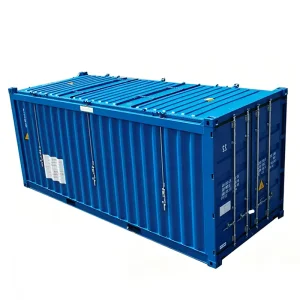
Explore heavy-duty, certified container hardware engineered for precision cargo transport across maritime, overland, and specialized offshore environments.
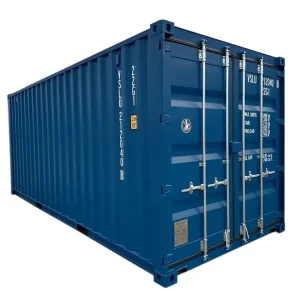

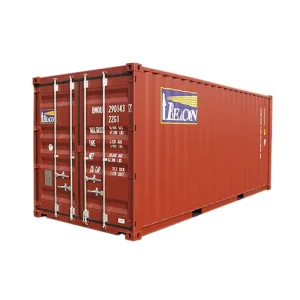

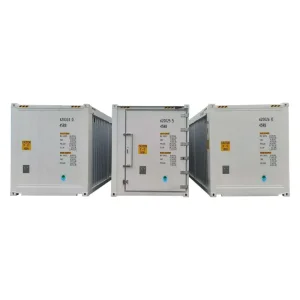
Analyzing the competitive advantages, engineering precision, and supply chain clusters that make Chinese ODM manufacturers the indispensable partners for intermodal logistics.
Chinese container manufacturers leverage proximity to world-class steel fabrication hubs specializing in SPA-H Corten atmospheric corrosion-resistant steel. This structural integration eliminates international component freight overheads and assures rigorous quality control from ingot rolling to final corrugation welding.
Rather than simple assembly, modern Chinese plants provide comprehensive original design manufacturing (ODM). In-house finite element analysis (FEA), computational fluid dynamics for reefers, and rapid structural prototyping allow buyers to deploy custom heights, tailored door geometries, and bespoke reinforced sub-floors with minimal tooling lead times.
Situated within primary maritime clusters such as Tianjin, Ningbo, and the Yangtze River Delta, manufacturing plants provide immediate gateway access. Exporters utilize one-way free-use positioning loads, drastically reducing transpacific and Europe-bound relocation costs by loading export cargo on the container's maiden voyage.
From dynamic cold-chain telemetry to structural lightweighting, technological disruptions are revolutionizing standard intermodal assets into intelligent data nodes.
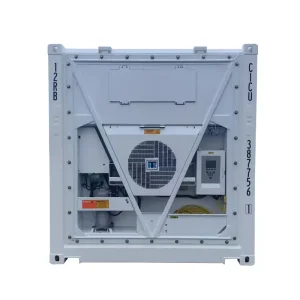
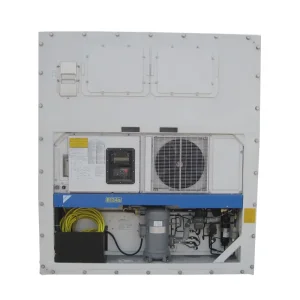
Reefer containers now integrate dual-mode GPS, cellular, and satellite IoT loggers. Modern units dynamically regulate variable-speed compressors based on internal pulp temperatures, relative humidity, and CO2 thresholds, providing live visibility required by high-value pharmaceutical and perishables transport.
Global decarbonization mandates like the Kigali Amendment are driving the phased abandonment of R134a. Contemporary ODM reefer lines increasingly engineer closed-loop circuits using R513A or natural CO2 (R744) refrigerants with ultra-low Global Warming Potential, pairing eco-efficiency with lower lifetime energy consumption.
Beyond vanilla transport, shipping container designs are rapidly branching into modular battery energy storage systems (BESS), mobile water treatment enclosures, and off-grid computing rooms. Rigid ISO framing enables rapid worldwide deployment using existing port container-handling equipment.
Reviewing how purpose-built container architectures resolve critical logistical challenges across maritime, deep-sea exploration, regional freight, and temporary industrial warehousing.
In harsh offshore oil, gas, and wind installations, standard ISO containers present severe risks of structural collapse during sea-state lifting. DNV 2.7-1 / EN 12079 certified containers utilize low-temperature Charpy-tested alloy steel, integral pad eyes, certified wire-rope slings, and multi-layer offshore marine coatings designed to withstand open-sea salt spray.
Cross-border rail systems (such as the Eurasian Land Bridge) subject freight to intense longitudinal forces and continuous vibration. ODM heavy dry cargo containers integrate reinforced end-frames, heavy-gauge gooseneck tunnels, and lock-rod anti-rack mechanisms ensuring stability across rail transfers.
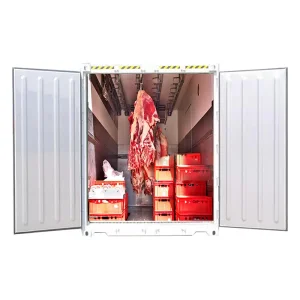
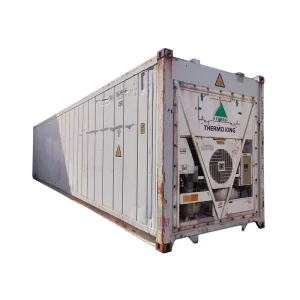
Developing logistics hubs often lack capital-intensive permanent cold storage. 40ft High Cube containers equipped with Daikin, Thermo King, or Carrier units serve as standalone modular cold rooms. Three-in-one multi-temperature compartments allow operations to split frozen, chilled, and ambient sections within a singular portable asset.
A rigorous engineering comparison to guide international logistics managers, container leasing firms, and industrial project buyers.
| Classification | Structural Steel / Shell | Thermal / Insulation | Max Gross Mass (R.G.W.) | Key International Standard |
|---|---|---|---|---|
| Standard Dry Cargo (20GP / 40HC) | SPA-H Corten Anti-Corrosive Alloy | Uninsulated / Passive Venting | 30,480 kg – 32,500 kg | ISO 1496-1, CSC, UIC, TIR |
| Marine Reefer Container | MGSS Exterior, SUS304 Food-Grade Liner | High-Pressure Injected Polyurethane (PU) | 34,000 kg | ISO 1496-2, ATP, ClassNK, BV |
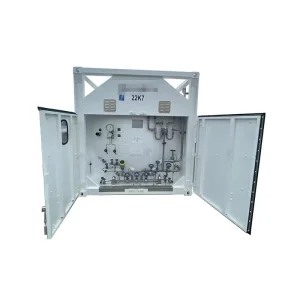
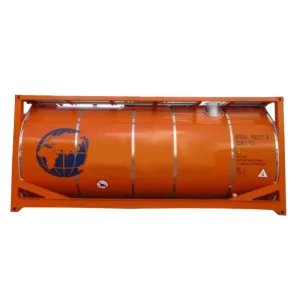
| ISO Liquid Tank (T11 / T75) | 316L Stainless Steel / SA-516 Grade 70 | Rockwool / Multi-Layer Vacuum Perlite | 36,000 kg | IMDG, ASME Section VIII, ADR/RID |
| Offshore Module (DNV-Certified) | High-Strength Micro-Alloy (Charpy Tested) | Fire-Rated Rockwool (A60 / H60 optional) | Project-Optimized (Up to 25,000 kg) | DNV 2.7-1, EN 12079, ISO 10855 |
| Specialty Nested / Roll-Up Boxes | Structural Carbon Steel / Corrugated Sheets | Single-Layer Elastomeric (Optional) | 5,000 kg – 15,000 kg | Custom Factory CSC Exemption / ISO |
Procuring shipping containers at volume requires a multi-faceted evaluation strategy spanning total cost of ownership (TCO), metallurgy, and supply contract design.
Savvy procurement teams assess asset longevity over direct factory price. Low-grade paint formulations and sub-standard subfloor adhesives rapidly degrade in humid marine conditions. Investing in full zinc-rich epoxy primers, automated continuous seam welding, and verified apitong hardwood flooring maximizes operational service life beyond 15–20 years.
International freight compliance demands legitimate classification society certification. Every standard build batch must be stamped by reputable bodies such as Bureau Veritas (BV), ABS, Lloyd's Register (LR), or DNV. Enterprise buyers mandate non-destructive testing (NDT) logs, hydro-testing reports for tanks, and corner-casting hardness reports prior to bill of lading clearance.
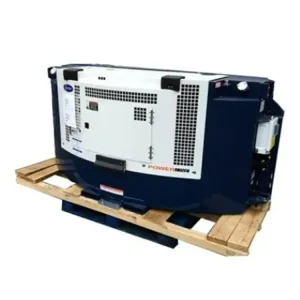
When engineering specialty intermodal assets—such as power generators or battery storage enclosures—dimensional accuracy is critical. Enterprise agreements must articulate strict deflections under full load, floor weight load capacities (e.g., up to 7,260 kg per axle under ISO 1496), and dynamic vibration absorption requirements.
Authoritative technical and logistical answers prepared by our structural engineers and maritime trade specialists.
Explore our specialized portfolio of reefer equipment, cryogenic tank units, offshore handling hardware, and custom dry containers ready for worldwide deployment.