
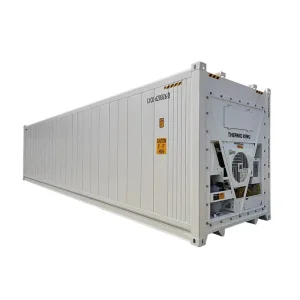
Explore our primary array of high-volume 9ft 6in High Top containers, active refrigeration systems, and heavy-payload solutions engineered for harsh intermodal logistics.
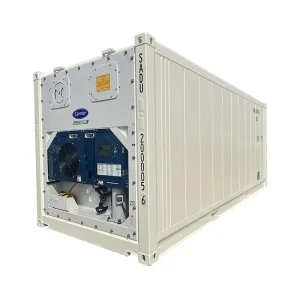
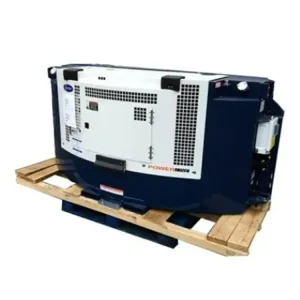
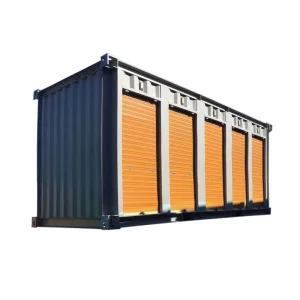
Strategic transition toward 9ft 6in vertical configurations: Volumetric economics, metallurgical integrity, and multi-modal freight resilience.
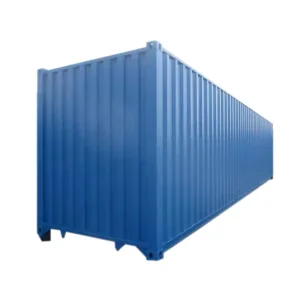
In modern intermodal freight networks, the standard 8ft 6in ISO intermodal profile has progressively ceded ground to the High Top container (commonly classified as High Cube or 9ft 6in overall external height). Originating as a specialized variant for voluminous, low-density cargo, High Top structures now constitute more than 55% of global dry container fleets and exceeding 92% of deep-sea refrigerated intermodal units. As global industrial supply chains pivot toward volumetric optimization—such as pre-packaged consumer technology, automotive sub-assemblies, lithium-ion energy storage racks, and climate-controlled agricultural yields—the additional 305 mm (12 inches) of vertical clearance represents the single highest margin multiplier for maritime and transcontinental rail operators.
A reliable OEM high top container manufacturer operates at the nexus of metallurgical science, precision robotic automation, and structural finite element analysis (FEA). Standard factory runs must guarantee that lifting, lashing, and dynamic stacking capacities meet or exceed ISO 1496-1 requirements, retaining safety margins under dynamic ocean conditions where containers face acceleration forces surpassing 2.0g vertically and 0.8g transversely.
The structural design of the 40ft High Cube yields approximately 76.4 m³ (2,698 cu ft) of internal storage capacity compared to 67.7 m³ (2,390 cu ft) in a standard height configuration. For volume-constrained shipments like white goods, solar photovoltaic panels, and flat-pack industrial components, this 12.8% volumetric increase reduces cost-per-cubic-meter by 8.5% across transoceanic routes.
Constructed from weathering Corten-A / SPA-H atmospheric corrosion-resistant steel, our high top containers form a dense protective oxide patina. The cold-rolled profiles deliver minimum tensile strengths of 490 MPa and yield strengths of 345 MPa, maintaining dimensional stability under severe torsional loads.
Designed in strict compliance with UIC 592 and ISO 668 classifications, high top containers integrate gooseneck tunnels (3,291 mm minimum length) to lower highway transit heights when mounted on drop-frame chassis, satisfying North American, European, and Asian overhead clearance limits.
From robotic continuous seam welding to zinc-rich epoxy multi-layer coatings, discover the manufacturing precision required for tier-1 OEM High Top containers.
| Dimensional / Performance Metric | 20ft Standard ISO | 20ft High Top (High Cube) | 40ft High Top (High Cube) | 40ft High Cube Reefer (Cold Chain) |
|---|---|---|---|---|
| External Height (mm / ft) | 2,591 mm (8' 6") | 2,896 mm (9' 6") | 2,896 mm (9' 6") | 2,896 mm (9' 6") |
| Internal Volume (m³ / cu ft) | 33.2 m³ (1,172 cu ft) | 37.4 m³ (1,320 cu ft) | 76.4 m³ (2,698 cu ft) | 67.8 m³ (2,394 cu ft) |
| Tare Weight (Nominal) | 2,230 kg (4,916 lbs) | 2,380 kg (5,247 lbs) | 3,900 kg (8,598 lbs) | 4,600 kg (10,140 lbs) [w/ unit] |
| Max Gross Weight (Rating) | 30,480 kg (67,200 lbs) | 30,480 kg (67,200 lbs) | 32,500 kg (71,650 lbs) | 34,000 kg (74,950 lbs) |
| Floor Structure Specification | 28mm Keruing / Apitong Ply | 28mm Laminated Hardwood | 28mm Multi-ply Tropical Hardwood | Extruded Aluminum T-Floor (Airflow) |
| Primary Structural Steel | SPA-H / Corten-A | SPA-H / Corten-A | SPA-H / Corten-A | Corten-A Outer / SS 304 Inner |
| Corner Post Stacking Safety | 86,400 kg per post | 86,400 kg per post | 86,400 kg per post | 9-High Fully Laden Sea Stack |
Raw steel plates undergo mechanized high-velocity steel grit shot blasting to Swedish SA 2.5 standard. This process removes mill scale and establishes an optimal 45-75 micron anchoring profile before applying zinc silicate primer coatings.
End-frames, side corrugated walls (1.6mm thickness intermediate, 2.0mm end corrugation), and corner castings (cast steel SCW480) are united via continuous submerged arc and robotic metal active gas (MAG) welding systems, eliminating heat deformation.
Units are subjected to structural racking tests (150 kN transversally), floor strength testing under 7,260 kg axle loads via industrial forklift simulators, watertightness assessments under 200 kPa jet pressure, and third-party inspection sign-offs by BV and DNV.
Analyzing real-world scenarios where additional vertical envelope and rigidized steel frames transform field performance.
High Top enclosures provide the necessary vertical clearance to accommodate 42U and 48U server racks, lithium iron phosphate (LFP) power racks, overhead fire suppression networks (Novec 1230), and HVAC ducting. Reinforced crossmembers handle static equipment densities reaching 25-30 metric tons.
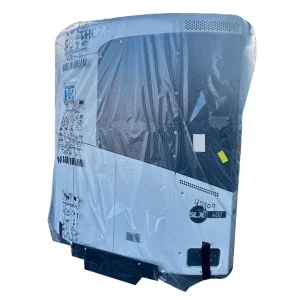
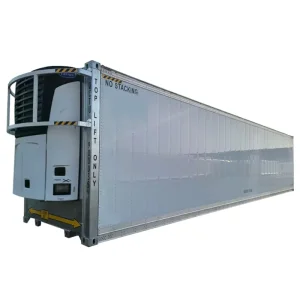
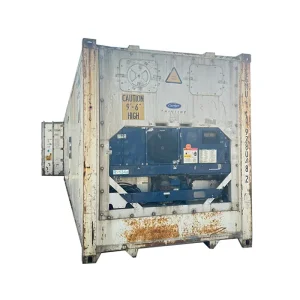
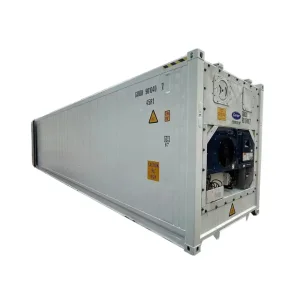
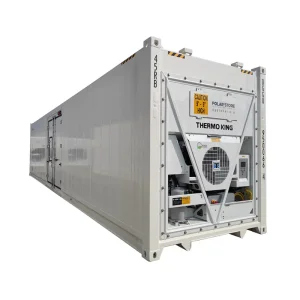
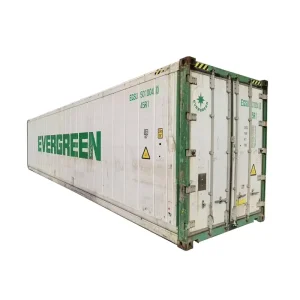
In 40ft High Cube reefer units, the elevated roofline preserves interior air ducting and airflow patterns across T-bar aluminum flooring. This configuration prevents cargo warm spots during cross-hemisphere transport of pharmaceutical items, fresh produce, and seafood.
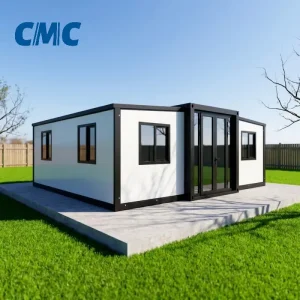
Civil contractors and disaster-relief operations utilize 20ft and 40ft High Top structures for converted housing. The extra 30cm headroom allows for suspended ceilings, electrical/plumbing channels, and high-efficiency closed-cell polyurethane foam insulation while maintaining a comfortable 2.4m finished interior ceiling height.
Strategic integration of IoT sensor networks, carbon-reduced metallurgy, and aerodynamic coatings.
Standard integration of factory-installed ambient temp, shock, humidity, and door-opening sensors communicating via satellite/5G mesh networks.
Commercialization of Hydrogen-Direct Reduced Iron (H-DRI) green steel panels, cutting embodied lifecycle carbon emissions by 45% per unit.
Replacing bulk polyurethane foam with nanostructured aerogel composites, achieving identical thermal R-values in 30% of the wall profile thickness.
Robotic lock-sensing corner castings with internal hydraulic twistlocks suited for fully autonomous port terminals and driverless chassis.
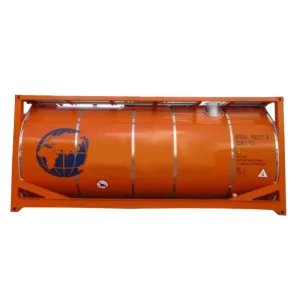
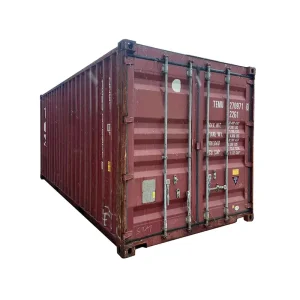
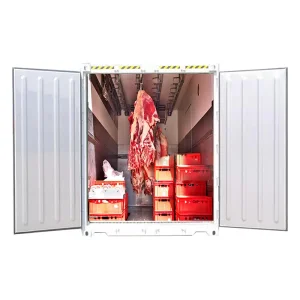
Explore our complementary series of ISO certified liquid tanks, specialized hanging meat reefers, secondary-market verified units, and side-opening enclosures.
Direct technical clarifications on payload thresholds, international certifications, maintenance, and fabrication customizations.
A High Top (High Cube) container measures 2,896 mm (9 feet 6 inches) in external height, exactly 305 mm (1 foot) taller than the standard 2,591 mm (8 feet 6 inches) specification. This geometry increases usable cubic capacity by approximately 12.8% to 13.5% without modifying rail or maritime terminal footprint compatibility.
Yes. Every container manufactured under ISO 1496-1 and classified by Bureau Veritas (BV) or Lloyd's Register is load-tested to withstand vertical forces of not less than 848 kN (86,400 kg) per corner post. This fully supports dynamic 9-high cell-guide stacking with total gross vessel stack weights reaching 339,200 kg.
We offer customized engineering including industrial roll-up shutter doors, full side-opening access doors, structural roof cutouts for equipment drop-ins, marine-grade cable glands, insulation (rockwool, PU, PIR), interior T-bar or checkered steel flooring, and DNV 2.7-1 certified lifting pad-eyes.
Units specified for offshore or marine atmospheric service receive a multi-stage ISO 12944 C5-M high-durability coating system: zinc-rich ethyl silicate primer (30-40µm), epoxy micaceous iron intermediate coat (100-120µm), and high-gloss polyurethane topcoat (50-60µm), totaling 200µm+ dry film thickness (DFT).
The gooseneck tunnel is an indent structure built into the bottom floor at the front end, measuring approximately 3,291 mm long and 120 mm deep. When secured on a specialized gooseneck semi-trailer chassis, the entire unit sits lower, keeping total highway transport height beneath the standard 4.0m / 13ft 6in road clearance limit.
Standard ISO High Top production batches require 15 to 25 days depending on batch volume. Specialized OEM/ODM configurations with insulation, specific doors, or genset brackets run on a 30 to 45 day cycle. With production bases located 100 km from Tianjin and Suzhou sea terminals, transfer to vessel berths is managed within 24-48 hours of final inspection sign-off.