Technical Whitepaper & Engineering Standards for Intermodal Rail, Cross-Border Freight, and Custom High-Cube Logistics Solutions Manufactured by CIMIC China.
High-tensile Corten steel constructions adhering strictly to ISO 1496-1, UIC 592, and BV/DNV class certifications.
Leveraging deep industrial clusters, direct access to cold-rolled SPA-H atmospheric corrosion-resistant steel, and advanced automated submerged arc welding systems.
China produces over 90% of global intermodal equipment. CIMIC's production facilities in Tianjin and Suzhou utilize specialized robotic profiling, precision corner casting casting foundries, and integrated zinc-rich epoxy paint application tunnels.
Railway operations subject containers to sustained multi-directional cyclic loading, shunting impacts, and lateral harmonic vibration. Our engineering tolerance controls are held within ±1.5mm diagonal limits, surpassing standard maritime benchmarks.
With production facilities positioned approximately 100 kilometers from the automated terminals of Tianjin Port and the Yangtze River logistics corridors, CIMIC eliminates inter-terminal delays for international project shipments.
How the expansion of Trans-Eurasian corridors and automated carbon reporting is reshaping railway container design parameters.
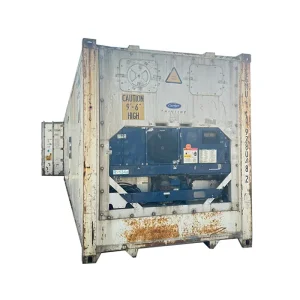
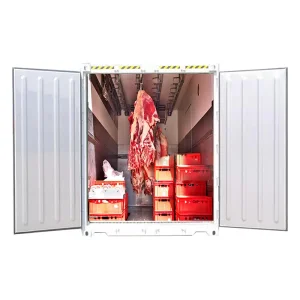
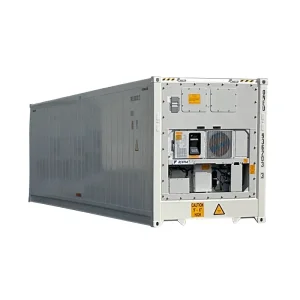
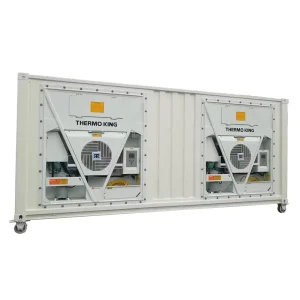
Long-distance rail transit (such as the Chongqing–Duisburg route) requires autonomous, multi-power-source refrigeration. Modern OEM builds combine dual-fuel clip-on diesel generator sets (gensets) with integrated electric scroll compressors capable of unbroken 21-day temperature integrity.
Next-generation rail containers feature satellite-linked telematics embedded directly into the corrugated side walls. Real-time logging of internal atmospheric pressure, humidity, door events, and 3-axis shock impacts allows global operators to mitigate cargo loss autonomously.
Using finite element analysis (FEA), container tares are trimmed by up to 8% while increasing ultimate gross operating load ratings to 34,000 kg. This allows maximum bulk weight realization for industrial resins, mineral concentrates, and machinery.
Railway systems cross different rail track gauges across international border zones (e.g., standard 1435mm to broad 1520mm gauges). Containers are constructed with specialized underfloor crossmembers to withstand rapid gantry spreader cycling during bogie-exchange operations.
Comprehensive baseline engineering specifications for volume procurement and budget estimation.
| Equipment Type | Dimensions (L × W × H) | Tare Weight | Max Gross Payload | Insulation / Cooling | Certification Benchmarks |
|---|---|---|---|---|---|
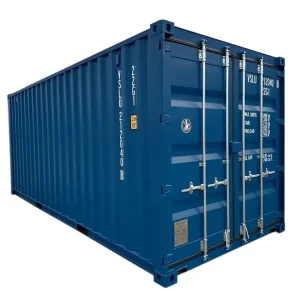
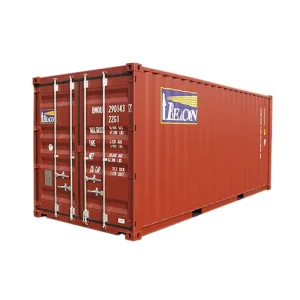
| 20ft Standard Dry Intermodal | 6,058 × 2,438 × 2,591 mm | 2,200 kg | 28,280 kg | N/A (Corten Weathering Steel) | ISO 1496-1, CSC, UIC 592, BV |
| 40ft High Cube Intermodal | 12,192 × 2,438 × 2,896 mm | 3,800 kg | 28,700 kg | Optional anti-sweat internal linings | ISO 1496-1, CSC, UIC, TIR |
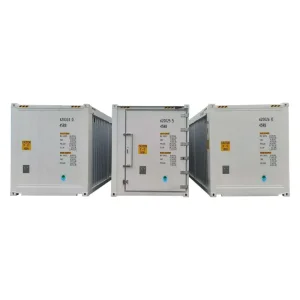
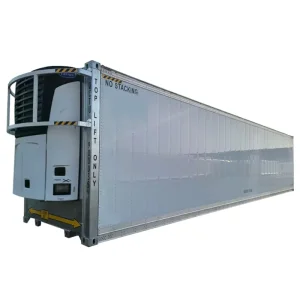
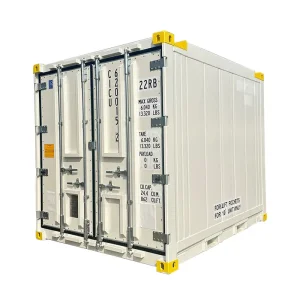
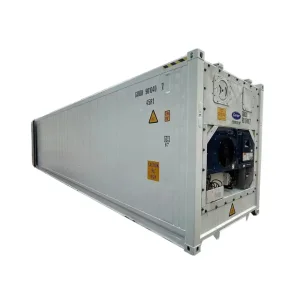
| 40ft HC Active Cold-Chain Rail Reefer | 12,192 × 2,438 × 2,896 mm | 4,650 kg | 29,350 kg | High-pressure PU Foam (45 kg/m³) | ATP/FRC, ISO 1496-2, BV, CSC |
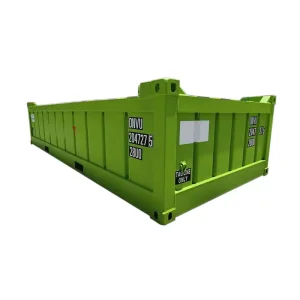
| 20ft Half-Height Heavy Mineral | 6,058 × 2,438 × 1,295 mm | 2,850 kg | 32,000 kg | Hardox abrasion resistant floor | DNV 2.7-1, EN 12079, ISO 1496-4 |
| 40ft Side-Opening High Cube | 12,192 × 2,438 × 2,896 mm | 4,900 kg | 25,580 kg | Bi-fold or multi-hinge full access | ISO 1496-1, CSC Type Approved |
Engineered to deliver structural performance across extreme temperature gradients, varying track qualities, and multimodal transfer points.
Intermodal transit through northern rail tracks exposes equipment to temperatures dropping below -40°C. Standard carbon steel undergoes severe brittle-transition hazards at these levels. Our OEM northern builds utilize low-temperature alloy formulations, specialized synthetic low-temp door gaskets, and thermal bridge insulation breakers to prevent structural fracture and thermal dissipation.
High ambient thermal loads exceeding +50°C coupled with fine silica dust storms represent a continuous challenge for rolling stock equipment. We integrate specialized multi-stage labyrinth door seals, high-reflective aliphatic polyurethane topcoats, and air filter pre-cleaning enclosures for refrigerated Genset intakes to eliminate dust fouling.
Hauling unrefined ores, coal, and heavy concentrates requires reinforced load profiles. CIMIC designs reinforced half-height open-top railway boxes with interior wear plates, hydraulic tipping discharge compatibility, and high-impact twistlocks to streamline transfer from quarry face to smelting port.
Strategic purchasing guidelines for freight forwarders, state rail authorities, and international leasing companies.
Corten steel plates and industrial polyurethane comprise up to 60% of total manufacturing costs. Enterprise purchase agreements with CIMIC allow procurement managers to leverage indexed raw-material purchase contracts, shielding balance sheets from monthly metal market fluctuations.
Our automated production stamping and assembly tooling requires rapid-switch reconfiguration. Typical OEM engineering programs reach optimal economies of scale at minimum orders of 10 to 25 units for custom profiles, while standard ISO configurations are dispatched from continuous rolling runs.
Every batch produced at our Tianjin and Suzhou yards is open to independent physical inspection. We routinely coordinate with Bureau Veritas, DNV, Lloyd's Register, and SGS to execute hydrostatic, door seal vacuum, structural racking, and drop-impact tests prior to sign-off.
To reduce freight expenditure, CIMIC coordinates "one-way use" cargo loadings from Chinese manufacturing hubs to destinations across Central Asia, Europe, and North America. This structure often reduces shipping transport costs to near zero for international buyers.
Direct answers from our engineering and export departments on custom rail equipment orders.
While both conform to external ISO envelope dimensions, railway containers undergo significantly higher longitudinal acceleration and dynamic racking loads during train shunting, braking, and rail vibration. Our OEM railway boxes incorporate reinforced bottom side rails, thickened corner post joints, and heavy-duty front/rear sill assemblies tested to withstand sustained 2g longitudinal shock impacts as dictated by UIC 592 specifications.
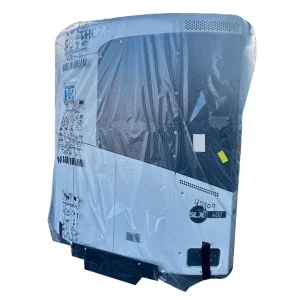
We work directly with Carrier Transicold, Thermo King, and Daikin to engineer cold-chain units tailored to specific rail corridors. For autonomous cross-border freight routes lacking continuous electric chassis connections, we install underslung or front-mounted clip-on generator sets with high-capacity diesel fuel reservoirs supporting up to 25 days of continuous operations.
OEM railway container pricelists depend on: (1) base steel and zinc market pricing; (2) container specification (standard dry, high cube, side-access, or active insulated); (3) custom mechanical adaptations (floor thickness, lashing rings, internal lining); (4) third-party certification society involvement (BV, DNV, ABS); and (5) order volume. We provide clear, itemized quotes outlining cost per unit along with tooling and delivery schedules within 24 hours.
Every new container manufactured carries an internationally registered CSC (Convention for Safe Containers) safety approval plate. Depending on user specifications, we deliver third-party design-approval certificates and build-inspection documentation issued by Bureau Veritas (BV), ISO 9001 quality compliance credentials, UIC registration, and, where applicable, DNV 2.7-1 certifications for offshore and severe heavy-industry use.
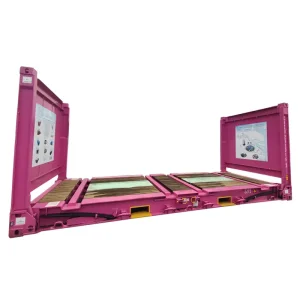
Yes. OEM/ODM customization is our core capability. We manufacture custom width pallet-wide variants (allowing side-by-side Euro pallet placement), dual side-opening containers, full-height roll-up doors, and half-height mining bins. Our technical team produces detailed CAD and 3D FEA mechanical drawings for approval prior to production.
Standard ISO configuration sample batches or baseline orders are typically completed within 3 to 4 weeks from drawing sign-off. Highly customized equipment—including specialized insulated reefers or atypical side-door units—generally requires 4 to 6 weeks for manufacturing, structural testing, and classification verification at our Tianjin or Suzhou bases.
Engineered cold-storage, insulated preservation, and specialized intermodal containers ready for global export.