Engineered for extreme longitudinal buffing stress, rapid multimodal transshipment, and cross-border broad/standard gauge railway corridors.


International logistics has entered an era of sustained decarbonization, supply chain redundancy, and land-bridge revitalization across Eurasia, North America, and Sub-Saharan transport corridors.
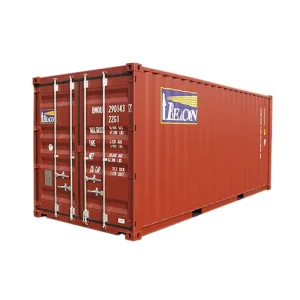
Cross-border freight systems traversing the New Eurasian Land Bridge face massive climatic variation (-40°C in Kazakhstan steppes to +45°C across Central Asia) coupled with double-gauge transshipment jolts (1435mm to 1520mm). Standard ISO marine containers frequently experience structural micro-buckling under repeated railway hump shunting and heavy buffing loads. Specialized railway-grade containers incorporate Corten-A reinforcement pillars and modified understructures to eliminate shear-wall deflection.
Precision OEM railway container construction deviates from maritime dry boxes through rigorous compliance with Association of American Railroads (AAR) M-930 and International Union of Railways (UIC) standards. The requirement demands sustained dynamic load tolerances exceeding 2.0g dynamic impact longitudinally and specialized forklift pocket reinforcing plates to prevent side-rail crushing during multi-tier intermodal yard handling.
Procurement officers evaluate OEM railway containers based on structural lifecycle cost metrics rather than baseline manufacturing price. A high-spec Corten container treated with multi-coat epoxy primer and polyurethane finish delivers a verified operational life exceeding 18 years without structural fatigue, eliminating en-route cargo loss liabilities and costly trackside emergency transfer operations.
From intelligent telematics monitoring wheelset vibration impacts to active diesel-electric hybrid reefers, smart tech and materials are elevating railway container performance.
Deep landlocked railway corridors lack consistent cellular data connectivity. Modern OEM builds incorporate dual-mode cellular and satellite IoT sensors embedded directly flush into the Corten corrugation profiles. These units harvest micro-kinetic vibration energy to continuously broadcast geofence coordinates, door breaches, multi-axis tri-axial shock readings, and internal temperature fluctuations to cloud-based monitoring portals.
Tare weight optimization is vital for heavy-haul rail corridors operating under strict gross axle load limits (e.g., 22.5 to 25 metric tons per axle). By migrating structural members to high-tensile steels such as S500MC and S700MC, structural sidewall thickness can be reduced while simultaneously elevating internal cube capacity and allowable cargo payload, delivering measurable diesel efficiency gains on multi-locomotive consists.
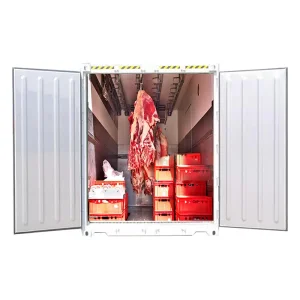
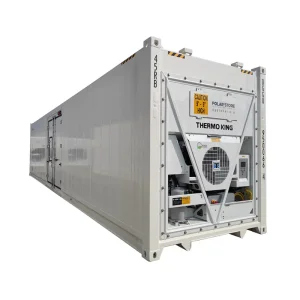
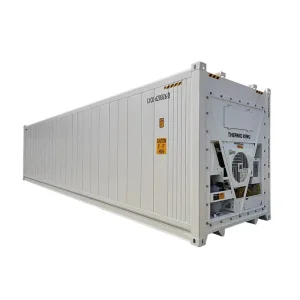
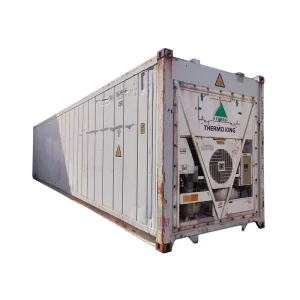
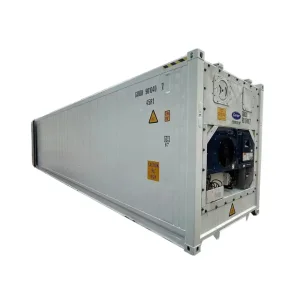
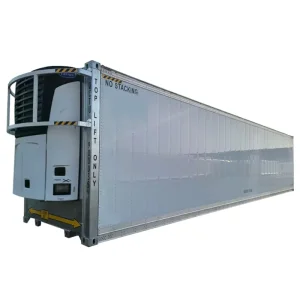
Unlike ocean vessels equipped with universal auxiliary reefer plugs, rail flats often traverse remote segments without centralized train power cabling. OEM reefer engineering combines integrated underslung or nose-mounted 350-liter fuel capacity clip-on diesel generator sets (Carrier, Thermo King, Daikin) with advanced micro-channel condenser loops capable of sustaining -30°C pharmaceutical and meat payloads for up to 20 days untended.
Tailored operational configurations addressing specific bulk material challenges, food security imperatives, and complex mining-to-port infrastructure.
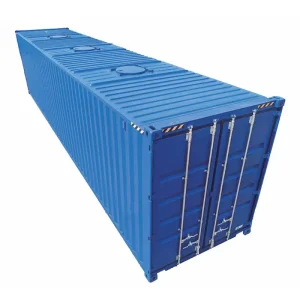
Bulk iron ore, lithium spodumene, and copper concentrates demand open-top half-height or three-quarter-height containers designed specifically for specialized 360-degree railcar rotary tipplers. Structural top rails are engineered with extra thick seamless hollow structural sections (HSS) to prevent ovalization and corner casting rupture during fast tipping cycles at maritime transshipment yards.
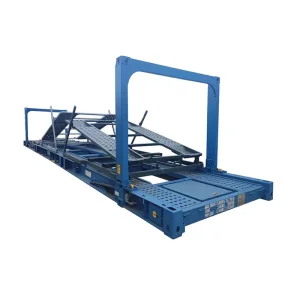
Automotive OEM manufacturing depends upon clockwork cross-border supply chains. Specialized 40ft and 45ft high-cube railway containers incorporate floor-integrated pneumatic tie-down channels, adjustable internal mezzanine deck structures, and roll-up side curtains to streamline loading sequences, eliminating wood dunnage waste and reducing intermodal turn-around dock times.
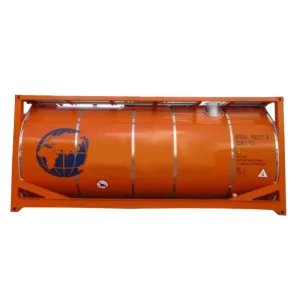
Liquid chemical, LNG, and food-grade liquid bulk transits via rail encounter violent sloshing dynamics (surge pressures) during locomotive deceleration. Specialized intermodal ISO tanks feature integrated internal baffle plates, full-surround 316L stainless-steel shells insulated with rockwool or vacuum jackets, and secondary safety relief valves matched to dangerous goods rail codes (RID / CFR-49).
Compare technical parameters between conventional ocean-going maritime units and specialized OEM heavy-haul railway configurations.
| Engineering Parameter | Standard ISO Marine Container | Heavy-Haul OEM Railway Container | Operational Value Advantage |
|---|---|---|---|
| Structural Corten Steel Grade | SPA-H / Q345B Standard Yield | SPA-H / S500MC Ultra-High Yield | Superior impact toughness in -40°C Siberian / Alpine rail corridors |
| Longitudinal Dynamic Resistance | 1.0 g Nominal Test Value | 2.0 g to 2.5 g AAR/UIC Proof Tested | Prevents frame buckling during hump-yard marshalling and shunting |
| Understructure Crossmember Pitch | 300 mm to 350 mm spacing | 200 mm to 250 mm reinforced web pitch | Supports heavy concentrated axled forklift loading (up to 7,260 kg) |
| Interior Linings & Securing | Standard lashing rings (1,000 kg cap.) | Continuous E-Track & 2,500 kg recessed D-rings | Zero longitudinal cargo drift during emergency locomotive braking |
| Refrigeration Power Architecture | 380V/440V Shore cable power only | Hybrid Clip-on 350L Diesel Genset + Dual Power | Autonomous temperature control across un-electrified rail spurs |
Direct OEM production lines covering offshore certified cargo baskets, bulk ore units, car carriers, liquid tanks, and integrated modular units.

Direct engineering clarity regarding international gauge conversions, custom coatings, thermal retention calculations, and delivery lead times.
