Direct OEM & ODM engineered configurations manufactured strictly according to ISO 1496-1, DNV 2.7-1, and international maritime safety certifications.
Analyzing the central role of the ISO standard 20-foot general purpose container in international trade routes, manufacturing infrastructure, and cross-border multi-modal transport networks.
Global 20ft Container Circulation Base
Corten High-Strength Anti-Corrosive Purity
Maximum Gross Operating Mass (MGM)
Structural Lifecycle with C5-M Marine Coating
The standard twenty-foot equivalent unit (TEU) represents the foundational volumetric unit of international commerce. Because high-density industrial freight such as machinery, heavy metals, ores, liquids, and agricultural commodities reach gross weight thresholds long before cubic limits are exceeded, the 20ft chassis offers maximum structural integrity and weight efficiency across ocean carriers, railway flatcars, and tri-axle chassis trucks.
China remains the undisputed epicenter of global maritime container manufacturing, producing over 90% of certified intermodal equipment. Facilities anchored near the industrial corridor of Tianjin port and the Yangtze River Delta utilize vertical integration, combining continuous cold-rolled coil mills, specialized casting plants for ISO corner castings, and specialized chemical paint facilities to minimize delivery timelines to major oceanic terminals.
The contemporary 20ft container has transitioned from a purely mechanical steel box into an engineered platform. Advancements in structural finite element analysis (FEA) enable optimized corrugated steel wall thicknesses without sacrificing racking resistance or structural corner-post load limits, ensuring safe 9-high fully laden stacking during severe offshore ocean pitch and roll dynamics.
Comprehensive engineering benchmarks conforming to ISO 1496-1, ISO 668, ISO 1161, and the International Convention for Safe Containers (CSC).
| Structural Sub-Assembly | Engineering Material & Specification | Dimension / Thickness | Design Yield Strength & QA Standard |
|---|---|---|---|
| Corner Post (Rear/Door End) | SPA-H Atmospheric Corrosion Resistant Steel | 6.0 mm Cold Formed Profile | Yield ≥ 345 MPa, Tensile ≥ 490 MPa; 86,400 kg test load |
| Corner Post (Front End) | SPA-H High Yield Structural Plate | 6.0 mm Pressed Channel | ISO 1496-1 vertical stacking compliance (9-high stack) |
| Side Corrugated Panels | SPA-H Weathering Corten Steel Sheets | 1.6 mm / 2.0 mm (Inner/Outer Vane) | Trap-corrugation with hydrophobic anti-ponding slope |
| Roof Panels & Camber | SPA-H Corten Die-Stretched Steel | 2.0 mm Die-stamped with 5mm camber | Static load rating: 300 kg / 600x300mm surface area |
| Bottom Side Rails | High Tensile SPA-H Steel Plate | 4.5 mm Cold Roll Formed Channel | Integrated forklift pocket cut-outs (2,050mm spread) |
| Floor Crossmembers | Cold Pressed C-Section SPA-H | 4.0 mm Thickness, 285mm pitch | Designed to resist 7,260 kg axle loads (ISO floor test) |
| Flooring Substrate | 28mm Marine Grade Apitong / Hardwood Plywood | 19-ply, Moisture content < 14% | AQIS & Australian Quarantine TCT chemical treated |
| ISO Corner Castings | SCW 480 Cast Carbon Steel (8 per container) | 178mm x 162mm x 118mm (Standard) | ISO 1161 certified, full ultrasonic non-destructive testing |
| Door Locking Mechanism | Forged Steel / Hot-Dip Galvanized Rods & Cams | Dual-locking gear per door leaf | Anti-rack cam keeper integration with tamper-evident seal tabs |
| Weather Seals & Gaskets | EPDM Dual-Lip Extruded Rubber | J-type compression perimeter gasket | Operating range: -40°C to +80°C watertight seal |
Unlike conventional mild steels (Q235), SPA-H Corten steel contains micro-alloying elements including Copper (Cu), Chromium (Cr), and Nickel (Ni). Upon atmospheric exposure, it forms an ultra-dense, self-healing protective patina that blocks oxygen and moisture penetration, slowing corrosion rates by up to 800% in marine environments.
Surface preparation requires automated shot-blasting to ISO SA 2.5 standards to achieve a surface anchor profile of 40-70 microns. This is followed by a 3-tier marine coating: Zinc-rich epoxy primer (30µm), an epoxy polyamide intermediate coat (40µm), and a high-durability acrylic/polyurethane topcoat (50µm), yielding a total dry film thickness (DFT) ≥ 120µm.
The flooring framework is engineered to withstand severe dynamic mechanical loading caused by industrial counterbalanced forklifts carrying raw materials. Under ISO 1496-1 testing, each floor assembly must support an axle load test of 5,460 kg (standard) or an upgraded heavy-duty rating of 7,260 kg without permanent structural deformation.
Transparent commercial pricing structure reflecting factory-gate economics, raw material fluctuations, certification levies, and bespoke modification premiums.
| Container Model & Build Type | Dimensions (L x W x H) | Tare Wt. (kg) | Payload (kg) | FOB Port Factory Gate Price (USD) | Lead Time (Batches ≥ 10 TEU) |
|---|---|---|---|---|---|
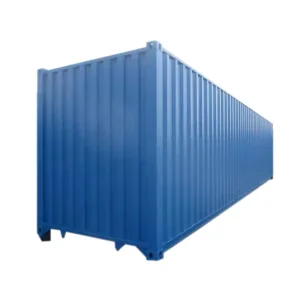
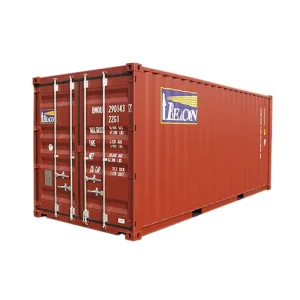
| Standard 20ft General Purpose (GP) | 20' x 8' x 8'6" (6.058 x 2.438 x 2.591m) | 2,180 kg | 28,300 kg | $1,750 – $2,250 | 10 – 15 Days |
| 20ft High Cube Dry (HC) | 20' x 8' x 9'6" (6.058 x 2.438 x 2.896m) | 2,350 kg | 28,130 kg | $1,950 – $2,450 | 12 – 18 Days |
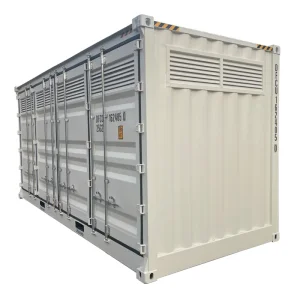
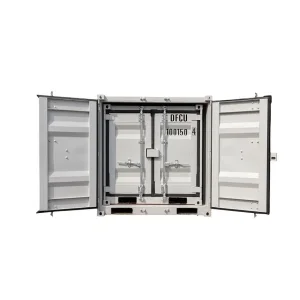
| 20ft Full Side-Open Access Door | 20' x 8' x 8'6" (Bi-folding side wall) | 3,100 kg | 24,900 kg | $3,400 – $4,200 | 20 – 25 Days |
| 20ft Double Door (Tunnel Container) | 20' x 8' x 8'6" (Dual end swing doors) | 2,320 kg | 28,160 kg | $2,200 – $2,700 | 15 – 20 Days |
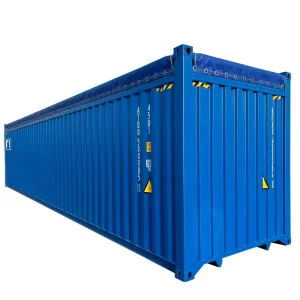
| 20ft Hard/Soft Open Top Container | 20' x 8' x 8'6" (Removable roof bow/tarpaulin) | 2,450 kg | 28,030 kg | $2,800 – $3,600 | 18 – 24 Days |
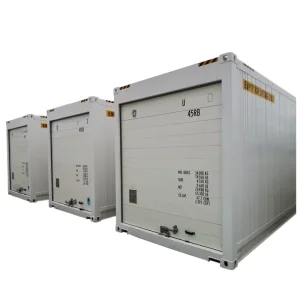
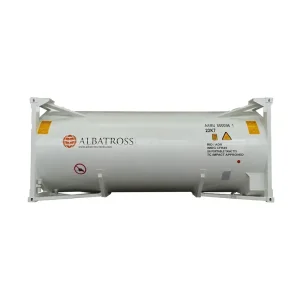
| 20ft ISO Intermodal Gas Tank (T50/T11) | 20' x 8' x 8'6" (Cylindrical pressure vessel) | 4,200 kg | 25,000 Liters | $14,500 – $22,000 | 30 – 45 Days |
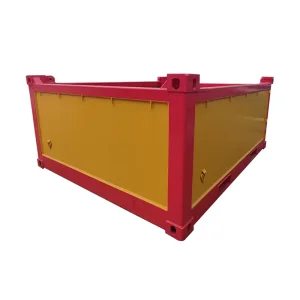
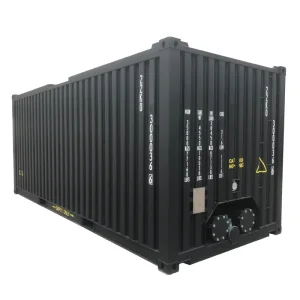
| 20ft DNV 2.7-1 Offshore Cargo Basket | 20' x 8' x 4'3" (Certified dynamic offshore) | 2,800 kg | 15,000 kg | $5,800 – $7,900 | 25 – 35 Days |
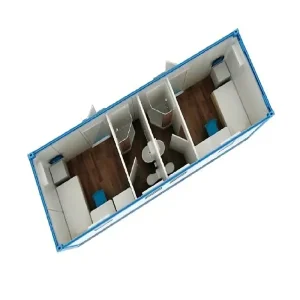
| 20ft Modular Habitation / BESS Enclosure | 20' x 8' x 9'6" (Structural reinforced chassis) | 3,500 kg | Custom Build | $4,500 – $8,500 | 20 – 30 Days |
Over 55% of the baseline manufacturing cost of a standard 20ft container is directly indexed to Hot-Rolled Corten Steel coils. Price variations on global commodity exchanges for SPA-H, alongside crude oil derivatives used in marine epoxy paints and apitong timber harvesting quotas, directly correlate to weekly FOB factory quotation shifts.
A precision-built OEM 20ft container with Corten chemistry and C5-M high-solids coating exhibits a 15-year marine deployment life followed by an additional 10-15 years of secondary terrestrial or static storage life. Its residual scrap or secondary conversion value remains exceptionally high, retaining up to 45% of original capital expenditure after 12 years of service.
International procurement teams can dramatically reduce ocean repositioning costs by leveraging "One-Way Use" (Cabotage) export programs. Factory-fresh units loaded with paying commercial cargo outbound from Chinese maritime hubs arrive at European or North American destinations with freight costs largely subsidized by the cargo payload.
Every unit undergoes strict structural non-destructive testing (NDT), dimensional geometry confirmation, and inspection approvals from leading global classification societies.
Our manufacturing workflow is certified and witnessed by Bureau Veritas (BV), American Bureau of Shipping (ABS), and DNV. Each production heat receives individual Type Approval Certificates verifying compliance with ISO 1496-1, CSC guidelines, and statutory international maritime agreements.
To ensure unrestricted international multi-modal transshipment across rail networks and border crossings, all containers comply with the Customs Convention on Containers (CCC/TIR), the International Union of Railways (UIC 592), and the Association of American Railroads (AAR) structural standards.
Timber flooring meets the rigorous treatment mandates of the Australian Quarantine and Inspection Service (AQIS), utilizing certified cyclically applied chemical preservatives that prevent pest and biological transfers across pristine agricultural biospheres worldwide.
Expanding beyond maritime transport: How OEM 20ft container chassis serve as pre-engineered structural envelopes for critical infrastructure worldwide.
Factory-modified 20ft High Cube containers serve as the global structural enclosure standard for Battery Energy Storage Systems (BESS). Reinforced floors support heavy lithium iron phosphate (LiFePO4) battery racks, integrated HVAC liquid cooling loops, explosion-proof fire suppression piping, and NFPA 855-compliant thermal runaway management.
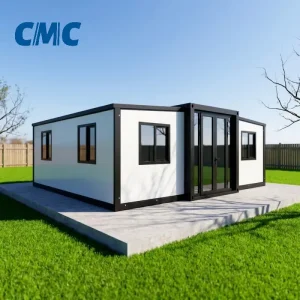
Modern commercial developments leverage 20ft ISO frames as turnkey modular building blocks. With structural load-bearing corner castings capable of supporting multistory vertical stacking, these units transform into modular workforce camps, remote medical clinics, emergency field command units, and disaster-relief shelters requiring rapid installation.
The telecommunications and artificial intelligence sectors deploy modified 20ft container bodies to host modular micro-data centers. Featuring acoustic insulation, high-capacity closed-loop chillers, clean-agent FM-200 fire suppression, and electromagnetic interference (EMI) shielding, these pods bring computing power to remote industrial installations.
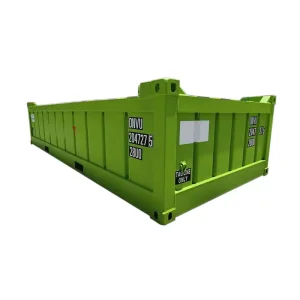
Engineered half-height, open-top, and tank container configurations transport dense ores, bulk mineral concentrates, drilling muds, and aggressive chemical feedstocks to offshore drillships and isolated mining sites. Equipped with sloped interior drainage discharge systems, these chassis withstand severe dynamic loading.
Compliant with UN chemical classification regulations, specialized 20ft dangerous goods containers incorporate floor-level bunded steel spill sumps with drainage valves, non-sparking zinc-plated mesh floors, explosion-proof internal extraction fans, and wall louvers for passive chemical vapor dissipation.
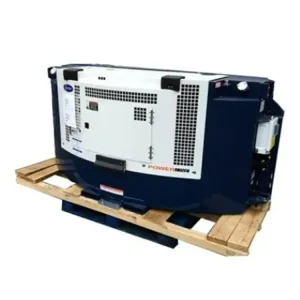
Heavy equipment manufacturers install industrial diesel generators, reverse-osmosis water desalinators, air compressor banks, and hydraulic pumping stations directly inside 20ft container frames. This enables turn-key factory testing before shipping, followed by fast, plug-and-play commissioning on job sites.
Advancements in industrial metallurgy, low-carbon fabrication, composite materials, and real-time satellite IoT systems shaping container production through 2030.
Adoption of Hydrogen-based Direct Reduced Iron (H2-DRI) and Electric Arc Furnace (EAF) production lines to forge certified SPA-H weathering steel, reducing embedded manufacturing carbon emissions by over 60% per TEU.
Upgrading factory lines from conventional metal active gas (MAG) to high-speed laser hybrid welding cells. This cuts heat-affected zones (HAZ), eliminates residual micro-distortions in side wall panels, and delivers uniform, weld seams.
Transitioning from tropical hardwood plywood to composite floorboards crafted from recycled PET plastics and bamboo fibers. These boards resist rot, are 100% moisture-impermeable, and reduce empty container tare weight by 85 kg.
Factory-embedded, solar-powered low-power satellite sensors integrated into the roof header. These nodes continuously stream cargo temperature, door breach notifications, internal humidity, and real-time GPS coordinates directly to enterprise cloud systems.
In-depth technical answers addressing custom builds, classification tests, pricing variables, lead times, and factory acceptance procedures.
A standard 20ft General Purpose (GP) container has an external height of 8 feet 6 inches (2,591 mm) and an internal cubic capacity of approximately 33.2 cubic meters. A 20ft High Cube (HC) container stands at 9 feet 6 inches (2,896 mm), offering an extra foot of vertical clearance and a capacity of roughly 37.4 cubic meters. High Cube configurations are ideal for modular equipment enclosures (such as BESS battery arrays and generators) that require added headroom for ceiling cable trays and HVAC ducting.
Corten SPA-H is an atmospheric corrosion-resistant alloy steel enriched with copper, chromium, and nickel. When exposed to ocean air and salt spray, it forms a dense, self-healing oxide patina that protects the underlying steel from progressive rust. In contrast, non-weathering mild steels (such as Q235B) pit and flake rapidly under offshore conditions, leading to early wall perforation and structural corner-post failure.
Factory Acceptance Testing for ISO certification involves several severe destructive and non-destructive load tests supervised by classification society surveyors (e.g., BV or ABS). These include an 86,400 kg corner post vertical stacking test (simulating a 9-high laden stack), a 15,240 kg transversal racking test, a 7,260 kg forklift floor axle load test, and a 0.2 MPa high-pressure water spray test across all door seals, roof seams, and ventilation louvers to guarantee watertight integrity.
For standard ISO 20ft dry cargo containers painted in stock carrier colors, minimum order quantities can be as low as 1 to 5 units from existing depot inventories. For bespoke OEM/ODM projects requiring custom laser-cut openings, tailored structural crossmembers, specialized wall thicknesses, non-standard RAL industrial coatings, or unique door arrangements, production line changeover tooling typically requires a minimum batch size of 10 to 20 TEU to ensure manufacturing cost efficiency.
Container flooring is constructed from 28mm-thick, 19-ply marine-grade hardwood or keruing/apitong plywood bonded with boiling-water-proof (BWP) phenolic resins. Plywood shipments undergo moisture content verification (which must register below 14% to prevent floor rot and mold), static four-point bend deflection testing, and chemical treatment certification in strict compliance with Australian Quarantine (AQIS) standards to prevent insect infestation across borders.
Yes. If structural modifications (such as side openings, window cutouts, or partition walls) are made to a certified container, an updated finite element structural analysis (FEA) must be submitted to our partnering classification society (e.g., Bureau Veritas). Following verification and prototype proof-testing, a recertified CSC safety plate is stamped with the modified maximum gross mass (MGM) and stacking limitations, ensuring full compliance for international shipping.
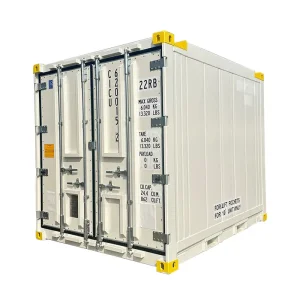
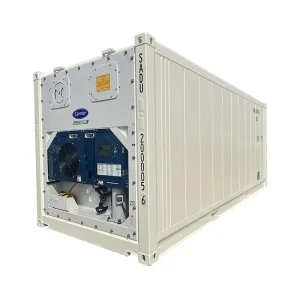
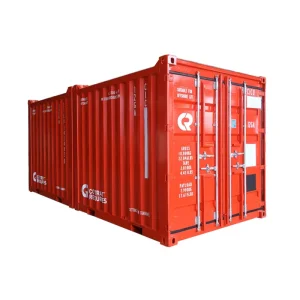
High-specification refrigerated, side-door accessible, dangerous goods, and offshore equipment engineered to withstand extreme logistics and industrial environments.