China 40 Feet Container Products & Factories

Next-Generation ISO Standards, Global Intermodal Logistics & Industry 4.0 Production Frameworks

Featured Equipment & Intermodal Solutions

Engineered for high-stress transcontinental rail, maritime routing, and smart-monitored operations.
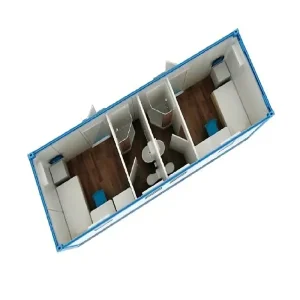
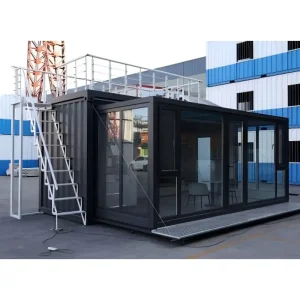
China 20ft 40ft Standard Size Accommodation Modular House Container Exporter, Products
View Specifications
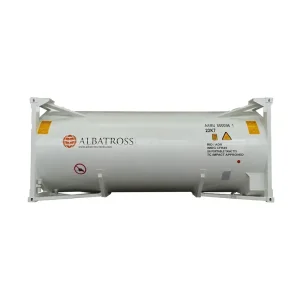
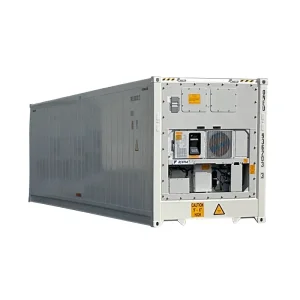
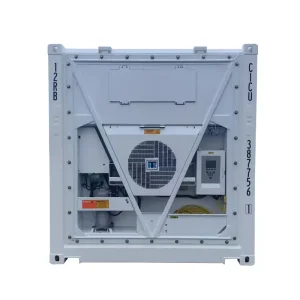
OEM 20ft Offshore Refrigerated Container DNV Certification Is More Durable Products, Manufacturers
View Specifications
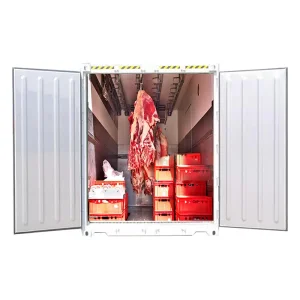
OEM Brand new hanging meat container for low temperature fresh transportation Product, Quotes
View Specifications
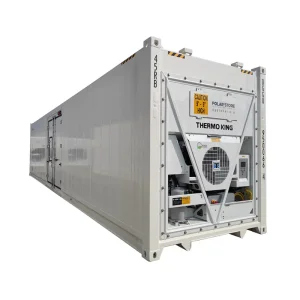
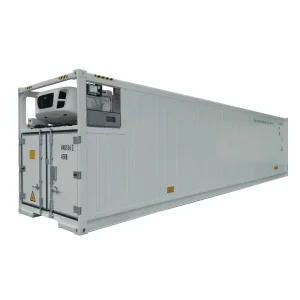
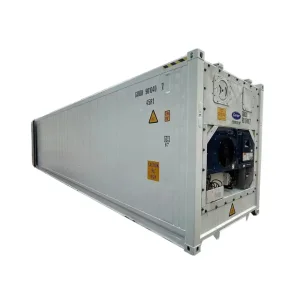
Buy New 40-foot high cube & 45-foot Belt and Road railway refrigerated container
Buy New 40-foot high cube & 45-foot "Belt and Road" railway refrigerated container. Products, Exporters
View Specifications
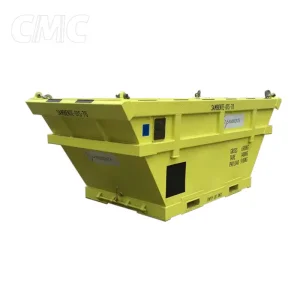
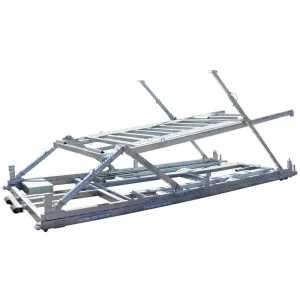
High-Quality DNV Certification Silt Basket Container Used in Offshore Operations
High-Quality DNV Certification Silt Basket Container Used in Offshore Operations Product, Products
View Specifications
76.4 m³
Internal Cube Capacity (40ft HC)
30,480 kg
Max Gross Weight Rating
SPA-H
High-Tensile Corten Steel Grade
100%
ISO 1496-1 Testing Compliance

The Industrial Evolution of 40 Feet Intermodal Containers

The standard forty-foot container (12.192 meters) remains the indisputable bedrock of globalization, mediating over 70% of non-bulk maritime cargo volume worldwide. Originating as a static steel storage envelope, the 40ft container—specifically the 40-foot High Cube (40HC) variant providing an enhanced height profile of 9 feet 6 inches—has transformed into an actively monitored, aerodynamically engineered instrument for multimodal transit.

Historically, ocean freight infrastructure suffered systemic structural failures driven by uneven thermal stresses, chloride-rich oceanic corrosion, and dynamic rack-and-pinion fatigue during transpacific and North Atlantic passages. Modern metallurgical improvements and advanced finite element analysis (FEA) implemented in Chinese foundries have yielded modern corten steel alloys (SPA-H chemistry) capable of withstanding dynamic racking loads exceeding 150 kN, providing exceptional service lives beyond twenty years even in severe marine environments.

Simultaneously, the convergence of active telemetry, cellular-satellite fallback modems, and real-time cold-chain mechanics has revolutionized procurement decisions. What was formerly a commodity metal enclosure is now treated by procurement directors as a mission-critical asset requiring strict adherence to classification societies including Bureau Veritas (BV), Lloyd’s Register (LR), and Det Norske Veritas (DNV).

Global Enterprise Procurement Demands vs. China Factory 4.0

Bridging rigorous operational requirements across logistics, defense, energy, and retail with smart automated production lines.

Automated Robotic Assembly

Multi-axis automated submerged arc welding systems guarantee root-pass penetration across corrugated corten side walls, end frames, and twist-lock corner castings without micro-void anomalies.

Eco-Friendly Surface Coating

Application of water-borne zinc-rich primer and polyurethane topcoats in clean-loop baking rooms ensures volatile organic compound (VOC) compliance while delivering superior salt-spray rust inhibition.

Digitized Cold Chain Integrity

Precision thermal-bridge elimination utilizing cyclopentane high-pressure polyurethane foaming lines guarantees an exceptional heat leakage factor (U-value) for pharmaceutical-grade preservation.

Logistics Cluster Proximity

Strategically situated production facilities in coastal manufacturing corridors (Tianjin FTA and Suzhou/Shanghai regions) cut drayage overhead and enable immediate ocean/rail dispatch to international hubs.

Localized Application Scenarios & Intermodal Paradigms

Deploying specialized 40ft form factors across demanding geographic, climatic, and industrial topologies.

1. Trans-Eurasian Rail Corridors (Belt & Road Initiative)

The continuous expansion of cross-border rail networks connecting mainland manufacturing hubs with Central Asia and Western Europe has driven intense demand for 40-foot and 45-foot specialized intermodal containers. Subjected to drastic seasonal thermal differentials—from -40°C in Siberian corridors to +45°C across arid interiors—standard dry freight containers risk internal sweat and cargo desiccation.

Chinese production units resolve this through targeted condensation-trapping bamboo-composite flooring, secondary inner insulation liners, and diesel-electric hybrid reefer systems featuring integrated fuel reservoirs for 500+ hours of continuous uninterrupted autonomous power supply without active rail platform electrification.

2. Offshore Exploration & Dynamic Subsea Logistics (DNV 2.7-1 / EN 12079)

Maritime oil & gas rigs, subsea installations, and offshore wind turbines operate in high-corrosion, splash-zone atmospheres. Containers hoisted onto working supply ships face violent hydrodynamic wave actions and shock accelerations.

Standard ISO corner castings are insufficient for continuous dynamic lifting offshore. Factories implement structural steel profiles certified to DNV 2.7-1, featuring continuous four-part marine lifting slings with integrated padeyes welded directly into heavy load-bearing structural beams, accompanied by full non-destructive testing (NDT), magnetic particle inspection (MPI), and traceability back to steel mill ladle batches.

3. Fast-Track Modular Architecture & High-Density Battery Energy Storage (BESS)

The modular housing sector and the green energy transition have created entirely new consumption channels for 40ft Corten enclosures. Container-based Battery Energy Storage Systems (BESS) require heavy load-bearing floors supporting upwards of 35 tons of localized static mass, specialized structural cut-outs for liquid cooling loops, explosion-relief roof hatches, and UL94-V0 fire-rated thermal insulation.

Simultaneously, modular building configurations utilize prefabricated structural framing to create deployable medical complexes, executive field accommodation, and modular data centers delivered turn-key with embedded electrical harnesses, plumbing chaseways, and structural ISO corner interlocking mechanisms.

Heavy-Duty, Specialized & Secondary Fleet Inventory

Verified production batches, specialized flat-racks, bulk haulers, and certified offshore storage units.
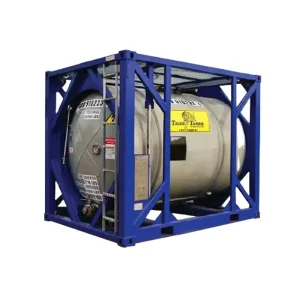
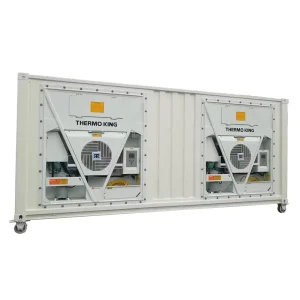
Buy The new blast reefer containers are certified by classification societies
Buy The new blast reefer containers are certified by classification societies Product, Exporters
View Specifications
Famous New 40ft High-Cube Daikin Freezer Container Cold Storage Room
Famous New 40ft High-Cube Daikin Freezer Container Cold Storage Room Exporter, Product
View Specifications
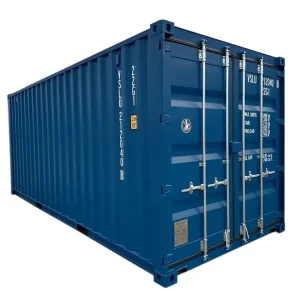
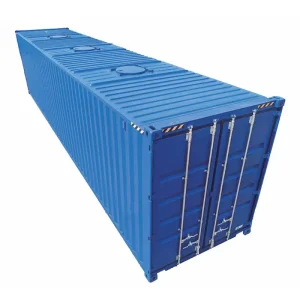
Buy New 20ft Double Door Dry Cargo Shipping Container Manufacturer, Factories
View Specifications
ODM Ninety Percent New Used 40ft HC Carrier Refrigerated Container
ODM Ninety Percent New Used 40ft HC Carrier Refrigerated Container Product, Manufacturers
View Specifications
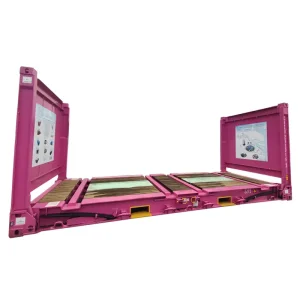
OEM 20ft Foldable Prefab Modular Homes Mobile Expandable Container House
OEM 20ft Foldable Prefab Modular Homes Mobile Expandable Container House Prefabricated House with Bathroom Factory, Products
View Specifications

Frequently Asked Technical & Sourcing Questions

Comprehensive procurement, regulatory, and mechanical criteria for global freight forwarding engineers.

What structural distinctions exist between a standard 40ft GP and a 40ft High Cube (HC) container?
A standard 40-foot General Purpose (GP) container has an external height of 8 feet 6 inches (2,591 mm) and an interior volume of roughly 67.7 m³. In contrast, the 40-foot High Cube (HC) container provides an external height of 9 feet 6 inches (2,896 mm), achieving 76.4 m³ of internal space—an increase of approximately 12.8% in usable volume. HC variants are specifically sought after for light, high-cube consumer goods, furniture, automated production components, and modular conversions where internal headroom is essential.
Which steel chemistries and metallurgical certifications are standard in Chinese container factories?
Industrial-grade intermodal containers manufactured in premier facilities strictly deploy SPA-H (JIS G3125) atmospheric corrosion-resistant Corten steel. This copper-chromium-nickel alloy develops an adherent rust patina upon exposure to weathering, significantly arresting inward oxidation penetration. Critical load points—such as the eight corner castings—are cast from high-weldability SCW480 carbon steel, compliant with ISO 1161 and tested under longitudinal, lateral, and vertical dynamic forces.
How do Chinese export manufacturers verify cold-chain compliance and insulation performance?
Active reefer units undergo comprehensive Pre-Trip Inspections (PTI) prior to port staging. Active machinery from Carrier Transicold, Thermo King, and Daikin is calibrated to fractional temperature targets down to -30°C (or -60°C for ultra-low blast freezers). Foam insulation cores are assessed via thermal imaging for cold spots, while box leakage values are validated through standardized pressure decay methods specified by the ATP agreement (Agreement on the International Carriage of Perishable Foodstuffs).
What documentation and safety approval plates are legally mandated for maritime shipping?
Every container deployed into intermodal trade must bear an internationally certified CSC Safety Approval Plate (Convention for Safe Containers, 1972). This stainless steel plate records the country of approval, approval reference number, manufacturing date, manufacturer’s identification number, maximum operating gross weight, allowable stacking load for 1.8g (typically 192,000 kg or 216,000 kg), and transverse racking test values. Units inspected by societies such as Bureau Veritas (BV) or ABS feature appropriate classification society stampings.
Can custom interior mountings, racking, or automated ventilation be engineered at scale under OEM/ODM agreements?
Yes. Modern factories offer end-to-end OEM and ODM capabilities. Production configurations regularly accommodate integrated vehicle-loading fixtures, hanging meat rails with anti-bacterial stainless steel hooks, full side-opening bifold doors, heavy equipment tie-down rings, certified flame-retardant interior wall linings, and integrated solar telemetry pods. CAD design engineering, structural FEA simulation, prototype validation, and full batch classification certification are coordinated prior to serial manufacturing.