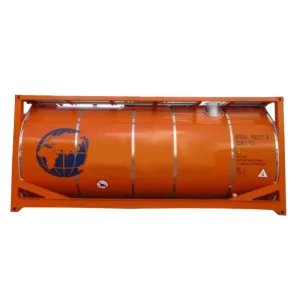
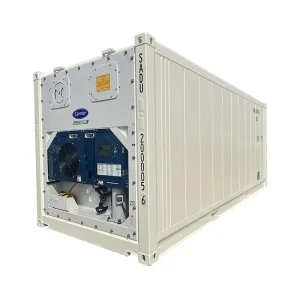
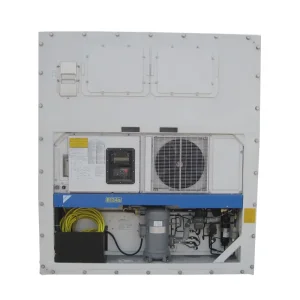
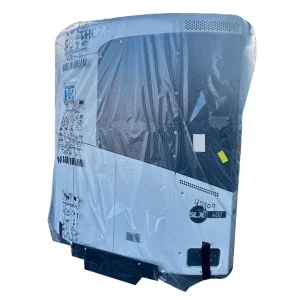
Explore certified maritime, intermodal, and structural reefer configurations precision-engineered for long-haul temperature retention, low GWP compliance, and ruggedized oceanic performance.




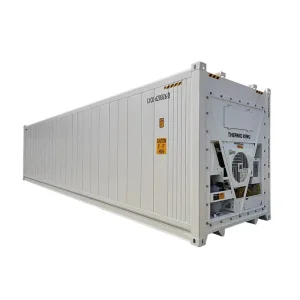
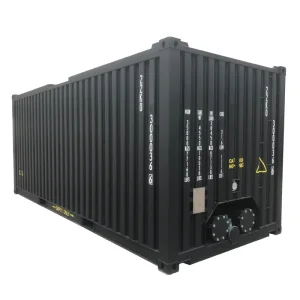
A technical assessment of changing regulatory mandates, modal transitions from conventional reefer ships to integrated containerization, and the thermodynamic benchmarks driving tier-1 production hubs.
Decades of Continuous Structural & Cold-Chain R&D
Years of Global Intermodal Manufacturing Pedigree
Thermal Conductivity (K-Value) Enclosure Thresholds
Ultra-Deep Cold Cryogenic Preservation Capability
The global refrigerated shipping container (reefer) industry has transitioned from passive thermal containment into an active, highly digitized branch of industrial automation. Modern cross-border supply chains—spanning perishable foodstuffs, active pharmaceutical ingredients (APIs), biological serums, and sensitive chemical reagents—demand continuous, immutable climate stability across transoceanic transits that often exceed 45 days. As conventional dedicated refrigerated cargo vessels are phased out in favor of standardized containerized vessels, the demand for specialized 10ft, 20ft, 40ft High-Cube, and customized reefer builds has accelerated exponentially.
A primary catalyst for this industrial transformation is the enforcement of strict international environmental accords. The Kigali Amendment to the Montreal Protocol, coupled with the European Union’s F-Gas Regulation (EU 2024/573), has initiated an aggressive phase-down of hydrofluorocarbons (HFCs) featuring high Global Warming Potential (GWP), such as R-404A and R-134a. Premier container manufacturing facilities are systematically upgrading their production jigs to integrate low-GWP refrigerants (such as R-452A, R-513A) and natural refrigerants like carbon dioxide (R-744 CO2 transcritical systems). Achieving thermodynamic efficiency with these modern chemical matrices requires structural reefer boxes with unprecedented airtightness, superior thermal barrier design, and zero thermal bridging across corners, door seals, and machinery bulkheads.
Under the international ATP treaty (Agreement on the Carriage of Perishable Foodstuffs), a standard container must demonstrate a global heat transfer coefficient (K-value) below 0.40 W/(m²·K) to be classified as heavily insulated. Leading Chinese factories utilize automated, cyclopentane-blown microcellular polyurethane (PUR) injection at ultra-high pressures, driving production line averages down to an exceptional 0.34–0.38 W/(m²·K), dramatically reducing compressor power draw on container vessel electrical grids.
Simultaneously, the widespread adoption of Controlled Atmosphere (CA) and Modified Atmosphere (MA) technologies has extended the viable commercial shelf-life of high-respiration produce such as avocados, berries, and bananas. By actively monitoring and dynamically throttling oxygen (O2) and carbon dioxide (CO2) concentrations while removing ethylene with catalytic scrubbers, these specialized units slow the cellular metabolic rate of agricultural commodities. This technical capability enables ocean carriers to replace air freight on trans-Pacific and Asia-Europe corridors, delivering up to an 80% reduction in transport-related carbon emissions while maintaining post-harvest quality parameters.
How state-of-the-art robotic production clusters in Tianjin and Suzhou combine deep metallurgical engineering, automated continuous foaming, and streamlined multi-port logistics to serve global fleet operators.
Structural reliability begins with raw metallurgical integrity. Certified reefer containers employ SPA-H weathering corten steel for all primary corner posts, bottom side rails, and crossmembers to guarantee exceptional tensile yield strength (≥355 MPa) and corrosion resistance.
Thermal isolation depends on the structural density and homogeneity of the polyisocyanurate (PIR) or polyurethane core. Robotic clamping jigs hold composite stainless steel panels under uniform hydraulic pressure during chemical injection.
Strategic geographic placement in Tianjin and Suzhou provides a decisive logistical advantage. Situated approximately 100 kilometers from Northern and Eastern China's primary container terminals, dispatch times are minimized.
Compare standard and custom engineered configurations across critical thermal thresholds, payload ratings, refrigeration machine integrations, and primary international class certifications.
| Equipment Category | Nominal Dimensions | Internal Temp Range | Insulation & Wall Spec | Cooling Machine Integration | Primary Regulatory Certifications |
|---|---|---|---|---|---|
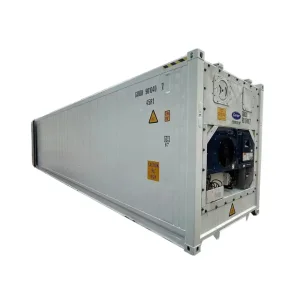
| 40ft High-Cube Active Reefer | 12,192 x 2,438 x 2,896 mm (L x W x H) | -30°C to +30°C (±0.25°C precision) | Corten outer / 70mm PUR foam / SUS 304 food-grade interior | Carrier Transicold / Thermo King / Daikin scroll | ISO 1496-2, BV, TIR, ATP heavily insulated, CSC |
| Ultra-Deep Blast Freeze Container | 20ft or 40ft High-Cube standardized | Down to -65°C cryogenic deep freeze | Multi-layer vacuum insulation panels (VIP) + 100mm thickened PUR | Dual-stage cascade compressor system with low-GWP refrigerant | Classification societies certified, DNV, CE, BV |
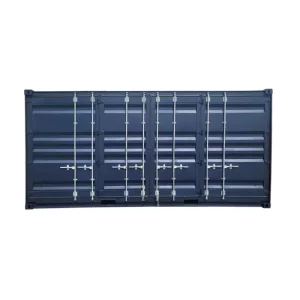
| Roll-Up & Side-Door Distribution Reefer | 20ft / 40ft customized door geometry | -25°C to +15°C multi-zone compartmental | Reinforced perimeter framing with thermal break dual-lip gaskets | Undermount or front-wall slimline diesel/electric hybrid units | ISO 668, CSC, EN 12642 Code XL chassis compliant |
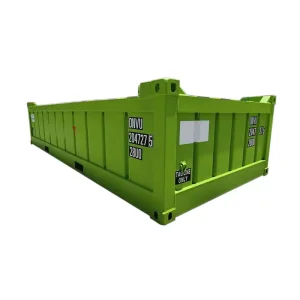
| DNV 2.7-1 Offshore Cold Storage | 10ft / 20ft heavy-duty offshore frame | -20°C to +10°C extreme ambient ratings | Heavy-gauge Corten-A, explosion-proof ATEX zone 1/2 electricals | Ruggedized marine tropical condenser with copper fins & anti-corrosion | DNV GL-ST-E271, EN 12079, IMO MSC/Circ.860 |
| Insulated Passive Thermal Container | 20ft / 40ft High-Cube dry footprint | Passive holding (dry ice / PCM phase buffers) | Thickened cyclopentane micro-cell core without active mechanical motor | Non-mechanical; integrated pre-cooled eutectic plates optional | ISO 1496-1, BV quality management, CSC |
*Note: All reefer machinery parameters can be tailored via OEM/ODM engineering workflows. Electrical specifications support standard 380V/460V 3-phase 50/60Hz shore/vessel power with dual-frequency transformers.
From deep-sea marine corridors to remote inland resource extraction camps, our engineered equipment delivers uncompromising performance in severe operating conditions.
Pharmaceutical Cold Chain (GDP compliant) mandates continuous thermal stability within strict target ranges (+2°C to +8°C, or -20°C deep frozen) with zero margin for deviation. Our pharma-grade reefer builds integrate redundant refrigeration units, dual microprocessor controllers, and real-time cellular/satellite IoT telematics tracking temperature, relative humidity, door-open cycles, and GPS coordinates.
T-bar aluminum extruded flooring ensures continuous high-volume bottom-air circulation beneath standard Euro-pallets, preventing hot spots or localized temperature layers even when containers are loaded to maximum cubic capacity.
Standard intermodal reefers often fail when moving from oceanic transport to extreme rail networks like the Trans-Eurasian rail corridor, where ambient temperatures plunge to -40°C. Our heavy-duty builds feature integrated heating elements, heated door-perimeter gaskets that eliminate freeze-locking, and heavy-gauge floor stringers rated for rough-track shock absorption.
For remote offshore and terrestrial mining sites, units function as autonomous field cold-storage rooms with interior emergency door releases, vapor-proof LED luminaires, and external visual/acoustic malfunction sirens.
In-depth responses to core engineering, certification, machinery integration, and logistics inquiries commonly raised by enterprise fleet managers and procurement directors.
We maintain tier-1 OEM relationships with all dominant global refrigeration machinery manufacturers: Carrier Transicold (ThinLINE, PrimeLINE), Thermo King (Magnum Plus), and Daikin (LXE Series). Clients select units based on their regional service technician availability, proprietary telematics network preferences, or corporate refrigerant policies (such as Carrier's CO2-based NaturaLINE). Every machinery unit undergoes exhaustive 4-hour Pre-Trip Inspections (PTI) under load before dispatch.
Standard marine reefers are designed to preserve cargo temperatures during transport; they are not engineered to rapidly pull down the core temperature of warm ambient goods. Blast freezers, conversely, feature high-capacity dual refrigeration compressors, oversized evaporator fans generating air flow velocities exceeding 20 meters per second, and reinforced internal sub-flooring. They pull down bulk seafood or meat batches from fresh slaughter levels down to -35°C or -65°C within hours, preventing ice crystal formation that degrades cell structure.
Every newly manufactured reefer container comes complete with a valid CSC (International Convention for Safe Containers) safety plate and certification from major IACS (International Association of Classification Societies) members, including Bureau Veritas (BV), ABS, or DNV. For units deployed on maritime oil & gas support vessels, builds are certified strictly to DNV GL-ST-E271 (DNV 2.7-1) / EN 12079 criteria, verifying high-impact dynamic lift resilience and pad-eye NDT weld inspection.
Thermal bridging is eliminated through composite thermal breaks constructed from heavy-density PVC or fiberglass reinforced polymers (FRP) placed between the internal MGSS stainless steel wall and the external Corten steel skeleton. The insulation layer utilizes high-pressure injected, closed-cell polyurethane foam with cyclopentane blowing agents. Automated high-pressure injection ensures zero internal void spaces, preventing air and moisture migration that causes panel degradation over time.
For standard ISO 20ft and 40ft High-Cube reefer models using catalog specifications, our baseline manufacturing capacity accommodates orders from single-unit trials up to 500-unit fleet replacement batches. Bespoke engineering projects requiring unique door openings (such as side-opening bi-folds or roll-up security doors), non-standard dimensions, or dual-temperature partitioning carry an MOQ of 2 to 5 units, with custom engineering approvals and factory acceptance testing (FAT) finalized in 3 to 5 weeks.
Inland drayage of heavy industrial containers across several hundred miles adds thousands of dollars in positioning freight and introduces transit risks. Our manufacturing clusters sit roughly 100 kilometers from the Xingang (Tianjin) and Shanghai/Taicang (Suzhou) berths. Containers are hauled directly to seaport staging yards with minimal positioning fees. Additionally, we provide "one-way lease with cargo" arrangements, loading approved dry cargo for the export leg to eliminate repositioning costs for overseas importers.
Explore heavy-duty bulk tank containers, offshore platform transport units, and mobile generator cooling machinery built to international intermodal standards.