

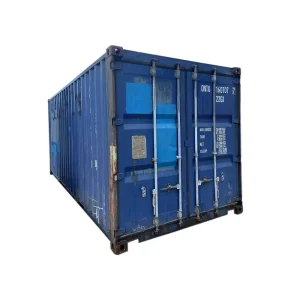
Overcoming the historical dead-space limitation of standard ISO containers through millimeter-precision wide engineering, dynamic payload stabilization, and intermodal compatibility.
In modern multimodal supply chain operations, traditional ISO 668 dimensions present a chronic geometric challenge for regional pallet transport. Standard maritime dry containers feature an exterior width of precisely 8 feet (2,438 mm) and an interior clearance width ranging from 2,330 mm to 2,352 mm. When handling standard European pallets (EUR 1: 1,200 mm × 800 mm) or Australian standard pallets (1,165 mm × 1,165 mm), side-by-side positioning is physically restricted. This creates mandatory longitudinal placement resulting in broken stowage—wasting up to 18% of the container's usable floor area while requiring costly protective dunnage and air bags to prevent transverse shift during maritime heave and pitch.
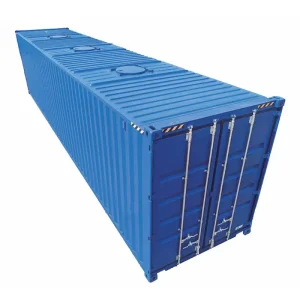
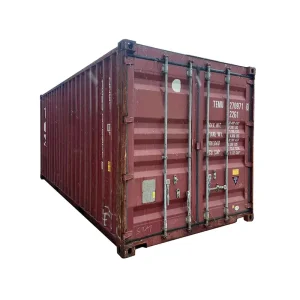
To eliminate this systemic freight waste, forward-thinking manufacturers engineer Pallet-Wide Containers (Container Wide). By calibrating exterior dimensions to 2,480 mm – 2,500 mm (or up to 2,550 mm for regional short-sea, railway, and domestic logistics) while maintaining strict ISO corner-casting centers at 2,259 mm, modern pallet-wide builds allow two 1,200 mm pallets to nest seamlessly abreast without load snagging. A 40-foot pallet-wide unit expands payload capacity from 25 standard Euro-pallets up to 30, and a 45-foot high-cube version increases intake to 33 pallets. This 20% surge in stowed unit density converts directly into lower logistics emissions, condensed fleet movements, and minimized per-pallet freight expenditures across intermodal corridors.
The industrial definition of "Container Wide" extends beyond pallet-optimized dry freight. Modern manufacturers leverage extra-width structural footprints for specialized applications:
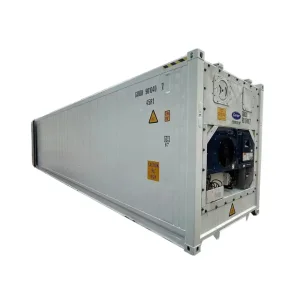
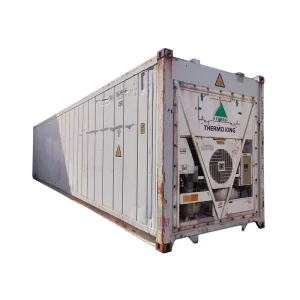
1. Thermal Integrity in Wide Reefer Architectures: High-performance cold chains demand ultra-low thermal dissipation (K-values below 0.38 W/m²·K). Standard reefers must sacrifice interior clearance to accommodate 60 mm to 100 mm of rigid polyurethane foam insulation. In pallet-wide reefers, customized thin-wall vacuum insulation panels (VIP) paired with advanced cyclopentafoam chemistry protect payload width while exceeding ATP Class FRC thermal standards.
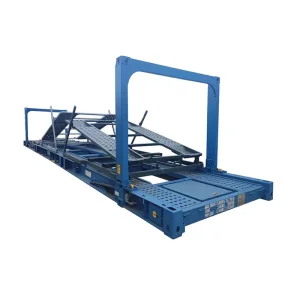
2. Dynamic Offshore Structures (DNV 2.7-1 / ISO 10855): Heavy equipment modules, mining half-height carriers, and hazardous chemical transport tanks frequently exceed standard dimensions. Offshore industrial applications require specialized corner posts, cast padeyes, continuous full-penetration welding, and certified sling sets built to withstand shock loads up to 3G in North Sea and Arctic wave conditions.
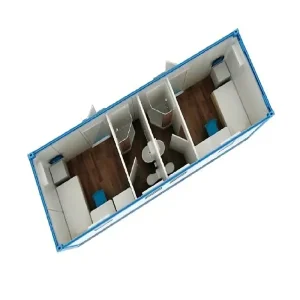
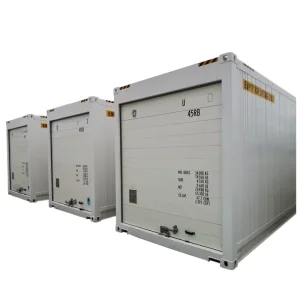
3. High-Cube Modular & Electrical Pod Enclosures: With the global rollout of energy storage systems (BESS), prefabricated data cabins, and mobile power stations, factories require container architectures engineered as walk-in enclosures. These units require structural stability, custom roll-up and side-open doors, and integrated raceways for rapid deployment across heavy industrial sites.
How deep raw material supply chains, automated robotic welding, and coastal port logistics drive unmatched cost-performance for global enterprise buyers.
Direct supply contracts with domestic primary steel mills provide verified Corten-A (SPA-H / Q345GNHL) atmospheric corrosion-resistant alloy steel. Containing controlled additions of copper, chromium, and nickel, this raw material forms a self-regenerating oxide passivation layer that withstands corrosive marine salt-mist environments for decades.
Continuous twin-wire multi-axis submerged arc and MAG robotic welding systems execute bottom side rails, header crossmembers, and corrugation seams with millimeter consistency. Eliminating porosity and undercuts guarantees structural shear rigidity capable of sustaining dynamic 9-high fully loaded ISO stack tests (192,000 kg).
Every raw welded structure undergoes automated total centrifugal shot blasting to Swedish Standard Sa 2.5, clearing mill scale and establishing an anchor profile of 40–70 μm. Next, multi-stage eco-friendly waterborne zinc-rich primers, intermediate epoxy barriers, and polyurethane topcoats deliver superior anti-corrosion protection.
A major hidden cost in global container procurement is repositioning and inland transit from factory to departure terminal. With dedicated primary manufacturing facilities strategically situated in Tianjin (serving North China, Bohai Rim logistics corridors, and Eurasia rail freight) and Suzhou (integrating the Yangtze River Delta and Shanghai deep-water ports), production yards sit within 100 kilometers of deep-water berths. This strategic proximity reduces domestic trucking drayage fees, expedites export customs documentation, and provides instant access to global vessel loops for immediate dispatch upon final inspection.
Direct structural comparison across interior clearances, maximum gross mass, floor load bearing, and international society certifications.
| Equipment Model | Exterior Dims (L × W × H) | Internal Clearance (W) | Euro-Pallet Intake | Max Gross Mass (MGW) | Primary Classification |
|---|---|---|---|---|---|
| 20ft Standard Dry Container | 6,058 × 2,438 × 2,591 mm | 2,352 mm | 11 units | 30,480 kg | ISO 1496-1 / BV / CSC |
| 20ft Pallet-Wide High Cube | 6,058 × 2,480 × 2,896 mm | 2,440 mm | 14 units (+27%) | 32,500 kg | ISO 1496-1 / CSC / TIR |
| 40ft Standard High Cube Dry | 12,192 × 2,438 × 2,896 mm | 2,352 mm | 25 units | 32,500 kg | ISO / ABS / BV / CSC |
| 40ft Pallet-Wide High Cube (PW) | 12,192 × 2,480 × 2,896 mm | 2,440 mm | 30 units (+20%) | 34,000 kg | CSC / UIC 592 / ISO 1496 |
| 45ft Short-Sea Pallet-Wide HC | 13,716 × 2,500 × 2,896 mm | 2,444 mm | 33 units (+32%) | 34,000 kg | EN 283 / CSC / BV |
| DNV 2.7-1 Offshore Heavy Carrier | Project Specific / Modular | Custom Reinforced | Bulk / Ore / Heavy | Up to 25,000 kg | DNV GL ST-E271 / EN 12079 |
| 40ft Active Reefer (Carrier/Daikin) | 12,192 × 2,438 × 2,896 mm | 2,290 mm | 23 units | 34,000 kg | ATP Class FRC / CSC / BV |
*Dimensional tolerances held to ±1.5mm. Custom width modifications up to 3,000 mm engineered for off-highway industrial modular enclosures.
From multi-temperature cold distribution to offshore salt spray and seismic prefabricated housing modules.
Operating across high-frequency intermodal networks (such as short-sea feeder routes and cross-continental freight rail), 45-foot pallet-wide containers match standard road mega-trailers pallet for pallet, enabling seamless modal shifts from road to rail without product repacking.
Equipped with industry-leading machinery from Thermo King, Daikin, and Carrier, wide and standard reefer builds maintain precise temperature profiles (-35°C to +30°C) for high-value biopharmaceuticals, seafood, and perishable produce on multi-week maritime voyages.
Manufactured to strict DNV 2.7-1 specifications, heavy-duty half-height containers and offshore dry freight boxes feature high Charpy V-notch impact toughness (27 Joules at -20°C), certified 4-point wire rope lifting slings, and secondary safety locking devices for offshore transfers.
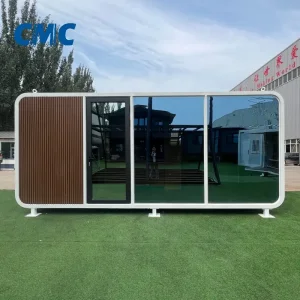
Prefabricated modular living pods, Apple Cabin executive spaces, and job-site command centers take advantage of the wider interior footprint to integrate complete insulation, concealed utility wiring, insulated glazing, and HVAC without feeling cramped.
For municipal storage, construction equipment laydown, and rapid cross-dock distribution, full-length bi-fold side-opening doors and heavy-gauge aluminum roller shutters allow direct forklift side-loading, eliminating bottlenecking during dispatch.
Intermodal tank containers framed in heavy-gauge Corten profiles protect inner 316L stainless steel pressure vessels with full ADR, RID, and IMDG compliance, enabling international carriage of food-grade oils, industrial solvents, and bulk fine chemicals.
Key quality checkpoints procurement teams use to evaluate manufacturer reliability, weld integrity, and factory compliance.
Every production heat batch must be backed by original steel mill test certificates verifying chemical composition (C ≤ 0.12%, Cr 0.5–1.2%, Cu 0.25–0.55%) and minimum yield strengths (≥ 345 MPa).
Corner casting welds, lifting padeyes, and bottom rail joints undergo dye penetrant and ultrasonic non-destructive testing to verify zero subsurface defects prior to primer application.
Type approval testing under classification society surveyors (Bureau Veritas, Lloyd's Register, or ABS) verifying transverse racking (150 kN), floor strength (7,260 kg front axle load), and rain tightness tests.
Full dimensional inspection, door gasket sealing evaluation under chalk tests, reefer automated Pre-Trip Inspection (PTI) cycle verification, and direct port dispatch clearance.
Experienced fleet directors avoid looking solely at initial capital expenditure (CAPEX). Pallet-wide units yield substantial recurring operational savings (OPEX):
Fleet Density Formula: Sourcing 500 units of 45-foot pallet-wide equipment (capacity: 33 pallets) versus standard 40-foot units (capacity: 25 pallets) yields an incremental 4,000 pallets shipped per cycle across the fleet. Over an average container service lifecycle of 12 years with 18 international cycles annually, this represents 864,000 additional pallets transported without ordering additional ship slots, port handling, or drayage trips. Factor in scrap salvage recovery from high-grade Corten steel, and pallet-wide containers deliver significantly lower lifecycle logistics costs.
How digitalization, structural lightweighting, and circular manufacturing are transforming commercial shipping containers.
Factory-integrated smart sensors featuring solar-scavenging satellite modems track real-time GPS location, door open/close events, internal temperature, relative humidity, and G-force shock anomalies to protect cargo in transit.
Phasing out traditional tropical apitong hardwood in favor of high-density bamboo composites and recycled polypropylene composite flooring reduces tare weight by 120 kg per 40ft container while exceeding ISO 1496 axle load tests.
Automated manufacturing processes use zero-VOC waterborne coatings and thermal recovery incineration during curing, reducing factory VOC emissions by over 85% compared to legacy solvent-based processes.
In-depth guidance covering custom engineering tolerances, class society certifications, cold chain PTI routines, and factory audit policies.