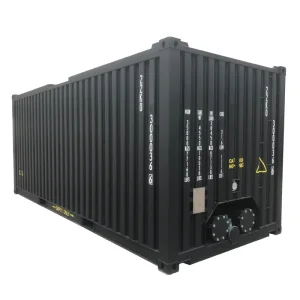
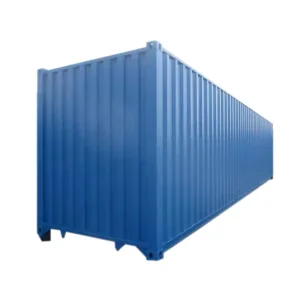
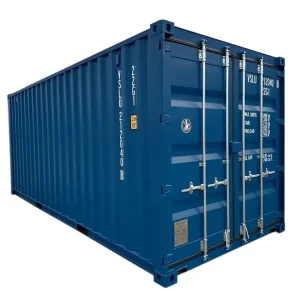
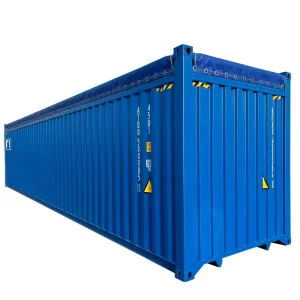
Immediate dispatch available for standardized and custom maritime units engineered for maximum volumetric cubic capacity, offshore survivability, and mission-critical dry storage.
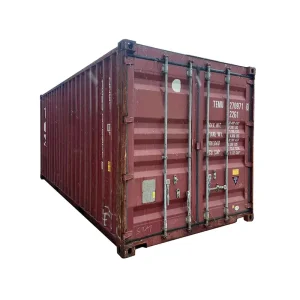
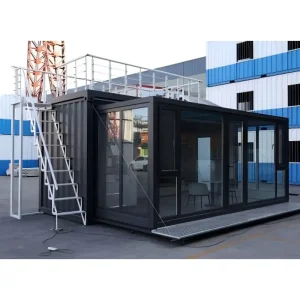
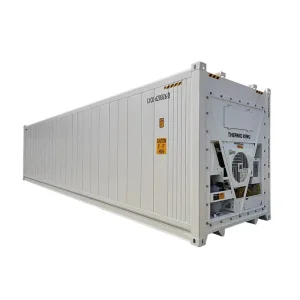
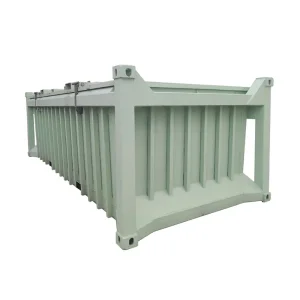
As the epicentre of global maritime container manufacturing, Chinese specialized production complexes deliver unparalleled metallurgical expertise, precision automated robotic welding, and coastal multi-port deployment efficiency.
High Cube structures require advanced metallurgical resilience to resist racking stresses across additional 1-foot vertical clearance. We employ prime SPA-H atmospheric corrosion-resistant Corten steel exclusively across corner castings, sills, and corrugated roof panels.
Utilizing multi-axis robotic gas metal arc welding (GMAW), our continuous weld seams eliminate porosity defects, securing full water-tight integrity and dynamic transverse shear resistance exceeding ISO 1496-1 safety coefficients under maximum stacking loads.
Each unit undergoes full automated grit blasting to Swedish Standard Sa 2.5, followed by electrostatically applied zinc-rich primer, high-build epoxy intermediate barriers, and acrylic topcoats rated for severe ISO 12944 C5-M marine corrosive exposure.
Located strategically in Tianjin and Suzhou, within 100 kilometers of the world's busiest container terminals. We load new builds with one-trip export freight directly, dramatically saving relocation positioning costs for overseas vessel operators.
As international maritime regulations tighten around environmental sustainability and telemetry visibility, modern High Cube containers are rapidly evolving into intelligent, energy-efficient logistical assets.
Real-time GPS tracking, electronic door opening timestamps, multi-axis shock and tilt detectors, and remote internal atmospheric telemetry (temperature, relative humidity, O2/CO2 levels) are directly integrated into container frames for enterprise visibility.
In accordance with the Kigali Amendment and strict IMO decarbonization mandates, our reefer High Cube production utilizes ultra-efficient scroll compressors and natural refrigerants like R-513A and R-744 (CO2), drastically dropping GWP while maximizing thermal insulation.
Transitioning away from scarce tropical hardwoods, we engineer high-strength bamboo composite flooring, galvanized steel decking, and recycled polymer-coated surfaces capable of sustaining 7,260 kg forklift front-axle loads pursuant to ISO 1496-1 tests.
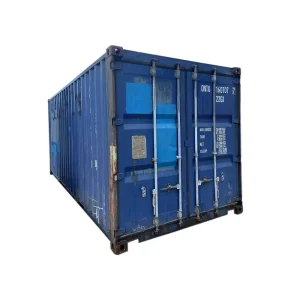
High Cube units offer an extra 305 mm (12 inches) of internal clearance over standard dry vans, resolving volumetric bottlenecks across high-density intermodal logistics, cold chain transport, modular construction, and energy infrastructure.
Consumer electronics, textiles, furniture, and e-commerce parcels max out cubic space before hitting tare weight caps. 40ft High Cube containers expand internal capacity to 76.4 m³ (2,698 cu ft), lowering per-cubic-meter ocean transit tariffs by up to 13.5%.
Clean energy developers convert our modified HC containers into utility-scale Battery Energy Storage Systems (BESS). The extra 1-foot clearance accommodates overhead heavy copper busbars, fire-suppression manifolds, and liquid-cooling HVAC conduits effortlessly.
Commercial developers utilize HC shells as high-load structural modules for worker camps, mobile clinics, and pop-up retail pods. The 2,698 mm interior ceiling clearance permits insulation, suspended ceilings, and subfloor utility runs without violating building codes.
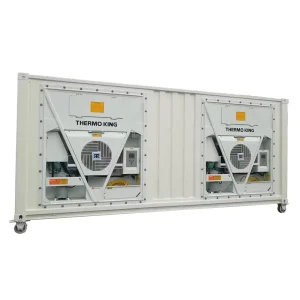
High Cube reefer units provide dedicated floor-to-ceiling air ducts and deep T-bar flooring, circulating conditioned air throughout 33 Euro-pallets of perishables, pharmaceuticals, or seafood at -35°C to +30°C holding thresholds.
Procurement officers and freight forwarding directors must evaluate dimensional envelopes, internal clearances, and payload margins when sourcing intermodal sea container equipment.
| Dimensional / Performance Metric | 20ft Standard Dry (GP) | 20ft High Cube (HC) | 40ft Standard Dry (GP) | 40ft High Cube (HC) | 40ft High Cube Reefer |
|---|---|---|---|---|---|
| External Height (mm / ft) | 2,591 mm (8'6") | 2,896 mm (9'6") | 2,591 mm (8'6") | 2,896 mm (9'6") | 2,896 mm (9'6") |
| Internal Height (mm / ft) | 2,393 mm (7'10") | 2,698 mm (8'10") | 2,393 mm (7'10") | 2,698 mm (8'10") | 2,544 mm (8'4") |
| Internal Cubic Capacity | 33.2 m³ (1,172 cu ft) | 37.4 m³ (1,320 cu ft) | 67.7 m³ (2,390 cu ft) | 76.4 m³ (2,698 cu ft) | 67.5 m³ (2,383 cu ft) |
| Tare Weight (Nominal) | 2,230 kg (4,916 lbs) | 2,400 kg (5,291 lbs) | 3,700 kg (8,157 lbs) | 3,900 kg (8,598 lbs) | 4,600 kg (10,141 lbs) |
| Max Gross Weight (Rating) | 30,480 kg (67,200 lbs) | 30,480 kg (67,200 lbs) | 30,480 kg (67,200 lbs) | 32,500 kg (71,650 lbs) | 34,000 kg (74,957 lbs) |
| Primary Cargo Focus | Heavy mineral & metal goods | Dense small equipment, gensets | Standard general pallet cargo | E-commerce, furniture, electronics | Pharma, meats, cold chain fruits |
| Structural Certifications | ISO 1496-1, CSC, BV | ISO 1496-1, CSC, BV | ISO 1496-1, CSC, BV | ISO 1496-1, CSC, BV | ISO 1496-2, ATP, BV, DNV |
To eliminate supply chain vulnerability, every high cube sea container exported from our production hubs passes an exhaustive five-stage factory acceptance inspection verified by third-party classification surveyors.
Optical emission spectrometers confirm Corten SPA-H alloy thresholds (Cu, Cr, Ni chemistry) ensuring proper weathering patina development under atmospheric salt-fog exposure.
Non-destructive ultrasonic and magnetic particle examinations on main corner casting corner post junctions, top headers, and gooseneck tunnel structural joints.
Continuous full-perimeter water nozzle spray testing at 100 kPa (1 bar) directed along all EPDM door gasket channels, welded roof seams, and ventilation louvers to guarantee 100% weather tightness.
Digital electromagnetic DFT gauge verification across interior (min 70µm) and exterior (min 110µm) coats, ensuring zero holiday voids and uniform anti-corrosion barrier protection.
Hydraulic transverse and longitudinal racking tests simulating dynamic container vessel forces up to 150 kN to confirm stackability under 9-tier fully laden configurations.
Direct answers addressing technical constraints, international shipping classifications, custom OEM fabrication parameters, and global port dispatch logistics.
A standard 40ft container has an exterior height of 8 feet 6 inches (2,591 mm), whereas a 40ft High Cube container stands at 9 feet 6 inches (2,896 mm). This additional foot of vertical headroom expands internal usable volume from 67.7 m³ to 76.4 m³—an increase of approximately 12.8% in volumetric cargo space without changing the outer container footprint.
Yes. High Cube containers feature standard ISO bottom corner casting dimensions and gooseneck tunnel recesses on the underside front rail. The gooseneck tunnel allows the chassis neck to sit flush within the underframe, lowering the total vehicular riding height to pass through bridge clearances, highway overpasses, and standard rail gauge corridors.
All our new and refurbished containers leave the facility with an active CSC (International Convention for Safe Containers) safety approval plate. Classification society certification can be issued under Bureau Veritas (BV), ABS, Lloyd's Register (LR), or DNV for offshore units, certifying adherence to ISO 668, ISO 1496-1, and IMO seaworthiness criteria.
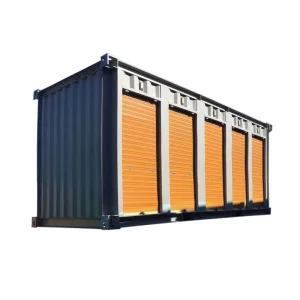
We offer extensive custom engineering, including side-opening cargo doors, heavy-duty industrial roll-up doors, thermal rockwool or spray polyurethane insulation linings, explosion-proof ventilation, internal steel structural reinforcement for battery systems (BESS), and specialized corporate liveries with RAL color matching.
Our manufacturing bases in Tianjin and Suzhou are within 100 kilometers of deepwater ocean terminals. We coordinate "One-Way / One-Trip" lease shipping—where newly built containers are packed with compliant export cargo destined for the buyer’s home port—saving substantial empty positioning freight costs for overseas importers.
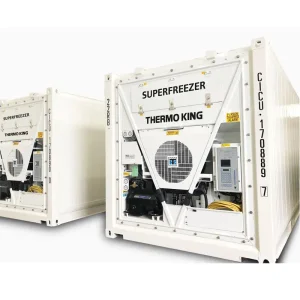
Active reefer High Cube units incorporate electric refrigeration machinery (Thermo King, Carrier, or Daikin) that continuously sustains temperatures between -35°C and +30°C. In contrast, insulated containers feature passive high-density polyurethane walls without compressors, ideal for temperature-sensitive cargo on short transit routes or static job-site storage.
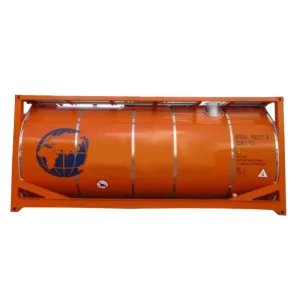
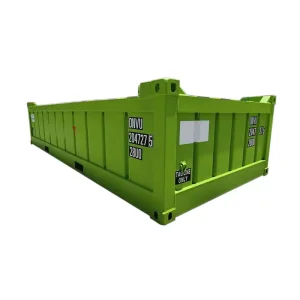
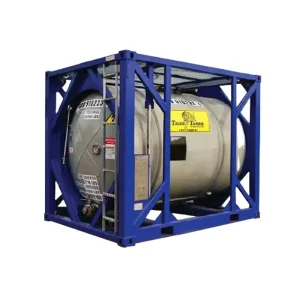
Review our second tier of precision-manufactured container equipment, including certified offshore half-heights, liquid food-grade ISO tanks, and heavy cargo open tops.