Explore precision-engineered containers built under strict BV, ISO, and DNV maritime classifications directly from certified Chinese production clusters.


Understanding ex-factory pricing mechanics requires analyzing raw material indices, robotic fabrication efficiencies, coating chemistry, and exchange rate dynamics across Chinese manufacturing corridors.
SPA-H weather-resistant Corten steel accounts for 55% to 62% of standard dry box bill-of-materials (BOM). Domestic Chinese steel complexes in Hebei and Jiangsu provide ultra-localized rolling mills, eliminating transshipment premiums and shielding manufacturers from global scrap volatility.
Adhering to strict VOC environmental regulations, Chinese factories utilize specialized three-layer waterborne zinc-rich epoxy and polyurethane coatings. While initially increasing raw formulation expenses, automated electrostatic spray lines yield consistent dry film thickness (DFT 120μm+) and prevent premature marine salt oxidation.
Robotic assembly lines across production bases in Tianjin and Suzhou execute robotic seam welding and CNC roof corrugated stamping. This automation mitigates domestic labor cost inflation, guarantees continuous ISO-standard defect-free weld joints, and accelerates throughput to thousands of TEU per month.
Empirical cost ranges for new and certified container categories exported from China's primary maritime ports (FOB basis). Actual quotes fluctuate based on raw Corten steel spot prices, refrigeration specs, and custom certifications.
| Container Classification | Standard Dimensions | Structural Specification | FOB China Estimated Cost | Applicable Certifications | Strategic Use Case |
|---|---|---|---|---|---|
| Standard Dry Cargo (20GP / 40HC) | 20'×8'×8'6" / 40'×8'×9'6" | 1.6-2.0mm Corten SPA-H Corrugated Steel, Marine Plywood / Bamboo Floor | $1,750 - $3,450 | ISO 1496-1, BV, CCS, ABS | General multimodal freight, breakbulk logistics, dry depot storage |
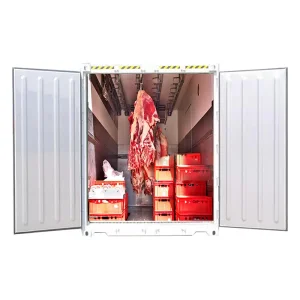
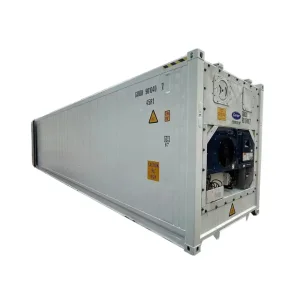
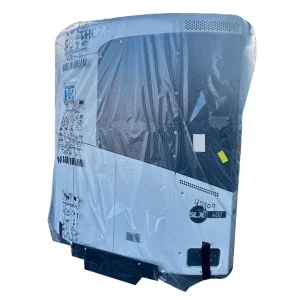
| Reefer Cold Chain Container | 20ft / 40ft High Cube | Stainless 304 / MGX liner, PU foam insulation, Thermo King / Carrier / Daikin | $11,800 - $19,500 | ISO 1496-2, ATP, TIR, BV | Perishable agriculture, biomedical APIs, marine deep-freeze transit |
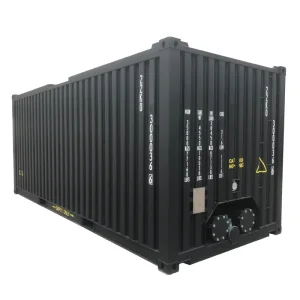
| Offshore Oil & Gas Units | 10ft / 20ft Half Height & Standard | Impact-resistant structural steel, pad eyes, offshore sling assemblies | $4,800 - $9,200 | DNV 2.7-1, EN 12079, LR | Offshore drilling rigs, subsea pipe logistics, harsh open-ocean marine lifting |
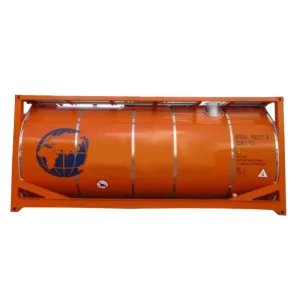
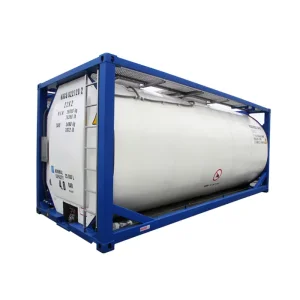
| ISO Chemical / Food Grade Tank | 20ft ISO T11 / T14 / T50 | 316L Stainless Steel pressure vessel, external insulation, steam heating | $14,500 - $26,000 | ASME, IMDG, ADR/RID, USDOT | Bulk hazardous liquids, food oils, petrochemicals, solvent shipping |
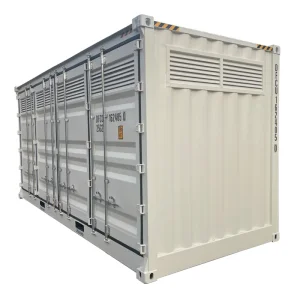
| Dangerous Goods Side-Open Box | 20ft / 40ft High Cube | Explosion-proof louvers, spill-containment floor sump, safety locks | $3,600 - $6,800 | CSC, Class 9 Hazmat, BV | Lithium battery logistics, chemical drum storage, hazardous paints |
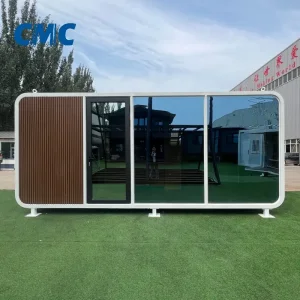
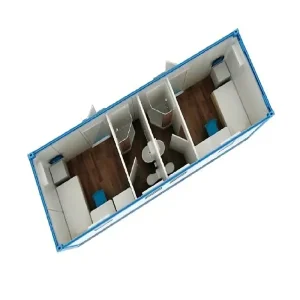
| Prefab Modular Architecture | 20ft Flat-Pack / Apple Pods | Galvanized light steel framing, rockwool thermal panels, double glazing | $2,400 - $7,500 | CE, AS/NZS, UL Structural | Remote workforce accommodations, off-grid eco-resorts, site offices |
Decades of clustered industrial planning, localized metallurgy, and terminal port integration allow Chinese manufacturers to outpace global competitors on unit costs, rapid delivery cycles, and customization bandwidth.
Major container manufacturing complexes operate in direct proximity to deep-water gateway terminals in Tianjin, Qingdao, Shanghai, and Ningbo. Being under 100 km from automated container terminals minimizes drayage repositioning costs and allows immediate export loading onto scheduled ocean liners.
From apitong hard-timber floorings and composite bamboo laminates to cold-formed corner castings, EPDM rubber door gaskets, and locking hardware, every primary and ancillary component is produced within a 50-mile supply cluster, radically eliminating lead-time friction.
Whether buyers demand battery energy storage system (BESS) enclosures with high-expansion fire suppressors, mobile water filtration skid containers, or side-curtain intermodal boxes, specialized engineering teams complete 3D structural simulations within days.
Shipping containers endure extreme dynamic stresses, cyclic wave action, and corrosive environments. Reputable Chinese exporters guarantee multi-agency marine verification to secure port clearance and multimodal insurance compliance.
Every export unit is permanently stamped with a stainless steel International Convention for Safe Containers (CSC) plate. This validates rigorous factory prototype destructive tests: transverse racking loads (150kN), longitudinal restraint testing, stacking strength under nine-high fully loaded containers, and roof load endurance.
For railway land-bridge corridors (China-Europe Rail Express) and cross-border road trucking, units comply with Customs Convention on the International Transport of Goods Under Cover of TIR Carnets and UIC railway loading gauges, securing customs seal tamper resistance.
Enterprise reefer acquisitions partner directly with global cold-machinery service infrastructures. Utilizing genuine Thermo King, Carrier Transicold, or Daikin compressors ensures factory warranties and authorized technician repair networks operate across over 120 global destination seaports.
The container industry is advancing rapidly beyond passive steel shells into intelligent, eco-certified, and digitally tracked connected assets.
Next-generation dry and reefer boxes are increasingly factory-fitted with integrated solar-powered satellite transceivers, door micro-switches, accelerometers (impact detection), and internal humidity-temperature sensors, streaming real-time telemetry into enterprise ERP clouds.
With maritime stakeholders committing to Scope 3 decarbonization, leading Chinese manufacturers are adopting hydrogen-reduced iron and electric-arc furnace (EAF) steel plates, curbing embodied lifecycle carbon emissions by over 38% per TEU produced.
To safeguard tropical forests and counter phytosanitary quarantine restrictions, conventional hardwood floors are transitioning to advanced bamboo-fiber matrix boards and high-strength galvanized steel grid floorings that provide non-toxic, rot-resistant longevity.
Multinational freight consolidators and industrial EPC project managers are increasingly deploying Shipper-Owned Containers (SOC) sourced directly from China to eliminate carrier demurrage fees and secure localized storage assets.
Carrier-Owned Containers (COC) impose punishing daily detention charges when remote inland infrastructure or customs bureaucracy delays container devanning. Purchasing SOC units from Chinese factories creates a fixed-cost asset that can linger on-site indefinitely as secure warehousing.
Buyers can significantly offset ocean freight shipping costs by permitting freight forwarders to utilize brand-new factory containers for a single revenue-earning cargo voyage ("one-trip cabotage"). The container arrives at the buyer's destination port with zero to minimal freight expense.
Professional procurement contracts mandate independent third-party audits (SGS / BV / Lloyd's) verifying light-leakage tests, ultrasonic paint thickness gauge assessments, corner casting metallurgical hardness, door gasket water tightness under 2-bar hose jet sprays, and tare weight verification.
Authoritative insights straight from marine container manufacturing plant engineers and compliance directors.
Under active deep-sea commercial service governed by periodic CSC inspections, an authentic Corten-A (SPA-H) container typically exhibits an active voyage lifecycle of 12 to 15 years. When subsequently transitioned to static ground storage, secondary intermodal logistics, or modular building envelopes with routine exterior coating maintenance, its structural viability routinely extends to 25 to 30 years without panel failure.
While a standard dry container is fundamentally a non-powered structural monocoque box built of corrugated Corten steel and timber flooring, a reefer is a thermodynamic precision instrument. Reefers integrate vacuum-injected high-density polyurethane insulation, food-grade 304 stainless steel interior panels, aluminum T-bar airflow flooring, and an active multi-stage refrigeration cooling plant (Carrier, Thermo King, or Daikin). The refrigeration unit alone accounts for over 65% of the total unit cost.
Yes. China's top container factories offer extensive OEM/ODM engineering capabilities. Customizations encompass high-cube heights (9'6" or 10'6"), dual-side open full-access accordion doors, roll-up shutter access, specialized heavy-duty forklift pockets, hazardous materials ventilation louvers, and company-specific exterior polyurethane RAL color matching complete with customer fleet decals.
In a "one-trip" (or "cabotage") arrangement, once a brand-new container leaves the factory assembly line, our logistics branch liaises with ocean carriers or export freight forwarders to load compatible, non-damaging export cargo for a single voyage to the buyer's destination seaport. The freight revenue generated offsets or completely subsidizes the container's transit shipping costs, delivering the container to the buyer in near-mint condition at immense cost savings.
Every legitimate container export dispatch includes the formal CSC Certificate (Safety Approval), Classification Society Certificate of Inspection (from Bureau Veritas, CCS, ABS, or DNV), Mill Test Certificates (MTC) proving Corten SPA-H steel metallurgy, Timber Treatment / Phytosanitary Quarantine Certificate (verifying Australian quarantine standard compliant floor treatments), and the official Manufacturer's Declaration of Conformity.
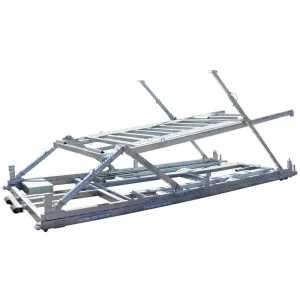
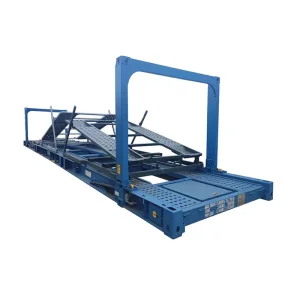
Explore heavy-duty vehicular racks, controlled-atmosphere meat hangers, soft open-tops, and ISO chemical bulk container systems direct from production yards.