Engineered to withstand 9-high fully laden stacking (30,480 kg RGW), severe marine corrosion cycles, and international intermodal rail/sea transit standards under BV, ABS, and ISO 1496 compliance.
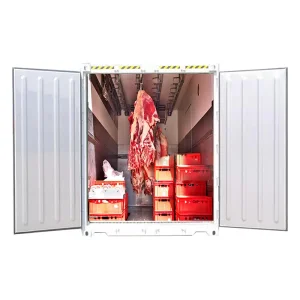
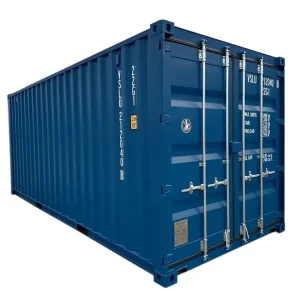
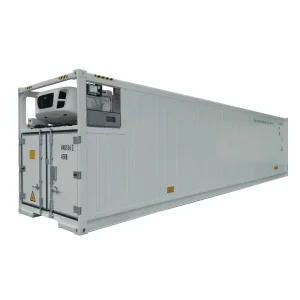
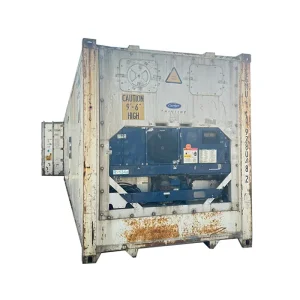
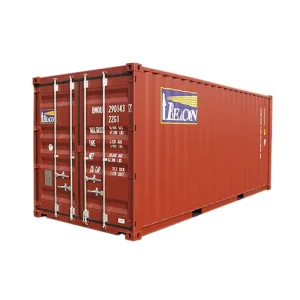
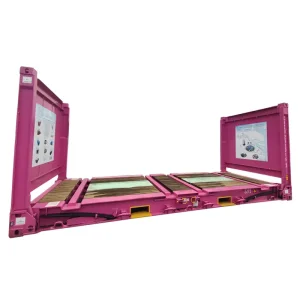
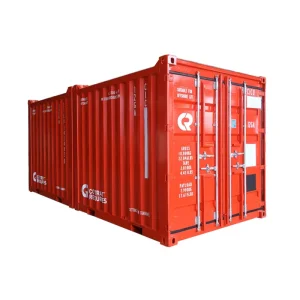
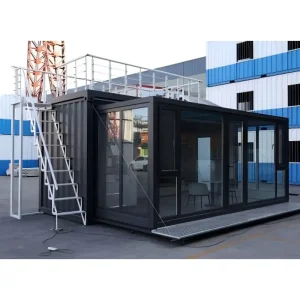
The global containerized freight industry is experiencing a profound paradigm shift driven by stringent decarbonization benchmarks, advanced structural metallurgy, autonomous IoT telematics, and geopolitical supply chain reconfiguration.
Modern sea freight intermodal units rely entirely on ASTM A242 and JIS G3125 SPA-H atmospheric corrosion-resistant steel. In maritime operating environments with intense sodium chloride spray, atmospheric rust converts into an impermeable copper-chromium-phosphorus oxide patina that limits oxidation rates to less than 12 microns per year, ensuring asset lifespans exceed 15 to 20 years in transoceanic deployment.
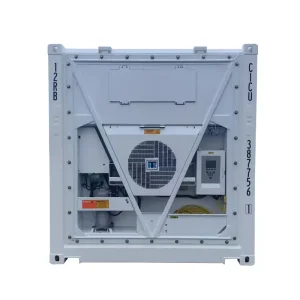
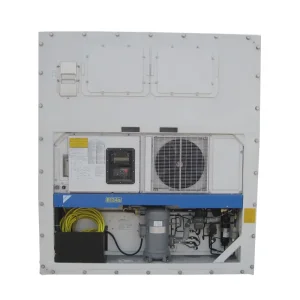
The integration of permanent low-power cellular and satcom transponders directly into corner post cavities has revolutionized asset visibility. Modern active reefer equipment (engineered with Carrier Transicold, Daikin, or Thermo King machinery) continuously transmits real-time supply air temperatures, return air differentials, USDA cold-treatment logging, and diagnostic power phase balance directly to fleet dispatchers.
Environmental compliance has forced a rapid transition away from solvent-borne zinc primers toward ultra-low VOC waterborne polyurethanes and zinc-rich epoxy primers. In parallel, sustainable forestry bamboo composite floors (28mm thickness with 19-ply veneer cross-lamination) have replaced traditional tropical apitong hardwoods, meeting Australian Quarantine Inspection Service (AQIS) requirements without formaldehyde off-gassing.
When global shipping lines, freight forwarders, and institutional engineering contractors evaluate container fleet acquisition, decisions hinge upon Total Cost of Ownership (TCO) models rather than purely initial factory invoice pricing.
Factoring in repositioning surcharges, depot storage detention tariffs, preventive maintenance intervals, and secondary terminal salvage values, purchasing directly from qualified primary Chinese manufacturing clusters delivers significant structural savings over commercial 5-year operating leases.
"Direct OEM capital procurement reduces long-term container equipment carrying costs by up to 28.4% compared to master lease agreements across standard 7-year multi-trade lane cycles."
Procurement teams performing factory acceptance testing (FAT) or third-party depot surveys should rigorously verify the following engineering tolerances:
| Component | Engineering Standard | Acceptable Tolerance |
|---|---|---|
| Side Corrugation Steel | Corten SPA-H (1.6 mm / 2.0 mm) | ±0.10 mm |
| Corner Casting Geometry | ISO 1161 Standard (Cast Steel) | +0 / -1.5 mm diagonal |
| Base Crossmember Pitch | 4.0 mm C-Section Channels | 280 mm spacing center |
| Dry Film Thickness (DFT) | Zinc Epoxy + High Build Polyurethane | Ext: 120μm / Int: 75μm |
Standard marine boxes satisfy general dry goods, but modern industrial globalization demands custom containerized architectures tailored for volatile chemical logistics, subsea energy exploration, and renewable battery storage.
For deepwater drilling platforms and FPSO support vessels, maritime acceleration forces exceed 3.0g under dynamic sea state conditions. Our offshore containers feature specialized Charpy V-Notch impact-tested carbon steels capable of absorbing dynamic shock loads at -20°C, accompanied by permanent pad-eyes and certified 4-leg wire rope slings.
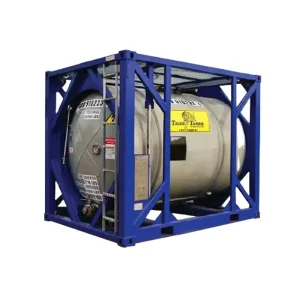
UN Portable T11–T50 tank containers and modified hazardous goods containers engineered to ADR, RID, and IMDG codes. Equipped with emergency pressure relief valves, burst discs, anti-spill catchment sumps, non-sparking aluminum interior flooring, and ATEX Zone 1 explosion-proof louvers for lithium battery raw materials, solvents, and fuel transit.
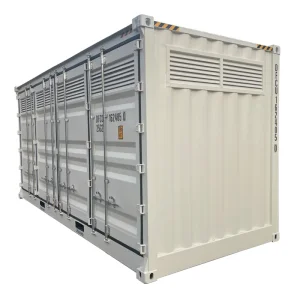
Utility-scale battery energy storage system (BESS) enclosures engineered within modified 20ft and 40ft High Cube envelopes. Structural enhancements include thermal runaway blowout panels, internal R-13 structural rockwool fire suppression batts, integrated HVAC liquid chilling loops, and certified NFPA 68/69 deflagration vents for clean-tech solar and wind microgrids.
Representative direct manufacturing FOB Tianjin / Qingdao benchmark prices. Actual pricing fluctuates based on Shanghai Hot-Rolled Coil (HRC) steel indexes, timber exchange rates, reefer compressor component availability, and quantity batch volumes.
| Container Model & Type | Dimensions (L × W × H) | Payload Capacity (kg) | Certifications Held | FOB Estimate (USD) | Production Lead Time |
|---|---|---|---|---|---|
| 20ft Standard Dry ISO Box | 6,058 × 2,438 × 2,591 mm | 28,200 kg | BV, ISO 1496-1, CSC | $1,750 – $2,250 | 10–14 Days |
| 40ft High-Cube (HC) Dry Cargo | 12,192 × 2,438 × 2,896 mm | 28,600 kg | BV, ABS, ISO, CSC | $2,850 – $3,450 | 12–18 Days |
| 20ft Double Door Heavy Duty | 6,058 × 2,438 × 2,591 mm | 27,800 kg | ISO, CSC, TIR | $2,200 – $2,700 | 14–20 Days |
| 40ft HC Active Cold Reefer (Daikin/Carrier) | 12,192 × 2,438 × 2,896 mm | 29,400 kg | BV, ATP, USDA, CE | $11,800 – $15,200 | 20–25 Days |
| 20ft DNV 2.7-1 Offshore Heavy Box | 6,058 × 2,438 × 2,591 mm | 14,500 kg (Dynamic Safe) | DNV GL, EN 12079 | $5,400 – $6,800 | 25–30 Days |
| 20ft UN T11 Liquid ISO Tank (24,000L) | 6,058 × 2,438 × 2,591 mm | 36,000 kg RGW | ASME, IMDG, RID, ADR | $13,500 – $18,000 | 30–40 Days |
| Certified Insulated 40ft Passive Foam Box | 12,192 × 2,438 × 2,896 mm | 27,500 kg | ISO, CSC Verified | $5,800 – $7,200 | 15–22 Days |
| Used 40ft HC Cargo Worthy (CW) Inspected | 12,192 × 2,438 × 2,896 mm | 26,500 kg | IICL-5 / CW Marine Plate | $1,450 – $1,850 | Immediate Dispatch |
Note for Enterprise Fleet Sourcing: Volume discounts apply on orders exceeding 50 TEU units. Custom paint schemes (RAL code matched), corporate exterior silk-screen decals, factory-fitted lockboxes, and specialized interior floor lashing rings (up to 2,000 kg shear capacity each) are quoted on a line-item basis.
A shipping container is a structural pressure-bearing module governed by international maritime life safety conventions. A single weld flaw can cause cataclysmic stack failure aboard 24,000 TEU Ultra Large Container Vessels (ULCVs).
Every dry and reefer unit leaving the production line carries an approved 304 stainless steel Convention for Safe Containers (CSC) Safety Approval Plate. This plate officially registers structural payload limitations, maximum stacking test weights (minimum 86,400 kg for 9-high stacks), racking test forces, and timber quarantine treatment chemicals.
Our manufacturing yards operate under continuous third-party surveillance by Bureau Veritas (BV), American Bureau of Shipping (ABS), and DNV. Routine verification includes full destructive weld micro-etch examinations, ultrasonic testing of corner castings, air tightness testing at 200 Pa, and water spray testing under 1 bar pressure at 100 mm/minute.
Situated in the industrial maritime hub of Tianjin and complemented by manufacturing facilities in Suzhou, our yards sit less than 100 kilometers from primary marine terminals. This geographical proximity cuts empty repositioning drayage expenses and enables rapid vessel loading onto direct transpacific, European, and African liner loops.
Anticipating international emissions regulations, automated robotic container yards, and smart cargo handling infrastructure, our ongoing research and development roadmap focuses on four core technological horizons.
Development of roof-integrated flexible monocrystalline photovoltaic panels capable of delivering 400W supplemental charging to reefer controller batteries, reducing auxiliary diesel generator reliance in intermodal rail corridors.
Ultra-lightweight continuous fiber-reinforced thermoplastic composite corrugations replacing traditional sheet steel to cut tare weight by up to 22% (650 kg per 40ft HC box), maximizing cargo payload efficiency and cutting vessel fuel consumption.
Integration of wireless strain-gauge sensors inside bottom side rails and floor crossmembers. Embedded machine-learning algorithms identify fatigue stresses, floor delamination, and impact overload conditions before structural failures occur at sea.
High-cube intermodal tank containers engineered with specialized vacuum multi-layer insulation (MLI) and carbon fiber composite overwrap for zero-boil-off maritime carriage of liquid and cryogenic compressed green hydrogen fuels.
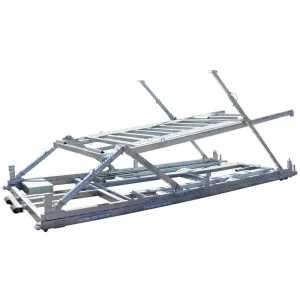
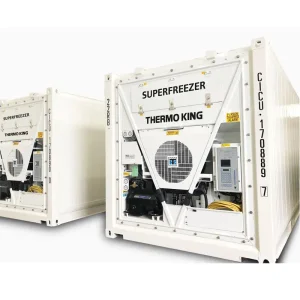
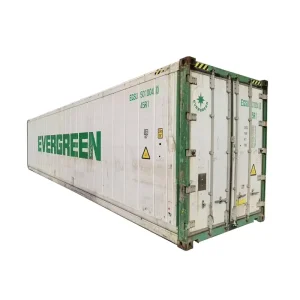
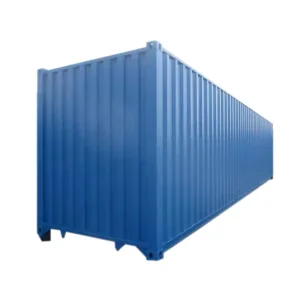
Explore heavy-duty vehicle transport racks, deep-freezing reefer equipment, hazmat containment enclosures, and certified offshore liquid transfer modules designed for demanding international engineering operations.
Direct answers from our senior marine manufacturing and metallurgical engineering team addressing structural certification, custom modifications, classification societies, and international delivery protocols.
Our factory utilizes high-tensile JIS G3125 SPA-H atmospheric corrosion-resistant steel across all corrugated side panels (typically 1.6 mm or 2.0 mm thickness) and roof panels (2.0 mm). For critical load-bearing structural members—specifically corner posts, bottom side rails, top side rails, and door header frames—we utilize ASTM A572 Grade 50 or SM490YA hot-rolled structural steel, ensuring yield strengths exceed 345–355 MPa. This dual-metallurgy combination guarantees high structural resistance against cyclic ocean wave racking forces while keeping tare weight optimal.
Thermal efficiency in our reefer containers is established through high-density polyurethane (PU) foam walls blown with zero-ODP (Ozone Depletion Potential) blowing agents, achieving an overall thermal heat leakage coefficient (K-value) below 0.38 W/m²K under ATP testing criteria. The internal lining is constructed from food-grade 304 or 316 stainless steel with mirror or hairline finish, and the floor utilizes continuous aluminum extruded T-sections (height 60–75 mm) designed for high airflow return. Each finished reefer unit undergoes a 4-hour pre-trip inspection (PTI), micro-leak pressure hold testing, and complete thermal data calibration.
Standard ISO containers are engineered primarily for shipboard cellular guides and static warehouse stacking under ISO 1496. They are prohibited from offshore platform crane transfers due to lack of dynamic impact resistance. DNV 2.7-1 (and EN 12079) offshore containers are custom-engineered for dynamic open-sea lifts. They feature thick structural pad-eyes welded directly into heavy main frames, steel with verified Charpy V-notch toughness (absorbing at least 27 Joules at -20°C to prevent brittle fracture), full ultrasonic and magnetic particle weld inspections, and certified 4-leg wire rope lifting bridles equipped with safety bow shackles.
Prior to signing off shipping releases, our quality assurance engineering division performs six mandatory FAT checkpoints: (1) Seven-point dimensional verification verifying diagonally square corner casting tolerance within ±3 mm; (2) High-pressure water spray deluge testing operating at 100 kPa for 15 minutes across all door seals, rivet lines, and weld seams; (3) Floor strength load testing simulating 7,260 kg forklift axle weights over a 142 cm² tire contact area; (4) Micro-meter paint dry film thickness (DFT) tests across 24 reference grid points; (5) Light-box enclosure light-tightness inspection; and (6) Classification Society (BV/ABS) physical stamp verification on the CSC data plate.
Yes. Approximately 75% of our international industrial buyers utilize our factory's SOC export arrangement. Under this scheme, brand new containers manufactured at our Tianjin or Suzhou yards are coordinated directly with tier-1 international shipping lines (such as MSC, Maersk, COSCO, or CMA CGM) to carry commercial export cargo on their initial maiden voyage. This arrangement eliminates empty equipment repositioning deadfreight charges and delivers the new container to the buyer's destination port (e.g., Rotterdam, Los Angeles, Dubai, Durban, or Singapore) with zero ocean freight tariff on the box itself.
We provide full structural OEM and ODM engineering capabilities. Custom modifications include structural frame cutouts with reinforced hollow section (RHS) lintels, motorized industrial roller shutter doors, full-length side opening bi-fold door sets, explosion-proof louvered ventilation chambers, internal insulated ceiling and wall paneling (rockwool, PIR, or PU), integrated electrical cable raceways, high-capacity floor load spreaders (up to 40-tonne machinery ratings), specialized exterior polyurethane epoxy coatings to match corporate brand pantones, and pre-installed HVAC mounting recesses.
